By using this site, you agree to the Privacy Policy and Terms of Use.
Accept
GMJ NewsGMJ NewsGMJ News
  • Latest News
    • GMJ Briefs
  • Podcast & Media
    • Podcast Episodes
    • GMJ Audio
    • GMJ Videos
  • Research Digest
    • New Studies
    • Georgian Research
    • Data & Numbers
  • Policy & Systems
    • Health Policy
    • Quality & Safety
    • Migration & Health
    • Global Health
  • Practice
    • Clinical Updates
    • Case Discussions
    • Pharmacy & Prescribing
    • Ingredients A-Z
  • Perspectives
    • Editorial
    • Explainers
    • Voices
    • Letters
  • GMJ Articles
    • Vol. 1 Issue 2 (2026)
    • Vol. 1 Issue 1 (2026)
    • Pre-Launch Articles (2025)
  • Read the Journal →
  • About GMJ News
Notification Show More
Font ResizerAa
GMJ NewsGMJ News
Font ResizerAa
  • Latest News
    • GMJ Briefs
  • Podcast & Media
    • Podcast Episodes
    • GMJ Audio
    • GMJ Videos
  • Research Digest
    • New Studies
    • Georgian Research
    • Data & Numbers
  • Policy & Systems
    • Health Policy
    • Quality & Safety
    • Migration & Health
    • Global Health
  • Practice
    • Clinical Updates
    • Case Discussions
    • Pharmacy & Prescribing
    • Ingredients A-Z
  • Perspectives
    • Editorial
    • Explainers
    • Voices
    • Letters
  • GMJ Articles
    • Vol. 1 Issue 2 (2026)
    • Vol. 1 Issue 1 (2026)
    • Pre-Launch Articles (2025)
  • Read the Journal →
  • About GMJ News
Follow US
GMJ News > Practice > Clinical Updates > Chromoblastomycosis: A Neglected Tropical Infection Resurfacing in Clinical Practice
Clinical UpdatesExplainersPerspectivesPractice

Chromoblastomycosis: A Neglected Tropical Infection Resurfacing in Clinical Practice

GMJ
Last updated: 09/07/2026 15:51
By
GMJ Practice Desk
Share
10 Min Read
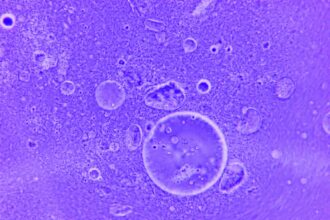
Microscopic image of chromoblastomycosis showing characteristic sclerotic bodies in skin tissueIllustrative image · National Lab Week 130410-F-TT327-015.jpg by Airman 1st Class Jason Couillard / Public domain via Wikimedia Commons (Public domain)
A clinical case presentation in The New England Journal of Medicine highlights diagnostic and therapeutic challenges in chromoblastomycosis, a neglected tropical fungal infection increasingly recognized in non-endemic regions. Early biopsy, antifungal therapy, and surgical intervention offer the best outcomes. — National Lab Week 130410-F-TT327-015.jpg by Airman 1st Class Jason Couillard / Public domain via Wikimedia Commons (Public domain)
SHARE
7 min read|1,318 words
✓ Medically reviewed by Prof. Giorgi Pkhakadze, MD, MPH, PhD · ORCID 0000-0001-7609-4515

🟠 Moderate Evidence

Contents
    • Key takeaways
      • Case at a Glance
      • Geographic Distribution and Risk Factors in Chromoblastomycosis
  • A Fungal Infection at the Nexus of Travel, Climate, and Delayed Recognition
  • Diagnostic Delays and Misclassification Remain Central Challenges
  • Treatment Requires Integration of Medical and Surgical Approaches
  • Global Burden, Travel Medicine Implications, and the Case for Heightened Awareness
    • What this means
  • Frequently asked questions
    • How is chromoblastomycosis transmitted, and who is at highest risk?
    • Why is chromoblastomycosis so difficult to treat?
    • Can chromoblastomycosis be cured?

Chromoblastomycosis, a chronic subcutaneous fungal infection caused by dematiaceous fungi, is gaining renewed attention in clinical medicine as increasing case reports highlight diagnostic and therapeutic challenges that have historically delayed treatment. According to a clinical case presentation published in The New England Journal of Medicine, Volume 394, Issue 23 (June 2026), the disease remains underdiagnosed in non-endemic regions despite its potential for significant morbidity if left untreated.

Key takeaways

  • Chromoblastomycosis is a chronic fungal skin infection endemic to tropical and subtropical regions, with cases now appearing in temperate climates
  • Delayed diagnosis is common due to misclassification as other skin conditions, prolonging disease progression and disability
  • Clinical recognition and early biopsy with histopathological examination are essential for timely diagnosis and treatment initiation
  • Antifungal therapy combined with surgical intervention offers the best chance for disease control and cure

Case at a Glance

Source The New England Journal of Medicine
Article type Clinical case presentation and review
Focus Diagnostic and therapeutic challenges in chromoblastomycosis
Publication date June 18, 2026 (Volume 394, Issue 23)
Clinical relevance Underdiagnosed condition with significant morbidity if untreated
Chronic progression
Chromoblastomycosis typically develops over years to decades, with lesions that become progressively fibrotic and resistant to treatment if diagnosis is delayed

Geographic Distribution and Risk Factors in Chromoblastomycosis

Endemic regions and populations most affected by dematiaceous fungal infections

Tropical Americas (Mexico, Brazil, Venezuela)
Highest endemic burden
Africa (Madagascar, South Africa)
Significant prevalence
Asia-Pacific (Australia, Southeast Asia)
Emerging cases
Temperate regions (Europe, North America)
Rare imported cases

Source: NEJM clinical case presentation, June 2026 | Georgian Medical Journal News

Submit Your Paper
GMJ_Submit_Banner

A Fungal Infection at the Nexus of Travel, Climate, and Delayed Recognition

Chromoblastomycosis is caused by a group of dematiaceous (melanin-containing) fungi, most commonly Fonsecaea pedrosoi, Phialophora verrucosa, and Cladophialophora carrionii, according to the clinical review in The New England Journal of Medicine. The infection typically enters the body through minor traumatic inoculation—commonly via thorn pricks, soil exposure, or cuts—making it an occupational hazard for agricultural workers, gardeners, and construction workers in endemic tropical regions.

🎙️ Related Podcast Episodes
🎧 # 6 | WHO Influenza Vaccine Update 2026–2027 | GMJ Briefing · 19m
🎧 #54 | GMJ Podcast | The Blueprint of a Medical Journal: Designing an Open-Access Scientific Platform · 19m
🎧 #53 | GMJ Podcast | Palliative Care in Georgia — Health System Gaps, Access Barriers, and Policy Implications · 16m
🎧 #52 | GMJ Podcast | Health and Migration Knowledge Hub — A Global Resource for Evidence-Based Practice · 17m
🎧 #47 | GMJ Podcast | Tskaltubo and the Future of Spa-Based Medicine — Radon Therapy, Rehabilitation, and Preventive Health · 19m

The disease establishes itself as a chronic localized skin infection, most often affecting the lower extremities. What distinguishes chromoblastomycosis from common dermatological conditions is its progressive nature: without treatment, lesions gradually spread, become scarred and fibrotic, and can lead to severe functional impairment and increased infection risk. The insidious progression often means patients do not seek care until significant tissue damage has occurred.

Diagnostic Delays and Misclassification Remain Central Challenges

The NEJM case presentation highlights a critical clinical gap: chromoblastomycosis is frequently misdiagnosed as psoriasis, eczema, warts, or other more common skin conditions, particularly in clinicians outside endemic zones. Early lesions may present as small, asymptomatic papules or plaques, creating diagnostic confusion. This delay in recognition can extend for years before definitive diagnosis is established.

The diagnostic gold standard is histopathological examination of a skin biopsy, which reveals the characteristic “sclerotic bodies” (also called muriform cells)—dark, thick-walled fungal spores with distinctive internal septation visible under light microscopy. Without a high index of clinical suspicion, this diagnostic step may never be pursued. Culture confirmation, though definitive, is slow and often requires specialized mycology expertise not uniformly available in all healthcare settings. See related coverage on quality and diagnostic standards in clinical microbiology.

Treatment Requires Integration of Medical and Surgical Approaches

According to the NEJM clinical review, chromoblastomycosis is notoriously difficult to cure with antifungal monotherapy alone. First-line antifungal agents include itraconazole, terbinafine, and voriconazole, with lengthy treatment courses (often 6–12 months or longer) required to achieve clinical cure. Itraconazole remains the most extensively studied agent, though response rates vary significantly depending on disease duration, lesion size, and fungal species involved.

The most effective approach combines antifungal therapy with surgical excision or thermotherapy of lesions. Cryotherapy, laser ablation, and surgical removal all play important roles, particularly for localized disease. In extensive or refractory cases, combination antifungal therapy may be considered, though evidence remains limited. For patients with chronic infections affecting daily function, early aggressive treatment offers the best outcome.

Global Burden, Travel Medicine Implications, and the Case for Heightened Awareness

The publication of this clinical case in The New England Journal of Medicine underscores a growing reality: as international travel and labor migration increase, clinicians in non-endemic regions are encountering chromoblastomycosis with greater frequency. A traveller returning from Brazil, a worker who spent years in agricultural work in Mexico, or an immigrant from Madagascar may present to a dermatologist or primary care physician in Europe or North America with an unrecognized fungal infection.

This calls for a two-pronged public health response: education of healthcare providers in travel medicine and dermatology about the clinical presentation of chromoblastomycosis, and strengthened access to diagnostic mycology services in resource-limited endemic regions where disease burden is highest. The World Health Organization’s focus on neglected tropical diseases includes recognition that fungal infections, though historically underemphasized, pose significant disability and mortality in affected populations.

Chromoblastomycosis, a chronic dematiaceous fungal infection most commonly caused by Fonsecaea pedrosoi, requires high clinical suspicion, histopathological confirmation via skin biopsy, and combined antifungal and surgical treatment for optimal outcomes.

— Clinical review, The New England Journal of Medicine, Volume 394, Issue 23 (June 2026)

What this means

For patients: If you have a slowly progressive skin lesion, especially after exposure to soil or plant material in tropical regions, seek evaluation by a dermatologist and request a skin biopsy if initial treatments fail. Early diagnosis and combined treatment (antifungal medication plus surgical removal or heat therapy) offer the best chance for cure and prevent long-term scarring and disability.
For clinicians: Include chromoblastomycosis in the differential diagnosis of chronic granulomatous skin lesions, particularly in patients with travel or occupational history in endemic regions. Do not assume a lesion is psoriasis, eczema, or warts without biopsy confirmation. Refer for mycology expertise and consider combination therapy (antifungal plus surgical intervention) for optimal outcomes.
For policymakers: Strengthen diagnostic mycology capacity in endemic regions, integrate chromoblastomycosis awareness into training curricula for health workers in tropical countries, and support research into more effective antifungal regimens. International travel medicine education should include recognition of this condition to improve early identification in non-endemic settings.

Related Coverage

CAR T Cells Show Promise Against Smoldering Myeloma, But Patient Selection Is CriticalJul 12, 2026
General-Purpose AI Chatbots Outperform Specialized Clinical Tools in Physician AssessmentsJul 12, 2026
Shingles Vaccination and Dementia Prevention: Why Randomized Trials Are Critically NeededJul 12, 2026
Cooling the Brain After Stroke: How Induced Hypothermia Could Transform Acute CareJul 12, 2026
Related reference
  • Itraconazole · Drug
  • Voriconazole · Drug
  • Terbinafine · Drug
  • Psoriasis · Condition
PG
Written by
Prof. Giorgi Pkhakadze, MD, MPH, PhD
Editor-in-Chief, GMJ News
Full profile →  ·  ORCID 0000-0001-7609-4515
Medical disclaimer. This article is health journalism intended for general information. It is not medical advice and is not a substitute for consultation with a qualified healthcare professional. Always seek your physician's advice regarding any medical condition.
Medically reviewed by Prof. Giorgi Pkhakadze, MD, MPH, PhD. Spotted an error? Contact the editorial team.

Get the GMJ News digest
Evidence-based health journalism in your inbox. No spam; unsubscribe anytime.
TAGGED:chromoblastomycosisdermatologyfungal-infectionneglected tropical diseasestropical-disease
Share This Article
Facebook LinkedIn Bluesky Copy Link Print
GMJ
ByGMJ Practice Desk
Follow:
GMJ Practice Desk is part of GMJ News, the newsroom of the Georgian Medical Journal (gmj.ge), published by the Public Health Institute of Georgia. Every article is editorially reviewed before publication.
Leave a Comment Leave a Comment

Leave a Reply Cancel reply

Your email address will not be published. Required fields are marked *

Submit Your Paper →

Georgia's peer-reviewed open-access medical journal. No APC until January 2027.
Submit Manuscript →
CAR T Cells Show Promise Against Smoldering Myeloma, But Patient Selection Is Critical

CAR T cell therapy achieves deep remissions in smoldering myeloma, a precancerous…

General-Purpose AI Chatbots Outperform Specialized Clinical Tools in Physician Assessments

Three general-purpose large language models outperformed specialized clinical AI tools on physician…

Shingles Vaccination and Dementia Prevention: Why Randomized Trials Are Critically Needed

Observational evidence linking shingles vaccination to reduced dementia risk has reached unprecedented…

Submit Your Paper to GMJ

No APC until January 2027.
Submit Manuscript →

You Might Also Like

Medical illustration of bacteriophages attacking antibiotic-resistant bacteria in bone tissueIllustrative image · Photo by www.kaboompics.com on Pexels (Pexels License)
Clinical UpdatesPractice

Bacteriophage Therapy Saves Patient from Antibiotic-Resistant Skull Infection

By
GMJ Practice Desk
07/07/2026
Medical illustration of spinal cord stimulation device for stroke rehabilitation therapy
Clinical UpdatesNew StudiesPracticeResearch Digest

Spinal Cord Stimulation Shows Promise for Chronic Stroke Recovery After Four Years

By
GMJ Practice Desk
11/06/2026
Elderly cancer patient taking oral medication at home instead of receiving IV treatment
Clinical UpdatesNew StudiesPracticeResearch Digest

New Oral AML Treatment Shows Promise for Older Patients in FDA Trial

By
GMJ Practice Desk
07/06/2026
Medical illustration showing muscle metabolism activation for diabetes treatment
Clinical UpdatesNew StudiesPracticeResearch Digest

New diabetes pill activates muscle metabolism, burns fat without appetite suppression

By
GMJ Practice Desk
08/06/2026
Facebook Twitter Youtube Instagram
Company
  • Privacy Policy
  • Contact US
  • GMJ Journal
  • Submit Manuscript
  • Editorial Team
  • Register at GMJ
  • Terms of Use

Subscribe to GMJ News — Click here

Join Community
© 2026 Georgian Medical Journal (GMJ). Published by the Public Health Institute of Georgia (PHIG). All rights reserved.
Welcome Back!

Sign in to your account

Username or Email Address
Password

Lost your password?

Not a member? Sign Up