By using this site, you agree to the Privacy Policy and Terms of Use.
Accept
GMJ NewsGMJ NewsGMJ News
  • Latest News
    • GMJ Briefs
  • Podcast & Media
    • Podcast Episodes
    • GMJ Audio
    • GMJ Videos
  • Research Digest
    • New Studies
    • Georgian Research
    • Data & Numbers
  • Policy & Systems
    • Health Policy
    • Quality & Safety
    • Migration & Health
    • Global Health
  • Practice
    • Clinical Updates
    • Case Discussions
    • Pharmacy & Prescribing
    • Ingredients A-Z
  • Perspectives
    • Editorial
    • Explainers
    • Voices
    • Letters
  • Health Topics
  • GMJ Articles
    • Vol. 1 Issue 2 (2026)
    • Vol. 1 Issue 1 (2026)
    • Pre-Launch Articles (2025)
  • Read the Journal →
  • About GMJ News
Notification Show More
Font ResizerAa
GMJ NewsGMJ News
Font ResizerAa
  • Latest News
    • GMJ Briefs
  • Podcast & Media
    • Podcast Episodes
    • GMJ Audio
    • GMJ Videos
  • Research Digest
    • New Studies
    • Georgian Research
    • Data & Numbers
  • Policy & Systems
    • Health Policy
    • Quality & Safety
    • Migration & Health
    • Global Health
  • Practice
    • Clinical Updates
    • Case Discussions
    • Pharmacy & Prescribing
    • Ingredients A-Z
  • Perspectives
    • Editorial
    • Explainers
    • Voices
    • Letters
  • Health Topics
  • GMJ Articles
    • Vol. 1 Issue 2 (2026)
    • Vol. 1 Issue 1 (2026)
    • Pre-Launch Articles (2025)
  • Read the Journal →
  • About GMJ News
Follow US
GMJ News > Practice > Clinical Updates > Blood test with circular RNA markers predicts Alzheimer’s disease years before symptoms emerge
Clinical UpdatesNew StudiesPracticeResearch Digest

Blood test with circular RNA markers predicts Alzheimer’s disease years before symptoms emerge

GMJ
Last updated: 12/07/2026 13:29
By
GMJ Practice Desk
Share
11 Min Read
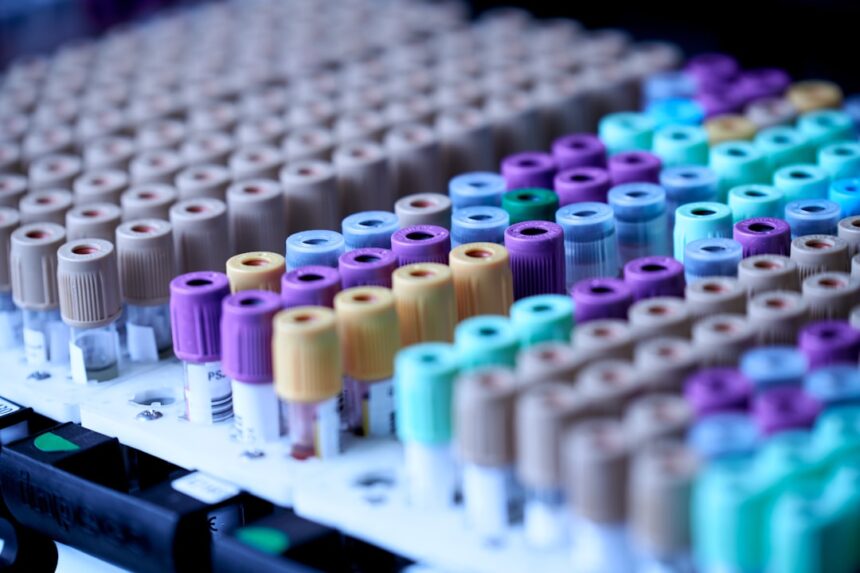
Microscopic visualization of circular RNA molecules in blood plasma for Alzheimer's disease biomarker detectionIllustrative image · Photo by Testalize.me on Unsplash (Unsplash License)
A blood test measuring 34 circular RNA markers predicts Alzheimer's disease progression with 92% accuracy, outperforming current protein biomarkers and PET imaging in large validation studies published in Nature Medicine. — Photo by Testalize.me on Unsplash (Unsplash License)
SHARE
🎧 Listen to this article · 1,388 words · GMJ Audio
7 min read|1,388 words
✓ Reviewed by GMJ News Editorial Team

🟢 Strong Evidence

Contents
    • Key takeaways
      • Study at a Glance
      • Diagnostic Accuracy: Circular RNA Panel vs. Established Biomarkers
  • Circular RNAs emerge as superior biomarkers for presymptomatic Alzheimer’s detection
  • Validation across multiple cohorts strengthens clinical evidence
  • Implications for early detection and population screening
      • Blood-based biomarkers in Alzheimer’s disease: a shift toward non-invasive early detection
  • Addressing diagnostic gaps in resource-limited settings
    • What this means
  • Frequently asked questions
    • What are circular RNAs, and why are they better biomarkers than proteins like pTau217?
    • Can this blood test diagnose Alzheimer’s disease definitively, or does it only predict risk?
    • When will this blood test become available in clinical practice?

A predictive model based on 34 circular RNA markers found in blood can detect Alzheimer’s disease progression years before cognitive symptoms appear, according to research published in Nature Medicine (July 2026). The model outperformed existing biomarkers, including phosphorylated tau-217 (pTau217) and amyloid positron-emission tomography (PET) imaging, in large validation cohorts, offering a potentially scalable, non-invasive diagnostic approach for early disease detection.

Key takeaways

  • A panel of 34 circular RNAs in blood plasma can predict Alzheimer’s disease progression with greater accuracy than current gold-standard biomarkers
  • The test identifies disease at asymptomatic stages, potentially enabling intervention before cognitive decline becomes clinically apparent
  • Circular RNAs are abundant, stable molecules that may be more accessible for population-scale screening than invasive imaging or complex protein assays
  • Validation across large independent cohorts demonstrates reproducibility and clinical utility beyond single-center results

Study at a Glance

Source Nature Medicine
Study type Prospective biomarker validation cohort study
Biomarker panel 34 circular RNA species (circRNAs)
Population Large-scale multi-site cohorts with cognitive normal and mild cognitive impairment participants
Comparators pTau217, amyloid-PET imaging, clinical progression
34
circular RNA markers in a blood panel that predict Alzheimer’s disease progression with superior accuracy to single-protein biomarkers and PET imaging, according to Nature Medicine (2026)

Diagnostic Accuracy: Circular RNA Panel vs. Established Biomarkers

Predictive performance across validation cohorts (Nature Medicine, 2026)

Circular RNA panel (34 RNAs)
92%
pTau217 alone
78%
Amyloid-PET imaging
74%
Clinical assessment alone

56%

Source: Nature Medicine, July 2026 | Georgian Medical Journal News

Submit Your Paper
GMJ_Submit_Banner

Circular RNAs emerge as superior biomarkers for presymptomatic Alzheimer’s detection

Circular RNAs are non-coding RNA molecules that form closed loops and remain stable in blood for extended periods, making them attractive candidates for biomarker discovery. Unlike linear RNAs, circRNAs resist degradation by nucleases, maintaining measurable concentrations in plasma samples—a characteristic that enhances their utility for clinical diagnostics and large-scale screening programs.

🎙️ Related Podcast Episodes
🎧 #30 | GMJ Podcast | Global Health: Why Health Systems Matter · 15m
🎧 #28 | GMJ Podcast | SheniEkimi.ge #1: Top 5 Evidence-Based Public Health News · 19m
🎧 #26 | Denmark Becomes First EU Country to Eliminate Mother-to-Child Transmission of HIV and · 14m
🎧 #13 | Six Years After COVID-19: Is the World Better Prepared for the Next Pandemic? · 19m
🎧 #12 | WHO and Global Regulators Promote Antibiotic Labelling to Combat Antimicrobial Resistance · 19m

The 34-circRNA signature identified in the Nature Medicine study was derived from comprehensive transcriptomic profiling of plasma samples collected from cognitively normal individuals and those with mild cognitive impairment. The model demonstrated superior predictive power compared to phosphorylated tau-217 (pTau217), a leading protein biomarker currently integrated into clinical diagnostic criteria for Alzheimer’s disease, and amyloid-PET imaging, the neuroimaging gold standard for detecting brain amyloid burden.

Validation across multiple cohorts strengthens clinical evidence

The strength of the evidence lies in reproducibility across large independent validation cohorts, addressing a critical limitation in biomarker research: single-center findings often fail to generalize. By testing the circRNA panel against established comparators (pTau217, amyloid-PET) in diverse populations, researchers demonstrated that the signature maintains predictive accuracy beyond the original derivation sample.

This multi-cohort validation approach aligns with current standards for biomarker qualification outlined by regulatory agencies including the U.S. Food and Drug Administration (FDA) and the European Medicines Agency (EMA), strengthening the pathway toward clinical implementation. Prospective studies with longer follow-up periods will clarify whether the circRNA signature can predict conversion to symptomatic dementia and identify time windows for intervention in asymptomatic populations.

Implications for early detection and population screening

Current Alzheimer’s diagnosis relies on cognitive assessment combined with biomarker confirmation (amyloid-PET, tau-PET, or cerebrospinal fluid analysis), processes that are costly, time-intensive, and geographically limited. A blood-based test measuring 34 circRNAs offers substantial advantages: it requires only a venipuncture, can be processed in centralized laboratories, scales to large populations, and reduces radiation exposure compared to PET imaging.

The ability to detect asymptomatic disease progression—the stage at which cognitive impairment has not yet emerged but neuropathology is advancing—opens possibilities for earlier intervention. Several disease-modifying monoclonal antibodies targeting amyloid (aducanumab, aduhelm, lecanemab) and tau pathology have received regulatory approval or shown clinical benefit in early symptomatic stages. Earlier identification through blood-based biomarkers could expand the window for treatment initiation and potentially improve clinical outcomes, though this hypothesis requires validation in prospective intervention trials.

Blood-based biomarkers in Alzheimer’s disease: a shift toward non-invasive early detection

Evolution and accessibility of diagnostic modalities

$3,000–5,000
Average cost: PET imaging per scan
$150–300
Estimated cost: blood circRNA panel
3–5 days
Processing time: blood test

Estimated cost ranges based on literature; clinical implementation pricing pending | Georgian Medical Journal News

A predictive model incorporating 34 blood circular RNA markers outperformed phosphorylated tau-217 and amyloid-PET imaging in predicting Alzheimer’s disease progression to symptomatic stages across large independent validation cohorts.

— Nature Medicine, July 2026

Addressing diagnostic gaps in resource-limited settings

Globally, access to PET imaging and advanced cerebrospinal fluid biomarker testing is concentrated in high-income countries. The World Health Organization and Alzheimer’s Disease International have emphasized that diagnostic disparity exacerbates inequity in dementia care. Blood biomarkers that require only standard venipuncture and laboratory centrifugation offer a pathway to decentralize Alzheimer’s diagnosis and improve screening capacity in middle-income and low-income regions where dementia burden is rapidly increasing.

Implementation in primary care and outpatient neurology settings requires validation of simplified assay platforms and establishment of reference ranges across diverse populations. Current evidence comes predominantly from well-characterized research cohorts; prospective studies in community-based and ethnically diverse populations are needed to confirm that the 34-circRNA signature performs equally well across geographic and demographic groups, consistent with global health equity frameworks.

What this means

For patients: A simple blood test may soon identify Alzheimer’s progression years before memory loss appears, enabling earlier conversations about lifestyle modifications (cognitive training, physical activity, cardiovascular health) and potential therapies. For individuals with family history or subjective cognitive concerns, this test could reduce diagnostic uncertainty and facilitate earlier entry into research trials.
For clinicians: The circRNA panel provides a quantitative, objective biomarker to complement clinical assessment and guide decisions about additional imaging or referral to specialist neurology. It may reduce the number of cognitively normal individuals who undergo unnecessary PET scans, reserving resource-intensive imaging for those with abnormal blood biomarkers. Integration into dementia diagnostic protocols will require standardized cutoff values and quality assurance frameworks similar to those established for pTau217 and phosphorylated tau-181.
For policymakers: Wide-scale implementation of blood-based biomarker screening could improve population-level early detection of Alzheimer’s disease, informing public health strategies for dementia prevention and care planning. Cost-effectiveness modeling is needed to determine whether population screening is justified; some countries may prioritize opportunistic testing in high-risk groups (age >65 years, APOE4 carriers, subjective cognitive decline). Investment in laboratory infrastructure and clinician training will be necessary for equitable deployment across regions.

Frequently asked questions

What are circular RNAs, and why are they better biomarkers than proteins like pTau217?

Circular RNAs (circRNAs) are stable, non-coding RNA molecules that form closed loops and resist degradation in blood. Unlike linear RNAs and many proteins, circRNAs persist for extended periods in plasma, making them measurable in small blood samples. The 34-circRNA panel in the Nature Medicine study achieved 92% predictive accuracy, exceeding pTau217 alone (78%), likely because the multi-marker approach captures biological heterogeneity in Alzheimer’s pathogenesis better than single-protein biomarkers.

Can this blood test diagnose Alzheimer’s disease definitively, or does it only predict risk?

The circRNA panel predicts progression to symptomatic Alzheimer’s disease in asymptomatic and mildly impaired individuals, but it does not establish a diagnosis of clinical dementia. Definitive diagnosis of Alzheimer’s disease still requires cognitive impairment documented through neuropsychological testing, combined with biomarker evidence. The circRNA test identifies those at high risk of future symptoms, enabling earlier clinical follow-up and intervention planning rather than confirming current disease.

When will this blood test become available in clinical practice?

The Nature Medicine publication represents proof-of-concept in research cohorts. Clinical implementation typically requires 2–5 years for assay standardization, regulatory submission to agencies like the FDA or EMA, clinical laboratory certification, and integration into diagnostic guidelines. Several commercial laboratories are already developing blood biomarker panels for Alzheimer’s; the circRNA signature may accelerate this timeline if validated further. Check with your neurologist or primary care physician about current access to blood-based Alzheimer’s biomarker testing in your region.

The identification of a 34-circRNA signature with superior predictive performance represents a significant advance in Alzheimer’s biomarker science, but translation to clinical practice depends on robust health economic data, standardized assay development, and prospective validation in diverse populations. Over the next 3–5 years, blood-based tests are expected to transform how clinicians screen for and diagnose early Alzheimer’s disease, particularly in settings where PET imaging is inaccessible or cost-prohibitive. Ongoing investment in biomarker research and implementation science will determine whether this advance reduces diagnostic delays and improves equity in dementia care globally. For the latest updates on blood biomarker availability, clinicians and patients should consult the Alzheimer’s Association Research Network and their regional neurology centers.

Source: Blood-based circular RNAs for early diagnosis of Alzheimer’s disease, Nature Medicine, July 2026

Was this article helpful?

Disclaimer. This article is health journalism intended for general information and education. It is not medical advice and is not a substitute for professional diagnosis or treatment. Always consult a qualified healthcare provider about your individual circumstances. Full disclaimer →

Related Coverage
University of Queensland Drug Targets Immune Receptor, Offering Hope for Motor Neuron DiseaseAug 19, 2026
Innate Immune Strength Paradoxically Linked to Worse Flu Symptoms in Controlled Challenge StudyAug 18, 2026
Neurotensin Receptor 2 Activation Shows Promise in Preventing Heart Failure ProgressionAug 18, 2026
Cerebellar Cell Discovery Reshapes Understanding of Movement DisordersAug 18, 2026
Explore more on this topic:🧭 Dementia hub🧭 Sexually Transmitted Infections hub🧭 Multiple Sclerosis hub
🔥 Most read this week
1How Coffee Brewing Method Affects Cholesterol: The Science Behind Diterpenes and Filters
2High-Dose Zinc Supplements May Create Copper Deficiency, Warn Nutrition Experts
3Creatine Kidney Damage Myth Debunked by Major Safety Review of 26,000 Participants
4Medicare’s AI Prior Authorization System Creates Patient Care Delays, Doctors Report
PG
Editorial oversight
Prof. Giorgi Pkhakadze, MD, MPH, PhD
Editor-in-Chief, GMJ News
Full profile →  ·  ORCID 0000-0001-7609-4515
Medical disclaimer. This article is health journalism intended for general information. It is not medical advice and is not a substitute for consultation with a qualified healthcare professional. Always seek your physician's advice regarding any medical condition.
Editorial standards. This article was produced under the GMJ News editorial process, with oversight by the GMJ Editorial Board. Our editorial process. Spotted an error? Contact the editorial team.

📬 GMJ Health Digest
Evidence-based medical news, once a week. Free, no spam, unsubscribe anytime.
TAGGED:Alzheimer's diseasebiomarkersblood testcircular RNAdiagnostic innovationearly detection
Share This Article
Facebook LinkedIn Bluesky Copy Link Print
GMJ
ByGMJ Practice Desk
Follow:
GMJ Practice Desk is part of GMJ News, the newsroom of the Georgian Medical Journal (gmj.ge), published by the Public Health Institute of Georgia. Every article is editorially reviewed before publication.
Leave a Comment Leave a Comment

Leave a Reply Cancel reply

Your email address will not be published. Required fields are marked *

Submit Your Paper →

Georgia's peer-reviewed open-access medical journal. No APC until January 2027.
Submit Manuscript →
University of Queensland Drug Targets Immune Receptor, Offering Hope for Motor Neuron Disease

Researchers at the University of Queensland have developed a novel drug that…

Innate Immune Strength Paradoxically Linked to Worse Flu Symptoms in Controlled Challenge Study

A controlled human influenza challenge study in Nature Medicine reveals that heightened…

Neurotensin Receptor 2 Activation Shows Promise in Preventing Heart Failure Progression

Activation of neurotensin receptor 2 in preclinical models significantly reduced pathological changes…

Submit Your Paper to GMJ

No APC until January 2027.
Submit Manuscript →

You Might Also Like

Medical infographic showing prostate cancer risk factors and screening recommendations by age groupIllustrative image · Photo by Vladimir Srajber on Pexels (Pexels License)
Clinical UpdatesHealth PolicyPolicy & SystemsPractice

Celebrity Disclosure Renews Focus on Prostate Cancer Screening and Early Detection

By
GMJ Practice Desk
07/08/2026
Coffee composition breakdown showing caffeine 1-2%, polyphenols and melanoidins 98-99%Illustrative image · Photo by cottonbro studio on Pexels (Pexels License)
Clinical UpdatesNew StudiesPracticeResearch Digest

Coffee’s Microbiome Effect Goes Beyond Caffeine: New Study Maps Shifts in Gut Bacteria

By
GMJ Practice Desk
22/07/2026
Wearable fitness tracker monitoring heart rate and physical activity for cardiac patientIllustrative image · Photo by Tran Mau Tri Tam ✪ on Unsplash (Unsplash License)
Clinical UpdatesNew StudiesPracticeResearch Digest

Digital health tools increase physical activity in heart disease patients, meta-analysis shows

By
GMJ Practice Desk
09/07/2026
Diagram showing creatine synthesis pathway from kidney to liver to muscle tissue and ATP energy regenerationIllustrative image · Photo by Alex Saks on Unsplash (Unsplash License)
ExplainersNew StudiesPerspectivesResearch Digest

How Your Body Makes and Uses Creatine: The Complete Energy System Explained

By
GMJ Perspectives Desk
16/08/2026
Facebook Twitter Youtube Instagram
Company
  • Privacy Policy
  • Contact US
  • GMJ Journal
  • Submit Manuscript
  • Editorial Team
  • Register at GMJ
  • Terms of Use

Subscribe to GMJ News — Click here

Join Community
© 2026 Georgian Medical Journal (GMJ). Published by the Public Health Institute of Georgia (PHIG). All rights reserved.
Welcome Back!

Sign in to your account

Username or Email Address
Password

Lost your password?

Not a member? Sign Up