Updated 13/09/2026
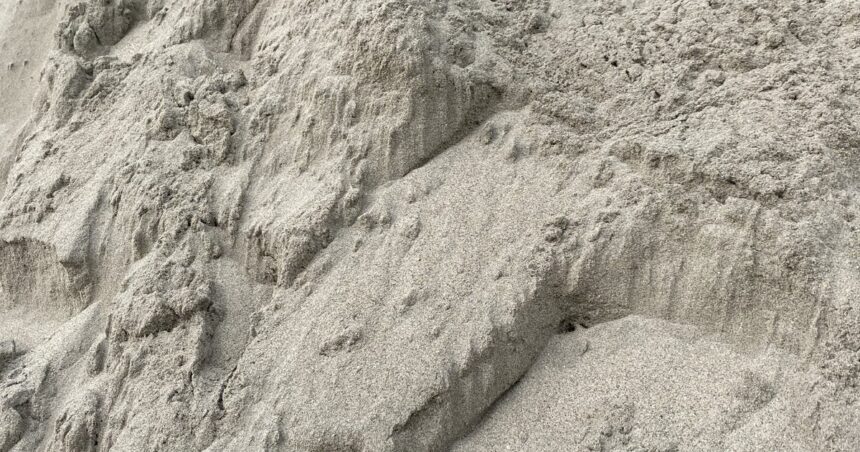
Photo: Close-up of a textured sand dune with visible ridges and layers., by Tawhid Sadman · Public domain / CC0 · Source
Plain-language summary of research published in the Georgian Medical Journal. Written for the general public by the GMJ News editorial team.
Foreign body appendicitis accounts for less than 0.001% of all appendicitis cases — genuinely rare. A case report in the Georgian Medical Journal documents an even rarer cause behind it: five years of undisclosed sand ingestion due to pica, an eating disorder involving persistent consumption of non-nutritive substances, that led directly to a perforated appendix and emergency surgery.

What Is Pica, and Why Does It Matter Medically
Pica is defined as the persistent consumption of non-nutritive substances — things with no nutritional value, like soil, chalk, ice, or in this case, sand — continuing for at least a month, beyond what’s developmentally normal. It’s recognised as a genuine eating disorder, not simply an odd habit, and it carries real medical consequences: pica is a well-established cause of iron deficiency anaemia, since the substances consumed can interfere with nutrient absorption or displace actual nutritive intake, and it can also lead to serious gastrointestinal complications when the ingested material physically obstructs, irritates, or perforates the digestive tract, as happened here.
A One-Day History That Concealed a Five-Year Habit
The patient, a 43-year-old woman, presented to Leratong Hospital in Johannesburg, South Africa, with one day of lower abdominal pain and vomiting. Examination revealed peritonitis — inflammation of the abdominal lining, a sign of a serious internal problem — with tachycardia at 116 beats per minute. Blood tests showed anaemia (haemoglobin 9.5 g/dL), an elevated white cell count (11.6 × 10&sup9;/L) indicating an active infection or inflammatory response, and significant inflammation (CRP 150 mg/L). Taken together, these findings pointed clearly to a serious abdominal infection — but nothing yet indicated the actual, highly unusual cause.
What the Imaging and Surgery Revealed
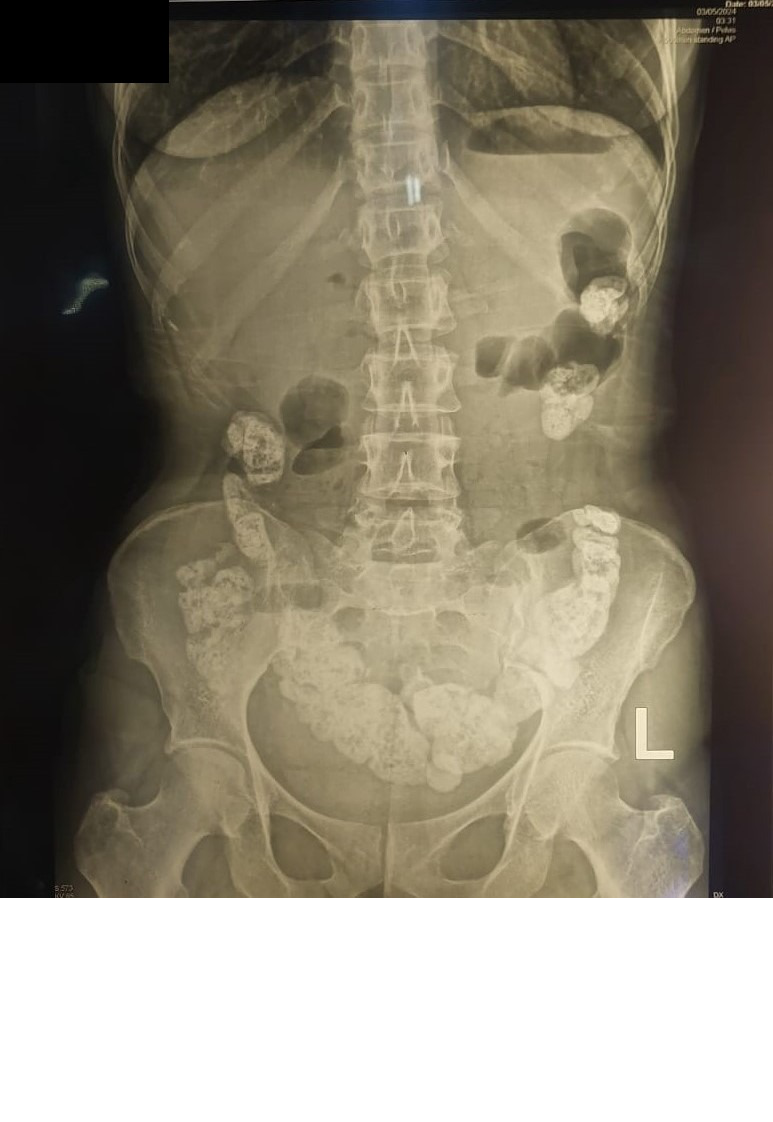
Abdominal radiograph showing diffuse radiopaque material (ingested sand) throughout the colon. Figure from the case report. Source: Georgian Medical Journal, Vol. 1 No. 2 (2026), DOI: 10.66636/gmj.v1.i2.a38.
Abdominal X-ray showed diffuse radiopaque material scattered throughout the colon — an unusual and immediately telling finding, since sand shows up on X-ray in a way most gastrointestinal contents don’t. Surgery was planned as a minimally invasive laparoscopic appendectomy, but had to be converted to an open procedure after equipment failure. What surgeons found explained everything: a perforated appendix with its lumen completely filled with sand, and a sand-laden large bowel so heavy with material that it had physically displaced part of the transverse colon into the pelvis. Histopathology — microscopic examination of the removed tissue — confirmed acute appendicitis with peritonitis.
The Disclosure That Came Only After Surgery
It was only postoperatively that the patient disclosed a five-year history of sand ingestion attributable to pica — a detail that had never surfaced in any prior medical contact, despite five years of presumably ongoing anaemia and gastrointestinal risk building quietly in the background. That gap is the report’s central clinical lesson: pica is a condition patients often don’t volunteer unprompted, whether from embarrassment, not recognising it as medically relevant, or simply never being asked.
The report’s message for clinicians is direct: unexplained anaemia or radiopaque material seen incidentally on imaging should prompt an active, specific question about non-nutritive substance ingestion during history-taking — not left as an open-ended question a patient might not think to answer. In regions or populations where pica or geophagy (soil-eating specifically) is more common, that index of suspicion matters even more, since a five-year silent history like this one can end, as it nearly did here, in a life-threatening surgical emergency.
🗺️ Find certified Georgian healthcare providers: sheniekimi.ge — Georgia Health Map · 998 clinics · 6,600+ doctors · 2,296 pharmacies
Read the Original Research
Original article: The Child Who Ate Sand: How a Hidden Eating Disorder Led to Emergency Surgery
Published in: Georgian Medical Journal, Vol. 1 No. 2 (2026)
DOI: 10.66636/gmj.v1.i2.a38
📄 Read the full article at gmj.ge →
Georgian Medical Journal (GMJ) · ISSN 3088-4322 · gmj.ge · Open Access CC BY 4.0 · Published by the Public Health Institute of Georgia (PHIG). This summary is an independent editorial product of GMJ News; for clinical decisions, consult the original peer-reviewed article and a qualified professional.
Was this article helpful?
Disclaimer. This article is health journalism intended for general information and education. It is not medical advice and is not a substitute for professional diagnosis or treatment. Always consult a qualified healthcare provider about your individual circumstances. Full disclaimer →
Related Coverage



Editorial standards. This article was produced under the GMJ News editorial process, with oversight by the GMJ Editorial Board. Our editorial process. Spotted an error? Contact the editorial team.