🟠 Moderate Evidence
Researchers have identified a novel therapeutic approach targeting the bone marrow microenvironment to accelerate recovery of blood-forming cells after chemotherapy-induced injury, according to findings reported on Medical Xpress. The strategy addresses myelosuppression—severe depletion of hematopoietic stem cells (HSCs) and other blood cell precursors—a life-threatening side effect of cancer treatment that currently requires stem cell transplantation in the most severe cases.
Key takeaways
- Bone marrow microenvironment-targeted therapy may reduce the need for hematopoietic stem cell transplantation (HSCT) in myelosuppressed patients
- The approach addresses a critical gap in managing chemotherapy-induced blood cell depletion, a condition affecting thousands of cancer patients annually
- This represents a mechanistic shift from cell replacement toward restoring the functional microenvironment that supports blood cell recovery
Bone marrow HSC depletion: therapeutic intervention points
Current treatment pathways and the emerging microenvironment-targeted strategy
Source: Conceptual clinical pathway model based on bone marrow physiology | Georgian Medical Journal News

Understanding myelosuppression and current treatment limits
Healthy bone marrow continuously produces all major blood cell types—red blood cells, white blood cells, and platelets—from hematopoietic stem cells (HSCs). Cancer therapies including chemotherapy and radiation are highly effective against tumour cells but often damage HSCs and surrounding bone marrow tissue as collateral damage, causing myelosuppression. According to the source report, this condition can be life-threatening because patients lose their ability to fight infection, carry oxygen, and clot blood.
When myelosuppression is severe, patients currently require hematopoietic stem cell transplantation (HSCT)—a procedure that replaces damaged HSCs with donor cells. However, HSCT carries significant risks including graft-versus-host disease, infection, and transplant failure. There is therefore strong clinical motivation to develop therapies that restore the bone marrow’s own capacity to regenerate blood cells without requiring donor transplantation.
Shifting strategy: restoring the microenvironment rather than replacing cells
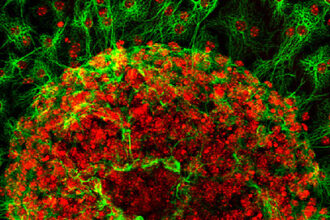
The emerging microenvironment-targeted approach represents a conceptual shift in therapeutic thinking. Rather than attempting cell replacement, this strategy aims to restore the specialized tissue environment—or “niche”—within the bone marrow that supports HSC survival, self-renewal, and differentiation into blood cells. According to Medical Xpress, the bone marrow microenvironment comprises stromal cells, blood vessels, and signalling molecules that collectively regulate HSC function.
Chemotherapy damages not only HSCs but also this supporting tissue architecture. By targeting key components of the microenvironment—such as restoring vascular integrity, enhancing growth factor signalling, or regenerating stromal cell populations—this therapeutic approach may accelerate the bone marrow’s intrinsic capacity to recover. This represents an advance in regenerative medicine strategy, applying principles of tissue engineering to haematologic recovery.
Microenvironment-targeted therapy addresses myelosuppression by restoring the functional bone marrow niche that supports hematopoietic stem cell recovery, potentially reducing dependence on stem cell transplantation in severe cases.
— Source: Medical Xpress, 2026
Clinical implications and future research directions
If validated in clinical trials, this approach could substantially improve outcomes for cancer patients experiencing treatment-related bone marrow failure. Current clinical practice relies heavily on supportive care (blood transfusions, antibiotics, growth factors) combined with HSCT in severe cases. A therapy that accelerates endogenous bone marrow recovery could reduce hospitalisation duration, infection risk, and the need for allogeneic transplantation—each representing significant morbidity and cost savings.
The approach also has potential applications beyond cancer therapy. Patients with inherited bone marrow failure syndromes, acute radiation exposure, and certain blood disorders characterised by HSC dysfunction could benefit from microenvironment-targeted interventions. Research is now needed to identify the most effective microenvironment targets, optimise dosing and timing, and confirm safety and efficacy in human clinical trials.
What this means
Frequently asked questions
What is myelosuppression and why is it dangerous?
Myelosuppression is severe depletion of blood cell production in the bone marrow, most commonly caused by chemotherapy or radiation used to treat cancer. According to the source report, it is dangerous because patients lose the ability to produce infection-fighting white blood cells (increasing risk of life-threatening infection), oxygen-carrying red blood cells (causing anaemia), and clotting platelets (causing bleeding risk). In severe cases, patients may die from infection or bleeding unless treated with stem cell transplantation or intensive supportive care.
How is myelosuppression currently treated?
Current treatment combines supportive care (blood transfusions, antibiotic prophylaxis, growth factor injections to stimulate remaining blood cell production) with hematopoietic stem cell transplantation (HSCT) in severe or prolonged cases. HSCT involves infusing donor stem cells to replace the patient’s damaged bone marrow. However, this procedure carries significant risks including rejection and graft-versus-host disease.
What is the bone marrow microenvironment and why does it matter for recovery?
The bone marrow microenvironment is the specialised tissue environment within bone marrow that supports blood stem cell survival and function—it includes blood vessels, stromal cells, and chemical signalling molecules. According to Medical Xpress, chemotherapy damages this environment along with the stem cells themselves. By restoring the microenvironment, the bone marrow’s own stem cells may recover and regenerate blood cells without requiring transplantation.
The development of microenvironment-targeted therapies reflects a growing understanding of bone marrow biology and regenerative medicine principles. Clinical trials comparing this approach to standard care are likely to begin within the next 2–3 years, with results potentially reshaping haematologic supportive care protocols for cancer patients worldwide. Success in this space could also inform therapeutic strategies for other organs where tissue microenvironment damage contributes to organ failure.
Source: Novel microenvironment-targeted therapy for bone marrow recovery after injury
Was this article helpful?
Disclaimer. This article is health journalism intended for general information and education. It is not medical advice and is not a substitute for professional diagnosis or treatment. Always consult a qualified healthcare provider about your individual circumstances. Full disclaimer →
Related Coverage




Editorial standards. This article was produced under the GMJ News editorial process, with oversight by the GMJ Editorial Board. Our editorial process. Spotted an error? Contact the editorial team.