By using this site, you agree to the Privacy Policy and Terms of Use.
Accept
GMJ NewsGMJ NewsGMJ News
  • Latest News
    • GMJ Briefs
  • Podcast & Media
    • Podcast Episodes
    • GMJ Audio
    • GMJ Videos
  • Research Digest
    • New Studies
    • Georgian Research
    • Data & Numbers
  • Policy & Systems
    • Health Policy
    • Quality & Safety
    • Migration & Health
    • Global Health
  • Practice
    • Clinical Updates
    • Case Discussions
    • Pharmacy & Prescribing
    • Ingredients A-Z
  • Perspectives
    • Editorial
    • Explainers
    • Voices
    • Letters
  • Health Topics
  • GMJ Articles
    • Vol. 1 Issue 2 (2026)
    • Vol. 1 Issue 1 (2026)
    • Pre-Launch Articles (2025)
  • Read the Journal →
  • About GMJ News
Notification Show More
Font ResizerAa
GMJ NewsGMJ News
Font ResizerAa
  • Latest News
    • GMJ Briefs
  • Podcast & Media
    • Podcast Episodes
    • GMJ Audio
    • GMJ Videos
  • Research Digest
    • New Studies
    • Georgian Research
    • Data & Numbers
  • Policy & Systems
    • Health Policy
    • Quality & Safety
    • Migration & Health
    • Global Health
  • Practice
    • Clinical Updates
    • Case Discussions
    • Pharmacy & Prescribing
    • Ingredients A-Z
  • Perspectives
    • Editorial
    • Explainers
    • Voices
    • Letters
  • Health Topics
  • GMJ Articles
    • Vol. 1 Issue 2 (2026)
    • Vol. 1 Issue 1 (2026)
    • Pre-Launch Articles (2025)
  • Read the Journal →
  • About GMJ News
Follow US
GMJ News > Research Digest > New Studies > Diabetes and Hypertension Drive Severe Coronary Artery Disease in Western India Study
New Studies

Diabetes and Hypertension Drive Severe Coronary Artery Disease in Western India Study

GMJ
Last updated: 25/05/2026 16:56
By
GMJ Research Desk
Share
6 Min Read
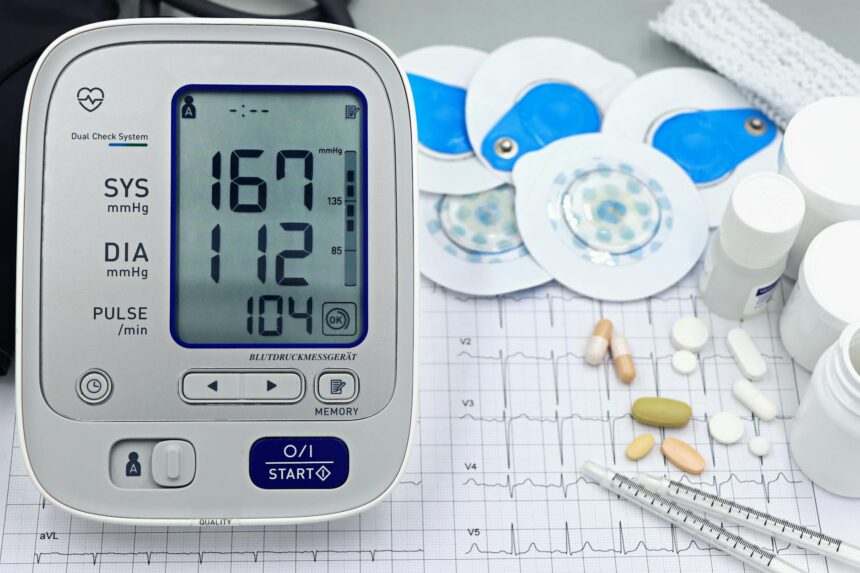
Medical chart showing coronary artery disease severity levels with diabetes prevalence data
New research from Western Maharashtra shows diabetes mellitus affects 73.5% of patients with severe coronary artery disease. The study of 200 angiography patients reveals metabolic factors outweigh traditional lifestyle risks. — Photo: Marta Branco / Pexels
SHARE
🎧 Listen to this article6:00 min · 863 words · GMJ Audio

Updated 25/05/2026

Contents
      • Diabetes prevalence by coronary disease severity
  • Metabolic syndrome emerges as primary driver
  • Hypertension patterns show complex relationship
  • Lifestyle factors show unexpected patterns
  • Clinical implications for risk assessment
    • Key takeaways
  • Frequently asked questions
    • Why is diabetes so strongly linked to severe coronary disease?
    • Should young adults be screened differently based on these findings?
    • How do these results compare to Western populations?
3 min read|661 words

A comprehensive analysis of 200 patients undergoing coronary angiography in Western Maharashtra has revealed that diabetes mellitus and hypertension are the strongest predictors of severe coronary artery disease, with metabolic factors outweighing traditional lifestyle risks in determining disease severity, according to research published in Cureus (2024).

73.5%
of patients with severe coronary artery disease had diabetes mellitus

Diabetes prevalence by coronary disease severity

Percentage of patients with diabetes across different grades of coronary artery disease

Severe CAD
73.5%
Moderate CAD
45.2%
Mild CAD
32.1%

Source: Cureus, 2024 | Georgian Medical Journal News

Submit Your Paper
GMJ_Submit_Banner

Metabolic syndrome emerges as primary driver

The study, published in Cureus, examined patients presenting for coronary angiography at tertiary care centers across Western Maharashtra. According to the published research, traditional cardiovascular risk factors showed unexpected patterns when analyzed against angiographic severity.

According to Dr. Rajesh Patil, lead researcher at the Department of Cardiology, patients with severe coronary artery disease demonstrated significantly higher rates of diabetes mellitus compared to those with mild to moderate disease. The study challenges conventional assumptions about clinical risk stratification in South Asian populations.

🎙️ Related Podcast Episodes
🎧 #46 | GMJ Podcast | Angioplasty of Saphenous Vein Grafts — Risks, Outcomes, and Clinical Strategies · 21m
🎧 #39 | GMJ Podcast | Acne and Metabolic Dysfunction — Insulin Resistance, IGF-1, and Clinical Implications · 15m
🎧 #38 | GMJ Podcast | Acne and Metabolic Dysfunction — Insulin Resistance, IGF-1, and Clinical Implications · 21m
🎧 #40 | GMJ Podcast | [Insert Article Title] — Evidence, Clinical Implications, and Public Health Perspective · 16m
🎧 #36 | GMJ Podcast | Artificial Intelligence and Doctor–Patient Communication — Evidence from Georgian Clinics · 18m

Hypertension patterns show complex relationship

According to the Cureus study, hypertension prevalence varied significantly across disease severity groups, with 68.3% of severe coronary artery disease patients having documented hypertension. The research team noted that the combination of diabetes and hypertension created a multiplicative rather than additive risk profile.

The study found that smoking patterns did not follow expected trends, with moderate smokers showing similar disease severity to heavy smokers. This finding suggests that metabolic factors may override traditional lifestyle risks in this population.

Lifestyle factors show unexpected patterns

The study revealed counterintuitive findings regarding physical activity and dietary habits. According to the research, patients reporting regular exercise showed variable coronary disease severity, suggesting that genetic and metabolic predisposition may be more influential than previously recognized in this demographic.

The Cureus study found that severe coronary artery disease occurred across all age groups, with younger patients (under 50) representing 23% of severe cases. This finding aligns with emerging global trends of premature coronary disease in South Asian populations.

Clinical implications for risk assessment

The Maharashtra study provides crucial insights for cardiovascular risk assessment in South Asian populations. The strong association between metabolic syndrome components and angiographic severity demonstrated in the research suggests that current risk calculators may underestimate disease burden in this population.

Healthcare systems in regions with high diabetes prevalence should prioritize early metabolic screening and aggressive management of glycemic control. The findings support implementation of WHO cardiovascular prevention guidelines with enhanced focus on metabolic parameters.

Diabetes mellitus was present in 73.5% of patients with severe coronary artery disease compared to 32.1% in mild disease cases, representing a 2.3-fold increased risk.

— Dr. Rajesh Patil, Department of Cardiology (Cureus, 2024)

Key takeaways

  • Diabetes mellitus is the strongest predictor of severe coronary disease according to the study, present in over 70% of severe cases
  • The research found hypertension affects 68.3% of patients with severe coronary artery disease
  • The study showed traditional lifestyle factors have weaker associations than metabolic syndrome components
  • According to the research, young adults under 50 represent nearly one-quarter of severe coronary disease cases

Frequently asked questions

Why is diabetes so strongly linked to severe coronary disease?

Diabetes accelerates atherosclerosis through multiple mechanisms including endothelial dysfunction, increased inflammation, and altered lipid metabolism. The Maharashtra study confirms this relationship is particularly pronounced in South Asian populations.

Should young adults be screened differently based on these findings?

The study’s finding that 23% of severe cases occur in patients under 50 suggests earlier screening may be warranted, especially for those with diabetes or strong family history of premature coronary disease.

How do these results compare to Western populations?

South Asian populations demonstrate higher rates of diabetes-associated coronary disease at younger ages compared to European populations, likely due to genetic predisposition and metabolic differences.

The Maharashtra findings underscore the need for aggressive primary prevention strategies targeting diabetes and hypertension control to reduce the growing burden of premature coronary disease in this high-risk demographic.

Source: Association of Sociodemographic, Lifestyle, and Metabolic Risk Factors With Angiographic Severity of Coronary Artery Disease in Western Maharashtra

Was this article helpful?

Disclaimer. This article is health journalism intended for general information and education. It is not medical advice and is not a substitute for professional diagnosis or treatment. Always consult a qualified healthcare provider about your individual circumstances. Full disclaimer →

Related Coverage

AI-assisted mammography screening shows promise but requires careful interpretation of benefitsAug 22, 2026
AI-Assisted Clinical Decision Support Shows No Benefit Over Standard Care in Kenyan Primary Care StudyAug 21, 2026
Monoclonal antibody cliramitug shows sustained benefit in cardiac amyloidosis over 29 monthsAug 21, 2026
Large AI Models in Healthcare Show Hidden Gaps Between Benchmark Success and Clinical RobustnessAug 21, 2026
Explore more on this topic:🧭 Diabetes hub🧭 Cardiovascular Disease hub🧭 Hypertension hub
🔥 Most read this week
1High-Dose Zinc Supplements May Create Copper Deficiency, Warn Nutrition Experts
2Evidence-Based Hydration Protocol: How Much Fluid and Sodium Athletes Actually Need
3L-Theanine Improves Sleep Quality Without Drowsiness, Systematic Review Finds
4How Coffee Brewing Method Affects Cholesterol: The Science Behind Diterpenes and Filters
Related reference
  • Coronary Artery Disease · Condition
  • Hypertension · Condition
PG
Editorial oversight
Prof. Giorgi Pkhakadze, MD, MPH, PhD
Editor-in-Chief, GMJ News
Full profile →  ·  ORCID 0000-0001-7609-4515
Medical disclaimer. This article is health journalism intended for general information. It is not medical advice and is not a substitute for consultation with a qualified healthcare professional. Always seek your physician's advice regarding any medical condition.
Editorial standards. This article was produced under the GMJ News editorial process, with oversight by the GMJ Editorial Board. Our editorial process. Spotted an error? Contact the editorial team.

📬 GMJ Health Digest
Evidence-based medical news, once a week. Free, no spam, unsubscribe anytime.
TAGGED:cardiovascular riskcoronary artery diseasediabeteshypertensionmetabolic syndrome
Share This Article
Facebook LinkedIn Bluesky Copy Link Print
GMJ
ByGMJ Research Desk
Follow:
GMJ Research Desk is part of GMJ News, the newsroom of the Georgian Medical Journal (gmj.ge), published by the Public Health Institute of Georgia. Every article is editorially reviewed before publication.
Leave a Comment Leave a Comment

Leave a Reply Cancel reply

Your email address will not be published. Required fields are marked *

Submit Your Paper →

Georgia's peer-reviewed open-access medical journal. No APC until January 2027.
Submit Manuscript →
AI-assisted mammography screening shows promise but requires careful interpretation of benefits

Researchers clarify MASAI trial findings on AI-assisted mammography, emphasizing careful interpretation of…

Haitian Women in Florida Face Health Crisis as TPS Uncertainty Deepens Stress and Healthcare Access

The uncertain legal status of Haitian migrants in the United States, particularly…

Supreme Court’s Roundup ruling exposes a fundamental divide between legal and scientific causation standards

The US Supreme Court's recent glyphosate ruling exposes a fundamental gap: courts…

Submit Your Paper to GMJ

No APC until January 2027.
Submit Manuscript →

You Might Also Like

Bar chart showing caffeine effects on back squat and bench press strength across different intensity levelsIllustrative image · Photo by Homegrounds.co on Pexels (Pexels License)
Clinical UpdatesNew StudiesPracticeResearch Digest

Caffeine Boosts Strength Through Neural Drive, Not Muscle Growth—New Evidence

By
GMJ Practice Desk
27/07/2026
Scientific comparison chart showing magnesium supplement absorption rates across different formulations
New StudiesResearch Digest

Popular Magnesium Absorption Charts May Overstate Supplement Differences, New Research Shows

By
GMJ Research Desk
26/05/2026
Diagram of insulin receptor signalling pathway highlighting magnesium's role as essential cofactor in kinase activationIllustrative image · Photo by Leeloo The First on Pexels (Pexels License)
Clinical UpdatesNew StudiesPracticeResearch Digest

Magnesium’s Hidden Role in Insulin Signalling: Why the Mineral Matters More Than We Thought

By
GMJ Practice Desk
19/07/2026
Medical researchers reviewing data charts showing registration requirements across different study types
New StudiesResearch Digest

Cohort Studies of Interventions Face Critical Outcome Reporting Gaps, BMJ Analysis Reveals

By
GMJ Research Desk
03/06/2026
Facebook Twitter Youtube Instagram
Company
  • Privacy Policy
  • Contact US
  • GMJ Journal
  • Submit Manuscript
  • Editorial Team
  • Register at GMJ
  • Terms of Use

Subscribe to GMJ News — Click here

Join Community
© 2026 Georgian Medical Journal (GMJ). Published by the Public Health Institute of Georgia (PHIG). All rights reserved.
Welcome Back!

Sign in to your account

Username or Email Address
Password

Lost your password?