By using this site, you agree to the Privacy Policy and Terms of Use.
Accept
GMJ NewsGMJ NewsGMJ News
  • Latest News
    • GMJ Briefs
  • Podcast & Media
    • Podcast Episodes
    • GMJ Audio
    • GMJ Videos
  • Research Digest
    • New Studies
    • Georgian Research
    • Data & Numbers
  • Policy & Systems
    • Health Policy
    • Quality & Safety
    • Migration & Health
    • Global Health
  • Practice
    • Clinical Updates
    • Case Discussions
    • Pharmacy & Prescribing
    • Ingredients A-Z
  • Perspectives
    • Editorial
    • Explainers
    • Voices
    • Letters
  • GMJ Articles
    • Vol. 1 Issue 2 (2026)
    • Vol. 1 Issue 1 (2026)
    • Pre-Launch Articles (2025)
  • Read the Journal →
  • About GMJ News
Notification Show More
Font ResizerAa
GMJ NewsGMJ News
Font ResizerAa
  • Latest News
    • GMJ Briefs
  • Podcast & Media
    • Podcast Episodes
    • GMJ Audio
    • GMJ Videos
  • Research Digest
    • New Studies
    • Georgian Research
    • Data & Numbers
  • Policy & Systems
    • Health Policy
    • Quality & Safety
    • Migration & Health
    • Global Health
  • Practice
    • Clinical Updates
    • Case Discussions
    • Pharmacy & Prescribing
    • Ingredients A-Z
  • Perspectives
    • Editorial
    • Explainers
    • Voices
    • Letters
  • GMJ Articles
    • Vol. 1 Issue 2 (2026)
    • Vol. 1 Issue 1 (2026)
    • Pre-Launch Articles (2025)
  • Read the Journal →
  • About GMJ News
Follow US
GMJ News > Perspectives > Explainers > Frozen produce rivals fresh in most vitamins, UC Davis study finds
ExplainersNew StudiesPerspectivesResearch Digest

Frozen produce rivals fresh in most vitamins, UC Davis study finds

GMJ
Last updated: 12/07/2026 13:29
By
GMJ Perspectives Desk
Share
8 Min Read
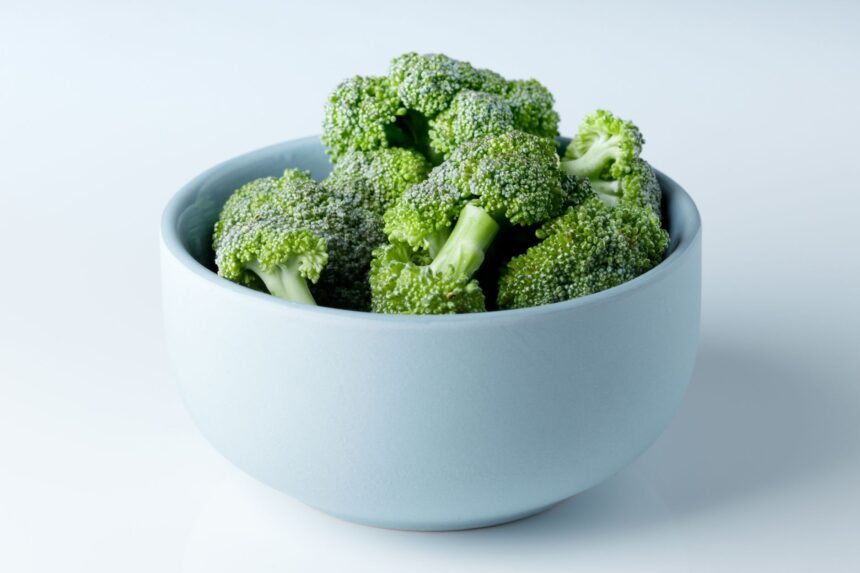
Comparison chart showing vitamin C, E, riboflavin, and beta-carotene levels in fresh versus frozen vegetablesIllustrative image · Photo by Oliver Schulz on Pexels (Pexels License)
A UC Davis study comparing vitamin content in frozen and fresh produce found that frozen vegetables matched or exceeded fresh in vitamin C, E, and B vitamins. Only β-carotene showed consistent advantages in fresh samples—a finding with major implications for nutrition accessibility. — Photo by Oliver Schulz on Pexels (Pexels License)
SHARE
5 min read|1,024 words
✓ Reviewed by Prof. Giorgi Pkhakadze, MD, MPH, PhD · ORCID 0000-0001-7609-4515

🟠 Moderate Evidence

Contents
    • Key takeaways
      • Study at a Glance
      • Vitamin retention: fresh versus frozen storage
  • Peak ripeness locked in at freezing
  • The exception that proves the biochemistry
  • Accessibility and food security implications
    • What this means
  • Frequently asked questions
    • Why is frozen produce sometimes cheaper than fresh?
    • Does blanching before freezing destroy all nutrients?
    • Is fresh produce ever nutritionally superior to frozen?

A controlled comparison of eight common vegetables and berries found that frozen produce matched or exceeded fresh in vitamin C, vitamin E, and B vitamins, contradicting the widespread assumption that fresh is nutritionally superior. Researchers at the University of California, Davis, measured nutrient retention under standard storage conditions, finding that rapid freezing within hours of harvest preserves micronutrients that degrade in conventionally stored fresh produce.

Key takeaways

  • Frozen samples equalled or surpassed fresh in 7 of 8 commodities for vitamin C
  • Vitamin E (α-tocopherol) showed identical patterns: frozen higher in 3 of 8, equivalent in 5, never lower
  • β-carotene was the exception—fresh produce retained more in peas, carrots, and spinach
  • Freezing within hours of harvest locks nutrients at peak ripeness; fresh produce degrades during transport and storage

Study at a Glance

Source Journal of Agricultural and Food Chemistry
Study type Controlled laboratory comparison
Sample size 8 commodities × 3 storage time points
Population Corn, carrots, broccoli, spinach, peas, green beans, strawberries, blueberries
Country United States (UC Davis)
3 of 8
commodities showed higher vitamin C in frozen vs fresh samples, with the remaining 5 showing statistical equivalence and zero commodities lower in frozen

Vitamin retention: fresh versus frozen storage

Comparison of four micronutrients across eight produce items, measured at standard storage conditions (UC Davis, 2015)

Vitamin C
Frozen ≥ Fresh in 8/8
Vitamin E (α-tocopherol)
Frozen ≥ Fresh in 8/8
Riboflavin (B2)
No difference in 6/8
β-carotene

Fresh advantage in 3/5

Source: Bouzari et al., Journal of Agricultural and Food Chemistry, 2015 | Georgian Medical Journal News

Submit Your Paper
GMJ_Submit_Banner

Peak ripeness locked in at freezing

The mechanism underlying frozen produce’s nutrient stability is biochemical straightforwardness. Researchers at UC Davis found that frozen vegetables are blanched and frozen within hours of harvest, preserving nutrient content at its maximum. The frozen storage chain that follows operates in a biochemically stable environment—the freezer aisle maintains constant low temperature that halts enzymatic degradation.

Vitamin C illustrates this stasis most clearly. At standard freezer temperatures (–18°C / 0°F), ascorbic acid is preserved essentially indefinitely. Fresh produce takes a different trajectory: picked, packed, transported, displayed in produce sections, and stored in home refrigerators over days or weeks, each stage exposes vitamins to warmth, light, and oxygen—accelerating degradation.

The exception that proves the biochemistry

β-carotene—the precursor to vitamin A—presents the only consistent advantage for fresh produce. Of the five commodities containing measurable β-carotene (peas, carrots, spinach, broccoli, and green beans), three showed measurable losses in frozen samples: peas, carrots, and spinach. This pattern reflects the blanching step—the brief heating used before freezing destabilizes carotenoids more than it affects water-soluble vitamins.

For practical purposes, this difference is modest. A serving of frozen spinach or peas retains substantially more β-carotene than fresh spinach or peas stored in a home refrigerator for a week. The nutritional gap widens only if fresh produce is consumed immediately after harvest—a luxury unavailable to most consumers in cold climates or during seasons when local production ceases.

Accessibility and food security implications

The UC Davis findings carry weight beyond individual shopping decisions. Frozen produce reduces barriers to nutritious eating in food deserts, rural areas, and low-income households where fresh produce availability and affordability are constrained. A bag of frozen broccoli typically costs less, lasts longer, and requires no preparation time. Its nutrient profile—equivalent to fresh—removes the guilt from a pragmatic choice.

Seasonal availability also matters. Winter in much of the Northern Hemisphere means fresh local produce is unavailable; frozen vegetables allow year-round access to micronutrients at stable cost. For populations relying on shelf-stable nutrition, this represents genuine food security, not a nutritional compromise.

Frozen samples equalled or exceeded fresh produce in vitamin C and vitamin E across all tested commodities, with riboflavin showing no meaningful difference in six of eight. Only β-carotene showed consistent fresh advantage in three commodities (peas, carrots, spinach), but losses were modest compared to degradation in week-old refrigerated fresh produce.

— Bouzari and colleagues, University of California, Davis (Journal of Agricultural and Food Chemistry, 2015)

What this means

For patients: Frozen vegetables are nutritionally equivalent to fresh for most vitamins and often superior for vitamin C and E. Buying frozen removes cost and waste barriers to vegetable consumption without nutritional penalty.
For clinicians: When counseling patients on dietary micronutrient intake, frozen produce should be presented as a valid alternative to fresh, particularly for vitamin C and E. This expands realistic nutrition guidance for food-insecure populations.
For policymakers: Removing stigma from frozen produce in food assistance programs and nutrition labelling could expand access to affordable micronutrients and strengthen public health nutrition strategies in regions with seasonal or geographic produce scarcity.

Frequently asked questions

Why is frozen produce sometimes cheaper than fresh?

Frozen produce does not require the same cold-chain logistics as fresh—no continuous refrigeration during transport and retail display. Processing costs are lower when produce can be frozen at peak harvest near the farm. Frozen items also have longer shelf life, reducing spoilage loss in supply chains. For consumers, this translates to lower prices and less household waste.

Does blanching before freezing destroy all nutrients?

Blanching (brief boiling or steaming before freezing) removes only specific nutrients—notably β-carotene, which is heat-sensitive. Water-soluble vitamins like C and B vitamins are largely retained because freezing immediately halts further degradation. The net effect is that frozen vegetables retain more total nutrients by end-of-shelf-life than fresh vegetables stored for days in a home refrigerator.

Is fresh produce ever nutritionally superior to frozen?

Only immediately after harvest and only for β-carotene-rich produce (carrots, spinach, peas). If you have access to farm-fresh vegetables within hours of picking, those may have slight advantages in this single micronutrient. For any fresh produce older than 3–5 days, frozen is likely equivalent or superior in most vitamins. For consumers without farm access, frozen is the more reliable choice.

The evidence shifts the conversation from fresh versus frozen to a pragmatic focus on consumption frequency and affordability. Nutritionists increasingly recognize that the best vegetable is the one a person actually eats—and frozen removes cost, storage, and time barriers that prevent many households from meeting daily vegetable recommendations. Marketing mythology around “fresh” has inadvertently stigmatized a product that is often nutritionally superior and universally more accessible.

Source: Bouzari et al., Journal of Agricultural and Food Chemistry, 2015

Was this article helpful?

Disclaimer. This article is health journalism intended for general information and education. It is not medical advice and is not a substitute for professional diagnosis or treatment. Always consult a qualified healthcare provider about your individual circumstances. Full disclaimer →

Related Coverage

Magnesium's hidden role in insulin signalling: why the mineral matters for glucose controlJul 17, 2026
Why the same bread raises blood sugar differently in different peopleJul 17, 2026
Vitamin D dose response is not linear: Why shelf-picked supplements may not work as expectedJul 17, 2026
How a single stem cell in bone marrow generates your entire immune systemJul 17, 2026
Related reference
  • Riboflavin · Ingredient
  • Vitamin C · Ingredient
  • Vitamin A · Ingredient
  • Vitamin E · Ingredient
  • Iron · Ingredient
  • SAMe · Ingredient
PG
Written by
Prof. Giorgi Pkhakadze, MD, MPH, PhD
Editor-in-Chief, GMJ News
Full profile →  ·  ORCID 0000-0001-7609-4515
Medical disclaimer. This article is health journalism intended for general information. It is not medical advice and is not a substitute for consultation with a qualified healthcare professional. Always seek your physician's advice regarding any medical condition.
Medically reviewed by Prof. Giorgi Pkhakadze, MD, MPH, PhD. Spotted an error? Contact the editorial team.
Get the GMJ News digest
Evidence-based health journalism in your inbox. No spam; unsubscribe anytime.
TAGGED:food securityNutritionproducepublic healthvitamins
Share This Article
Facebook LinkedIn Bluesky Copy Link Print
GMJ
ByGMJ Perspectives Desk
Follow:
GMJ Perspectives Desk is part of GMJ News, the newsroom of the Georgian Medical Journal (gmj.ge), published by the Public Health Institute of Georgia. Every article is editorially reviewed before publication.
Leave a Comment Leave a Comment

Leave a Reply Cancel reply

Your email address will not be published. Required fields are marked *

Submit Your Paper →

Georgia's peer-reviewed open-access medical journal. No APC until January 2027.
Submit Manuscript →
Magnesium’s hidden role in insulin signalling: why the mineral matters for glucose control

Magnesium acts as a critical molecular switch in insulin signalling. New analysis…

Why the same bread raises blood sugar differently in different people

Researchers at the Weizmann Institute found that identical carbohydrate meals produce glucose…

Vitamin D dose response is not linear: Why shelf-picked supplements may not work as expected

Vitamin D supplements do not work the same way for everyone. Research…

Submit Your Paper to GMJ

No APC until January 2027.
Submit Manuscript →

You Might Also Like

Comparison chart showing liver and muscle glycogen recovery rates after exercise
New StudiesResearch Digest

Study shows liver recovers from exercise in 6 hours, muscles need 24 hours

By
GMJ Research Desk
22/05/2026
Children laughing during therapeutic play session showing brain development benefits
New StudiesResearch Digest

Laughter Helps Children’s Brain Resilience and Learning, Says Child Development Expert

By
GMJ Research Desk
28/05/2026
Microscopic view of plastic polymer chains and chemical structure representationsIllustrative image · Photo by Teslariu Mihai on Unsplash (Unsplash License)
Global HealthNew StudiesPolicy & SystemsResearch Digest

Early-life plastic chemical exposure linked to persistent anxiety in male animals

By
GMJ Policy Desk
12/07/2026
Scientific illustration showing genetic mutations connecting blood cancer to Alzheimer's diseaseIllustrative image · Photo by National Institute of Allergy and Infectious Diseases on Unsplash (Unsplash License)
New StudiesResearch Digest

Blood Cancer Gene Mutations Trigger Alzheimer’s Disease Through Brain Inflammation

By
GMJ Research Desk
28/06/2026
Facebook Twitter Youtube Instagram
Company
  • Privacy Policy
  • Contact US
  • GMJ Journal
  • Submit Manuscript
  • Editorial Team
  • Register at GMJ
  • Terms of Use

Subscribe to GMJ News — Click here

Join Community
© 2026 Georgian Medical Journal (GMJ). Published by the Public Health Institute of Georgia (PHIG). All rights reserved.
Welcome Back!

Sign in to your account

Username or Email Address
Password

Lost your password?

Not a member? Sign Up