By using this site, you agree to the Privacy Policy and Terms of Use.
Accept
GMJ NewsGMJ NewsGMJ News
  • Latest News
    • GMJ Briefs
  • The Wire
  • Health Topics
  • Podcast & Media
    • GMJ Audio
    • GMJ Videos
    • Podcast & Media
    • Podcast Episodes
  • GMJ Articles
    • Vol. 1 Issue 3 (2026)
    • Public Health Dictionary — Supplement Edition
    • IAP Legacy Series
    • Read Full Journal (gmj.ge) →
    • Pre-Launch Articles (2025)
    • Vol. 1 Issue 1 (2026)
    • Vol. 1 Issue 2 (2026)
  • Perspectives
    • Editorial
    • Explainers
    • Letters
    • Voices
  • Policy & Systems
    • Global Health
    • Health Policy
    • Migration & Health
    • Quality & Safety
    • Work & Health
  • Dictionary
    • Our Story: 20 Years in the Making
    • Browse A–Z
    • About the Project
    • Contribute a Term
  • Practice
    • Case Discussions
    • Clinical Updates
    • Pharmacy & Prescribing
  • Research Digest
    • Data & Numbers
    • Georgian Research
    • New Studies
  • Read the Journal →
Notification Show More
Font ResizerAa
GMJ NewsGMJ News
Font ResizerAa
  • Latest News
  • The Wire
  • Health Topics
  • Podcast & Media
  • GMJ Articles
  • Perspectives
  • Policy & Systems
  • Dictionary
  • Practice
  • Research Digest
  • Read the Journal →
  • Latest News
    • GMJ Briefs
  • The Wire
  • Health Topics
  • Podcast & Media
    • GMJ Audio
    • GMJ Videos
    • Podcast & Media
    • Podcast Episodes
  • GMJ Articles
    • Vol. 1 Issue 3 (2026)
    • Public Health Dictionary — Supplement Edition
    • IAP Legacy Series
    • Read Full Journal (gmj.ge) →
    • Pre-Launch Articles (2025)
    • Vol. 1 Issue 1 (2026)
    • Vol. 1 Issue 2 (2026)
  • Perspectives
    • Editorial
    • Explainers
    • Letters
    • Voices
  • Policy & Systems
    • Global Health
    • Health Policy
    • Migration & Health
    • Quality & Safety
    • Work & Health
  • Dictionary
    • Our Story: 20 Years in the Making
    • Browse A–Z
    • About the Project
    • Contribute a Term
  • Practice
    • Case Discussions
    • Clinical Updates
    • Pharmacy & Prescribing
  • Research Digest
    • Data & Numbers
    • Georgian Research
    • New Studies
  • Read the Journal →
Follow US
GMJ News > Policy & Systems > Work & Health > GILS Decent Work Scorecard for Georgia: 15 Indicators, Sourced — and Why We Withdrew a Single-Number Index
Work & Health

GILS Decent Work Scorecard for Georgia: 15 Indicators, Sourced — and Why We Withdrew a Single-Number Index

GMJ
Last updated: 03/10/2026 03:33
By
GILS Research Team
Share
8 Min Read
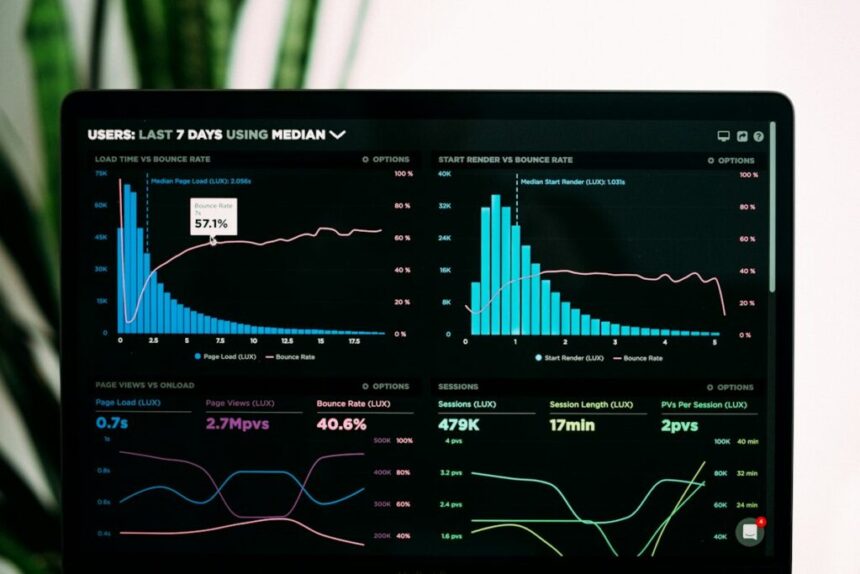
Labour underutilisation dashboard — GILS Georgia
Photo: Unsplash / CC0
SHARE
🎧 Listen to this article4:37 min · 927 words · GMJ Audio
Work & Health · From the Georgian Institute of Labour Studies
This analysis was first published by the Georgian Institute of Labour Studies (GILS), an initiative of the Public Health Institute of Georgia. Read the original on labour.edu.ge →
5 min read|927 words

Decent work is a social determinant of health. This scorecard brings together 15 sourced indicators of work in Georgia — from earnings and poverty to workplace deaths and the ratification of the ILO's occupational safety conventions.

Contents
      • Key Findings
  • 1. Why a Scorecard, Not an Index
  • 2. The Scorecard
  • 3. What the Scorecard Shows
    • Growth without inclusion
    • The institutional gap
    • The data gap
  • 4. Limitations
  • 5. Conclusion
      • GILS Recommendations
      • GILS Position
      • References
21 August 2026

An earlier version of this page presented a single “Decent Work Index” score for Georgia. GILS could not document the methodology and data behind that score to the standard we now require, and it has been withdrawn. In its place, this scorecard sets out 15 indicators across the ILO’s decent work dimensions, each with its latest value, its direction and its source — and no composite score that would hide the evidence behind a single number.

Key Findings

  • Employment opportunities are weak and stagnant: unemployment was 13.9% in 2025, the employment rate 46.9%, and composite labour underutilisation 27.8% in 2025.
  • Earnings are rising fast (GEL 2,466 a month in Q4 2025, +11.2%) and absolute poverty fell to 7.1% in 2025 — but the statutory minimum wage remains GEL 20.
  • Equality indicators are mixed: the adjusted gender pay gap fell to 11.4% (hourly, 2024), while women’s participation fell to 44.2% in 2025.
  • Social security and social dialogue are the weakest dimensions: no unemployment insurance, union membership of at most about one in six employees, and no official collective bargaining data.
  • Recorded workplace deaths fell to 32 in 2025, but Georgia has not ratified the two ILO fundamental conventions on occupational safety and health.

1. Why a Scorecard, Not an Index

Composite indices are attractive because they summarise many indicators in one number. But they depend on choices — which indicators, which benchmarks, which weights — that are rarely visible to readers, and a single score can move for reasons unrelated to workers’ lives. Georgia also lacks several of the data series an index would need, such as collective bargaining coverage. GILS therefore presents the evidence indicator by indicator, organised by the ILO’s decent work dimensions, with sources for each.

2. The Scorecard

Table 1. GILS Decent Work Scorecard for Georgia
Dimension Indicator Latest value Direction Source
Employment opportunities Unemployment rate 13.9% (2025) Unchanged from 2024 Geostat
Employment opportunities Employment rate (15+) 46.9% (2025) Down 0.2 pts Geostat
Employment opportunities Composite labour underutilisation (LU4) 27.8% (2025) About twice the unemployment rate since 2020 Geostat via PMCG
Employment opportunities Unemployment, ages 15–19 39.0% (2025) Up from 36.3% (2024) Geostat
Adequate earnings Average monthly earnings GEL 2,466 (Q4 2025) Up 11.2% year-on-year Geostat
Adequate earnings Statutory minimum wage (private) GEL 20 (since 1999) Unchanged; 0.8% of average earnings Presidential Order No. 351
Adequate earnings Absolute poverty rate 7.1% (2025) Down from 9.4% (2024) Geostat
Equal opportunity Women’s labour force participation 44.2% vs 66.3% men (2025) Women down 0.7 pts Geostat
Equal opportunity Adjusted hourly gender pay gap 11.4% (2024) Down from 15.9% (2020) Geostat
Stability and security Informal employment 37.1% (2022) — ILO (Pignatti, 2026)
Social security Unemployment insurance None — —
Safe work Recorded workplace deaths 32 (2025) Reported −46% vs 2024 Labour Inspection Service
Social dialogue Union membership, share of employees ≤15.7% (upper bound) — GILS calculation (GTUC, Geostat)
Social dialogue Collective bargaining coverage Not measured — No official statistic
Rights at work ILO fundamental conventions ratified 8 of 10 (not C155, C187) — EU Twinning Fiche (2023); ILO

Sources and calculations are documented in the linked GILS analyses and references below.

Submit Your Paper
GMJ_Submit_Banner
Selected decent work indicators, Georgia (%)Selected decent work indicators, Georgia (%)0%15%30%45%60%13.9%Unemploy-ment 202546.9%Employmentrate 202544.2%Women'sparticip. 202528.8%Labour under-utilisation 202437.1%Informalemploy. 202215.7%Union members(max.)Sources: Geostat; PMCG (2025); Pignatti (2026); GILS calculation (union membership)
Figure 1. Selected percentage indicators from the scorecard.

3. What the Scorecard Shows

Growth without inclusion

The indicators that have improved most — earnings and poverty — are those driven by economic growth. The indicators that have stalled or worsened — participation, women’s participation, youth unemployment — are those that depend on institutions: childcare, employment services, social dialogue and labour market policy.

The institutional gap

The weakest dimensions are those requiring institutions Georgia lacks or has only recently built: a functioning minimum wage, unemployment insurance, collective bargaining and full ratification of fundamental conventions. These are also areas where EU candidate status brings benchmarks that Georgia does not yet meet.

🎙️ Related Podcast Episodes
🎧 #48 | GMJ Podcast | Launching the Georgian Medical Journal — Transparency, Editorial Standards, and Open-Access Vision · 17m
🎧 #24 | WHO Releases Updated Health Inequality Data Repository and Equity Toolkit · 21m
🎧 #55 | GMJ Podcast | How Georgian Medical Journal Entered the Swiss Academic System (ETH Library) · 4m
🎬 NAD⁺ Injections and “NAD Boosters”
🎬 GMJ Video Series | Rare Case: Lung Cancer & Tuberculosis Coexistence

The data gap

Several important indicators cannot be measured at all, or only infrequently: collective bargaining coverage, informal employment after 2022, accident rates per worker, and the employment of people with functional disabilities. Better measurement is itself a decent work priority.

4. Limitations

Indicators refer to different years depending on availability. Some values are GILS calculations from official data. The scorecard does not assign weights or an overall score, and comparisons with other countries are not included because comparable data were not verified for this edition.

5. Conclusion

Georgia’s labour market shows rising pay and falling poverty alongside weak employment, low participation and thin labour institutions. A transparent scorecard makes clear where progress is happening and where it is not. GILS will update it annually.

GILS Recommendations

  1. Adopt a national decent work monitoring framework, using ILO decent work indicators, published annually by Geostat.
  2. Fill the data gaps: collective bargaining coverage, regular informality estimates, accident rates per worker and disability employment.
  3. Prioritise the institutional dimensions: minimum wage law, unemployment insurance and social dialogue.
  4. Use the Decent Work Country Programme to set targets for the weakest indicators.

GILS Position

GILS withdrew a single-number index it could not fully document. We believe evidence on decent work should be transparent and checkable. This scorecard is our commitment to that standard.

References

  1. GBC (2026). The unemployment rate in 2025 has not changed — 13.9%. gbc.ge
  2. Geostat (2026). Average Monthly Nominal Earnings of Employees (IV Quarter, 2025). geostat.ge
  3. GBC (2025). The gender pay gap is almost 20%. gbc.ge
  4. PMCG Research (2025). Labor Market Overview: Georgia, Issue 151. research.pmcg-i.com
  5. Pignatti, C. (2026). Recent Trends on Informal Employment in Georgia. ILO Working Paper 159. doi.org/10.54394/MOJI5185
  6. Georgia Today (2026). Labor Inspection Service 2025 report: 32 workplace fatalities. georgiatoday.ge
  7. EU Twinning Fiche (2023). GE 21 NDICI SO 02 23. esteri.it
  8. ILO (2013). Decent Work Indicators: Guidelines for Producers and Users of Statistical and Legal Framework Indicators. Geneva: ILO.

Suggested citation: GILS Research Team (2026). Decent Work Scorecard for Georgia. Editor: G. Pkhakadze. Georgian Institute of Labour Studies, Tbilisi. labour.edu.ge

GILS analyses are prepared with AI-assisted drafting. All figures and claims are verified against the cited primary sources and reviewed under the responsibility of the Editor.

Was this article helpful?

Disclaimer. This article is health journalism intended for general information and education. It is not medical advice and is not a substitute for professional diagnosis or treatment. Always consult a qualified healthcare provider about your individual circumstances. Full disclaimer →

Related Coverage

Georgia's NEET Challenge: Why Young Women and Graduates Are Most at Risk of Being Left OutOct 3, 2026
Labour Inspection in Georgia Five Years After the Full Mandate: More Inspections, an Unratified Convention — and the Evidence Still MissingOct 3, 2026
Georgia's Pension System Seven Years After the 2019 Reform: GEL 8.2 Billion Saved, but Coverage and Adequacy Gaps RemainOct 2, 2026
How Many Georgians Live Abroad? What the Migration Data Actually Show — and Why the Labour Market Should CareOct 2, 2026
Explore more on this topic:🧭 Huntington's Disease hub🧭 Erectile Dysfunction hub
🔥 Most read this week
1Animal Protein’s Muscle-Building Edge Disappears When Measured Over Days, Not Hours
2Animal Protein Produces 47% Larger Muscle Protein Synthesis Spike Than Plant Sources, New Research Shows
3Resistance Training Linked to 27% Reduction in Early Death Risk, Large-Scale Review Finds
4High-Intensity Interval Training Alone Preserves Muscle While Reducing Fat in Older Adults

Find certified Georgian healthcare providers at sheniekimi.ge/jandacvis-ruka/

PG
Editorial oversight
Prof. Giorgi Pkhakadze, MD, MPH, PhD
Editor-in-Chief, GMJ News
Full profile →  ·  ORCID 0000-0001-7609-4515
Medical disclaimer. This article is health journalism intended for general information. It is not medical advice and is not a substitute for consultation with a qualified healthcare professional. Always seek your physician's advice regarding any medical condition.
Editorial standards. This article was produced under the GMJ News editorial process, with oversight by the GMJ Editorial Board. Our editorial process. Spotted an error? Contact the editorial team.
📬 GMJ Health Digest
Evidence-based medical news, once a week. Free, no spam, unsubscribe anytime.
Share This Article
Facebook Whatsapp Whatsapp LinkedIn Telegram Bluesky Copy Link Print
GMJ
ByGILS Research Team
Follow:
GILS Research Team, Georgian Institute of Labour Studies (labour.edu.ge), an initiative of the Public Health Institute of Georgia. Editor: Prof. Giorgi Pkhakadze, MD, MPH, PhD (ORCID 0000-0001-7609-4515). GILS analyses are prepared with AI-assisted drafting; all figures and claims are verified against the cited sources and reviewed under the responsibility of the Editor.
Leave a Comment Leave a Comment

Leave a Reply Cancel reply

Your email address will not be published. Required fields are marked *

Submit Your Paper →

Georgia's peer-reviewed open-access medical journal. No APC until January 2027.
Submit Manuscript →
How creatine, collagen, and magnesium work at the molecular level—and why supplementation requires careful consideration

Three widely supplemented micronutrients work through distinct biochemical pathways that explain why…

How Calcium Imbalance Disrupts the Heart and Nervous System

Calcium imbalance—whether too low (hypocalcemia) or too high (hypercalcemia)—disrupts the heart's electrical…

UK’s Healthy Life Expectancy Falls: Is the NHS Struggling to Keep People Well?

The UK's healthy life expectancy has stalled or declined, with people living…

Submit Your Paper to GMJ

No APC until January 2027.
Submit Manuscript →

You Might Also Like

Hard hats on a construction site — occupational safety
Work & Health

32 Workplace Deaths in 2025, Two-Thirds in Construction — What the Labour Inspection Data Show

By
GILS Research Team
02/10/2026
Tbilisi State University — youth and the education-to-work transition
Work & Health

Georgia’s NEET Challenge: Why Young Women and Graduates Are Most at Risk of Being Left Out

By
GILS Research Team
03/10/2026
Construction workers — informal employment
Work & Health

37% of Georgia’s Workers Are Informally Employed: Who They Are, Where They Work, and Why Informality Persists

By
GILS Research Team
02/10/2026
Pension and retirement finance — GILS Georgia
Work & Health

Georgia’s Pension System Seven Years After the 2019 Reform: GEL 8.2 Billion Saved, but Coverage and Adequacy Gaps Remain

By
GILS Research Team
02/10/2026
Facebook Twitter Youtube Instagram
Company
  • Privacy Policy
  • Accreditation Canada in Georgia
  • GMJ Journal
  • Submit Manuscript
  • Editorial Team
  • Register at GMJ

Subscribe to GMJ News — Click here

Join Community
© 2026 Georgian Medical Journal (GMJ). Published by the Public Health Institute of Georgia (PHIG). All rights reserved.
Welcome Back!

Sign in to your account

Username or Email Address
Password

Lost your password?