🟠 Moderate Evidence
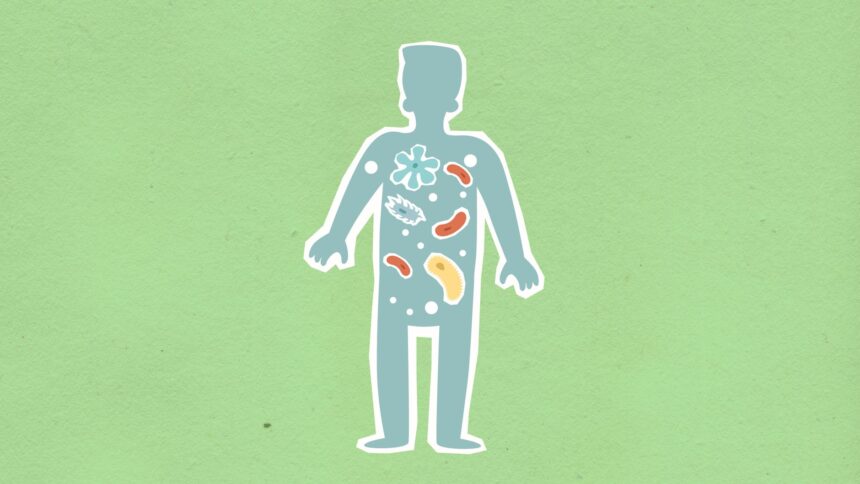
Emerging evidence suggests that gut bacteria play a direct role in regulating the body’s internal clock, influencing sleep quality, stress responses, and metabolic function through multiple communication pathways between the intestines and brain. Research on the gut–brain axis reveals that microbial metabolites and signalling molecules coordinate circadian rhythms across the body, with disruptions in this system linked to sleep disorders, metabolic dysfunction, and inflammation.
Key takeaways
- Gut microbes synchronise with the body’s master clock in the brain and respond to feeding times and light exposure
- Bacterial metabolites regulate stress hormones, immune responses, and glucose metabolism through four distinct biological pathways
- Circadian misalignment between the gut microbiome and external schedules may contribute to sleep disruption, weight gain, and chronic inflammation
- Dietary timing and consistent sleep schedules appear to support healthy microbial diversity and clock synchronisation
Four biological pathways linking gut microbes to circadian rhythm control
Communication routes between the microbiome and the brain’s central clock
Source: Integrated gut–brain research | Georgian Medical Journal News

The master clock and its microbial followers
The brain’s suprachiasmatic nucleus (SCN) acts as the body’s master clock, synchronising circadian rhythms with light exposure through the retinohypothalamic tract, according to contemporary neuroscience research. However, peripheral clocks throughout the body—including those within the gut—do not simply receive signals from the brain; they also respond independently to feeding times and chemical signals produced by microbial communities.
This dual-control system means that the gut microbiome can influence circadian timing both directly, through metabolite production, and indirectly, by modulating the signals sent from the brain. When light exposure becomes irregular or eating patterns shift dramatically, the gut’s circadian rhythm can become desynchronised from the master clock, leading to measurable changes in microbial composition and metabolic regulation.
Research featured in contemporary microbiome studies demonstrates that temporal alignment between eating schedules and light–dark cycles is critical for maintaining stable microbial communities and preventing the dysbiosis associated with shift work and jet lag.
Stress hormones: the endocrine bridge
The hypothalamic–pituitary–adrenal (HPA) axis, which controls stress hormone release, operates on a circadian schedule and is significantly influenced by gut microbial activity. Bacterial metabolites and immune signalling molecules alter the activation of the HPA axis, thereby affecting cortisol release patterns throughout the day.
Specific bacterial taxa, including members of the Actinobacteria and Streptococcus genera, have been shown to modulate HPA activity and contribute to changes in both inflammation and stress hormone output. This finding suggests that microbial diversity loss—a common consequence of antibiotic exposure, Western dietary patterns, or circadian misalignment—may amplify stress reactivity and dysregulate the normal cortisol rhythm.
According to research on the gut–brain–HPA axis interaction, maintaining a diverse microbiota through stable sleep and feeding schedules may help preserve normal stress hormone regulation and resilience to psychological stressors.
Immune signals crossing the blood–brain barrier
Microbial components within the intestinal tract interact with immune cells embedded in the intestinal mucosa, triggering the production of signalling molecules (cytokines) that reach the brain through both blood circulation and vagal nerve signalling. Lipopolysaccharides (LPS)—outer membrane components of gram-negative bacteria—and other pattern-associated molecules activate immune cells to release inflammatory cytokines such as interleukin-1β (IL-1β) and tumour necrosis factor-alpha (TNF-α).
When the microbiota becomes dysbiotic, LPS levels and pro-inflammatory signalling increase, a phenomenon linked to neuroinflammation and impaired sleep architecture. Evidence indicates that dysbiosis-driven inflammation disrupts normal sleep consolidation and is associated with fragmented sleep patterns and reduced sleep efficiency.
Research on circadian immunity and microbiota composition suggests that dietary interventions promoting microbial diversity may reduce systemic LPS exposure and dampen excessive immune activation during sleep.
Metabolic regulation through microbial metabolites
Gut bacteria synthesise short-chain fatty acids (SCFAs)—primarily butyrate, propionate, and acetate—and other metabolites that regulate glucose and lipid metabolism. The production of these compounds follows circadian patterns that align with feeding times and the body’s metabolic state. When circadian alignment is disrupted, SCFA production becomes dysrhythmic, contributing to glucose intolerance and lipid dysmetabolism.
Species such as Faecalibacterium prausnitzii and other SCFA-producing bacteria are particularly sensitive to circadian disruption and dietary inconsistency. Loss of these keystone species is associated with reduced butyrate production, compromised intestinal barrier function, and increased metabolic endotoxaemia—a state of elevated circulating LPS that promotes chronic low-grade inflammation.
Clinical implications of this pathway are significant: supporting SCFA-producing bacteria through consistent meal timing and adequate dietary fibre intake may improve glucose regulation, reduce weight gain risk, and lower systemic inflammation. See clinical updates on metabolic health for practical dietary guidance.
Circadian misalignment—whether from shift work, irregular eating, or sleep disruption—destabilises the gut microbiota, reduces SCFA production, elevates LPS levels, and amplifies HPA axis activation, collectively contributing to metabolic dysfunction, sleep disorders, and chronic inflammation.
— Integrated findings from gut–brain–circadian research
What this means
Frequently asked questions
Can shift workers improve their microbiota health if their schedule is fixed?
Yes. While circadian misalignment from shift work is challenging to reverse, consistency is key: maintaining the same sleep and meal times relative to the work schedule, maximising light exposure during working hours, and ensuring adequate dietary fibre and SCFA-producing foods may help stabilise microbial composition and reduce metabolic dysfunction. Timing of meals and light exposure should be aligned with the shift schedule rather than external time.
What is the fastest way to restore a disrupted microbiota rhythm after jet lag or schedule change?
Restoration typically requires 3–7 days of consistent circadian re-alignment. Strategies include adjusting light exposure to the new time zone (morning light for eastward travel, evening light for westward), maintaining regular meal times in the new time zone despite initial circadian misalignment, and temporarily increasing dietary fibre intake to support microbial recovery. Probiotic supplements show mixed evidence and should not replace behavioural interventions.
Are there specific foods that support circadian-aligned microbial diversity?
Yes. High-fibre foods (whole grains, legumes, vegetables, fruits) provide substrates for SCFA-producing bacteria. Fermented foods (yoghurt, kefir, sauerkraut, kimchi) introduce live bacteria and their metabolites. Polyphenol-rich foods (berries, tea, dark chocolate, nuts) act as prebiotics, selectively feeding beneficial bacterial species. Consistency of consumption—aligned with regular meal times—appears more important than the specific foods chosen, as the microbiota is sensitive to temporal patterns of nutrient availability.
The emerging understanding of the gut–microbiota–circadian axis reshapes how we think about sleep and metabolic health: not as problems residing solely within the brain or individual cells, but as systems dependent on the temporal coordination of billions of microbial symbionts. As research continues to delineate the specific bacterial species, metabolites, and signalling pathways involved, clinical interventions targeting circadian alignment and microbial diversity are likely to become standard elements of sleep and metabolic medicine. For now, the evidence suggests that the simplest interventions—consistent sleep, regular meals, morning light, and adequate dietary fibre—represent low-cost, evidence-informed strategies for supporting the microbial timekeepers that regulate our rest and metabolism.
Source: Integrated research on the gut–brain–circadian axis | Georgian Medical Journal News
Was this article helpful?
Disclaimer. This article is health journalism intended for general information and education. It is not medical advice and is not a substitute for professional diagnosis or treatment. Always consult a qualified healthcare provider about your individual circumstances. Full disclaimer →
Related Coverage




Editorial standards. This article was produced under the GMJ News editorial process, with oversight by the GMJ Editorial Board. Our editorial process. Spotted an error? Contact the editorial team.