By using this site, you agree to the Privacy Policy and Terms of Use.
Accept
GMJ NewsGMJ NewsGMJ News
  • Latest News
    • GMJ Briefs
  • Podcast & Media
    • Podcast Episodes
    • GMJ Audio
    • GMJ Videos
  • Research Digest
    • New Studies
    • Georgian Research
    • Data & Numbers
  • Policy & Systems
    • Health Policy
    • Quality & Safety
    • Migration & Health
    • Global Health
  • Practice
    • Clinical Updates
    • Case Discussions
    • Pharmacy & Prescribing
    • Ingredients A-Z
  • Perspectives
    • Editorial
    • Explainers
    • Voices
    • Letters
  • GMJ Articles
    • Vol. 1 Issue 2 (2026)
    • Vol. 1 Issue 1 (2026)
    • Pre-Launch Articles (2025)
  • Read the Journal →
  • About GMJ News
Notification Show More
Font ResizerAa
GMJ NewsGMJ News
Font ResizerAa
  • Latest News
    • GMJ Briefs
  • Podcast & Media
    • Podcast Episodes
    • GMJ Audio
    • GMJ Videos
  • Research Digest
    • New Studies
    • Georgian Research
    • Data & Numbers
  • Policy & Systems
    • Health Policy
    • Quality & Safety
    • Migration & Health
    • Global Health
  • Practice
    • Clinical Updates
    • Case Discussions
    • Pharmacy & Prescribing
    • Ingredients A-Z
  • Perspectives
    • Editorial
    • Explainers
    • Voices
    • Letters
  • GMJ Articles
    • Vol. 1 Issue 2 (2026)
    • Vol. 1 Issue 1 (2026)
    • Pre-Launch Articles (2025)
  • Read the Journal →
  • About GMJ News
Follow US
GMJ News > Research Digest > New Studies > Iron Transport Requires Copper at Three Critical Checkpoints, Study Shows
New StudiesResearch Digest

Iron Transport Requires Copper at Three Critical Checkpoints, Study Shows

GMJ
Last updated: 27/05/2026 17:36
By
GMJ Research Desk
Share
6 Min Read
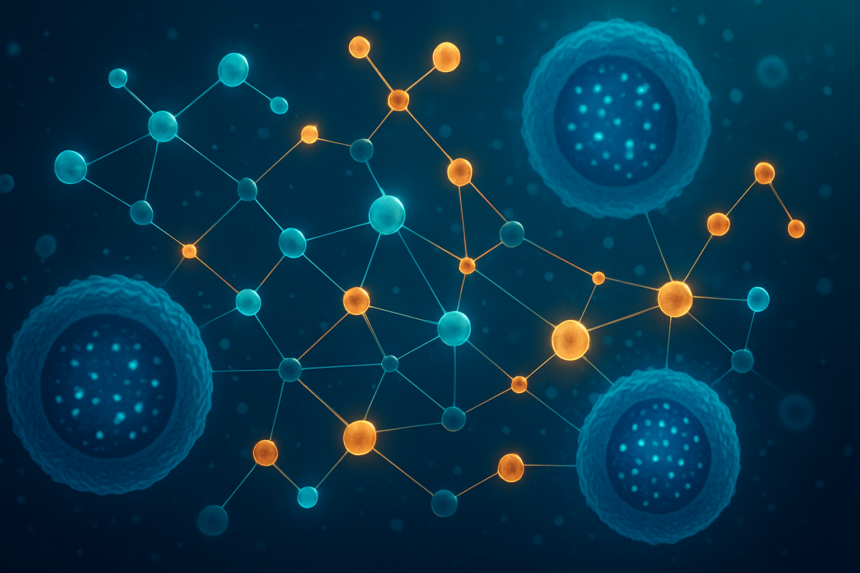
Medical illustration showing iron transport pathways and copper enzyme checkpoints in human metabolism
New research reveals copper deficiency may masquerade as iron deficiency anemia, with copper-dependent enzymes controlling iron transport at three critical checkpoints. Clinical cases show patients misdiagnosed with bone marrow cancer when copper deficiency was the actual cause.
SHARE
🎧 Listen to this article5:47 min · 741 words · GMJ Audio
4 min read|741 words

Iron deficiency anemia affects millions worldwide, but analysis of iron metabolism pathways shows that copper-dependent enzymes control iron transport at three critical checkpoints in the human body.

Contents
      • Iron Transport Checkpoints Requiring Copper
  • Copper Controls Iron at Every Stage
  • Iron Accumulates in Wrong Places When Copper is Low
  • Clinical Cases Reveal Misdiagnosis Patterns
    • Key takeaways
  • Frequently asked questions
    • How can doctors tell the difference between iron deficiency and copper deficiency?
    • Why does iron supplementation make copper deficiency worse?
    • Who is at highest risk for copper-induced iron problems?
3 gates
All three iron transport checkpoints require copper enzymes to function

Iron Transport Checkpoints Requiring Copper

Three critical gates where copper enzymes control iron movement

Gut absorption (hephaestin)
Required
Blood oxidation (ceruloplasmin)
Required
Cell recycling (GPI-CP)
Required

Source: Metabolic pathway analysis | Georgian Medical Journal News

Copper Controls Iron at Every Stage

Iron cannot move through the body without copper-dependent enzymes at every major checkpoint. When iron is absorbed in the gut, it enters intestinal cells but cannot exit without hephaestin, a copper-dependent ferroxidase enzyme embedded in the cell membrane.

Submit Your Paper
GMJ_Submit_Banner

Once iron reaches the bloodstream, it must be oxidized from Fe²⁺ to Fe³⁺ by ceruloplasmin, another copper-containing enzyme, before it can bind to transferrin proteins for transport to bone marrow. When old red blood cells break down, macrophages require a membrane-bound form of ceruloplasmin called GPI-CP to release recycled iron back into circulation.

🎙️ Related Podcast Episodes
🎧 #53 | GMJ Podcast | Palliative Care in Georgia — Health System Gaps, Access Barriers, and Policy Implications · 16m
🎧 #54 | GMJ Podcast | The Blueprint of a Medical Journal: Designing an Open-Access Scientific Platform · 19m
🎧 #46 | GMJ Podcast | Angioplasty of Saphenous Vein Grafts — Risks, Outcomes, and Clinical Strategies · 21m
🎧 #36 | GMJ Podcast | Artificial Intelligence and Doctor–Patient Communication — Evidence from Georgian Clinics · 18m
🎧 #29 | GMJ Podcast | GMJ Research: From Manuscript to Publication – How Medical Evidence Becomes Scientific Knowledge · 15m

All three transport gates depend entirely on adequate copper availability. For more coverage of mineral interactions, see our New Studies section.

Iron Accumulates in Wrong Places When Copper is Low

When copper levels drop, iron doesn’t disappear from the body—it becomes trapped in the wrong tissues. Copper-deficient mice develop iron overload in liver and intestinal cells while simultaneously becoming anemic, creating a paradoxical situation where the body contains adequate iron but cannot access it effectively.

On standard complete blood count tests, copper-induced iron trapping appears identical to classic iron deficiency, presenting as microcytic and hypochromic anemia. This similarity leads clinicians to prescribe additional iron supplements, which compounds the problem rather than solving it.

When copper serves as the metabolic bottleneck, supplemental iron cannot reach bone marrow for red blood cell production. Instead, it accumulates in storage tissues as Fe²⁺, the chemically reactive form that generates harmful free radicals through Fenton chemistry reactions.

Clinical Cases Reveal Misdiagnosis Patterns

Fong et al. reported five patients initially referred for suspected myelodysplastic syndrome—a serious bone marrow cancer—who were subsequently diagnosed with copper deficiency instead.

All five patients presented with anemia and neutropenia, conditions that completely resolved following copper supplementation rather than cancer treatment. The cases highlight how copper deficiency can mimic serious hematological disorders, with diagnosis often taking months to years because copper assessment isn’t included in standard laboratory workups.

The most common underlying cause identified was bariatric surgery, which affects copper absorption in approximately half of patients. Additional coverage of surgical complications appears in our Clinical Updates section.

Five patients referred for suspected bone marrow cancer were found to have copper deficiency instead, with complete resolution following copper supplementation

— Fong et al.

Key takeaways

  • Iron transport requires copper enzymes at three critical checkpoints: gut absorption, blood oxidation, and cellular recycling
  • Copper deficiency causes iron to accumulate in liver and intestinal tissues while creating anemia symptoms
  • Standard blood tests cannot distinguish copper-induced iron trapping from true iron deficiency
  • Bariatric surgery patients face particularly high risk for copper deficiency masquerading as iron problems
  • Misdiagnosis can lead to months of inappropriate iron supplementation and delayed proper treatment

Frequently asked questions

How can doctors tell the difference between iron deficiency and copper deficiency?

Standard blood tests show identical patterns for both conditions—microcytic, hypochromic anemia. Definitive diagnosis requires measuring serum copper and ceruloplasmin levels, which aren’t typically included in routine anemia workups but should be considered when iron supplementation fails to improve symptoms.

Why does iron supplementation make copper deficiency worse?

When copper enzymes aren’t functioning properly, additional iron cannot reach the bone marrow where it’s needed for red blood cell production. Instead, it accumulates in tissues as the reactive Fe²⁺ form, generating free radicals that cause oxidative damage while the anemia persists.

Who is at highest risk for copper-induced iron problems?

Bariatric surgery patients face the greatest risk, with studies showing copper deficiency in roughly half of cases. Other high-risk groups include people with malabsorption disorders, those taking high-dose zinc supplements (which interferes with copper absorption), and patients on long-term enteral nutrition without adequate copper content.

As healthcare systems increasingly recognize the interconnected nature of mineral metabolism, diagnostic protocols may need updating to include copper assessment in cases of treatment-resistant anemia. Early identification of copper deficiency could prevent months of ineffective iron supplementation and reduce the risk of misdiagnosis as more serious conditions like myelodysplastic syndrome. The findings underscore the importance of considering nutrient interactions rather than treating minerals as isolated deficiencies.

Source: Copper and iron are usually talked about as separate nutrients

Was this article helpful?

Disclaimer. This article is health journalism intended for general information and education. It is not medical advice and is not a substitute for professional diagnosis or treatment. Always consult a qualified healthcare provider about your individual circumstances. Full disclaimer →

Related Coverage

Kidney transplant without radiation: new approach uses donor bone marrow and recipient immune cellsJul 12, 2026
Early-life plastic chemical exposure linked to persistent anxiety in male animalsJul 12, 2026
GLP-1 Drugs Linked to Lower Violent Behaviour in Rutgers StudyJul 11, 2026
Parental Phone Distraction Linked to Insecure Attachment in Teenagers, New Research ShowsJul 11, 2026
Related reference
  • Iron supplements · Drug
  • Zinc supplements · Drug
  • Copper · Ingredient
  • Iron · Ingredient
  • Zinc · Ingredient
PG
Written by
Prof. Giorgi Pkhakadze, MD, MPH, PhD
Editor-in-Chief, GMJ News
Full profile →  ·  ORCID 0000-0001-7609-4515
Medical disclaimer. This article is health journalism intended for general information. It is not medical advice and is not a substitute for consultation with a qualified healthcare professional. Always seek your physician's advice regarding any medical condition.
Medically reviewed by Prof. Giorgi Pkhakadze, MD, MPH, PhD. Spotted an error? Contact the editorial team.
Get the GMJ News digest
Evidence-based health journalism in your inbox. No spam; unsubscribe anytime.
TAGGED:anemia diagnosisbariatric surgerycopper metabolismiron deficiencymineral interactions
Share This Article
Facebook LinkedIn Bluesky Copy Link Print
GMJ
ByGMJ Research Desk
Follow:
GMJ Research Desk is part of GMJ News, the newsroom of the Georgian Medical Journal (gmj.ge), published by the Public Health Institute of Georgia. Every article is editorially reviewed before publication.
Leave a Comment Leave a Comment

Leave a Reply Cancel reply

Your email address will not be published. Required fields are marked *

Submit Your Paper →

Georgia's peer-reviewed open-access medical journal. No APC until January 2027.
Submit Manuscript →
Kidney transplant without radiation: new approach uses donor bone marrow and recipient immune cells

A new protocol combining donor bone marrow with recipient regulatory T cells…

Early-life plastic chemical exposure linked to persistent anxiety in male animals

Perinatal exposure to diethylhexyl phthalate (DEHP), a plasticizer found in medical devices…

GLP-1 Drugs Linked to Lower Violent Behaviour in Rutgers Study

Rutgers University researchers found an association between GLP-1 receptor agonists (Ozempic, Wegovy)…

Submit Your Paper to GMJ

No APC until January 2027.
Submit Manuscript →

You Might Also Like

Medical illustration showing dual PET imaging technology monitoring both cancer tumors and heart inflammation
New StudiesResearch Digest

Dual PET Imaging Simultaneously Tracks Cancer Progression and Heart Inflammation During Treatment

By
GMJ Research Desk
05/06/2026
Chart showing declining neural tube defect rates following folic acid fortification programs globally
New Studies

Folic Acid Fortification Reduces Neural Tube Defects by 36% Despite MTHFR Gene Concerns

By
GMJ Research Desk
22/05/2026
Community health worker conducting voluntary blood donation in rural Sierra LeoneIllustrative image · Photo by Tahir Xəlfə on Pexels (Pexels License)
Global HealthNew StudiesPolicy & SystemsResearch Digest

Community-led blood donation model cuts costs by 40% in rural Sierra Leone

By
GMJ Policy Desk
10/07/2026
Medical illustration showing heart ventricles during cardiac arrest and defibrillation
New StudiesResearch Digest

Left and Right Ventricles Show Different Vulnerability During Cardiac Arrest

By
GMJ Research Desk
30/05/2026
Facebook Twitter Youtube Instagram
Company
  • Privacy Policy
  • Contact US
  • GMJ Journal
  • Submit Manuscript
  • Editorial Team
  • Register at GMJ
  • Terms of Use

Subscribe to GMJ News — Click here

Join Community
© 2026 Georgian Medical Journal (GMJ). Published by the Public Health Institute of Georgia (PHIG). All rights reserved.
Welcome Back!

Sign in to your account

Username or Email Address
Password

Lost your password?

Not a member? Sign Up