By using this site, you agree to the Privacy Policy and Terms of Use.
Accept
GMJ NewsGMJ NewsGMJ News
  • Latest News
    • GMJ Briefs
  • Podcast & Media
    • Podcast Episodes
    • GMJ Audio
    • GMJ Videos
  • Research Digest
    • New Studies
    • Georgian Research
    • Data & Numbers
  • Policy & Systems
    • Health Policy
    • Quality & Safety
    • Migration & Health
    • Global Health
  • Practice
    • Clinical Updates
    • Case Discussions
    • Pharmacy & Prescribing
    • Ingredients A-Z
  • Perspectives
    • Editorial
    • Explainers
    • Voices
    • Letters
  • GMJ Articles
    • Vol. 1 Issue 2 (2026)
    • Vol. 1 Issue 1 (2026)
    • Pre-Launch Articles (2025)
  • Read the Journal →
  • About GMJ News
Notification Show More
Font ResizerAa
GMJ NewsGMJ News
Font ResizerAa
  • Latest News
    • GMJ Briefs
  • Podcast & Media
    • Podcast Episodes
    • GMJ Audio
    • GMJ Videos
  • Research Digest
    • New Studies
    • Georgian Research
    • Data & Numbers
  • Policy & Systems
    • Health Policy
    • Quality & Safety
    • Migration & Health
    • Global Health
  • Practice
    • Clinical Updates
    • Case Discussions
    • Pharmacy & Prescribing
    • Ingredients A-Z
  • Perspectives
    • Editorial
    • Explainers
    • Voices
    • Letters
  • GMJ Articles
    • Vol. 1 Issue 2 (2026)
    • Vol. 1 Issue 1 (2026)
    • Pre-Launch Articles (2025)
  • Read the Journal →
  • About GMJ News
Follow US
GMJ News > Policy & Systems > Global Health > Lyme disease cases surge 22% in England as tick populations expand
Global HealthPolicy & Systems

Lyme disease cases surge 22% in England as tick populations expand

GMJ
Last updated: 20/06/2026 11:06
By
GMJ Policy Desk
Share
6 Min Read
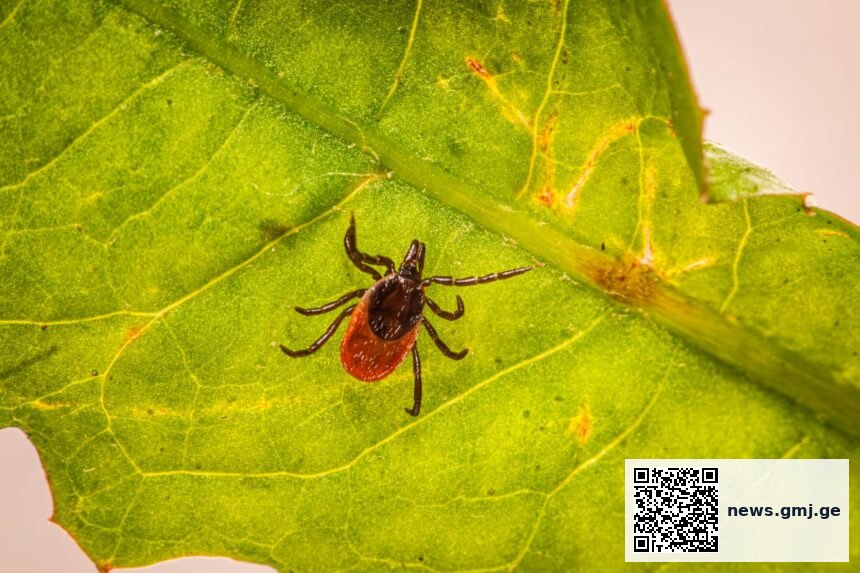
Chart showing rising Lyme disease case numbers in England with tick illustrationIllustrative image · Photo by Erik Karits on Pexels (Pexels License)
Laboratory-confirmed Lyme disease cases in England jumped 22% to 1,168 in 2025, driven by expanding tick populations and environmental changes. The UK Health Security Agency reports the disease remains the country's most common locally acquired vector-borne infection. — Photo by Erik Karits on Pexels (Pexels License)
SHARE
4 min read|746 words

Laboratory-confirmed cases of Lyme disease in England jumped by more than one-fifth in 2025, marking a concerning trend in the UK’s most common locally acquired vector-borne infection. The UK Health Security Agency reported 1,168 confirmed acute cases in 2025, compared to 959 cases in 2024.

Contents
      • Lyme Disease Cases Show Volatile Pattern
  • Disease transmission driven by expanding tick habitats
  • 2025 figures mirror pre-pandemic levels
  • Clinical recognition remains challenging
  • Prevention strategies gain importance
    • Key takeaways
  • Frequently asked questions
    • What causes the year-to-year variation in Lyme disease cases?
    • When are people most at risk for tick bites?
    • How effective is early treatment for Lyme disease?
1,168
laboratory-confirmed Lyme disease cases in England during 2025, up 22% from previous year

Lyme Disease Cases Show Volatile Pattern

Annual laboratory-confirmed acute cases in England, 2021-2025

1,168
cases in
2025
959
cases in
2024
22%
increase
year-over-year

8001000120020212022202320242025

Source: UK Health Security Agency, 2026 | Georgian Medical Journal News

Disease transmission driven by expanding tick habitats

Lyme disease, caused by the bacterium Borrelia burgdorferi, spreads through bites from infected ticks. The UKHSA noted in its annual surveillance report that tick populations have shown an increasingly widespread distribution across the UK, though numbers fluctuate annually due to weather patterns and environmental factors.

Submit Your Paper
GMJ_Submit_Banner

The agency attributed the volatile case numbers to multiple environmental variables, including climate trends, habitat modifications, and changes in host animal populations. These factors collectively influence both tick survival rates and their potential for carrying the disease-causing bacteria.

🎙️ Related Podcast Episodes
🎧 #15 | WHO: One in Two People Facing Cataract Blindness Still Need Access to Surgery · 21m
🎧 #21 | WHO Issues New Guidance on Novel Snakebite Treatments · 14m
🎧 #16 | WHO Prequalifies New Oral Polio Vaccine to Strengthen Global Eradication Efforts · 20m
🎧 #9 Leprosy in 2026: Bridging Medical Cure and Social Inclusion – WHO World Leprosy Day Message · 18m
🎧 #40 | GMJ Podcast | [Insert Article Title] — Evidence, Clinical Implications, and Public Health Perspective · 16m

Despite seasonal variations, with peak activity typically occurring during warmer months, the UKHSA emphasized that tick bites can occur throughout the year. This represents a shift from historical patterns where transmission was more predictably seasonal, according to global health surveillance data.

2025 figures mirror pre-pandemic levels

The 2025 case count of 1,168 closely resembles the 1,151 confirmed cases recorded in 2023, suggesting the disease may be establishing a new baseline after years of fluctuation. This pattern indicates that while 2024 saw a temporary decline to 959 cases, the underlying trend may be stabilizing at higher levels than previously observed.

The Centers for Disease Control and Prevention has documented similar trends in other temperate regions globally, where expanding tick habitats correlate with increased human exposure risks. Vector-borne disease specialists note that urbanization and changing land use patterns contribute to greater overlap between tick habitats and human recreational areas.

Clinical recognition remains challenging

Early-stage Lyme disease often presents with nonspecific symptoms that can delay diagnosis and treatment. The characteristic erythema migrans rash, while pathognomonic when present, appears in only 70-80% of cases according to clinical studies.

Healthcare providers increasingly emphasize the importance of taking detailed exposure histories, particularly for patients presenting with unexplained fever, fatigue, or joint pain during tick season. Early antibiotic treatment with doxycycline remains highly effective when initiated within the first few weeks of infection, as documented in recent clinical guidance updates.

Prevention strategies gain importance

Public health authorities recommend multiple prevention approaches as tick populations continue expanding. Personal protective measures include using EPA-approved insect repellents, wearing long sleeves and pants in wooded areas, and conducting thorough tick checks after outdoor activities.

The NHS advises prompt tick removal using fine-tipped tweezers, grasping the tick as close to the skin surface as possible and pulling upward with steady pressure. Landscape management strategies, such as creating barriers between wooded areas and recreational spaces, also play important roles in reducing exposure risks.

Laboratory confirmed acute cases of Lyme disease rose from 959 in 2024 to 1,168 in 2025, representing a 22% increase and bringing case numbers back to levels similar to 2023.

— UK Health Security Agency Annual Surveillance Report (2026)

Key takeaways

  • Lyme disease cases in England increased 22% in 2025, with 1,168 laboratory-confirmed cases
  • The disease remains England’s most common locally acquired vector-borne infection
  • Expanding tick populations across the UK contribute to increased human exposure risk
  • Early recognition and antibiotic treatment within weeks of infection provides optimal outcomes

Frequently asked questions

What causes the year-to-year variation in Lyme disease cases?

Case numbers fluctuate due to environmental factors including weather conditions, climate trends, habitat changes, and shifting populations of animals that serve as tick hosts. The UKHSA notes these variables collectively influence both tick survival and their capacity to carry disease-causing bacteria.

When are people most at risk for tick bites?

While tick bites can occur year-round, they follow seasonal patterns with higher activity during warmer months. Peak transmission typically occurs from late spring through early fall when both tick activity and human outdoor recreation increase.

How effective is early treatment for Lyme disease?

Early antibiotic treatment with doxycycline is highly effective when started within the first few weeks of infection. Prompt treatment prevents progression to more severe manifestations affecting the nervous system, joints, and heart.

The rising incidence of Lyme disease in England reflects broader ecological changes that are expanding vector habitats and increasing human-tick encounters. As surveillance data continues to document these trends, public health strategies must adapt to address both immediate prevention needs and longer-term environmental factors driving disease emergence.

Source: Lyme disease cases in England rise 20% in a year

Was this article helpful?

Disclaimer. This article is health journalism intended for general information and education. It is not medical advice and is not a substitute for professional diagnosis or treatment. Always consult a qualified healthcare provider about your individual circumstances. Full disclaimer →

Related Coverage

Edinburgh Physicians Challenge Wood Burning Industry's Health Claims After Lobbying InvestigationJun 22, 2026
South Sudan Food Crisis: 7.8 Million Face Acute Hunger as Child Malnutrition Reaches Critical LevelsJun 22, 2026
UNICEF calls for child-focused migration policies as 50 million children migrate globallyJun 22, 2026
UNICEF Demands Protection for Mali's Children After Deadly School and Hospital AttacksJun 21, 2026
Related reference
  • Doxycycline · Drug
  • Iron · Ingredient
PG
Written by
Prof. Giorgi Pkhakadze, MD, MPH, PhD
Editor-in-Chief, GMJ News
Full profile →  ·  ORCID 0000-0001-7609-4515
Medical disclaimer. This article is health journalism intended for general information. It is not medical advice and is not a substitute for consultation with a qualified healthcare professional. Always seek your physician's advice regarding any medical condition.
Medically reviewed by Prof. Giorgi Pkhakadze, MD, MPH, PhD. Spotted an error? Contact the editorial team.
Get the GMJ News digest
Evidence-based health journalism in your inbox. No spam; unsubscribe anytime.
TAGGED:England healthLyme diseasetick-borne illnessUKHSAvector-borne disease
Share This Article
Facebook LinkedIn Bluesky Copy Link Print
GMJ
ByGMJ Policy Desk
Follow:
GMJ Policy Desk is part of GMJ News, the newsroom of the Georgian Medical Journal (gmj.ge), published by the Public Health Institute of Georgia. Every article is editorially reviewed before publication.
Leave a Comment Leave a Comment

Leave a Reply Cancel reply

Your email address will not be published. Required fields are marked *

Submit Your Paper →

Georgia's peer-reviewed open-access medical journal. No APC until January 2027.
Submit Manuscript →
Biobanks Deploy Trusted Research Environments to Secure Patient Data Access

Biobanks are implementing trusted research environments to secure patient data access, but…

Edinburgh Physicians Challenge Wood Burning Industry’s Health Claims After Lobbying Investigation

Royal College of Physicians of Edinburgh condemns wood burning industry lobbying tactics…

Nasal spray reverses brain aging in preclinical trial, researchers report

Texas A&M researchers developed a nasal spray that reverses brain aging markers…

Submit Your Paper to GMJ

No APC until January 2027.
Submit Manuscript →

You Might Also Like

Air France aircraft on tarmac representing flight diversion due to health protocols
Global HealthPolicy & Systems

Air France Flight Diverts to Canada After Passenger From Ebola-Hit Congo Boards ‘In Error’

By
GMJ Policy Desk
25/05/2026
Children walking to school in Mali amid security concerns and humanitarian crisisIllustrative image · Photo by Ana Kenk on Pexels (Pexels License)
Global HealthPolicy & Systems

UNICEF Demands Protection for Mali’s Children After Deadly School and Hospital Attacks

By
GMJ Policy Desk
21/06/2026
UK medicines regulatory authority building with EU and UK flags representing post-Brexit pharmaceutical trade
Health PolicyPolicy & Systems

UK approves 342 parallel drug import licences in 2026 amid post-Brexit medicine access challenges

By
GMJ Policy Desk
08/06/2026
PAHO logo with 2026 FIFA World Cup emblem representing public health preparedness guidelines
Global HealthPolicy & Systems

PAHO Urges Enhanced Measles Surveillance Ahead of 2026 FIFA World Cup

By
GMJ Policy Desk
05/06/2026
Facebook Twitter Youtube Instagram
Company
  • Privacy Policy
  • Contact US
  • GMJ Journal
  • Submit Manuscript
  • Editorial Team
  • Register at GMJ
  • Terms of Use

Subscribe to GMJ News — Click here

Join Community
© 2026 Georgian Medical Journal (GMJ). Published by the Public Health Institute of Georgia (PHIG). All rights reserved.
Welcome Back!

Sign in to your account

Username or Email Address
Password

Lost your password?

Not a member? Sign Up