By using this site, you agree to the Privacy Policy and Terms of Use.
Accept
GMJ NewsGMJ NewsGMJ News
  • Latest News
    • GMJ Briefs
  • Podcast & Media
    • Podcast Episodes
    • GMJ Audio
    • GMJ Videos
  • Research Digest
    • New Studies
    • Georgian Research
    • Data & Numbers
  • Policy & Systems
    • Health Policy
    • Quality & Safety
    • Migration & Health
    • Global Health
  • Practice
    • Clinical Updates
    • Case Discussions
    • Pharmacy & Prescribing
    • Ingredients A-Z
  • Perspectives
    • Editorial
    • Explainers
    • Voices
    • Letters
  • GMJ Articles
    • Vol. 1 Issue 2 (2026)
    • Vol. 1 Issue 1 (2026)
    • Pre-Launch Articles (2025)
  • Read the Journal →
  • About GMJ News
Notification Show More
Font ResizerAa
GMJ NewsGMJ News
Font ResizerAa
  • Latest News
    • GMJ Briefs
  • Podcast & Media
    • Podcast Episodes
    • GMJ Audio
    • GMJ Videos
  • Research Digest
    • New Studies
    • Georgian Research
    • Data & Numbers
  • Policy & Systems
    • Health Policy
    • Quality & Safety
    • Migration & Health
    • Global Health
  • Practice
    • Clinical Updates
    • Case Discussions
    • Pharmacy & Prescribing
    • Ingredients A-Z
  • Perspectives
    • Editorial
    • Explainers
    • Voices
    • Letters
  • GMJ Articles
    • Vol. 1 Issue 2 (2026)
    • Vol. 1 Issue 1 (2026)
    • Pre-Launch Articles (2025)
  • Read the Journal →
  • About GMJ News
Follow US
GMJ News > Policy & Systems > Quality & Safety > Maternity Staff Used Offensive Terms for Patients, BBC Investigation Reveals
Policy & SystemsQuality & Safety

Maternity Staff Used Offensive Terms for Patients, BBC Investigation Reveals

GMJ
Last updated: 01/06/2026 18:31
By
GMJ Policy Desk
Share
5 Min Read
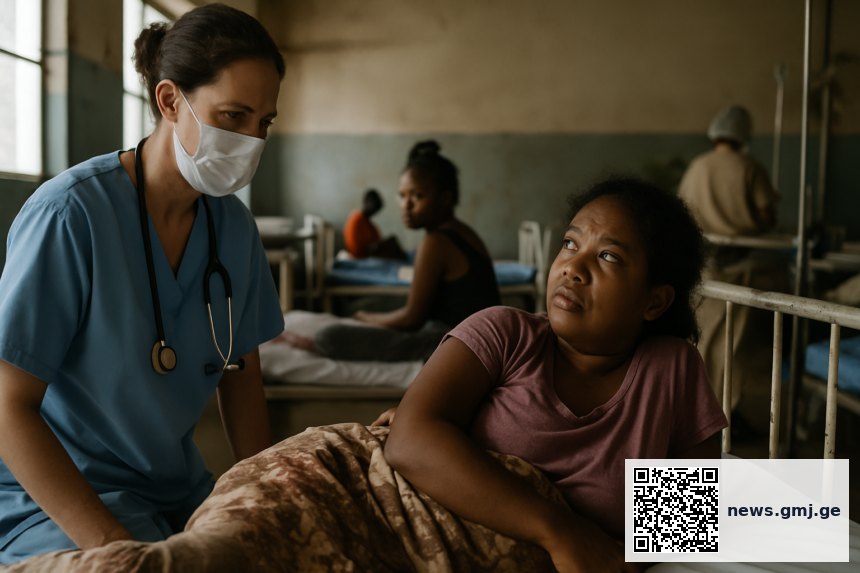
Healthcare workers in hospital corridor representing patient care standards
BBC Panorama investigation reveals maternity staff at Nottingham University Hospitals NHS Trust used derogatory language toward patients. Former midwives provided testimony about concerning workplace culture.
SHARE
🎧 Listen to this article4:11 min · 518 words · GMJ Audio
3 min read|518 words
✓ Reviewed by Prof. Giorgi Pkhakadze, MD, MPH, PhD · ORCID 0000-0001-7609-4515

🟠 Moderate Evidence

Contents
    • Key takeaways
  • Investigation Reveals Concerning Language
      • Key Elements of BBC Investigation
  • Trust Under Scrutiny
  • Implications for Patient Safety
    • What this means
  • Frequently asked questions
    • What should patients do if they experience disrespectful treatment?
    • What are the professional standards for healthcare communication?
    • How are maternity services regulated in the UK?

A BBC Panorama investigation has uncovered evidence of maternity staff at Nottingham University Hospitals NHS Trust using derogatory language to refer to patients, with documents showing instructions to staff to “don’t be too kind” alongside other offensive terminology documented in internal communications.

Key takeaways

  • BBC Panorama obtained internal documents showing offensive language used by maternity staff
  • Former midwives from Nottingham University Hospitals NHS Trust provided testimony about workplace culture
  • Investigation builds on existing concerns about maternity care quality at the trust
Multiple staff
Former midwives spoke to BBC Panorama about concerning practices

Investigation Reveals Concerning Language

The BBC Panorama investigation examined internal documents from Nottingham University Hospitals NHS Trust that contained derogatory references to patients receiving maternity care. The phrase “don’t be too kind” was among the concerning language documented in the investigation.

Former midwives who worked at the trust provided testimony to BBC Panorama about the workplace culture and treatment of patients. The investigation forms part of broader scrutiny of maternity care quality and patient safety standards.

Submit Your Paper
GMJ_Submit_Banner

Key Elements of BBC Investigation

Evidence sources examined by Panorama team

Documents
Internal communications
Testimony
Former midwives
NHS Trust
Nottingham University Hospitals

Source: BBC Panorama, 2024 | Georgian Medical Journal News

Trust Under Scrutiny

Nottingham University Hospitals NHS Trust has faced ongoing scrutiny regarding its maternity services. The latest revelations add to existing concerns about the culture within maternity departments and the treatment of patients during vulnerable periods.

Internal documents revealed staff were instructed to “don’t be too kind” with additional offensive terminology used to refer to patients

— BBC Panorama Investigation (BBC, 2024)

Implications for Patient Safety

The use of derogatory language toward patients raises significant concerns about the quality of care and patient dignity. Professional healthcare standards require that all patients receive compassionate, respectful care regardless of circumstances.

What this means

For patients: Patients have the right to expect respectful, dignified care during maternity services and should report concerning behavior
For clinicians: Professional standards require respectful patient communication at all times, with clear reporting mechanisms for inappropriate behavior
For policymakers: Robust oversight and accountability mechanisms are essential to ensure patient dignity and safety in NHS maternity services

Frequently asked questions

What should patients do if they experience disrespectful treatment?

Patients should report concerns immediately to the hospital’s patient advocacy service or complaints department. External reporting can be made to the Care Quality Commission or Parliamentary and Health Service Ombudsman.

What are the professional standards for healthcare communication?

The Nursing and Midwifery Council requires all registrants to treat people with kindness, respect and compassion. This includes using appropriate language and maintaining patient dignity at all times.

How are maternity services regulated in the UK?

The Care Quality Commission oversees NHS maternity services, conducting regular inspections and monitoring safety standards. Professional bodies like the Royal College of Midwives also provide guidance and oversight.

The BBC Panorama investigation highlights critical concerns about patient dignity and professional standards in maternity care. As healthcare systems face increasing scrutiny, maintaining respectful patient relationships remains fundamental to safe, effective clinical practice and public trust in medical services.

Source: ‘Don’t be too kind’: Maternity staff used offensive terms to refer to patients

Was this article helpful?

Disclaimer. This article is health journalism intended for general information and education. It is not medical advice and is not a substitute for professional diagnosis or treatment. Always consult a qualified healthcare provider about your individual circumstances. Full disclaimer →

Related Coverage

UK Public Health Laboratory in Birmingham Releases Updated User Handbook for NHS ServicesJul 15, 2026
UK Health Security Agency Launches Evidence-Based Training Programme for Healthcare StaffJul 15, 2026
How Political Pressure on Science Agencies Threatens Public Health Decision-MakingJul 15, 2026
UK Health and Safety Authorities Issue Joint Warning on Asbestos in Consumer ProductsJul 15, 2026
PG
Written by
Prof. Giorgi Pkhakadze, MD, MPH, PhD
Editor-in-Chief, GMJ News
Full profile →  ·  ORCID 0000-0001-7609-4515
Medical disclaimer. This article is health journalism intended for general information. It is not medical advice and is not a substitute for consultation with a qualified healthcare professional. Always seek your physician's advice regarding any medical condition.
Medically reviewed by Prof. Giorgi Pkhakadze, MD, MPH, PhD. Spotted an error? Contact the editorial team.

Get the GMJ News digest
Evidence-based health journalism in your inbox. No spam; unsubscribe anytime.
TAGGED:healthcare qualitymaternity careNHS trustpatient dignityPatient Safety
Share This Article
Facebook LinkedIn Bluesky Copy Link Print
GMJ
ByGMJ Policy Desk
Follow:
GMJ Policy Desk is part of GMJ News, the newsroom of the Georgian Medical Journal (gmj.ge), published by the Public Health Institute of Georgia. Every article is editorially reviewed before publication.
Leave a Comment Leave a Comment

Leave a Reply Cancel reply

Your email address will not be published. Required fields are marked *

Submit Your Paper →

Georgia's peer-reviewed open-access medical journal. No APC until January 2027.
Submit Manuscript →
How Brain Cell Conversations Shape Memory, Mood and Resilience

The brain's health depends on coordinated communication between astrocytes, microglia, neurons, and…

Astrocytes as Brain Regulators: How a 1989 Video Revealed Hidden Neural Intelligence

A landmark 1989 video by Yale neuroscientist Prof. Stephen J. Smith revealed…

Beyond the Powerhouse: How Mitochondria Control Energy, Stress, and Cell Survival

Mitochondria perform four critical functions: ATP generation, ROS balance, mitochondrial DNA maintenance,…

Submit Your Paper to GMJ

No APC until January 2027.
Submit Manuscript →

You Might Also Like

Infographic showing IOM's global governance structure and member country participationIllustrative image · Photo by Nothing Ahead on Pexels (Pexels License)
Global HealthPolicy & Systems

IOM Governance Structure Reinforces Global Migration Health Framework

By
GMJ Policy Desk
20/06/2026
Healthcare professional engaging in arts activity as part of social prescribing programIllustrative image · Photo by Centre for Ageing Better on Pexels (Pexels License)
Clinical UpdatesGlobal HealthNew StudiesPolicy & SystemsPracticeResearch Digest

Arts Engagement Shows Promise as ‘Social Prescribing’ for Health and Medical Empathy

By
GMJ Practice Desk
30/06/2026
World map showing projected expansion of chikungunya transmission zones due to climate changeIllustrative image · Photo by To Tao on Pexels (Pexels License)
Global HealthPolicy & Systems

Climate Change May Turn North America and Europe into Chikungunya Hotspots by 2070

By
GMJ Policy Desk
08/07/2026
Colorado health officials and lawmakers discussing childhood vaccination policy at state capitol
Health PolicyPolicy & Systems

Colorado Forms Vaccine Coalition as Federal Support Weakens

By
GMJ Policy Desk
27/05/2026
Facebook Twitter Youtube Instagram
Company
  • Privacy Policy
  • Contact US
  • GMJ Journal
  • Submit Manuscript
  • Editorial Team
  • Register at GMJ
  • Terms of Use

Subscribe to GMJ News — Click here

Join Community
© 2026 Georgian Medical Journal (GMJ). Published by the Public Health Institute of Georgia (PHIG). All rights reserved.
Welcome Back!

Sign in to your account

Username or Email Address
Password

Lost your password?

Not a member? Sign Up