Updated 13/09/2026
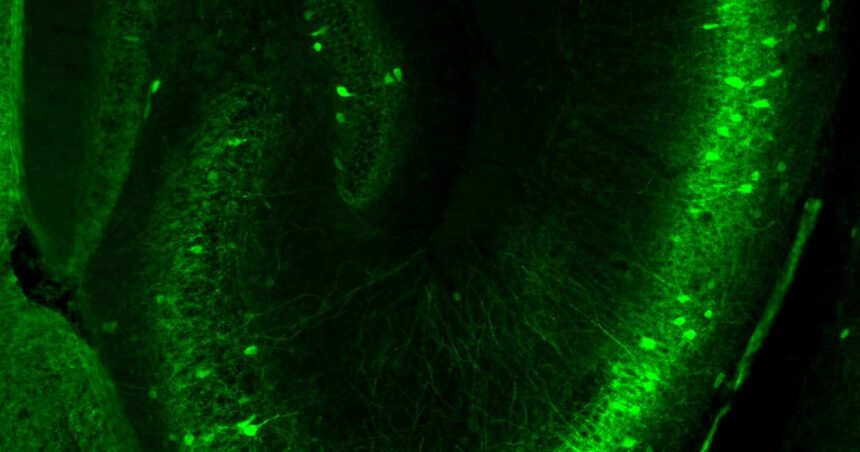
Photo: Inhibitory Interneurons, by National Institutes of Health (NIH) · Public domain / CC0 · Source
Plain-language summary of research published in the Georgian Medical Journal. Written for the general public by the GMJ News editorial team.
Microglia — the brain’s resident immune cells — sit at the centre of multiple sclerosis pathology, acting as both agents of tissue damage and, potentially, agents of repair. An analytical review in the Georgian Medical Journal synthesises two decades of evidence on what these cells actually do in MS, and whether targeting them directly could change how the disease is treated.

Two Faces of the Same Cell
Microglia in MS show substantial transcriptional and functional heterogeneity — they aren’t one uniform cell type doing one uniform job. Disease-associated states, including what researchers call “microglia inflamed in MS” (MIMS) and iron-laden rim microglia found at the edges of chronic active lesions, sustain a compartmentalised, ongoing neuroinflammation that contributes to slow lesion expansion and progressive disability over time.
The Repair Side of the Story
The same cell type plays an essential repair role: microglial phagocytosis of myelin debris — clearing away damaged material — through receptors including TREM2, MerTK, and CR3 is necessary for oligodendrocyte precursor cells to mature and actually remyelinate damaged nerve fibres. But there’s a tipping point: excess intracellular myelin lipid load can convert these reparative microglia into a dysfunctional, foam-like, pro-inflammatory phenotype instead — the same cell type flipping from helpful to harmful depending on how much debris it’s had to process.

At a glance — the headline figures.
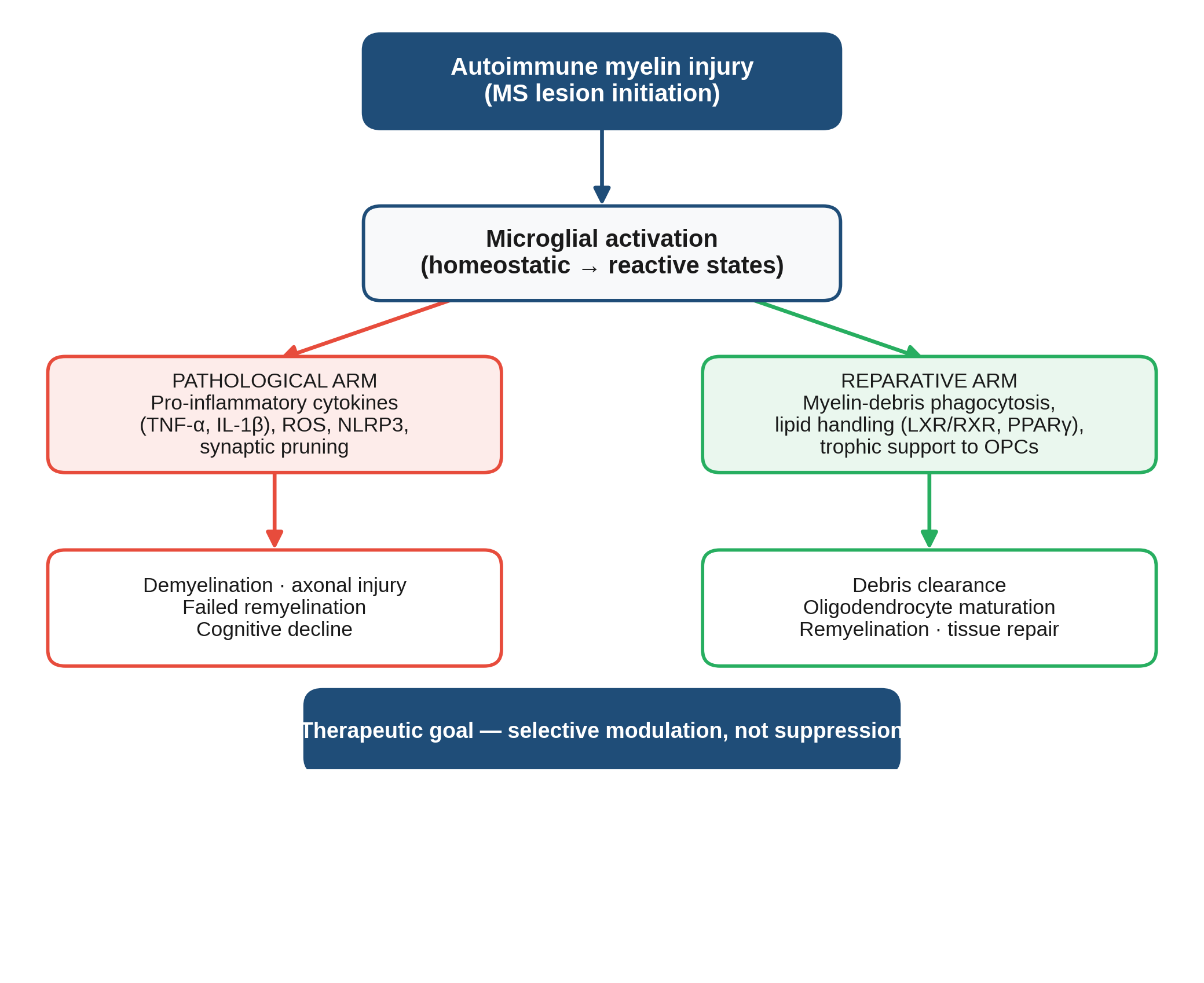
Microglial states and their roles across MS lesion evolution, from tissue injury through partial repair. Figure from the review. Source: Georgian Medical Journal, Vol. 1 No. 2 (2026), DOI: 10.66636/gmj.v1.i2.a40.
The therapeutic angle is what makes this more than academic: modulating microglia — including brain-penetrant Bruton tyrosine kinase (BTK) inhibitors, TREM2 agonism, and complement modulation — has produced encouraging preclinical data and, most recently, positive phase 3 clinical evidence specifically in non-relapsing secondary progressive MS, a form of the disease current peripherally-acting therapies largely fail to help. The review’s core argument is that selective modulation, not blanket suppression, of microglial function represents a biologically rational path to addressing disability progression that today’s disease-modifying therapies leave unmet.
🗺️ Find certified Georgian healthcare providers: sheniekimi.ge — Georgia Health Map · 998 clinics · 6,600+ doctors · 2,296 pharmacies
Read the Original Research
Original article: The Brain’s Own Immune Cells May Hold the Key to Multiple Sclerosis
Published in: Georgian Medical Journal, Vol. 1 No. 2 (2026)
DOI: 10.66636/gmj.v1.i2.a40
📄 Read the full article at gmj.ge →
Georgian Medical Journal (GMJ) · ISSN 3088-4322 · gmj.ge · Open Access CC BY 4.0 · Published by the Public Health Institute of Georgia (PHIG). This summary is an independent editorial product of GMJ News; for clinical decisions, consult the original peer-reviewed article and a qualified professional.
Was this article helpful?
Disclaimer. This article is health journalism intended for general information and education. It is not medical advice and is not a substitute for professional diagnosis or treatment. Always consult a qualified healthcare provider about your individual circumstances. Full disclaimer →
Related Coverage




Editorial standards. This article was produced under the GMJ News editorial process, with oversight by the GMJ Editorial Board. Our editorial process. Spotted an error? Contact the editorial team.