


Home › Topics › Venous Thromboembolism
Venous Thromboembolism
GMJ News knowledge hub · last reviewed October 2026 · Georgian Medical Journal
SummaryStatisticsGlossaryGMJ newsFAQDocumentsOrganizationsResearch
Venous thromboembolism (VTE) — encompassing deep vein thrombosis (DVT) and pulmonary embolism (PE) — affects approximately 10 million people per year globally, causing approximately 300,000-600,000 deaths annually in Europe and the Americas alone and representing one of the most preventable causes of in-hospital death (WHO). PE — a clot blocking the pulmonary arteries — is rapidly fatal if large and causes significant morbidity even when treated. Direct oral anticoagulants (DOACs) have transformed VTE treatment and prevention with superior efficacy, safety and convenience compared to warfarin; however, VTE prophylaxis in hospitals and long-haul flights remains critically underprovided globally.
Key messages
10 million events/year — highly preventable
Venous thromboembolism (VTE) — encompassing deep vein thrombosis (DVT) and pulmonary embolism (PE) — causes approximately 10 million events and 300,000-600,000 deaths per year in Europe and the Americas alone, making it one of the most prevalent and preventable cardiovascular conditions globally (WHO/ESC).
PE is a leading cause of preventable hospital death
Pulmonary embolism — clot blocking pulmonary arteries — is the most preventable cause of in-hospital death. Systematic VTE prophylaxis in hospitalised patients (mechanical + pharmacological) reduces PE substantially, yet prophylaxis remains underutilised globally.
DOACs transform treatment
Direct oral anticoagulants (DOACs — apixaban, rivaroxaban, edoxaban, dabigatran) have replaced warfarin as first-line treatment for most VTE — with superior or equivalent efficacy, lower bleeding risk, no monitoring requirement and fixed dosing.
Cancer-associated VTE
VTE is the second leading cause of death in cancer patients (after the cancer itself). Active malignancy is the strongest acquired VTE risk factor. LMWH or DOACs (rivaroxaban, apixaban, edoxaban) are used for extended anticoagulation in cancer-associated VTE.
Post-thrombotic syndrome
Approximately 25-50% of DVT patients develop post-thrombotic syndrome (PTS) — chronic leg pain, swelling, skin changes and ulceration from venous insufficiency after DVT. PTS significantly impairs quality of life; graduated compression stockings may reduce risk.
Long-haul flight risk
Long-haul flights (>8 hours) modestly increase VTE risk — approximately 2-3 fold — particularly in individuals with additional risk factors (prior VTE, thrombophilia, cancer, obesity, recent surgery). WHO recommends leg exercises, hydration and consideration of compression stockings for long flights.
Key statistics
Major VTE risk factors and relative risk increase — ESC/ACCP
Source: ESC and ACCP evidence. Active cancer is the strongest acquired risk factor.
Glossary of key terms
Latest GMJ coverage

Direct Oral Anticoagulants Show Promise Over Heparin in Cancer Blood Clots, New Analysis Finds
11/07/2026
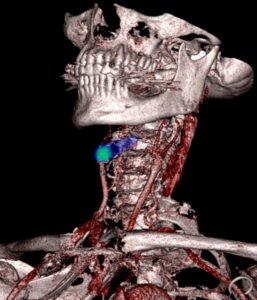
Novel PET Tracer Detects Blood Clots in Legs and Lungs with Single Scan
13/06/2026

Major Surgery Study Shows Tranexamic Acid Cuts Blood Loss by 30% in Complex Operations
03/07/2026
Frequently asked questions 12 Q&A — structured for Google featured snippets and AI discovery
Knowledge hub: guidelines, conventions and reports
Organizations working in migration and health
Related health topics
CVDCancer (thrombosis)Atrial fibrillationMaternal health (pregnancy VTE)Patient safetyBleeding disorders
About this hub. Produced by the GMJ News Editorial Team as a public-good service. Every statistic is linked to its primary source. Documents are preserved in the GMJ Repository with full attribution. Georgian Medical Journal · Contact the editorial team