By using this site, you agree to the Privacy Policy and Terms of Use.
Accept
GMJ NewsGMJ NewsGMJ News
  • Latest News
    • GMJ Briefs
  • Podcast & Media
    • Podcast Episodes
    • GMJ Audio
    • GMJ Videos
  • Research Digest
    • New Studies
    • Georgian Research
    • Data & Numbers
  • Policy & Systems
    • Health Policy
    • Quality & Safety
    • Migration & Health
    • Global Health
  • Practice
    • Clinical Updates
    • Case Discussions
    • Pharmacy & Prescribing
  • Perspectives
    • Editorial
    • Explainers
    • Voices
    • Letters
  • GMJ Articles
    • Vol. 1 Issue 2 (2026)
    • Vol. 1 Issue 1 (2026)
    • Pre-Launch Articles (2025)
  • Read the Journal →
  • About GMJ News
Notification Show More
Font ResizerAa
GMJ NewsGMJ News
Font ResizerAa
  • Latest News
    • GMJ Briefs
  • Podcast & Media
    • Podcast Episodes
    • GMJ Audio
    • GMJ Videos
  • Research Digest
    • New Studies
    • Georgian Research
    • Data & Numbers
  • Policy & Systems
    • Health Policy
    • Quality & Safety
    • Migration & Health
    • Global Health
  • Practice
    • Clinical Updates
    • Case Discussions
    • Pharmacy & Prescribing
  • Perspectives
    • Editorial
    • Explainers
    • Voices
    • Letters
  • GMJ Articles
    • Vol. 1 Issue 2 (2026)
    • Vol. 1 Issue 1 (2026)
    • Pre-Launch Articles (2025)
  • Read the Journal →
  • About GMJ News
Follow US
GMJ News > Research Digest > New Studies > Ubiquinol Marketing Claims Don’t Match Scientific Evidence on CoQ10 Absorption
New StudiesResearch Digest

Ubiquinol Marketing Claims Don’t Match Scientific Evidence on CoQ10 Absorption

GMJ
Last updated: 27/05/2026 16:53
By
GMJ News Desk
Share
5 Min Read
CoQ10 supplement comparison chart showing bioavailability differences between formulations
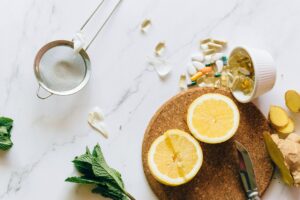
Recent comparative studies show ubiquinol's marketed superiority over ubiquinone isn't supported by bioavailability data. Manufacturing processes, not molecular form, determine CoQ10 absorption rates. — Photo: RDNE Stock project / Pexels
SHARE
🎧 Listen to this article4:34 min · 641 words · GMJ Audio

Contents
      • CoQ10 Formulation Performance Varies by Manufacturing Process
  • Body Efficiently Converts Between CoQ10 Forms
  • Bioavailability Depends on Manufacturing, Not Molecular Form
  • Clinical Outcomes Show Equivalent Therapeutic Effects
    • Key takeaways
  • Frequently asked questions
    • Does the body struggle to convert ubiquinone to ubiquinol?
    • Why do some CoQ10 supplements show better absorption than others?
    • Are there clinical differences between ubiquinone and ubiquinol supplements?

Marketing claims that ubiquinol represents a superior “active” form of CoQ10 are not supported by current bioavailability data, according to recent comparative studies examining different coenzyme Q10 formulations and their absorption rates.

95-98%
of CoQ10 circulating in blood exists as ubiquinol regardless of supplement form taken

CoQ10 Formulation Performance Varies by Manufacturing Process

Area under curve (AUC) comparison across seven different CoQ10 products

Crystal-dispersed ubiquinone
2.0x AUC
Ubiquinol soft gel
1.5x AUC
Standard ubiquinone

1.0x AUC

Source: Lopez-Lluch et al., Nutrition 2019; Mantle and Dybring analysis, Antioxidants 2020 | Georgian Medical Journal News

Submit Your Paper
GMJ_Submit_Banner

Body Efficiently Converts Between CoQ10 Forms

Coenzyme Q10 functions as a redox molecule that naturally cycles between its oxidized state (ubiquinone) and reduced state (ubiquinol) during cellular energy production. According to research published in Nutrition by Lopez-Lluch and colleagues, enterocytes in the small intestine routinely reduce ubiquinone to ubiquinol during absorption.

🎙️ Related Podcast Episodes
🎬 NAD⁺ Injections and “NAD Boosters”
🎬 GMJ Video Series | Rare Case: Lung Cancer & Tuberculosis Coexistence
🎧 #54 | GMJ Podcast | The Blueprint of a Medical Journal: Designing an Open-Access Scientific Platform · 19m
🎬 The Blueprint of a Medical Journal | How GMJ Was Built
🎧 #53 | GMJ Podcast | Palliative Care in Georgia — Health System Gaps, Access Barriers, and Policy Implications · 16m

The conversion process works bidirectionally with remarkable efficiency. When ubiquinol supplements are consumed, some oxidizes back to ubiquinone before reaching the intestine due to ubiquinol’s inherent instability in oxygen-rich environments. Despite these transformations, 95-98% of circulating CoQ10 maintains the ubiquinol form regardless of initial supplement type, demonstrating the body’s robust conversion capacity.

Clinical evidence challenges assumptions about conversion limitations. Research findings consistently show that healthy adults efficiently perform these molecular transformations without supplemental intervention, contradicting marketing narratives about metabolic bottlenecks.

Bioavailability Depends on Manufacturing, Not Molecular Form

A crossover study by Lopez-Lluch et al. in Nutrition (2019) tested seven different CoQ10 formulations in 14 healthy adults, revealing 10-fold variation in area under the curve (AUC) values across products. The analysis by Mantle and Dybring in Antioxidants (2020) identified crystal dispersion as the key determinant of bioavailability.

Crystal-dispersed ubiquinone demonstrated approximately double the AUC compared to ubiquinol in soft gel formulations. Standard ubiquinone without crystal dispersion showed the lowest bioavailability, while ubiquinol occupied an intermediate position. These findings indicate that manufacturing processes, particularly crystal lattice disruption to improve gastrointestinal fluid solubility, matter more than molecular oxidation state.

The data contradicts premium pricing strategies based solely on ubiquinol content. Supplement selection should prioritize formulation technology over molecular form when optimizing absorption rates.

Clinical Outcomes Show Equivalent Therapeutic Effects

Major cardiovascular trials have demonstrated therapeutic equivalence between ubiquinone and ubiquinol formulations. The Q-SYMBIO study, published in JACC Heart Failure by Mortensen and colleagues (2014), showed significant improvement in heart failure outcomes using ubiquinone supplementation.

Similarly, research by Alehagen et al. demonstrated reduced cardiovascular mortality in elderly participants receiving ubiquinone. Clinical evidence supports therapeutic efficacy for both molecular forms when properly formulated, reinforcing that bioavailability depends on manufacturing rather than inherent molecular superiority.

Crystal-dispersed ubiquinone achieved roughly double the bioavailability compared to ubiquinol soft gel formulations, with the ‘premium’ ubiquinol form performing at intermediate levels.

— David Mantle, Antioxidants Research (Antioxidants, 2020)

Key takeaways

  • Body efficiently converts between ubiquinone and ubiquinol forms with 95-98% circulating CoQ10 existing as ubiquinol regardless of supplement type
  • Crystal dispersion manufacturing process doubles bioavailability compared to standard formulations, outperforming ubiquinol soft gels
  • Clinical trials show equivalent therapeutic outcomes for both molecular forms when properly formulated

Frequently asked questions

Does the body struggle to convert ubiquinone to ubiquinol?

No, healthy adults efficiently convert between these forms throughout life. The conversion occurs naturally in enterocytes during absorption and continuously in cellular metabolism.

Why do some CoQ10 supplements show better absorption than others?

Manufacturing processes, particularly crystal dispersion, determine bioavailability more than molecular form. Crystal-dispersed formulations dissolve better in gastrointestinal fluids, improving absorption rates.

Are there clinical differences between ubiquinone and ubiquinol supplements?

Major cardiovascular trials demonstrate equivalent therapeutic effects for both forms when properly formulated. The key factor is bioavailable dosing rather than molecular oxidation state.

Future CoQ10 research should focus on optimizing formulation technologies rather than molecular form selection. As manufacturing processes continue advancing crystal dispersion and solubility enhancement, consumers can expect improved bioavailability across all CoQ10 variants regardless of ubiquinone versus ubiquinol marketing positioning.

Source: Ubiquinol is marketed as the “active” form of CoQ10

TAGGED:bioavailabilitycardiovascular healthCoQ10supplement absorptionubiquinol
Share This Article
Facebook LinkedIn Bluesky Copy Link Print
Leave a Comment Leave a Comment

Leave a Reply Cancel reply

Your email address will not be published. Required fields are marked *

Submit Your Paper →

Georgia's peer-reviewed open-access medical journal. No APC until January 2027.
Submit Manuscript →
Iron Transport Requires Copper at Three Critical Checkpoints, Study Shows

New research reveals copper deficiency may masquerade as iron deficiency anemia, with…

Iron Transport Requires Copper at Three Critical Checkpoints, Study Shows

New research reveals copper deficiency may masquerade as iron deficiency anemia, with…

Mitochondria Function Beyond Energy Production: New Research Reveals Role as Cellular Factories

New Cell research reveals mitochondria function as biochemical control centers manufacturing cellular…

Submit Your Paper to GMJ

No APC until January 2027.
Submit Manuscript →

You Might Also Like

Microscopic view of pancreatic cancer organoids in engineered biomaterial scaffold showing cellular transitions
New StudiesResearch Digest

Data-Driven Biomaterials Guide Pancreatic Cancer Cell State Transitions in Lab Models

By
GMJ News Desk
27/05/2026
Athlete demonstrating explosive movement with biomechanical force analysis overlay
New StudiesResearch Digest

New Research Reveals Why Explosive Athletic Performance Isn’t Just About Speed or Strength

By
GMJ News Desk
24/05/2026
Healthcare worker examining infant in African clinic setting
New StudiesResearch Digest

Severe Infant Symptoms Paradoxically Reduce Healthcare Seeking in Sub-Saharan Africa

By
GMJ News Desk
24/05/2026
Abstract visualization of AI assisting with scientific research and data analysis
New StudiesResearch Digest

Do ‘AI Co-Scientist’ Tools Actually Help Researchers? Evidence Suggests Caution

By
GMJ News Desk
27/05/2026
Facebook Twitter Youtube Instagram
Company
  • Privacy Policy
  • Contact US
  • GMJ Journal
  • Submit Manuscript
  • Editorial Team
  • Register at GMJ
  • Terms of Use

Subscribe to GMJ News — Click here

Join Community
© 2026 Georgian Medical Journal (GMJ). Published by the Public Health Institute of Georgia (PHIG). All rights reserved.
Welcome Back!

Sign in to your account

Username or Email Address
Password

Lost your password?

Not a member? Sign Up