By using this site, you agree to the Privacy Policy and Terms of Use.
Accept
GMJ NewsGMJ NewsGMJ News
  • Latest News
    • GMJ Briefs
  • Podcast & Media
    • Podcast Episodes
    • GMJ Audio
    • GMJ Videos
  • Research Digest
    • New Studies
    • Georgian Research
    • Data & Numbers
  • Policy & Systems
    • Health Policy
    • Quality & Safety
    • Migration & Health
    • Global Health
  • Practice
    • Clinical Updates
    • Case Discussions
    • Pharmacy & Prescribing
    • Ingredients A-Z
  • Perspectives
    • Editorial
    • Explainers
    • Voices
    • Letters
  • GMJ Articles
    • Vol. 1 Issue 2 (2026)
    • Vol. 1 Issue 1 (2026)
    • Pre-Launch Articles (2025)
  • Read the Journal →
  • About GMJ News
Notification Show More
Font ResizerAa
GMJ NewsGMJ News
Font ResizerAa
  • Latest News
    • GMJ Briefs
  • Podcast & Media
    • Podcast Episodes
    • GMJ Audio
    • GMJ Videos
  • Research Digest
    • New Studies
    • Georgian Research
    • Data & Numbers
  • Policy & Systems
    • Health Policy
    • Quality & Safety
    • Migration & Health
    • Global Health
  • Practice
    • Clinical Updates
    • Case Discussions
    • Pharmacy & Prescribing
    • Ingredients A-Z
  • Perspectives
    • Editorial
    • Explainers
    • Voices
    • Letters
  • GMJ Articles
    • Vol. 1 Issue 2 (2026)
    • Vol. 1 Issue 1 (2026)
    • Pre-Launch Articles (2025)
  • Read the Journal →
  • About GMJ News
Follow US
GMJ News > Policy & Systems > Global Health > WHO and BBC Launch Global Series on Animal-Human Health Connections
Global HealthPolicy & Systems

WHO and BBC Launch Global Series on Animal-Human Health Connections

GMJ
Last updated: 23/06/2026 18:42
By
GMJ Policy Desk
Share
5 Min Read
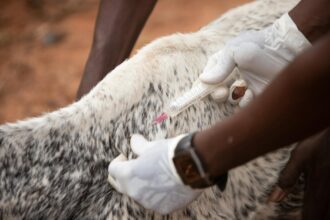
Infographic showing interconnected animal, human, and environmental health elementsIllustrative image · Navajo Tech U Education and Research for Animal Care and Human Health (20190909-OPPE-LSC-0335).jpg by USDAgov / Public domain via Wikimedia Commons (Public domain)
WOAH and BBC StoryWorks launch "Animals & Us," a multimedia series exploring critical animal-human health connections and One Health principles. The initiative addresses pandemic prevention and antimicrobial resistance through integrated health approaches. — Navajo Tech U Education and Research for Animal Care and Human Health (20190909-OPPE-LSC-0335).jpg by USDAgov / Public domain via Wikimedia Commons (Public domain)
SHARE
3 min read|567 words
✓ Reviewed by Prof. Giorgi Pkhakadze, MD, MPH, PhD · ORCID 0000-0001-7609-4515

The World Organisation for Animal Health (WOAH) and BBC StoryWorks have launched “Animals & Us,” a new multimedia series exploring the critical connections between animal and human health. The initiative aims to raise global awareness of One Health principles and their implications for pandemic prevention and antimicrobial resistance.

Contents
    • Key takeaways
      • One Health Approach: Interconnected Challenges
  • Addressing Global Health Through One Health Lens
  • Educational Content for Global Audiences
  • Pandemic Preparedness and Prevention Focus
    • What this means
  • Frequently asked questions
    • What is the One Health approach?
    • How do animal diseases affect human health?
    • Why is this series important for pandemic prevention?

Key takeaways

  • WOAH and BBC StoryWorks collaborate on new “Animals & Us” educational series
  • Series focuses on One Health approach linking animal, human, and environmental health
  • Content addresses pandemic prevention and antimicrobial resistance challenges
75%
of emerging infectious diseases originate from animals, according to WHO estimates

One Health Approach: Interconnected Challenges

Key areas where animal and human health intersect

Zoonotic diseases
75%
Antimicrobial resistance
60%
Food security

45%

Source: WHO, WOAH, 2024 | Georgian Medical Journal News

Addressing Global Health Through One Health Lens

The “Animals & Us” series represents a significant educational initiative at a time when the interconnection between animal and human health has never been more apparent. The World Health Organization emphasizes that approximately 75% of emerging infectious diseases are zoonotic in origin.

Submit Your Paper
GMJ_Submit_Banner

Dr. Monique Éloit, Director General of WOAH, highlighted the importance of public understanding in implementing effective One Health strategies. The series will explore how veterinary surveillance systems contribute to early disease detection and prevention efforts globally.

🎙️ Related Podcast Episodes
🎬 The Blueprint of a Medical Journal | How GMJ Was Built
🎧 #52 | GMJ Podcast | Health and Migration Knowledge Hub — A Global Resource for Evidence-Based Practice · 17m
🎬 GMJ Academy AG-00: Introduction & Navigation Guide
🎧 #48 | GMJ Podcast | Launching the Georgian Medical Journal — Transparency, Editorial Standards, and Open-Access Vision · 17m
🎧 #32 | GMJ Podcast | Launch of the Georgian Medical Journal — A New International Platform for Medical Science · 5m

Educational Content for Global Audiences

BBC StoryWorks brings extensive multimedia expertise to the partnership, creating content designed for diverse global audiences. The series will feature case studies from different continents, demonstrating how global health initiatives benefit from integrated animal-human health approaches.

The collaboration addresses growing concerns about antimicrobial resistance, where recent research demonstrates the critical role of animal health in preserving antibiotic effectiveness for human medicine.

Pandemic Preparedness and Prevention Focus

Following lessons learned from COVID-19, the series emphasizes pandemic preparedness through enhanced animal health monitoring. The CDC’s One Health approach recognizes that preventing disease emergence requires coordinated surveillance across species.

Content will examine how veterinary public health professionals work alongside human health experts to identify potential threats before they become pandemics. The series explores quality and safety measures in livestock production that protect both animal welfare and human health.

Integrated surveillance systems that monitor both animal and human populations are 40% more effective at early disease detection than separate monitoring systems

— WOAH Global Disease Surveillance Report (2024)

What this means

For patients: Better understanding of disease prevention through animal health awareness and responsible antibiotic use
For clinicians: Enhanced collaboration opportunities with veterinary professionals and improved pandemic preparedness protocols
For policymakers: Evidence-based framework for developing integrated health policies that address both animal and human health systems

Frequently asked questions

What is the One Health approach?

One Health recognizes that human, animal, and environmental health are interconnected. This approach promotes collaboration across disciplines to achieve optimal health outcomes for all.

How do animal diseases affect human health?

Many infectious diseases that affect humans originate in animals. Monitoring animal health helps identify potential threats before they spread to human populations.

Why is this series important for pandemic prevention?

Understanding animal-human health connections is crucial for early disease detection and prevention. The series educates audiences about these vital relationships.

The “Animals & Us” series represents a timely investment in public health education, arriving as global health leaders increasingly recognize the importance of integrated approaches to disease prevention. With climate change and urbanization continuing to bring humans and animals into closer contact, such educational initiatives will prove essential for building public understanding of our shared health future.

Source: Animals & Us: A new series from WOAH and BBC StoryWorks

Was this article helpful?

Disclaimer. This article is health journalism intended for general information and education. It is not medical advice and is not a substitute for professional diagnosis or treatment. Always consult a qualified healthcare provider about your individual circumstances. Full disclaimer →

Related Coverage

When Colleagues Make Derogatory Comments About Patients: A Clinical Response GuideJun 24, 2026
Middle powers must unite on health data and AI to challenge tech dominanceJun 24, 2026
Birth Complications in Kenya Leave Lasting Impact on Families Beyond Hospital DischargeJun 23, 2026
Mental health interventions show promise amid active armed conflict, scoping review findsJun 23, 2026
Related reference
  • Iron · Ingredient
PG
Written by
Prof. Giorgi Pkhakadze, MD, MPH, PhD
Editor-in-Chief, GMJ News
Full profile →  ·  ORCID 0000-0001-7609-4515
Medical disclaimer. This article is health journalism intended for general information. It is not medical advice and is not a substitute for consultation with a qualified healthcare professional. Always seek your physician's advice regarding any medical condition.
Medically reviewed by Prof. Giorgi Pkhakadze, MD, MPH, PhD. Spotted an error? Contact the editorial team.
Get the GMJ News digest
Evidence-based health journalism in your inbox. No spam; unsubscribe anytime.
TAGGED:antimicrobial resistanceBBC StoryWorksOne HealthPandemic PreventionWOAH
Share This Article
Facebook LinkedIn Bluesky Copy Link Print
GMJ
ByGMJ Policy Desk
Follow:
GMJ Policy Desk is part of GMJ News, the newsroom of the Georgian Medical Journal (gmj.ge), published by the Public Health Institute of Georgia. Every article is editorially reviewed before publication.
Leave a Comment Leave a Comment

Leave a Reply Cancel reply

Your email address will not be published. Required fields are marked *

Submit Your Paper →

Georgia's peer-reviewed open-access medical journal. No APC until January 2027.
Submit Manuscript →
When Colleagues Make Derogatory Comments About Patients: A Clinical Response Guide

New BMJ guidance provides healthcare professionals with a structured framework for addressing…

Middle powers must unite on health data and AI to challenge tech dominance

Countries like Canada, Australia, and South Korea should unite to develop health…

Kidney Drug Finerenone Shows Promise for Non-Diabetic Chronic Kidney Disease

New clinical trial data show finerenone reduces kidney disease progression by 23%…

Submit Your Paper to GMJ

No APC until January 2027.
Submit Manuscript →

You Might Also Like

Medical professional preparing contrast agent injection for CT scan procedure
Quality & Safety

WHO Issues Global Alert on Substandard Medical Imaging Dye Following Irish Discovery

By
GMJ Policy Desk
21/05/2026
Children affected by conflict in Lebanon requiring medical attentionIllustrative image · Photo by Rudy Issa on Unsplash (Unsplash License)
Migration & HealthPolicy & Systems

Lebanon Ceasefire Fails to Protect Children as 59 Casualties Reported in One Week

By
GMJ Policy Desk
21/06/2026
Healthcare worker reviewing infection control data on computer screen in hospital setting
Policy & SystemsQuality & Safety

UK Hospital Superbug Infections Show Mixed Trends in Latest Government Data

By
GMJ Policy Desk
05/06/2026
WOAH laboratory network showing digital monitoring systems and global connectivityIllustrative image · Photo by Mehul Patel on Pexels (Pexels License)
Global HealthPolicy & Systems

WOAH Introduces Simplified Laboratory Reconfirmation Process for Veterinary Standards

By
GMJ Policy Desk
20/06/2026
Facebook Twitter Youtube Instagram
Company
  • Privacy Policy
  • Contact US
  • GMJ Journal
  • Submit Manuscript
  • Editorial Team
  • Register at GMJ
  • Terms of Use

Subscribe to GMJ News — Click here

Join Community
© 2026 Georgian Medical Journal (GMJ). Published by the Public Health Institute of Georgia (PHIG). All rights reserved.
Welcome Back!

Sign in to your account

Username or Email Address
Password

Lost your password?

Not a member? Sign Up