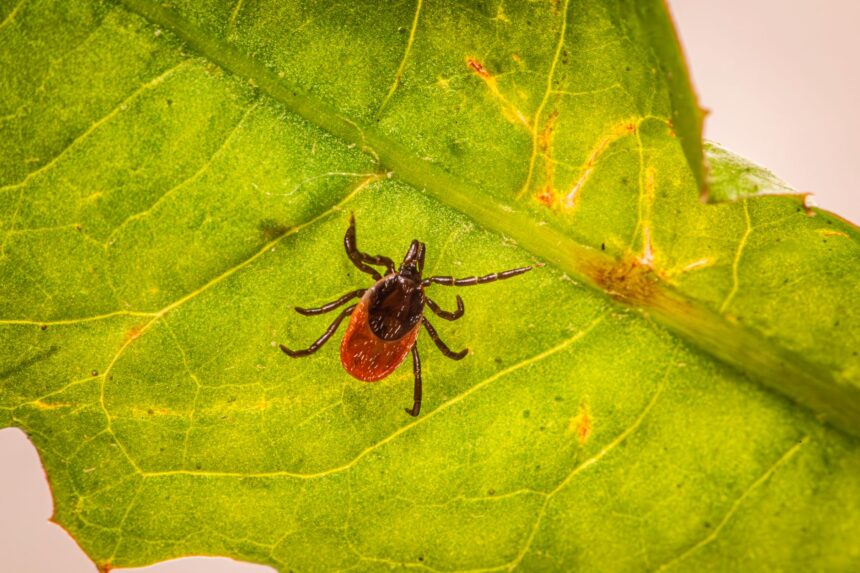
Laboratory-confirmed cases of Lyme disease in England jumped by more than one-fifth in 2025, marking a concerning trend in the UK’s most common locally acquired vector-borne infection. The UK Health Security Agency reported 1,168 confirmed acute cases in 2025, compared to 959 cases in 2024.
Lyme Disease Cases Show Volatile Pattern
Annual laboratory-confirmed acute cases in England, 2021-2025
2025
2024
year-over-year
Source: UK Health Security Agency, 2026 | Georgian Medical Journal News
Disease transmission driven by expanding tick habitats
Lyme disease, caused by the bacterium Borrelia burgdorferi, spreads through bites from infected ticks. The UKHSA noted in its annual surveillance report that tick populations have shown an increasingly widespread distribution across the UK, though numbers fluctuate annually due to weather patterns and environmental factors.

The agency attributed the volatile case numbers to multiple environmental variables, including climate trends, habitat modifications, and changes in host animal populations. These factors collectively influence both tick survival rates and their potential for carrying the disease-causing bacteria.
Despite seasonal variations, with peak activity typically occurring during warmer months, the UKHSA emphasized that tick bites can occur throughout the year. This represents a shift from historical patterns where transmission was more predictably seasonal, according to global health surveillance data.
2025 figures mirror pre-pandemic levels
The 2025 case count of 1,168 closely resembles the 1,151 confirmed cases recorded in 2023, suggesting the disease may be establishing a new baseline after years of fluctuation. This pattern indicates that while 2024 saw a temporary decline to 959 cases, the underlying trend may be stabilizing at higher levels than previously observed.
The Centers for Disease Control and Prevention has documented similar trends in other temperate regions globally, where expanding tick habitats correlate with increased human exposure risks. Vector-borne disease specialists note that urbanization and changing land use patterns contribute to greater overlap between tick habitats and human recreational areas.
Clinical recognition remains challenging
Early-stage Lyme disease often presents with nonspecific symptoms that can delay diagnosis and treatment. The characteristic erythema migrans rash, while pathognomonic when present, appears in only 70-80% of cases according to clinical studies.
Healthcare providers increasingly emphasize the importance of taking detailed exposure histories, particularly for patients presenting with unexplained fever, fatigue, or joint pain during tick season. Early antibiotic treatment with doxycycline remains highly effective when initiated within the first few weeks of infection, as documented in recent clinical guidance updates.
Prevention strategies gain importance
Public health authorities recommend multiple prevention approaches as tick populations continue expanding. Personal protective measures include using EPA-approved insect repellents, wearing long sleeves and pants in wooded areas, and conducting thorough tick checks after outdoor activities.
The NHS advises prompt tick removal using fine-tipped tweezers, grasping the tick as close to the skin surface as possible and pulling upward with steady pressure. Landscape management strategies, such as creating barriers between wooded areas and recreational spaces, also play important roles in reducing exposure risks.
Laboratory confirmed acute cases of Lyme disease rose from 959 in 2024 to 1,168 in 2025, representing a 22% increase and bringing case numbers back to levels similar to 2023.
— UK Health Security Agency Annual Surveillance Report (2026)
Key takeaways
- Lyme disease cases in England increased 22% in 2025, with 1,168 laboratory-confirmed cases
- The disease remains England’s most common locally acquired vector-borne infection
- Expanding tick populations across the UK contribute to increased human exposure risk
- Early recognition and antibiotic treatment within weeks of infection provides optimal outcomes
Frequently asked questions
What causes the year-to-year variation in Lyme disease cases?
Case numbers fluctuate due to environmental factors including weather conditions, climate trends, habitat changes, and shifting populations of animals that serve as tick hosts. The UKHSA notes these variables collectively influence both tick survival and their capacity to carry disease-causing bacteria.
When are people most at risk for tick bites?
While tick bites can occur year-round, they follow seasonal patterns with higher activity during warmer months. Peak transmission typically occurs from late spring through early fall when both tick activity and human outdoor recreation increase.
How effective is early treatment for Lyme disease?
Early antibiotic treatment with doxycycline is highly effective when started within the first few weeks of infection. Prompt treatment prevents progression to more severe manifestations affecting the nervous system, joints, and heart.
The rising incidence of Lyme disease in England reflects broader ecological changes that are expanding vector habitats and increasing human-tick encounters. As surveillance data continues to document these trends, public health strategies must adapt to address both immediate prevention needs and longer-term environmental factors driving disease emergence.
Source: Lyme disease cases in England rise 20% in a year
Was this article helpful?
Disclaimer. This article is health journalism intended for general information and education. It is not medical advice and is not a substitute for professional diagnosis or treatment. Always consult a qualified healthcare provider about your individual circumstances. Full disclaimer →
Related Coverage



Medically reviewed by Prof. Giorgi Pkhakadze, MD, MPH, PhD. Spotted an error? Contact the editorial team.