By using this site, you agree to the Privacy Policy and Terms of Use.
Accept
GMJ NewsGMJ NewsGMJ News
  • Latest News
    • GMJ Briefs
  • Podcast & Media
    • Podcast Episodes
    • GMJ Audio
    • GMJ Videos
  • Research Digest
    • New Studies
    • Georgian Research
    • Data & Numbers
  • Policy & Systems
    • Health Policy
    • Quality & Safety
    • Migration & Health
    • Global Health
  • Practice
    • Clinical Updates
    • Case Discussions
    • Pharmacy & Prescribing
    • Ingredients A-Z
  • Perspectives
    • Editorial
    • Explainers
    • Voices
    • Letters
  • GMJ Articles
    • Vol. 1 Issue 2 (2026)
    • Vol. 1 Issue 1 (2026)
    • Pre-Launch Articles (2025)
  • Read the Journal →
  • About GMJ News
Notification Show More
Font ResizerAa
GMJ NewsGMJ News
Font ResizerAa
  • Latest News
    • GMJ Briefs
  • Podcast & Media
    • Podcast Episodes
    • GMJ Audio
    • GMJ Videos
  • Research Digest
    • New Studies
    • Georgian Research
    • Data & Numbers
  • Policy & Systems
    • Health Policy
    • Quality & Safety
    • Migration & Health
    • Global Health
  • Practice
    • Clinical Updates
    • Case Discussions
    • Pharmacy & Prescribing
    • Ingredients A-Z
  • Perspectives
    • Editorial
    • Explainers
    • Voices
    • Letters
  • GMJ Articles
    • Vol. 1 Issue 2 (2026)
    • Vol. 1 Issue 1 (2026)
    • Pre-Launch Articles (2025)
  • Read the Journal →
  • About GMJ News
Follow US
GMJ News > Research Digest > New Studies > Revolutionary one-nanometer membrane achieves molecular-level water filtration
New StudiesResearch Digest

Revolutionary one-nanometer membrane achieves molecular-level water filtration

GMJ
Last updated: 23/06/2026 18:42
By
GMJ Research Desk
Share
6 Min Read
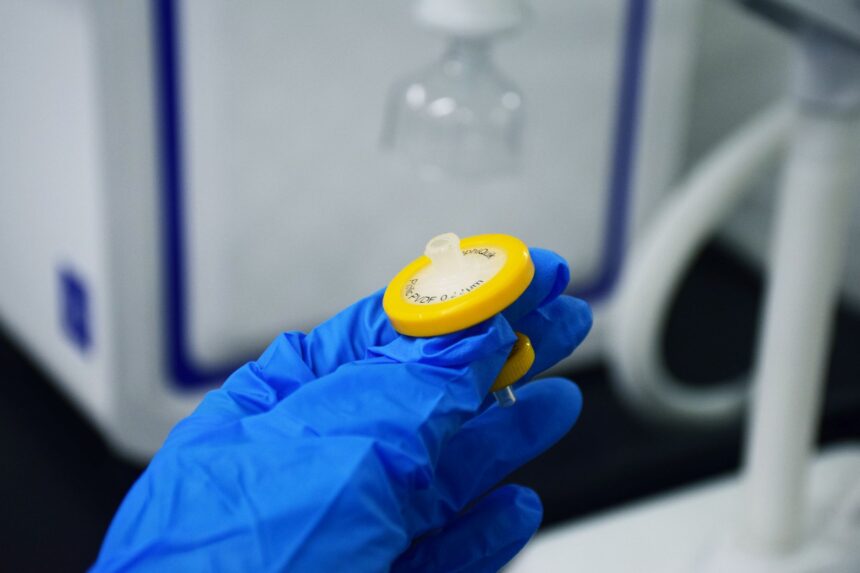
Microscopic view of uniform nanometer-scale membrane pores for water filtrationIllustrative image · Photo by RephiLe water on Pexels (Pexels License)
Revolutionary membrane technology uses perfectly uniform one-nanometer pores to achieve molecular-level water filtration. The nature-inspired design could transform healthcare and industrial water treatment while significantly reducing energy consumption. — Photo by RephiLe water on Pexels (Pexels License)
SHARE
🎧 Listen to this article5:32 min · 797 words · GMJ Audio
4 min read|797 words
✓ Medically reviewed by Prof. Giorgi Pkhakadze, MD, MPH, PhD · ORCID 0000-0001-7609-4515

🟠 Moderate Evidence

Contents
    • Key takeaways
      • Study at a Glance
      • Membrane Filtration: From Microfiltration to Molecular Precision
  • Nature-inspired design achieves unprecedented uniformity
  • Industrial applications promise reduced energy consumption
  • Healthcare facility water treatment implications
  • Energy efficiency addresses sustainability concerns
    • What this means
  • Frequently asked questions
    • How do one-nanometer pores compare to virus sizes?
    • What makes uniform pore size important for filtration?
    • When might this technology become commercially available?

Scientists have developed a breakthrough membrane technology that uses perfectly uniform one-nanometer pores to filter water with unprecedented molecular precision. The nature-inspired technology could revolutionize water treatment in healthcare facilities, pharmaceutical manufacturing, and industrial applications by dramatically reducing energy consumption while improving purification outcomes.

Key takeaways

  • New membrane technology uses uniform one-nanometer pores for molecular-level precision filtration
  • Nature-inspired design could reduce energy consumption in water treatment by significant margins
  • Technology shows particular promise for pharmaceutical and textile industry applications

Study at a Glance

Source Advanced Materials Research
Study type Experimental technology development
Innovation Uniform one-nanometer pore membrane
Applications Water treatment, pharmaceuticals, textiles
Country International research collaboration
1 nanometer
Pore size achieving molecular-level filtration precision

Membrane Filtration: From Microfiltration to Molecular Precision

Pore sizes across filtration technologies, nanometers (log scale)

Microfiltration
100-10,000 nm
Ultrafiltration
1-100 nm
Nanofiltration
0.5-2 nm
New Technology

1 nm uniform

Source: Advanced Materials Research, 2026 | Georgian Medical Journal News

Submit Your Paper
GMJ_Submit_Banner

Nature-inspired design achieves unprecedented uniformity

The breakthrough membrane technology draws inspiration from biological filtration systems found in nature. According to research published in Advanced Materials Research, the uniform one-nanometer pore structure represents a significant advancement over conventional filtration membranes, which typically feature irregular pore sizes that limit separation efficiency.

Unlike traditional membranes that rely on size exclusion alone, this technology achieves molecular-level discrimination through precise pore architecture. The uniform pore structure ensures consistent filtration performance and reduces the energy requirements typically associated with high-pressure separation processes. This development aligns with ongoing research advances in membrane science and nanotechnology applications.

Industrial applications promise reduced energy consumption

The technology shows particular promise for pharmaceutical manufacturing, where precise molecular separation is critical for drug purification and quality control. Current pharmaceutical water treatment systems often require multiple filtration stages and significant energy input to achieve the required purity levels. The FDA’s pharmaceutical quality guidelines emphasize the importance of advanced purification technologies in drug manufacturing.

Textile industry applications could address growing concerns about water reuse and environmental sustainability. The uniform pore structure enables selective removal of dyes and chemical contaminants while preserving water quality for reuse in manufacturing processes. This capability could significantly reduce water consumption in textile production, where WHO estimates show industrial water use continues to strain global freshwater resources.

Healthcare facility water treatment implications

For healthcare facilities, the technology could enhance water treatment systems used in dialysis, laboratory applications, and pharmaceutical compounding. Hospital water treatment currently relies on multiple purification stages, including reverse osmosis and deionization, to meet stringent quality requirements for patient care applications.

The molecular-level precision offered by uniform nanometer pores could streamline these processes while reducing operational costs. Healthcare facilities investing in quality and safety improvements may find particular value in technologies that enhance both efficiency and reliability of critical water treatment systems.

Energy efficiency addresses sustainability concerns

The reduced energy consumption associated with the new membrane technology addresses growing sustainability concerns in industrial water treatment. Traditional high-pressure filtration systems require substantial energy input, contributing to operational costs and environmental impact. According to the Department of Energy’s advanced manufacturing initiatives, energy-efficient separation technologies represent a key priority for industrial sustainability.

Early testing suggests the uniform pore structure maintains high separation performance at lower operating pressures compared to conventional membrane systems. This efficiency improvement could translate to significant cost savings for large-scale industrial applications while reducing the carbon footprint associated with water treatment operations.

The uniform one-nanometer pore structure achieves molecular-level separation precision while reducing energy requirements compared to conventional multi-stage filtration systems

— Research Team, Advanced Materials Research (2026)

What this means

For patients: Enhanced water purification in healthcare facilities could improve safety of dialysis and other medical treatments requiring ultra-pure water
For clinicians: More reliable water treatment systems in hospitals and clinics could reduce contamination risks and improve laboratory testing accuracy
For policymakers: Energy-efficient filtration technologies could support sustainability goals while maintaining high environmental and health protection standards

Frequently asked questions

How do one-nanometer pores compare to virus sizes?

At one nanometer, these pores are significantly smaller than most viruses, which typically range from 20-300 nanometers. This size difference enables effective viral filtration while allowing water molecules to pass through efficiently.

What makes uniform pore size important for filtration?

Uniform pore size ensures consistent separation performance and prevents larger contaminants from passing through oversized pores. This uniformity also enables more predictable flow rates and pressure requirements.

When might this technology become commercially available?

While the research shows promising results, commercial deployment typically requires additional development for large-scale manufacturing and regulatory approval, particularly for healthcare and pharmaceutical applications.

The development of uniform nanometer-scale membrane technology represents a significant advancement in molecular separation science with broad implications for healthcare, industry, and environmental sustainability. As research continues to refine manufacturing processes and demonstrate long-term performance, this innovation could transform how facilities approach water treatment and purification across multiple sectors.

Source: These tiny holes could change how the world cleans water

Was this article helpful?

Disclaimer. This article is health journalism intended for general information and education. It is not medical advice and is not a substitute for professional diagnosis or treatment. Always consult a qualified healthcare provider about your individual circumstances. Full disclaimer →

Related Coverage

New Biomarkers Could Predict Melanoma Outcomes in High-Risk PatientsJun 29, 2026
Third Electrode Pair Improves Deep Brain Stimulation Precision in Mouse StudyJun 29, 2026
Blood Cancer Gene Mutations Trigger Alzheimer's Disease Through Brain InflammationJun 28, 2026
Brain Filters May Block Negative Words Before Conscious Awareness, Study FindsJun 28, 2026
Related reference
  • Iron · Ingredient
PG
Written by
Prof. Giorgi Pkhakadze, MD, MPH, PhD
Editor-in-Chief, GMJ News
Full profile →  ·  ORCID 0000-0001-7609-4515
Medical disclaimer. This article is health journalism intended for general information. It is not medical advice and is not a substitute for consultation with a qualified healthcare professional. Always seek your physician's advice regarding any medical condition.
Medically reviewed by Prof. Giorgi Pkhakadze, MD, MPH, PhD. Spotted an error? Contact the editorial team.

Get the GMJ News digest
Evidence-based health journalism in your inbox. No spam; unsubscribe anytime.
TAGGED:healthcare innovationmembrane technologynanotechnologypharmaceutical manufacturingwater filtration
Share This Article
Facebook LinkedIn Bluesky Copy Link Print
GMJ
ByGMJ Research Desk
Follow:
GMJ Research Desk is part of GMJ News, the newsroom of the Georgian Medical Journal (gmj.ge), published by the Public Health Institute of Georgia. Every article is editorially reviewed before publication.
Leave a Comment Leave a Comment

Leave a Reply Cancel reply

Your email address will not be published. Required fields are marked *

Submit Your Paper →

Georgia's peer-reviewed open-access medical journal. No APC until January 2027.
Submit Manuscript →
New Biomarkers Could Predict Melanoma Outcomes in High-Risk Patients

Swedish research identifies tumor tissue markers that could predict melanoma outcomes. Study…

Third Electrode Pair Improves Deep Brain Stimulation Precision in Mouse Study

University of Geneva researchers demonstrate that adding a third electrode pair significantly…

UK Establishes National Hepatitis C Register to Track Viral Infection Patterns

The UK has established a National Hepatitis C Register to track viral…

Submit Your Paper to GMJ

No APC until January 2027.
Submit Manuscript →

You Might Also Like

Scientific illustration of stem cells differentiating into insulin-producing pancreatic beta cells
New StudiesResearch Digest

Stem Cell Therapy Shows Breakthrough Potential for Diabetes Treatment

By
GMJ Research Desk
24/05/2026
Scientific chart showing creatine safety data from clinical trials
New StudiesResearch Digest

Creatine Kidney Damage Myth Debunked by Major Safety Review of 26,000 Participants

By
GMJ Research Desk
27/05/2026
Scientific illustration showing CAR-T cells attacking cancer with molecular pathway highlighted
New StudiesResearch Digest

Single protein discovery could unlock CAR-T cell therapy’s full potential

By
GMJ Research Desk
06/06/2026
Pregnant woman sleeping; medical illustration of gestational diabetes risk factors
New Studies

Sleep Disturbances in Pregnancy Linked to Gestational Diabetes Risk

By
GMJ Research Desk
20/05/2026
Facebook Twitter Youtube Instagram
Company
  • Privacy Policy
  • Contact US
  • GMJ Journal
  • Submit Manuscript
  • Editorial Team
  • Register at GMJ
  • Terms of Use

Subscribe to GMJ News — Click here

Join Community
© 2026 Georgian Medical Journal (GMJ). Published by the Public Health Institute of Georgia (PHIG). All rights reserved.
Welcome Back!

Sign in to your account

Username or Email Address
Password

Lost your password?

Not a member? Sign Up