By using this site, you agree to the Privacy Policy and Terms of Use.
Accept
GMJ NewsGMJ NewsGMJ News
  • Latest News
    • GMJ Briefs
  • Podcast & Media
    • Podcast Episodes
    • GMJ Audio
    • GMJ Videos
  • Research Digest
    • New Studies
    • Georgian Research
    • Data & Numbers
  • Policy & Systems
    • Health Policy
    • Quality & Safety
    • Migration & Health
    • Global Health
  • Practice
    • Clinical Updates
    • Case Discussions
    • Pharmacy & Prescribing
    • Ingredients A-Z
  • Perspectives
    • Editorial
    • Explainers
    • Voices
    • Letters
  • GMJ Articles
    • Vol. 1 Issue 2 (2026)
    • Vol. 1 Issue 1 (2026)
    • Pre-Launch Articles (2025)
  • Read the Journal →
  • About GMJ News
Notification Show More
Font ResizerAa
GMJ NewsGMJ News
Font ResizerAa
  • Latest News
    • GMJ Briefs
  • Podcast & Media
    • Podcast Episodes
    • GMJ Audio
    • GMJ Videos
  • Research Digest
    • New Studies
    • Georgian Research
    • Data & Numbers
  • Policy & Systems
    • Health Policy
    • Quality & Safety
    • Migration & Health
    • Global Health
  • Practice
    • Clinical Updates
    • Case Discussions
    • Pharmacy & Prescribing
    • Ingredients A-Z
  • Perspectives
    • Editorial
    • Explainers
    • Voices
    • Letters
  • GMJ Articles
    • Vol. 1 Issue 2 (2026)
    • Vol. 1 Issue 1 (2026)
    • Pre-Launch Articles (2025)
  • Read the Journal →
  • About GMJ News
Follow US
GMJ News > Practice > Clinical Updates > Vitamin D Supplementation Boosts Breast Cancer Response to Chemotherapy in Randomized Trial
Clinical UpdatesNew StudiesPracticeResearch Digest

Vitamin D Supplementation Boosts Breast Cancer Response to Chemotherapy in Randomized Trial

GMJ
Last updated: 12/07/2026 13:29
By
GMJ Practice Desk
Share
10 Min Read
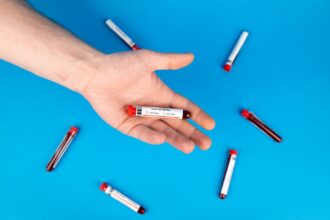
Bar chart comparing pathological complete response rates in vitamin D versus placebo groups for breast cancer neoadjuvant chemotherapyIllustrative image · Photo by Leeloo The First on Pexels (Pexels License)
A randomized trial published in Nutrition and Cancer found that vitamin D3 supplementation at 2,000 IU/day nearly doubled pathological complete response rates (43% vs. 24%) in postmenopausal women with breast cancer undergoing neoadjuvant chemotherapy, suggesting vitamin D status is a modifiable factor in cancer treatment outcomes. — Photo by Leeloo The First on Pexels (Pexels License)
SHARE
6 min read|1,213 words
✓ Medically reviewed by Prof. Giorgi Pkhakadze, MD, MPH, PhD · ORCID 0000-0001-7609-4515

🟢 Strong Evidence

Contents
    • Key takeaways
      • Study at a Glance
      • Vitamin D Status and Chemotherapy Response
  • Widespread Vitamin D Deficiency in Breast Cancer Population
  • Proposed Mechanisms: How Vitamin D May Enhance Chemotherapy Efficacy
  • Study Limitations and Clinical Translation
    • What this means
  • Frequently asked questions
    • Should all breast cancer patients take vitamin D supplements?
    • How long does it take for vitamin D supplementation to raise blood levels?
    • What is a “pathological complete response” and why does it matter?

A randomized, placebo-controlled trial published in Nutrition and Cancer (PMID: 40098326) has found that vitamin D3 supplementation significantly improves treatment response in postmenopausal women with breast cancer receiving neoadjuvant chemotherapy. Women receiving 2,000 IU/day of vitamin D3 during a 6-month chemotherapy course achieved a 43% pathological complete response rate—defined as the absence of invasive cancer in both breast and axillary lymph nodes after surgery—compared to 24% in the placebo group.

Key takeaways

  • Vitamin D3 supplementation at 2,000 IU/day nearly doubled pathological complete response rates (43% vs. 24%) in a randomized trial of 80 postmenopausal women with breast cancer
  • Women with vitamin D levels of 25(OH)D ≥ 20 ng/mL were 3.65 times more likely to achieve complete response than those with deficient levels
  • Baseline vitamin D deficiency was widespread in both groups (mean 19.6–21 ng/mL), suggesting a substantial proportion of the breast cancer population may benefit from supplementation

Study at a Glance

Source Nutrition and Cancer
Study type Randomized, placebo-controlled trial
Sample size N = 80 randomized; 75 completed treatment
Population Postmenopausal women with breast cancer undergoing neoadjuvant chemotherapy
Intervention Vitamin D3 2,000 IU/day vs. placebo for 6 months
43%
Pathological complete response rate in the vitamin D group, compared to 24% in placebo—a 79% relative increase in treatment response

Vitamin D Status and Chemotherapy Response

Baseline and post-supplementation 25(OH)D levels, and odds of complete response by vitamin D threshold

Complete Response Rate (Vit D group)
43%
Complete Response Rate (Placebo)
24%
Odds of Response (≥20 ng/mL vs. deficient)
3.65×
Post-supplementation Vit D Level (treatment group)
28 ng/mL
Post-supplementation Vit D Level (placebo)
20.2 ng/mL

Source: Nutrition and Cancer, 2025 (PMID: 40098326) | Georgian Medical Journal News

Submit Your Paper
GMJ_Submit_Banner

Widespread Vitamin D Deficiency in Breast Cancer Population

The trial revealed that baseline vitamin D deficiency was nearly universal among study participants. In the vitamin D group, baseline 25(OH)D levels averaged 19.6 ng/mL; in the placebo group, 21 ng/mL. Both values fall well below the 30 ng/mL threshold widely considered adequate for bone health and immune function, according to clinical guidelines published by the Endocrine Society.

🎙️ Related Podcast Episodes
🎧 #31 | GMJ Podcast | Daily Multivitamins and Biological Ageing — COSMOS Trial · 21m

Following supplementation, the vitamin D group’s levels rose significantly to 28 ng/mL, while the placebo group remained at 20.2 ng/mL. This 8 ng/mL gap proved clinically meaningful: logistic regression analysis showed that women with 25(OH)D ≥ 20 ng/mL were 3.65 times more likely to achieve pathological complete response than those with deficient levels. This finding suggests that correcting pre-existing vitamin D deficiency may represent a modifiable factor in breast cancer treatment outcomes. See related analysis on Clinical Updates for context on adjunctive therapies in oncology.

Proposed Mechanisms: How Vitamin D May Enhance Chemotherapy Efficacy

The authors propose several biological pathways through which vitamin D may sensitize tumor cells to chemotherapy. Vitamin D is known to promote apoptosis (programmed cell death) and cell cycle arrest in cancer cells, while increasing expression of tumor-suppressor genes. Additionally, vitamin D may reduce the metabolic stress that chemotherapy itself induces on cellular vitamin D stores, thereby maintaining adequate signaling throughout treatment.

The 2,000 IU/day dose was not arbitrary. Researchers selected this amount based on evidence that it can elevate 25(OH)D to ≥ 30 ng/mL in approximately 90% of the general population—a threshold hypothesized to improve cancer outcomes. However, the trial itself did not stratify participants by baseline vitamin D status, meaning some women entered the study with more pronounced deficiency than others, a limitation acknowledged by the authors.

Postmenopausal women receiving vitamin D3 2,000 IU/day achieved a 43% pathological complete response rate to neoadjuvant chemotherapy, compared to 24% in the placebo group—a finding consistent with emerging evidence that vitamin D status influences chemotherapy efficacy in breast cancer.

— Nutrition and Cancer (2025, PMID: 40098326)

Study Limitations and Clinical Translation

The trial’s relatively modest sample size (80 randomized, 75 completed) and single-center design mean that results require validation in larger, multi-center studies before influencing routine clinical practice. Additionally, the trial did not investigate potential interactions between vitamin D supplementation and specific chemotherapy regimens, nor did it examine whether vitamin D toxicity or hypercalcemia emerged at the 2,000 IU/day dose in this population. Because participants were postmenopausal women, results may not generalize to premenopausal or male patients with breast cancer.

Despite these limitations, the magnitude of the treatment effect—a 79% relative increase in complete response rate—warrants attention from oncologists and warrants investigation in prospective trials. The finding also aligns with broader evidence from observational studies suggesting that adequate vitamin D status is associated with better outcomes across multiple cancer types, though randomized evidence has been sparse until now. For further discussion of adjunctive micronutrient interventions in cancer, explore New Studies coverage at GMJ News.

What this means

For patients: If you have been diagnosed with breast cancer and are starting chemotherapy, vitamin D status is worth discussing with your oncology team. A simple blood test can measure your 25(OH)D level; if deficient, supplementation may be a low-risk adjunct to standard treatment. However, do not start supplementation without medical supervision, as very high doses can cause hypercalcemia.
For clinicians: Consider baseline vitamin D screening in postmenopausal women with newly diagnosed breast cancer, particularly those undergoing neoadjuvant chemotherapy. If deficiency is confirmed, supplementation at 2,000 IU/day appears safe and may improve pathological response rates. However, await larger trials and mechanistic validation before adopting this as standard practice. Monitor serum calcium and phosphate in supplemented patients.
For policymakers: This trial adds to growing evidence that vitamin D deficiency is a public health issue affecting cancer outcomes. Consider population-level vitamin D status screening programs and guidelines for supplementation in at-risk groups, particularly postmenopausal women in regions with limited sun exposure. Funding for larger definitive trials in this area would be justified.

Frequently asked questions

Should all breast cancer patients take vitamin D supplements?

Not necessarily. This trial was limited to postmenopausal women and showed a significant effect at 2,000 IU/day, but individual vitamin D status varies widely. A blood test measuring 25(OH)D is the first step; supplementation should be prescribed by your oncologist based on your baseline level and other health factors. Very high intakes can cause harm.

How long does it take for vitamin D supplementation to raise blood levels?

According to pharmacokinetic studies, 25(OH)D levels typically begin to rise within 1–2 weeks of daily supplementation, with stabilization occurring over 8–12 weeks. In this trial, supplementation occurred over 6 months during chemotherapy, allowing ample time for vitamin D status to normalize before treatment response was assessed.

What is a “pathological complete response” and why does it matter?

A pathological complete response (pCR) means that after surgery, pathologists find no invasive cancer remaining in the breast or lymph nodes—essentially, the tumor has been eradicated at the microscopic level. pCR is a strong prognostic indicator and is increasingly used as a primary endpoint in neoadjuvant trials because it correlates with long-term survival. Achieving pCR, when possible, is considered a major treatment success.

The findings from this Nutrition and Cancer trial suggest that vitamin D status is not a minor nutritional detail but a potentially modifiable variable in cancer treatment response. Larger randomized trials, particularly in diverse populations and across different cancer types, are now needed to confirm whether vitamin D supplementation should become part of standard neoadjuvant chemotherapy protocols for breast cancer and other malignancies.

Source: Vitamin D Supplementation and Pathological Complete Response in Neoadjuvant Breast Cancer: A Randomized Controlled Trial, Nutrition and Cancer (2025)

Was this article helpful?

Disclaimer. This article is health journalism intended for general information and education. It is not medical advice and is not a substitute for professional diagnosis or treatment. Always consult a qualified healthcare provider about your individual circumstances. Full disclaimer →

Related Coverage

How neurotransmitters control your mood, sleep, and focus: a primer on brain chemistryJul 23, 2026
Resistance Training 2–3 Times Weekly Reduces Brain Age, Randomized Trial ShowsJul 23, 2026
Fitness habits forged in youth widen dramatically by age 63, but late starters can still improveJul 23, 2026
The Science Behind Magnesium Forms: What Evidence Actually Supports Organ-Specific SupplementsJul 23, 2026
Related reference
  • Breast Cancer · Condition
  • Vitamin D · Ingredient
  • Calcium · Ingredient
PG
Written by
Prof. Giorgi Pkhakadze, MD, MPH, PhD
Editor-in-Chief, GMJ News
Full profile →  ·  ORCID 0000-0001-7609-4515
Medical disclaimer. This article is health journalism intended for general information. It is not medical advice and is not a substitute for consultation with a qualified healthcare professional. Always seek your physician's advice regarding any medical condition.
Medically reviewed by Prof. Giorgi Pkhakadze, MD, MPH, PhD. Spotted an error? Contact the editorial team.

Get the GMJ News digest
Evidence-based health journalism in your inbox. No spam; unsubscribe anytime.
TAGGED:breast cancerchemotherapyclinical trialoncologyvitamin D
Share This Article
Facebook LinkedIn Bluesky Copy Link Print
GMJ
ByGMJ Practice Desk
Follow:
GMJ Practice Desk is part of GMJ News, the newsroom of the Georgian Medical Journal (gmj.ge), published by the Public Health Institute of Georgia. Every article is editorially reviewed before publication.
Leave a Comment Leave a Comment

Leave a Reply Cancel reply

Your email address will not be published. Required fields are marked *

Submit Your Paper →

Georgia's peer-reviewed open-access medical journal. No APC until January 2027.
Submit Manuscript →
How neurotransmitters control your mood, sleep, and focus: a primer on brain chemistry

Neurotransmitters—dopamine, serotonin, acetylcholine, and nine others—regulate mood, sleep, focus, and motivation through…

Resistance Training 2–3 Times Weekly Reduces Brain Age, Randomized Trial Shows

A randomized controlled trial in GeroScience shows that 2–3 weekly sessions of…

Fitness habits forged in youth widen dramatically by age 63, but late starters can still improve

A 47-year Swedish study of 427 adults found that fitness diverges dramatically…

Submit Your Paper to GMJ

No APC until January 2027.
Submit Manuscript →

You Might Also Like

Medical illustration showing T-cell lymphoma development in immunosuppressed transplant patientIllustrative image · "110120-A-1566H-001" by ResoluteSupportMedia is licensed under CC BY 2.0. To view a copy of this license, visit https://creativecommons.org/licenses/by/2.0/. (CC BY 2.0)
Clinical UpdatesNew StudiesPracticeResearch Digest

Immunosuppression Linked to Rare T-Cell Lymphoma in Transplant Recipients: NEJM Case Report

By
GMJ Practice Desk
02/07/2026
Digital fluorescence microscopy showing coordinated calcium waves propagating across astrocytes in response to glutamate, 1989Illustrative image · Photo by Google DeepMind on Pexels (Pexels License)
ExplainersNew StudiesPerspectivesResearch Digest

Astrocytes as Brain Regulators: How a 1989 Video Revealed Hidden Neural Intelligence

By
GMJ Perspectives Desk
17/07/2026
Illustration of implantable cerebrospinal fluid biosensor platform for neurocritical monitoring
New Studies

Real-time brain fluid monitoring transforms neurocritical care: a breakthrough in cerebrospinal fluid diagnostics

By
GMJ Research Desk
19/05/2026
Graph showing 14% of population has used AI instead of seeing a health provider
New Studies

One in seven people have turned to AI instead of visiting a health provider, major UK study reveals

By
GMJ Research Desk
20/05/2026
Facebook Twitter Youtube Instagram
Company
  • Privacy Policy
  • Contact US
  • GMJ Journal
  • Submit Manuscript
  • Editorial Team
  • Register at GMJ
  • Terms of Use

Subscribe to GMJ News — Click here

Join Community
© 2026 Georgian Medical Journal (GMJ). Published by the Public Health Institute of Georgia (PHIG). All rights reserved.
Welcome Back!

Sign in to your account

Username or Email Address
Password

Lost your password?

Not a member? Sign Up