


Breast Cancer
GMJ News knowledge hub · last reviewed September 2026 · Georgian Medical Journal
SummaryStatisticsGlossaryGMJ newsFAQDocumentsOrganizationsResearch
Breast cancer is the most common cancer in women worldwide — and since 2021, the most common cancer overall: 2.3 million new cases and 685,000 deaths in 2020 — with incidence rising in every world region, including LMICs where most deaths occur (IARC/WHO). Early detection is transformative: 5-year survival exceeds 90% when diagnosed at an early stage, versus 29% at distant stage — yet in many LMICs, over 80% of women are diagnosed at late stages due to absent screening. The WHO Global Breast Cancer Initiative 2021-2030 targets reducing breast cancer mortality by 2.5% per year to avert 2.5 million deaths by 2040.
Key messages
Most common cancer globally
Breast cancer is the world's most common cancer: 2.3 million new cases and 685,000 deaths in 2020. Since 2021, it has overtaken lung cancer as the most common cancer overall (IARC GLOBOCAN 2020).
Survival depends on stage at diagnosis
Five-year survival exceeds 90% in countries with early detection — but falls to 29% at distant (metastatic) stage. In many LMICs, over 80% of women are diagnosed at advanced stages, explaining the mortality gap with high-income countries.
WHO Global Breast Cancer Initiative
The WHO Global Breast Cancer Initiative (GBCI) 2021-2030 targets: 60% of women with breast cancer diagnosed at Stage I or II; 80% receiving completed staging; and 80% completing recommended treatment — averting 2.5 million deaths by 2040.
Triple-negative is most aggressive
Triple-negative breast cancer (TNBC) — accounting for 10-15% of cases — lacks hormone receptors and HER2 overexpression, making it unresponsive to hormone therapy and targeted therapy. It is more aggressive and disproportionately affects younger women and those of African ancestry.
Risk factors
Known risk factors include: older age, female sex, inherited BRCA1/BRCA2 gene mutations, dense breast tissue, early menarche, late menopause, nulliparity, late first pregnancy, hormone therapy, alcohol and obesity. 50% of breast cancers occur in women with no identified risk factor.
Men get breast cancer too
Approximately 0.5-1% of breast cancers occur in men — approximately 2,650 cases per year in the US. Male breast cancer has worse outcomes partly from delayed diagnosis due to low awareness.
Key statistics
Breast cancer age-standardised incidence and mortality (per 100,000) by world region — GLOBOCAN 2020
Glossary of key terms
Latest GMJ coverage

WHO Breast Cancer Survival Targets: New Global Benchmarks Reveal Progress and Persistent Inequities
25/09/2026

Combination immunotherapy with radiation shows promise in hormone-receptor-positive breast cancer
20/08/2026
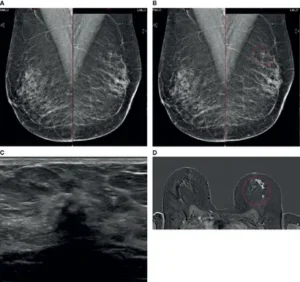
Late-life breast cancer screening reveals diagnosis in 79-year-old woman
11/08/2026

Vitamin D Supplementation Boosts Breast Cancer Response to Chemotherapy in Randomized Trial
23/07/2026

FDA alerts healthcare providers to critical shortage of stereotactic breast biopsy needles
10/07/2026

GLP-1 Drugs Show 30% Lower Breast Cancer Risk in Major Study
13/06/2026
Frequently asked questions 12 Q&A — structured for Google featured snippets and AI discovery
Knowledge hub: guidelines, conventions and reports
Organizations working in migration and health
Related health topics
CancerCervical cancerWomen's healthObesityAlcoholBreastfeeding (risk reduction)
About this hub. Produced by the GMJ News Editorial Team as a public-good service. Every statistic is linked to its primary source. Documents are preserved in the GMJ Repository with full attribution. Georgian Medical Journal · Contact the editorial team