By using this site, you agree to the Privacy Policy and Terms of Use.
Accept
GMJ NewsGMJ NewsGMJ News
  • Latest News
    • GMJ Briefs
  • Podcast & Media
    • Podcast Episodes
    • GMJ Audio
    • GMJ Videos
  • Research Digest
    • New Studies
    • Georgian Research
    • Data & Numbers
  • Policy & Systems
    • Health Policy
    • Quality & Safety
    • Migration & Health
    • Global Health
  • Practice
    • Clinical Updates
    • Case Discussions
    • Pharmacy & Prescribing
    • Ingredients A-Z
  • Perspectives
    • Editorial
    • Explainers
    • Voices
    • Letters
  • GMJ Articles
    • Vol. 1 Issue 2 (2026)
    • Vol. 1 Issue 1 (2026)
    • Pre-Launch Articles (2025)
  • Read the Journal →
  • About GMJ News
Notification Show More
Font ResizerAa
GMJ NewsGMJ News
Font ResizerAa
  • Latest News
    • GMJ Briefs
  • Podcast & Media
    • Podcast Episodes
    • GMJ Audio
    • GMJ Videos
  • Research Digest
    • New Studies
    • Georgian Research
    • Data & Numbers
  • Policy & Systems
    • Health Policy
    • Quality & Safety
    • Migration & Health
    • Global Health
  • Practice
    • Clinical Updates
    • Case Discussions
    • Pharmacy & Prescribing
    • Ingredients A-Z
  • Perspectives
    • Editorial
    • Explainers
    • Voices
    • Letters
  • GMJ Articles
    • Vol. 1 Issue 2 (2026)
    • Vol. 1 Issue 1 (2026)
    • Pre-Launch Articles (2025)
  • Read the Journal →
  • About GMJ News
Follow US
GMJ News > Perspectives > Explainers > How Your Immune System Works: A Guide to Its Specialized Cells and Functions
ExplainersPerspectives

How Your Immune System Works: A Guide to Its Specialized Cells and Functions

GMJ
Last updated: 12/07/2026 13:29
By
GMJ Perspectives Desk
Share
9 Min Read
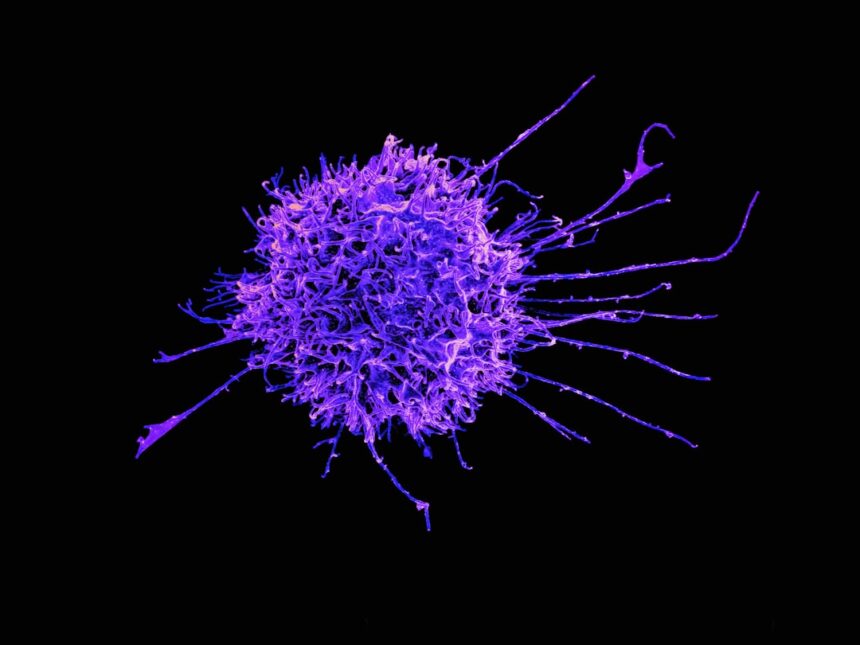
Diagram showing immune cell types and their roles in detection, coordination, and defenseIllustrative image · Photo by National Institute of Allergy and Infectious Diseases on Unsplash (Unsplash License)
Your immune system is an organized network of specialized cells—dendritic cells, T cells, B cells, and NK cells—each with distinct detection, coordination, and defensive roles. Lifestyle factors including sleep, training intensity, and stress modulate immune balance; more activation does not always improve immunity. — Photo by National Institute of Allergy and Infectious Diseases on Unsplash (Unsplash License)
SHARE
6 min read|1,156 words
✓ Reviewed by Prof. Giorgi Pkhakadze, MD, MPH, PhD · ORCID 0000-0001-7609-4515

Your immune system is not a single entity but rather an organized network of specialized cells, each with distinct detection, decision-making, and defensive roles. Understanding this cellular cast—from dendritic cells that act as sentinels to cytotoxic T cells that eliminate threats—provides a framework for comprehending how your body maintains health and responds to infection.

Contents
    • Key takeaways
  • The Five-Stage Framework of Immune Defense
      • The Immune Response: Cellular Roles and Functions
  • Reading the Immune Signals: What Your White Blood Cell Count Tells You
  • Lifestyle, Stress, and the Paradox of Immune Activation
    • What this means
  • Frequently asked questions
    • What is the difference between innate and adaptive immunity?
    • Can you “boost” your immune system through supplements or diet?
    • Why do high white blood cell counts sometimes indicate infection and sometimes indicate cancer?

Key takeaways

  • The immune system comprises specialized cell types—dendritic cells, T cells, B cells, NK cells, and support cells—each with distinct functions in detection, coordination, and defense
  • A simple framework organizes immune function: Detect (dendritic cells/monocytes) → Decide and coordinate (T cells) → Kill (NK and cytotoxic T cells) → Remember (memory B and T cells)
  • Lifestyle factors including training intensity, sleep quality, and chronic stress can shift immune signaling toward inflammation, potentially reducing defensive efficiency rather than enhancing it

The Five-Stage Framework of Immune Defense

Immunologists have long recognized that effective immunity requires coordinated action across multiple cell types. The first stage involves detection, where dendritic cells and monocytes act as sentinels, identifying pathogenic threats and foreign antigens. These cells then present their findings to the adaptive immune system, triggering the second stage: decision and coordination. Helper T cells (CD4+ cells) process this information and coordinate the broader immune response, determining whether to mount a vigorous defense or tolerate a benign substance.

The third stage is direct elimination. Natural killer (NK) cells and cytotoxic T cells (CD8+ cells) recognize and destroy infected or abnormal cells, using mechanisms that include perforin release and apoptosis induction. The fourth stage, immunological memory, involves memory B and T cells that persist long after initial infection, enabling faster responses to future encounters with the same pathogen. Finally, repair and oxygen delivery—mediated by platelets and red blood cells—support tissue healing and metabolic recovery following immune activation.

The Immune Response: Cellular Roles and Functions

Five coordinated stages from detection to repair

Submit Your Paper
GMJ_Submit_Banner
Detection (Dendritic cells, monocytes)
100%
Coordination (Helper T cells)
95%
Elimination (NK cells, cytotoxic T cells)
90%
Memory (Memory B and T cells)
85%
Repair (Platelets, RBCs)
80%

Source: Immunological function model | Georgian Medical Journal News

Reading the Immune Signals: What Your White Blood Cell Count Tells You

When clinicians order a complete blood count (CBC) or differential white blood cell (WBC) count, the results reveal real-time snapshots of immune activity. Elevated neutrophils—the most abundant type of white blood cell—typically indicate acute bacterial infection or acute inflammatory stress, as these cells mobilize rapidly in response to pyogenic organisms. In contrast, elevated eosinophils often signal allergic responses, asthma exacerbation, or parasitic infection, reflecting a distinct immune activation pattern oriented toward extracellular pathogens.

🎙️ Related Podcast Episodes
🎬 The Architecture of Migration Health: Inside the GMJ Knowledge Hub | Georgian Medical Journal
🎧 #52 | GMJ Podcast | Health and Migration Knowledge Hub — A Global Resource for Evidence-Based Practice · 17m
🎧 #47 | GMJ Podcast | Tskaltubo and the Future of Spa-Based Medicine — Radon Therapy, Rehabilitation, and Preventive Health · 19m
🎧 #44 | GMJ Podcast | Infant Formula Contamination — Global Food Safety Failure and the Cereulide Outbreak · 21m
🎧 #42 | GMJ Podcast | IT Service Management in Healthcare — Governance, Procurement, and Service Delivery · 16m

Elevated lymphocytes, comprising T cells, B cells, and NK cells, frequently appear during viral infections or certain malignancies, as these cells expand in response to viral-pattern immune recognition. Importantly, platelets are not merely hemostatic tools; they participate in innate immunity through pattern recognition receptors and cytokine release, making thrombocytosis or thrombocytopenia relevant to immune assessment. A comprehensive understanding of these cellular patterns enables clinicians to interpret lab findings within the broader context of immune physiology rather than as isolated numbers. See our Data & Numbers section for more on interpreting laboratory results.

Lifestyle, Stress, and the Paradox of Immune Activation

A counterintuitive finding in immunology is that more immune activation does not always equal better immunity. Intense physical training, chronic sleep deprivation, and sustained psychological stress can all elevate inflammatory markers—elevated cytokines, increased neutrophil mobilization, and lymphocyte redistribution—yet paradoxically impair the efficiency of both innate and adaptive immune responses. This reflects a shift in immune signaling away from coordinated defense toward a pro-inflammatory state.

Hard exercise, when followed by adequate recovery and sleep, enhances immune competence through improved lymphocyte trafficking and enhanced natural killer cell function. However, overtraining without sufficient rest—compounded by poor sleep quality—promotes a state sometimes called “immune exhaustion,” characterized by elevated cortisol, reduced T cell function, and increased susceptibility to upper respiratory infection. Chronic psychological stress similarly shifts immune balance through sustained elevation of catecholamines and glucocorticoids, reducing regulatory T cell populations and skewing responses toward Th1/Th17 inflammation. Research in psychoneuroimmunology demonstrates that sleep restoration, stress reduction, and periodized training recover immune competence more effectively than aggressive immune stimulation alone. Individuals interested in optimizing immune function should prioritize consistent sleep (7–9 hours nightly for adults), moderate-intensity physical activity with recovery days, and stress management practices.

The immune system functions as an integrated network where detection, coordination, elimination, and memory each depend on specialized cell types working in sequence. Lifestyle factors—particularly sleep, training intensity, and stress—modulate this balance; more activation does not always improve immunity.

— Immunological physiology framework, Georgian Medical Journal News

What this means

For patients: Optimizing immune health requires attention to sleep quality (7–9 hours nightly), balanced exercise with recovery, and stress reduction. Elevated white blood cell counts in lab results warrant clinical interpretation by your physician rather than self-diagnosis.
For clinicians: WBC differentials reveal distinct immune activation patterns: neutrophilia suggests acute bacterial/inflammatory stress; eosinophilia suggests allergic/parasitic signaling; lymphocytosis suggests viral-pattern immunity. This framework enables more precise clinical reasoning.
For policymakers: Public health education emphasizing sleep, stress reduction, and moderate exercise as immune-supporting behaviors may reduce population burden of immune-mediated illness more cost-effectively than promotional campaigns for immune-boosting supplements.

Frequently asked questions

What is the difference between innate and adaptive immunity?

Innate immunity comprises rapid, non-specific responses (neutrophils, macrophages, NK cells) that mobilize within hours of infection. Adaptive immunity involves T and B cells that require days to mount a response but provide antigen-specific recognition and long-term memory. Both systems are essential and work in tandem; the innate response buys time for adaptive immunity to develop.

Can you “boost” your immune system through supplements or diet?

No single supplement reliably boosts immunity. However, adequate protein, zinc, selenium, and vitamins A, C, and D support normal immune cell function. Sleep deprivation, stress, and poor nutrition impair immunity more than supplements enhance it. A balanced diet, consistent sleep, and stress management provide the strongest foundation.

Why do high white blood cell counts sometimes indicate infection and sometimes indicate cancer?

WBC elevation reflects immune activation, which occurs during both infection and malignancy. In infection, the elevation is typically transient and resolves as the pathogen is cleared. In leukemia or lymphoma, WBC elevation persists due to uncontrolled clonal proliferation. Peripheral blood smear review and flow cytometry differentiate these scenarios.

Understanding your immune system as an organized network of specialized cells—rather than a monolithic defense force—transforms how clinicians, patients, and public health officials approach infection prevention and health maintenance. As research in immunology continues to refine our understanding of immune cell interactions and the impact of lifestyle on immune function, a framework centered on detection, coordination, elimination, and memory provides a durable foundation for clinical reasoning and evidence-based health decisions. Further exploration of immunological mechanisms can be found in our Clinical Updates and Explainers sections.

Source: Immune system cellular roles educational graphic

Was this article helpful?

Disclaimer. This article is health journalism intended for general information and education. It is not medical advice and is not a substitute for professional diagnosis or treatment. Always consult a qualified healthcare provider about your individual circumstances. Full disclaimer →

Related Coverage

How the immune system learns and remembers: innate defenses meet adaptive immunityJul 28, 2026
Why creatine works in muscle but not the brain—yetJul 28, 2026
How Your Brain Cleans Itself: The Glymphatic System ExplainedJul 28, 2026
Iron, folate, and B12: the three nutrients that build your bloodJul 28, 2026
Related reference
  • Selenium · Ingredient
  • Asthma · Condition
  • Zinc · Ingredient
  • SAMe · Ingredient
PG
Written by
Prof. Giorgi Pkhakadze, MD, MPH, PhD
Editor-in-Chief, GMJ News
Full profile →  ·  ORCID 0000-0001-7609-4515
Medical disclaimer. This article is health journalism intended for general information. It is not medical advice and is not a substitute for consultation with a qualified healthcare professional. Always seek your physician's advice regarding any medical condition.
Medically reviewed by Prof. Giorgi Pkhakadze, MD, MPH, PhD. Spotted an error? Contact the editorial team.
Get the GMJ News digest
Evidence-based health journalism in your inbox. No spam; unsubscribe anytime.
TAGGED:health-basicsimmune systemimmunologylymphocyteswhite blood cells
Share This Article
Facebook LinkedIn Bluesky Copy Link Print
GMJ
ByGMJ Perspectives Desk
Follow:
GMJ Perspectives Desk is part of GMJ News, the newsroom of the Georgian Medical Journal (gmj.ge), published by the Public Health Institute of Georgia. Every article is editorially reviewed before publication.
Leave a Comment Leave a Comment

Leave a Reply Cancel reply

Your email address will not be published. Required fields are marked *

Submit Your Paper →

Georgia's peer-reviewed open-access medical journal. No APC until January 2027.
Submit Manuscript →
Brain network fragmentation at legal alcohol limits predicts subjective intoxication

Functional MRI reveals that individuals with identical blood alcohol levels show variable…

Evidence Review: Five Health Behaviours Reshaping 2025 Clinical Practice

Real-world studies and trials in 2025 reveal that timing and context shape…

L-Theanine Improves Sleep Quality Without Drowsiness, Systematic Review Finds

A systematic review of 13 randomised trials found that L-theanine supplementation at…

Submit Your Paper to GMJ

No APC until January 2027.
Submit Manuscript →

You Might Also Like

Microscopic image of T cells showing HIV-induced cellular transformation from CD4+ to CD8+ phenotype
New StudiesResearch Digest

HIV infection triggers CD4+ T cells to transform into CD8+ cells, Science study reveals

By
GMJ Research Desk
07/06/2026
Microscopic image of chromoblastomycosis showing characteristic sclerotic bodies in skin tissueIllustrative image · National Lab Week 130410-F-TT327-015.jpg by Airman 1st Class Jason Couillard / Public domain via Wikimedia Commons (Public domain)
Clinical UpdatesExplainersPerspectivesPractice

Chromoblastomycosis: A Neglected Tropical Infection Resurfacing in Clinical Practice

By
GMJ Practice Desk
12/07/2026
Molecular structure and cellular metabolism illustration showing taurine functionIllustrative image · A scientist working in a laboratory.jpg by Stanford ENERGY, Video by Mark Shwartz / CC BY 2.5 via Wikimedia Commons (CC BY 2.5)
ExplainersPerspectives

Taurine and Cancer: Separating Laboratory Findings from Dietary Risk

By
GMJ Perspectives Desk
26/07/2026
Illustration of amino acid pathways to neurotransmitter synthesis in the brainIllustrative image · Photo by DS stories on Pexels (Pexels License)
ExplainersPerspectives

How amino acids shape brain function: neurotransmitters, energy, and cognitive resilience

By
GMJ Perspectives Desk
17/07/2026
Facebook Twitter Youtube Instagram
Company
  • Privacy Policy
  • Contact US
  • GMJ Journal
  • Submit Manuscript
  • Editorial Team
  • Register at GMJ
  • Terms of Use

Subscribe to GMJ News — Click here

Join Community
© 2026 Georgian Medical Journal (GMJ). Published by the Public Health Institute of Georgia (PHIG). All rights reserved.
Welcome Back!

Sign in to your account

Username or Email Address
Password

Lost your password?

Not a member? Sign Up