By using this site, you agree to the Privacy Policy and Terms of Use.
Accept
GMJ NewsGMJ NewsGMJ News
  • Latest News
    • GMJ Briefs
  • Podcast & Media
    • Podcast Episodes
    • GMJ Audio
    • GMJ Videos
  • Research Digest
    • New Studies
    • Georgian Research
    • Data & Numbers
  • Policy & Systems
    • Health Policy
    • Quality & Safety
    • Migration & Health
    • Global Health
  • Practice
    • Clinical Updates
    • Case Discussions
    • Pharmacy & Prescribing
    • Ingredients A-Z
  • Dictionary
    • Browse A–Z
    • About the Project
    • Contribute a Term
  • Perspectives
    • Editorial
    • Explainers
    • Voices
    • Letters
  • Health Topics
  • GMJ Articles
    • Vol. 1 Issue 2 (2026)
    • Vol. 1 Issue 1 (2026)
    • Pre-Launch Articles (2025)
  • Read the Journal →
  • About GMJ News
Notification Show More
Font ResizerAa
GMJ NewsGMJ News
Font ResizerAa
  • Latest News
    • GMJ Briefs
  • Podcast & Media
    • Podcast Episodes
    • GMJ Audio
    • GMJ Videos
  • Research Digest
    • New Studies
    • Georgian Research
    • Data & Numbers
  • Policy & Systems
    • Health Policy
    • Quality & Safety
    • Migration & Health
    • Global Health
  • Practice
    • Clinical Updates
    • Case Discussions
    • Pharmacy & Prescribing
    • Ingredients A-Z
  • Dictionary
    • Browse A–Z
    • About the Project
    • Contribute a Term
  • Perspectives
    • Editorial
    • Explainers
    • Voices
    • Letters
  • Health Topics
  • GMJ Articles
    • Vol. 1 Issue 2 (2026)
    • Vol. 1 Issue 1 (2026)
    • Pre-Launch Articles (2025)
  • Read the Journal →
  • About GMJ News
Follow US
GMJ News > GMJ Briefs > Needle-Free Adrenaline Nasal Spray Transforms Pediatric Anaphylaxis Care

Needle-Free Adrenaline Nasal Spray Transforms Pediatric Anaphylaxis Care

GMJ
Last updated: 11/07/2026 16:43
By
Prof. Giorgi Pkhakadze
Share
1 Min Read
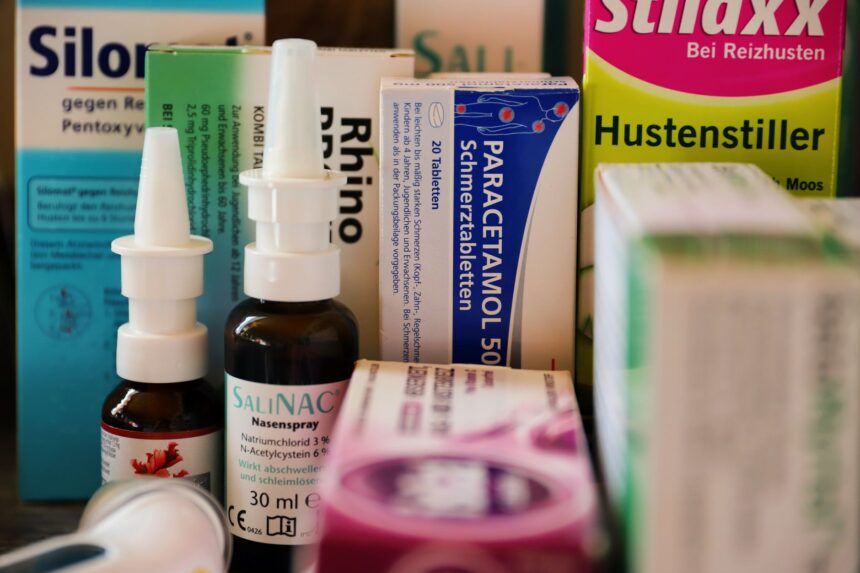
Medical nasal spray device representing breakthrough pediatric anaphylaxis treatment option
UK regulators approve the first needle-free adrenaline nasal spray for children as young as 12 months, offering a breakthrough treatment option for pediatric anaphylaxis emergencies. The MHRA approval addresses traditional injection barriers while maintaining therapeutic effectiveness. — Photo by Christina & Peter on Pexels (Pexels License)
SHARE
1 min read|134 words

The UK’s Medicines and Healthcare products Regulatory Agency has approved a groundbreaking needle-free adrenaline nasal spray for children as young as 12 months, addressing a critical gap in emergency anaphylaxis treatment for the youngest patients. This innovation eliminates traditional barriers associated with auto-injector devices, including needle phobia and injection site complications that can delay life-saving treatment during high-stress emergency situations.

The approval follows rigorous safety and efficacy evaluations, with regulators confirming that the lower-dose formulation meets the specific physiological requirements of infants and toddlers. This targeted approach to pediatric emergency medicine acknowledges the unique needs of vulnerable younger populations while maintaining the clinical effectiveness necessary for treating severe allergic reactions.

The MHRA continues ongoing safety monitoring to ensure sustained clinical benefit and tolerability in this new treatment population. Read the full article on GMJ Newsroom.

Was this article helpful?

GMJ Brief · Announcement

📰 Read the full article: MHRA Approves First Needle-Free Adrenaline Nasal Spray for Young Children →

Share This Article
Facebook LinkedIn Bluesky Copy Link Print
GMJ
ByProf. Giorgi Pkhakadze
Follow:
Prof. Giorgi Pkhakadze, MD, MPH, PhD, is Editor-in-Chief of the Georgian Medical Journal and Chair of the Public Health Institute of Georgia (PHIG). He is Professor and Head of the Department of Social and Behavioural Sciences at David Tvildiani Medical University, and Secretary/Treasurer of the UEMS Section of Public Health. ORCID: 0000-0001-7609-4515.

Submit Your Paper →

Georgia's peer-reviewed open-access medical journal. No APC until January 2027.
Submit Manuscript →
Ethiopia Study Reveals Stakeholder Concerns Over Novel Malaria Treatments

A qualitative study in Ethiopia reveals that health workers and patients view…

Sitafloxacin monotherapy matches doxycycline-rifampicin for brucellosis treatment in landmark trial

A multicenter randomized trial in The Lancet Regional Health – Western Pacific…

Ultra-processed foods linked to higher kidney cancer risk in large US study

A prospective analysis of over 300,000 US adults found that higher consumption…

Submit Your Paper to GMJ

No APC until January 2027.
Submit Manuscript →

You Might Also Like

Global HealthPolicy & Systems

Ebola Outbreak Response Underway in DRC and Uganda as CDC Coordinates Multi-Country Operations

By
Prof. Giorgi Pkhakadze
26/05/2026
Healthcare policy document showing Medicaid work requirements implementation timeline

20-Hour Weekly Minimum: New Medicaid Work Requirement Threshold

By
Prof. Giorgi Pkhakadze
14/07/2026
Bar chart showing improved health outcomes with increasing exercise diversity across four activity types

Announcement: Exercise diversity matters as much as exercise volume, new research suggests

By
Prof. Giorgi Pkhakadze
10/08/2026
Global HealthPolicy & Systems

WHO Chief ‘Profoundly Concerned’ After DRC Ebola Visit Amid Conflict

By
Prof. Giorgi Pkhakadze
14/06/2026
Facebook Twitter Youtube Instagram
Company
  • Privacy Policy
  • Contact US
  • GMJ Journal
  • Submit Manuscript
  • Editorial Team
  • Register at GMJ
  • Terms of Use

Subscribe to GMJ News — Click here

Join Community
© 2026 Georgian Medical Journal (GMJ). Published by the Public Health Institute of Georgia (PHIG). All rights reserved.
Welcome Back!

Sign in to your account

Username or Email Address
Password

Lost your password?