By using this site, you agree to the Privacy Policy and Terms of Use.
Accept
GMJ NewsGMJ NewsGMJ News
  • Latest News
    • GMJ Briefs
  • Podcast & Media
    • Podcast Episodes
    • GMJ Audio
    • GMJ Videos
  • Research Digest
    • New Studies
    • Georgian Research
    • Data & Numbers
  • Policy & Systems
    • Health Policy
    • Quality & Safety
    • Migration & Health
    • Global Health
  • Practice
    • Clinical Updates
    • Case Discussions
    • Pharmacy & Prescribing
    • Ingredients A-Z
  • Perspectives
    • Editorial
    • Explainers
    • Voices
    • Letters
  • Health Topics
  • GMJ Articles
    • Vol. 1 Issue 2 (2026)
    • Vol. 1 Issue 1 (2026)
    • Pre-Launch Articles (2025)
  • Read the Journal →
  • About GMJ News
Notification Show More
Font ResizerAa
GMJ NewsGMJ News
Font ResizerAa
  • Latest News
    • GMJ Briefs
  • Podcast & Media
    • Podcast Episodes
    • GMJ Audio
    • GMJ Videos
  • Research Digest
    • New Studies
    • Georgian Research
    • Data & Numbers
  • Policy & Systems
    • Health Policy
    • Quality & Safety
    • Migration & Health
    • Global Health
  • Practice
    • Clinical Updates
    • Case Discussions
    • Pharmacy & Prescribing
    • Ingredients A-Z
  • Perspectives
    • Editorial
    • Explainers
    • Voices
    • Letters
  • Health Topics
  • GMJ Articles
    • Vol. 1 Issue 2 (2026)
    • Vol. 1 Issue 1 (2026)
    • Pre-Launch Articles (2025)
  • Read the Journal →
  • About GMJ News
Follow US
GMJ News > Practice > Clinical Updates > University of Queensland Drug Targets Immune Receptor, Offering Hope for Motor Neuron Disease
Clinical UpdatesNew StudiesPracticeResearch Digest

University of Queensland Drug Targets Immune Receptor, Offering Hope for Motor Neuron Disease

GMJ
Last updated: 12/07/2026 13:29
By
GMJ Practice Desk
Share
7 Min Read
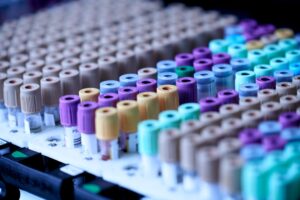
Laboratory microscope and cellular research imaging related to immune receptor activation drug developmentIllustrative image · Photo by Bioscience Image Library by Fayette Reynolds on Unsplash (Unsplash License)
Researchers at the University of Queensland have developed a novel drug that activates a previously difficult-to-target immune receptor, a breakthrough that could accelerate development of new treatments for motor neuron disease and related neurodegenerative conditions. — Photo by Bioscience Image Library by Fayette Reynolds on Unsplash (Unsplash License)
SHARE
🎧 Listen to this article · 950 words · GMJ Audio
5 min read|950 words
✓ Reviewed by GMJ News Editorial Team

🟡 Preliminary Evidence

Contents
    • Key takeaways
      • Immune Receptor Activation: A New Therapeutic Target
  • Unlocking a Pharmacological Challenge
  • Mechanism and Translational Potential
  • From Bench to Bedside: The Path Ahead
    • What this means
  • Frequently asked questions
    • What is motor neuron disease, and why is new treatment research important?
    • How long before this drug could be available to patients?
    • Could this immune receptor activation approach work for other neurological diseases?

Researchers at the University of Queensland have developed a novel drug that activates a previously difficult-to-target immune receptor, a finding that may accelerate the development of new therapeutic approaches for motor neuron disease (MND) and related neurodegenerative conditions. The breakthrough addresses a long-standing challenge in drug design: activating immune receptors that have resisted conventional pharmacological approaches.

Key takeaways

  • University of Queensland researchers developed a drug that activates a hard-to-target immune receptor, potentially opening new avenues for neurodegenerative disease treatment
  • The discovery addresses a significant gap in pharmacology by enabling activation of previously inaccessible immune pathways
  • Early findings suggest potential applications in motor neuron disease, though clinical trials remain ahead
1
novel drug candidate identified that successfully activates the previously elusive immune receptor

Immune Receptor Activation: A New Therapeutic Target

Breakthrough drug candidate achieves receptor activation in preclinical models

Previously
Receptor remained inaccessible to standard drugs
Now
Novel drug demonstrates successful activation

Source: University of Queensland | Georgian Medical Journal News

Submit Your Paper
GMJ_Submit_Banner

Unlocking a Pharmacological Challenge

Motor neuron disease, a group of progressive neurodegenerative disorders including amyotrophic lateral sclerosis (ALS), affects tens of thousands of people worldwide. The immune system plays a complex role in MND pathology, yet most therapeutic strategies have focused on conventional drug targets. According to researchers at the University of Queensland’s research division, identifying drugs that can modulate immune responses through underexplored receptors represents a critical frontier in neurodegenerative disease treatment.

🎙️ Related Podcast Episodes
🎧 #37 | GMJ Podcast | NAD⁺ Injections and “NAD Boosters” — Public Health Risks and Regulatory Implications · 20m

The immune receptor at the centre of this discovery had eluded drug developers for years. Its complex three-dimensional structure and cellular location made it an exceptionally challenging target for conventional pharmaceutical approaches. This suggests that advances in structural biology and computational drug design may now be enabling researchers to overcome previously insurmountable technical barriers.

Mechanism and Translational Potential

The drug developed by the University of Queensland team successfully engages the immune receptor, triggering downstream cellular signalling pathways that may suppress inflammation and neuronal damage associated with MND. While the research remains in preclinical stages, the ability to activate this receptor opens multiple potential therapeutic pathways that could be explored in future clinical development.

The implications extend beyond MND alone. Immune dysfunction contributes to numerous neurodegenerative conditions, including Parkinson’s disease, Alzheimer’s disease, and primary lateral sclerosis. If validated in human studies, receptor activation strategies could represent a new class of immunomodulatory therapy applicable across multiple disease contexts. This suggests that emerging research in neurodegenerative disease may increasingly focus on immune-modulating rather than purely neuroprotective mechanisms.

From Bench to Bedside: The Path Ahead

Between preclinical discovery and clinical application lies a lengthy development pipeline. The University of Queensland team must now advance the drug candidate through rigorous testing phases, including studies evaluating safety, tolerability, and efficacy in animal models before human trials can commence. Regulatory pathways, funding availability, and intellectual property considerations will shape the timeline for clinical translation.

The Australian research effort aligns with broader global initiatives to expand the therapeutic toolkit for MND. Clinical updates in neurodegenerative disease have increasingly highlighted the importance of immune-based interventions, suggesting that discoveries like this may accelerate the field toward disease-modifying therapies. Collaboration with industry partners and international research consortia will likely be essential to move this discovery toward patients who need new treatment options.

Researchers at the University of Queensland have developed a drug that successfully activates a previously inaccessible immune receptor, potentially unlocking new therapeutic approaches for motor neuron disease and related neurodegenerative conditions.

— University of Queensland Research Team

What this means

For patients: Motor neuron disease patients currently have limited treatment options. This discovery represents early-stage research that could eventually expand therapeutic choices, though clinical availability remains years away and further studies are needed to confirm safety and efficacy in humans.
For clinicians: This research signals a shift toward immune-modulating strategies in neurodegeneration management. Clinicians should remain informed about emerging immunotherapy approaches while continuing to counsel patients on evidence-based supportive care and existing approved treatments like riluzole and edaravone.
For policymakers: Investment in basic neuroscience and preclinical drug discovery, particularly at research-intensive institutions, continues to yield novel therapeutic leads. Supporting translation infrastructure and clinical trial capacity will be essential to move discoveries like this toward regulatory approval and patient access.

Frequently asked questions

What is motor neuron disease, and why is new treatment research important?

Motor neuron disease refers to progressive neurodegenerative conditions affecting nerve cells that control voluntary muscles. The most common form, amyotrophic lateral sclerosis (ALS), is characterized by rapidly progressive weakness and eventual paralysis. Despite decades of research, treatment options remain limited, making discovery of new therapeutic targets a high priority for affected patients and clinicians.

How long before this drug could be available to patients?

Preclinical discoveries typically require 5–10 years of additional development before human trials begin, and clinical trials themselves can span another 5–10 years. Regulatory approval and manufacturing scale-up extend timelines further. While this discovery is scientifically significant, patients should not expect access to this specific drug in the near term.

Could this immune receptor activation approach work for other neurological diseases?

Yes. Immune dysfunction is implicated in Parkinson’s disease, Alzheimer’s disease, and multiple sclerosis, among others. If this receptor activation strategy proves effective in motor neuron disease, similar approaches could potentially be adapted for other neurodegenerative and neuroinflammatory conditions, broadening its clinical impact.

The University of Queensland’s breakthrough demonstrates the ongoing power of fundamental biomedical research to identify novel drug targets and develop innovative therapeutic strategies. As the team advances this candidate through preclinical studies and seeks industry partnerships for development, the broader neuroscience community will be watching closely for evidence that immune receptor modulation can translate into clinical benefit for patients living with motor neuron disease.

Source: New drug unlocks elusive immune receptor, opening path toward motor neuron disease treatments

Was this article helpful?

Disclaimer. This article is health journalism intended for general information and education. It is not medical advice and is not a substitute for professional diagnosis or treatment. Always consult a qualified healthcare provider about your individual circumstances. Full disclaimer →

Related Coverage

Tailored drug combinations show promise against treatment-resistant melanoma in preclinical studyAug 19, 2026
Blood test with circular RNA markers predicts Alzheimer's disease years before symptoms emergeAug 19, 2026
Innate Immune Strength Paradoxically Linked to Worse Flu Symptoms in Controlled Challenge StudyAug 18, 2026
Neurotensin Receptor 2 Activation Shows Promise in Preventing Heart Failure ProgressionAug 18, 2026
Explore more on this topic:🧭 Motor Neuron Disease (ALS) hub🧭 Nipah Virus hub🧭 Rheumatoid Arthritis hub
🔥 Most read this week
1High-Dose Zinc Supplements May Create Copper Deficiency, Warn Nutrition Experts
2How Coffee Brewing Method Affects Cholesterol: The Science Behind Diterpenes and Filters
3Creatine Kidney Damage Myth Debunked by Major Safety Review of 26,000 Participants
4How Coffee and Tea Reduce Iron Absorption: A Mechanism Explained
Related reference
  • Amyotrophic Lateral Sclerosis · Condition
  • Multiple Sclerosis · Condition
PG
Editorial oversight
Prof. Giorgi Pkhakadze, MD, MPH, PhD
Editor-in-Chief, GMJ News
Full profile →  ·  ORCID 0000-0001-7609-4515
Medical disclaimer. This article is health journalism intended for general information. It is not medical advice and is not a substitute for consultation with a qualified healthcare professional. Always seek your physician's advice regarding any medical condition.
Editorial standards. This article was produced under the GMJ News editorial process, with oversight by the GMJ Editorial Board. Our editorial process. Spotted an error? Contact the editorial team.

📬 GMJ Health Digest
Evidence-based medical news, once a week. Free, no spam, unsubscribe anytime.
TAGGED:ALSdrug discoveryimmune receptormotor neuron diseaseneurodegenerative disease
Share This Article
Facebook LinkedIn Bluesky Copy Link Print
GMJ
ByGMJ Practice Desk
Follow:
GMJ Practice Desk is part of GMJ News, the newsroom of the Georgian Medical Journal (gmj.ge), published by the Public Health Institute of Georgia. Every article is editorially reviewed before publication.
Leave a Comment Leave a Comment

Leave a Reply Cancel reply

Your email address will not be published. Required fields are marked *

Submit Your Paper →

Georgia's peer-reviewed open-access medical journal. No APC until January 2027.
Submit Manuscript →
Tailored drug combinations show promise against treatment-resistant melanoma in preclinical study

Researchers at MD Anderson Cancer Center have developed a strategy to match…

Blood test with circular RNA markers predicts Alzheimer’s disease years before symptoms emerge

A blood test measuring 34 circular RNA markers predicts Alzheimer's disease progression…

Innate Immune Strength Paradoxically Linked to Worse Flu Symptoms in Controlled Challenge Study

A controlled human influenza challenge study in Nature Medicine reveals that heightened…

Submit Your Paper to GMJ

No APC until January 2027.
Submit Manuscript →

You Might Also Like

Physiological comparison of heat stress response between women and men during high-temperature exposureIllustrative image · Photo by Yan Krukau on Pexels (Pexels License)
Health PolicyNew StudiesPolicy & SystemsResearch Digest

Heat stress affects women more severely than men, research suggests

By
GMJ Policy Desk
09/08/2026
Scientific diagram showing starch transformation from cooking to cooling stages
New Studies

Cooling Cooked Starch Creates Fiber: How Temperature Changes Food’s Nutritional Profile

By
GMJ Research Desk
21/05/2026
Clinical illustration of diabetic foot ulcer assessment and wound careIllustrative image · Photo by Jan Romero on Unsplash (Unsplash License)
Case DiscussionsClinical UpdatesPractice

Diabetic Foot Ulcer in a 67-Year-Old Man: Clinical Case and Management Lessons

By
GMJ Practice Desk
18/08/2026
Digital interface showing AI-powered patient education for cancer diagnosis preparation
New Studies

Pre-consultation AI doctor sessions improve cancer patient understanding and reduce anxiety

By
GMJ Research Desk
19/05/2026
Facebook Twitter Youtube Instagram
Company
  • Privacy Policy
  • Contact US
  • GMJ Journal
  • Submit Manuscript
  • Editorial Team
  • Register at GMJ
  • Terms of Use

Subscribe to GMJ News — Click here

Join Community
© 2026 Georgian Medical Journal (GMJ). Published by the Public Health Institute of Georgia (PHIG). All rights reserved.
Welcome Back!

Sign in to your account

Username or Email Address
Password

Lost your password?

Not a member? Sign Up