🟠 Moderate Evidence
Primary aldosteronism—a condition in which one or both adrenal glands produce excessive amounts of the hormone aldosterone—causes high blood pressure and remains significantly underdiagnosed in clinical practice. According to a comprehensive Nature Reviews Disease Primers review published online on 25 June 2026 by Vaidya and colleagues, primary aldosteronism accounts for a substantial but often-overlooked proportion of hypertension cases, with major implications for patient outcomes and treatment strategy.
Key takeaways
- Primary aldosteronism is an important cause of hypertension resulting from excessive aldosterone production by the adrenal glands, yet remains frequently missed in routine clinical practice
- Systematic screening protocols, particularly in resistant hypertension and specific clinical phenotypes, can improve early detection and enable targeted treatment
- Management options range from medical therapy to adrenal surgery, with outcomes heavily dependent on accurate diagnosis and patient phenotyping
- Quality of life outcomes, cardiovascular complications, and metabolic effects vary significantly based on disease subtype and treatment approach
Study at a Glance
| Source | Nature Reviews Disease Primers |
| Article type | Clinical review and disease primer |
| Focus | Epidemiology, pathophysiology, diagnosis, management, and quality of life |
| Scope | Comprehensive clinical and translational overview |
| Publication date | 25 June 2026 |
Estimated prevalence of primary aldosteronism in hypertensive populations
Proportion of hypertension cases attributed to primary aldosteronism, by clinical subgroup, based on systematic literature review
Source: Nature Reviews Disease Primers, Vaidya et al., 2026 | Georgian Medical Journal News

Why primary aldosteronism remains underrecognised
Despite its clinical significance, primary aldosteronism is frequently missed in routine hypertension management. According to the Vaidya review in Nature Reviews Disease Primers, underdiagnosis stems from multiple factors: limited awareness among primary care clinicians, lack of standardised screening protocols in many healthcare systems, and the technical complexity of confirmatory testing. The condition presents clinically as resistant hypertension in many patients—defined as blood pressure uncontrolled despite use of three or more antihypertensive drugs—making it a critical differential diagnosis that is often overlooked.
Vaidya and colleagues emphasise that systematic screening in high-risk populations could substantially improve early detection rates. Patients with newly diagnosed hypertension before age 40, those with resistant hypertension despite optimal medical therapy, and individuals presenting with spontaneous hypokalaemia (low potassium levels) represent key phenotypes warranting targeted screening. The authors note that clinical practice patterns vary widely globally, with some centres applying systematic screening protocols whilst others reserve testing only for suspected cases.
Pathophysiology and disease heterogeneity
Primary aldosteronism arises from two distinct pathophysiological mechanisms: bilateral adrenal hyperplasia (accounting for approximately 60–70% of cases) and unilateral aldosterone-producing adenomas (30–40% of cases). According to the Nature Reviews Disease Primers review, this heterogeneity has profound implications for both diagnosis and management strategy. In bilateral disease, systemic aldosterone excess drives sodium retention and potassium wasting, resulting in hypertension, suppressed plasma renin activity, and often hypokalaemia.
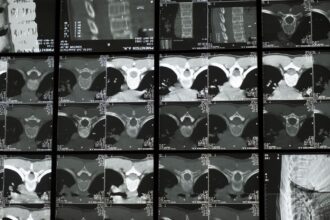
The Vaidya review highlights that distinguishing adenoma from hyperplasia requires both biochemical confirmation and adrenal imaging (computed tomography or magnetic resonance imaging), followed by selective adrenal venous sampling in many cases. This layered diagnostic approach is essential because unilateral adenomas may be amenable to surgical cure via adrenalectomy, whereas bilateral disease typically requires long-term medical management with mineralocorticoid receptor antagonists such as spironolactone or eplerenone. Misclassification of disease subtype can result in inappropriate treatment selection and suboptimal outcomes.
Diagnostic pathways and clinical decision-making
The diagnostic algorithm for primary aldosteronism, as outlined in the Nature Reviews Disease Primers article, proceeds through staged confirmation: initial screening via plasma aldosterone concentration and plasma renin activity ratio, followed by confirmatory testing using saline suppression, captopril challenge, or fludrocortisone suppression tests. Vaidya and colleagues note that test selection and interpretation protocols vary across international guidelines, reflecting both methodological differences and resource constraints in different healthcare settings.
Once biochemical confirmation is established, imaging and adrenal venous sampling localise the source of excess aldosterone production. The authors emphasise that this diagnostic stratification is not merely academic: it directly determines whether a patient is offered surgical intervention (with the possibility of normalising blood pressure and resolving hypokalaemia) or committed to lifelong medical therapy. Health policy initiatives promoting standardised diagnostic algorithms could improve diagnostic yield and treatment outcomes across different healthcare systems.
Management outcomes and quality of life
According to the Vaidya review, treatment outcomes differ substantially between surgical and medical management. Patients with unilateral adenoma who undergo successful adrenalectomy often achieve normal or significantly improved blood pressure control, with 30–60% achieving complete blood pressure normalisation and most others showing substantial reduction in antihypertensive medication burden. Hypokalaemia resolves in the majority of surgically treated patients, improving quality of life and reducing cardiovascular risk.
In contrast, patients with bilateral disease managed medically with mineralocorticoid receptor antagonists typically require additional antihypertensive agents and may experience adverse effects including gynecomastia (with spironolactone), hyperkalaemia (elevated potassium), and renal function decline in susceptible individuals. The authors note that long-term metabolic consequences—including effects on glucose metabolism, bone density, and cardiovascular remodelling—remain inadequately characterised in many patient cohorts, highlighting gaps in current knowledge about quality of life in primary aldosteronism.
Primary aldosteronism accounts for 5–15% of hypertension cases overall and up to 15% in resistant hypertension, yet systematic screening and early diagnosis remain uncommon in many healthcare systems, representing a significant missed opportunity for targeted treatment and prevention of complications.
— Vaidya et al., Nature Reviews Disease Primers (2026)
What this means
Frequently asked questions
What are the warning signs that I might have primary aldosteronism?
According to the Nature Reviews Disease Primers review, key clinical pointers include: resistant hypertension (blood pressure uncontrolled on three or more medications), hypertension diagnosed before age 40, unexplained low potassium levels, hypertension with adrenal incidentaloma (an adrenal nodule found incidentally on imaging), or a family history of early hypertension or stroke. If you have one or more of these features, discuss screening with your doctor.
Is primary aldosteronism curable?
According to Vaidya and colleagues in the Nature Reviews Disease Primers, unilateral aldosterone-producing adenomas can be cured by surgical removal (adrenalectomy), with 30–60% of patients achieving normal blood pressure and most others experiencing substantial improvement and reduced medication burden. Bilateral hyperplasia, which accounts for 60–70% of cases, requires lifelong medical management but responds well to mineralocorticoid receptor antagonists. Cure depends entirely on accurate diagnosis and disease localisation.
What medications are used to treat primary aldosteronism?
The Vaidya review identifies mineralocorticoid receptor antagonists—spironolactone and eplerenone—as first-line agents for primary aldosteronism, particularly in bilateral disease. These drugs block aldosterone’s effects on the kidney, reducing sodium retention and restoring potassium balance. Spironolactone is effective but may cause breast tenderness or sexual dysfunction in some patients; eplerenone is more selective but typically more expensive. Additional antihypertensive agents (ACE inhibitors, angiotensin receptor blockers, calcium channel blockers, or diuretics) are often required for optimal blood pressure control.
The publication of Vaidya and colleagues’ comprehensive review in Nature Reviews Disease Primers represents a timely opportunity to refocus clinical attention on primary aldosteronism as a discrete, treatable cause of hypertension. As healthcare systems worldwide face growing burdens of cardiovascular disease and medication-resistant hypertension, improved awareness and diagnostic capacity for primary aldosteronism could yield significant benefits: earlier diagnosis, targeted treatment selection, reduced cardiovascular complications, and improved quality of life for affected patients. Future research should address gaps in long-term outcome data, optimise diagnostic algorithms for resource-limited settings, and clarify mechanisms of cardiovascular remodelling in both treated and untreated disease.
Source: Primary aldosteronism, Vaidya et al., Nature Reviews Disease Primers, 25 June 2026
Was this article helpful?
Disclaimer. This article is health journalism intended for general information and education. It is not medical advice and is not a substitute for professional diagnosis or treatment. Always consult a qualified healthcare provider about your individual circumstances. Full disclaimer →
Related Coverage

Editorial standards. This article was produced under the GMJ News editorial process, with oversight by the GMJ Editorial Board. Our editorial process. Spotted an error? Contact the editorial team.