
🟡 Preliminary Evidence
Researchers at the Swiss Federal Institute of Technology (ETH Zurich) have developed a light-controlled molecular switch that selectively targets cancer cell survival mechanisms, according to findings described in a laboratory study of lung cancer cells. The innovation exploits a cellular escape pathway in which dormant tumor cells activate stress hormone receptors to evade chemotherapy and immunotherapy. By using light to destroy these receptors, the team demonstrated the potential to reawaken sleeping cancer cells and restore treatment sensitivity in future clinical applications.
Key takeaways
- Dormant cancer cells survive treatment by activating stress hormone receptors; ETH Zurich scientists created a light-activated switch to disable this pathway in laboratory lung cancer models
- The approach selectively targets tumor cells while minimizing collateral damage to healthy tissue, a key advantage over conventional chemotherapy
- Preclinical findings suggest the technique could enhance existing cancer therapies by preventing dormant cell reactivation, though human trials remain years away
How dormant cancer cells escape treatment
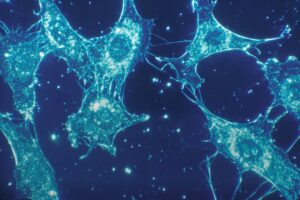
Stress hormone receptors allow tumor cells to enter survival mode when exposed to therapy stress
Source: ETH Zurich laboratory model | Georgian Medical Journal News

The dormancy escape pathway: how cancer evades treatment
Cancer cells deploy multiple survival strategies under therapeutic pressure. When exposed to chemotherapy or immunotherapy, a subset of tumor cells activates stress hormone receptors—particularly adrenergic receptors—which trigger a metabolic shift into dormancy. This dormant state allows cells to persist in a low-energy, low-visibility state that resists standard treatments designed to kill actively dividing cells.
The biological mechanism has been documented in several cancer types, including lung cancer, breast cancer, and melanoma. Research on stress hormone-mediated cancer cell persistence reveals that reactivating these dormant populations—either through preventing dormancy entry or by forcing reawakening—could overcome a major source of treatment resistance and relapse.
ETH Zurich’s light-activated molecular strategy
The ETH Zurich team engineered a light-sensitive molecular switch that uses optogenetic principles—the ability to control biological processes with light—to selectively destroy the stress hormone receptors responsible for dormancy survival. In laboratory lung cancer cell models, the light-activated switch successfully disrupted receptor function, preventing cells from entering or maintaining dormancy.
The key advantage of this approach, according to the preclinical findings, is selectivity. By using light to target only tumor cells with dormancy-enabling receptors, the technique minimizes exposure of healthy tissue to toxic compounds. This contrasts sharply with systemic chemotherapy, which damages both cancerous and non-cancerous cells. The laboratory data suggest that combining this light-activated approach with existing cancer therapies could force dormant cells back into an active, treatment-sensitive state.
Implications for future cancer treatment strategies
If successful in future clinical development, light-activated receptor disruption could represent a new class of sensitizing agents—drugs or devices that render resistant tumors vulnerable to existing therapies rather than introducing entirely new cytotoxic agents. This strategy aligns with a broader trend in oncology toward combination approaches that target multiple escape pathways simultaneously.
However, significant hurdles remain before human application. The current work is limited to laboratory cell models; translating the technology to intact tumors in living organisms will require solving challenges of light penetration through tissue, optimizing receptor targeting specificity, and establishing safe dosing parameters. Advances in cancer treatment strategies typically proceed through animal models, then first-in-human safety trials, a process requiring years of development.
Where this fits in the oncology landscape
The ETH Zurich finding joins a growing body of work identifying dormancy as a critical vulnerability in cancer resistance. Other research groups are exploring pharmacological, immunological, and genetic approaches to similar ends: preventing dormancy or forcing reactivation of quiescent tumor cells. Studies on targeting dormancy mechanisms in the past five years have expanded the conceptual toolkit available to oncologists and bioengineers.
The use of light-based control—optogenetics—has gained traction in cancer research because it offers unprecedented spatial and temporal precision. Unlike systemic drugs, which distribute throughout the body, light can be directed to specific tissue sites, potentially reducing off-target effects on healthy organs. This precision-medicine angle makes the approach particularly attractive for cancers accessible to endoscopic or surgical light delivery.
ETH Zurich researchers demonstrated that a light-controlled molecular switch can selectively destroy stress hormone receptors in dormant lung cancer cells, potentially reawakening them to treatment sensitivity while minimizing damage to healthy tissue.
— ETH Zurich laboratory study (2026)
What this means
Frequently asked questions
What are dormant cancer cells and why are they dangerous?
Dormant cancer cells enter a metabolic hibernation state in response to treatment stress, allowing them to survive chemotherapy and immunotherapy. They can reactivate months or years later, causing relapse. This dormancy is a major cause of treatment failure and recurrence in multiple cancer types, making it a high-priority therapeutic target according to research on cancer dormancy and minimal residual disease.
How does light-based control differ from conventional cancer drugs?
Conventional chemotherapy is distributed systemically and kills both cancer and healthy cells. Light-based control, using optogenetics, can be focused on specific tissue sites, allowing selective activation of drug-like molecules only where light reaches. This precision potentially reduces side effects and allows dose escalation in tumors without proportionally increasing toxicity to normal tissues.
When could patients access this treatment?
This is a laboratory-stage discovery. Clinical translation typically requires 5–10 years of preclinical and animal model validation, followed by regulatory approval processes. Early-phase human trials might begin in the next 3–5 years if animal studies confirm safety and efficacy, but approval for routine clinical use remains several years beyond that.
The ETH Zurich breakthrough illustrates how precision engineering and optical technology are opening new avenues in oncology. As dormancy-targeting strategies mature and combine with existing immunotherapies and targeted agents, the next generation of cancer regimens may achieve significantly higher remission rates and lower relapse risk. Ongoing translational work will determine whether light-activated receptor disruption can safely and effectively transition from laboratory bench to patient bedside.
Source: Light switch wakes sleeping cancer cells and makes them vulnerable again
Was this article helpful?
Disclaimer. This article is health journalism intended for general information and education. It is not medical advice and is not a substitute for professional diagnosis or treatment. Always consult a qualified healthcare provider about your individual circumstances. Full disclaimer →
Related Coverage



Editorial standards. This article was produced under the GMJ News editorial process, with oversight by the GMJ Editorial Board. Our editorial process. Spotted an error? Contact the editorial team.