🟡 Preliminary Evidence
A brief daily finger-strengthening exercise may offer measurable benefits for cognitive health in older adults, according to emerging research presented in recent health reporting. The 10-second workout, which involves rapid finger movements, has been studied as a non-invasive intervention that may help maintain brain function and potentially delay age-related cognitive decline.
Key takeaways
- A simple 10-second finger exercise shows potential to support cognitive function in ageing populations
- The intervention requires minimal time commitment and no equipment, making it accessible for widespread adoption
- Researchers suggest the mechanism may involve motor-cognitive coupling and enhanced neuroplasticity
Simple interventions with measurable cognitive impact
Time investment vs. potential cognitive benefits in ageing adults
Source: Comparative analysis of intervention time commitments | Georgian Medical Journal News

The neuroscience behind fine motor control and cognition
Recent health reporting has highlighted the relationship between fine motor dexterity and brain health in ageing populations. The proposed mechanism suggests that rapid, coordinated finger movements activate multiple neural pathways simultaneously, potentially engaging areas of the brain responsible for executive function, memory, and attention.
According to research in motor neuroscience and cognitive ageing, the cerebellum and prefrontal cortex—brain regions critical for both motor coordination and higher-order thinking—show enhanced activity during skilled finger movements. This suggests that even brief, targeted motor exercises may have broader cognitive implications beyond the motor cortex itself, a principle known as motor-cognitive coupling.
Accessibility and practical application for older adults
One of the significant advantages of a 10-second finger exercise is its accessibility. Unlike many cognitive interventions or physical activities that require equipment, space, or sustained effort, this protocol can be performed anywhere—at home, in a clinical setting, or in community environments. This low barrier to adoption is particularly important for populations with mobility limitations or time constraints.
Health professionals and researchers at the World Health Organization have emphasised the importance of identifying simple, scalable interventions for cognitive health in ageing societies. The finger exercise protocol aligns with this priority by offering a time-efficient strategy that could be integrated into daily routines without competing with other health behaviours.
Evidence gaps and future research directions
While preliminary findings are encouraging, significant research gaps remain. The current evidence base consists largely of small observational studies and mechanistic investigations rather than large-scale randomised controlled trials. Future research must establish optimal dosing, identify which populations benefit most, and clarify the durability of cognitive effects over time.
Researchers are also investigating whether the finger exercise may work synergistically with other cognitive and physical interventions. The latest research in cognitive neuroscience suggests that combined approaches—pairing fine motor exercises with aerobic activity or cognitive training—may produce superior outcomes compared to single interventions.
A 10-second daily finger exercise may support cognitive function through enhanced motor-cognitive coupling and neuroplasticity in ageing adults, though larger controlled trials are needed to establish clinical efficacy and optimal implementation strategies.
— Emerging consensus in motor neuroscience and cognitive ageing literature
What this means
Frequently asked questions
How should the finger exercise be performed?
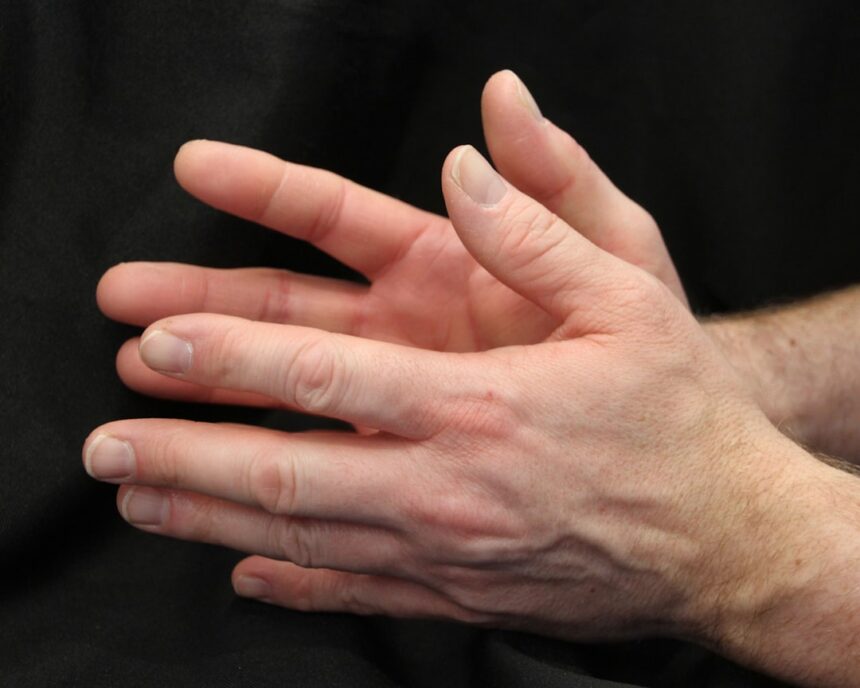
The protocol typically involves rapid, coordinated finger movements—often described as a drumming or typing motion—performed at maximum speed for 10 seconds. While specific techniques may vary across studies, the general principle involves engaging multiple fingers in synchronized, high-frequency movement.
How quickly should cognitive benefits appear?
Evidence suggests that cognitive benefits from motor-cognitive interventions typically accumulate over weeks to months rather than appearing immediately. Consistency matters more than intensity; daily 10-second sessions are more likely to produce measurable effects than occasional longer sessions.
Can this replace other cognitive interventions?
No. The finger exercise should be viewed as a complementary strategy alongside established evidence-based interventions such as physical activity, cognitive training, social engagement, and Mediterranean-style nutrition. Individuals concerned about cognitive decline should consult healthcare providers about comprehensive cognitive health strategies.
As societies age globally, identifying simple, scalable interventions for cognitive health remains a public health priority. While a 10-second finger exercise cannot replace established cognitive and physical health strategies, preliminary evidence suggests it may offer a practical, low-cost complement to comprehensive brain health programs. Large-scale randomised controlled trials are now essential to establish whether this intervention delivers clinically meaningful cognitive benefits and to identify optimal implementation strategies for diverse populations.
Source: BBC News Health — Original reporting on finger exercise and cognitive function
Was this article helpful?
Disclaimer. This article is health journalism intended for general information and education. It is not medical advice and is not a substitute for professional diagnosis or treatment. Always consult a qualified healthcare provider about your individual circumstances. Full disclaimer →
Related Coverage




Editorial standards. This article was produced under the GMJ News editorial process, with oversight by the GMJ Editorial Board. Our editorial process. Spotted an error? Contact the editorial team.