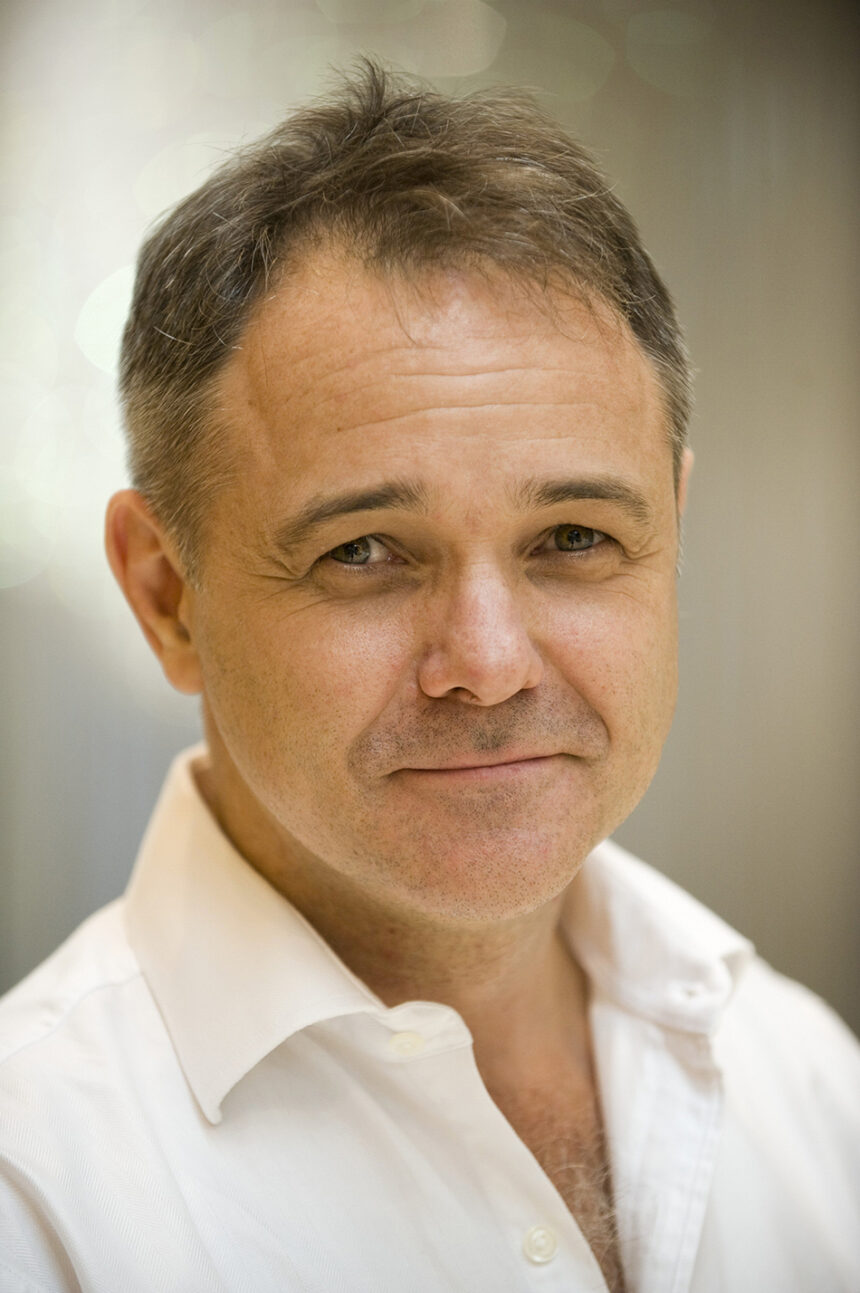
The announced retirement of Sir Jeremy Farrar from the World Health Organization should not be read as simply another senior official leaving an international institution — and it should certainly not be read as a verdict on the institution itself.
- A tribute that is deserved
- The numbers behind the transformation
- WHO is delivering even under these constraints — Ebola proves it
- The deeper problem is the financing model the world gave WHO
- COVID-19 should have taught us the opposite lesson
- Independence requires predictable financing
- What this means for smaller countries such as Georgia
- The real warning
- References
It comes at a moment when WHO is carrying out one of the most demanding transformations in its recent history, with remarkable discipline and under extraordinary financial pressure. The real story, therefore, is not about one individual. It is about what happens to global health when the institution the world relies on to coordinate its response to epidemics, pandemics and other transnational health threats is asked to do more with substantially less.
As first reported by The Telegraph, WHO Director-General Dr Tedros Adhanom Ghebreyesus informed staff that Dr Farrar will retire from WHO effective 30 September 2026, paying tribute to his exceptional commitment to science and public health, and announcing that Dr Bruce Aylward — one of the most experienced emergency and immunisation leaders in the organisation's history — will assume responsibility for the Health Promotion, Disease Prevention and Care division [1]. That is a strong signal of continuity.
Senior leadership transitions are a normal part of institutional life. They should not be over-interpreted, and speculation about individual motivations serves no one. What deserves serious attention is the environment in which this transition is taking place — an environment best understood through numbers.

A tribute that is deserved
Sir Jeremy Farrar is not simply another international civil servant.
Before joining WHO as Chief Scientist in 2023, he led the Wellcome Trust for almost a decade. He is an infectious-disease specialist who became one of the most recognisable scientific voices of the COVID-19 pandemic. In May 2025, he took on one of the most difficult assignments in global health: leading one of four newly consolidated divisions, at the very moment WHO was absorbing the deepest financial shock in its history [1].
He did not step back from that challenge. He helped design and implement a reform that no leader undertakes lightly. Reflecting on that period in an interview with the Swiss daily Le Temps earlier this year, Farrar acknowledged how painful it was for any organisation to reduce its workforce by roughly a third in a single year, while stressing that the redesign was carried out as strategically as possible to prepare WHO for the health challenges of the next twenty years [1].
That is what institutional responsibility looks like. Leaders who stay through the hardest chapter of a reform, complete it, and then hand over to experienced successors deserve gratitude, not conjecture.
The numbers behind the transformation
There is an uncomfortable contradiction at the centre of contemporary global health, and it does not originate in Geneva. The world expects WHO to deliver faster outbreak detection, stronger pandemic preparedness, better surveillance, scientific guidance, emergency coordination, support for universal health coverage, antimicrobial-resistance action and climate-health leadership. At the same time, the resources made available to WHO by the international community have contracted sharply.
This is not speculation. The figures are public.
The budget. WHO's approved base Programme Budget for 2024–2025 was US$6.8 billion. For 2026–2027, the Secretariat originally proposed US$5.3 billion. After the withdrawal of the United States — historically the organisation's largest single donor — and reductions in official development assistance by other countries, the proposal was cut to US$4.2 billion, which Member States approved at the Seventy-eighth World Health Assembly in May 2025 [2,3]. That is a reduction of more than one billion dollars, approximately 22%, from the original proposal — and roughly 38% below the previous biennium.
The funding gap. Even the reduced US$4.2 billion budget was not fully financed. In May 2025 the projected gap stood at approximately US$1.7 billion; by late 2025, following intensive resource mobilisation, it had been reduced to a projected US$1.05 billion for the 2026–2027 biennium — progress, but still a quarter of the base budget unfunded [4].
The workforce. In April 2025, Dr Tedros informed Member States that the refusal of the United States to pay its assessed contributions for 2024 and 2025, combined with broader aid reductions, had created a projected salary gap of US$560–650 million for 2026–2027 [5]. The organisational consequences were substantial: the senior leadership team was reduced from 14 to 7, headquarters departments from 76 to 34, and ten programme divisions were merged into four [6]. According to a workforce report presented to Member States in late 2025, an estimated 2,371 staff worldwide will have been terminated, retired or separated by agreement by mid-2026 — roughly a quarter of a workforce that numbered about 9,400 at the end of 2024 [4].
These are not abstract administrative statistics. When a public-health institution loses a quarter of its people — among them experienced epidemiologists, scientists, programme managers and emergency specialists — capacity can leave with them. Buildings do not respond to epidemics. People do.
WHO is delivering even under these constraints — Ebola proves it
The clearest evidence that WHO continues to perform its core mandate is unfolding right now in Central Africa.
On 15 May 2026, the Democratic Republic of the Congo declared an outbreak of Ebola disease caused by Bundibugyo virus — a species for which there is currently no licensed vaccine or specific treatment. Two days later, WHO determined the outbreak to be a public health emergency of international concern [7].
The scale is historic. As of mid-August 2026, WHO's Regional Office for Africa reported more than 5,000 confirmed cases and over 2,370 deaths [8]. The outbreak has expanded to 54 health zones across six provinces and is the fastest-spreading Ebola outbreak ever recorded in the country [9]. It has now surpassed the 2018–2020 North Kivu epidemic — which killed 2,299 people — as the deadliest Ebola outbreak in the DRC's history, with a case-fatality ratio approaching 46% [10]. Only the 2014–2016 West African epidemic was larger.
WHO is coordinating surveillance, contact tracing, clinical management, supply delivery, community engagement and cross-border preparedness across five neighbouring countries — while simultaneously absorbing a 25% workforce reduction [7,4]. Any honest observer should recognise what that represents: an institution performing under conditions that would break most organisations.
It should also concentrate minds. Imported cases linked to this outbreak have already been recorded in Europe and among foreign nationals evacuated for treatment [8]. Pathogens do not respect borders. Neither should our commitment to the institution that fights them.
The deeper problem is the financing model the world gave WHO
The present pressure exposes a structural weakness that public-health experts have discussed for decades — and that WHO itself has repeatedly asked Member States to fix.
The world created an organisation with enormous responsibilities but historically failed to provide it with predictable, flexible financing. By the 2020–2021 budget cycle, assessed contributions — the mandatory membership fees — represented only about 16% of WHO's approved programme budget; the rest depended on voluntary contributions, much of it earmarked by donors for specific programmes [3]. An organisation responsible for setting global health priorities according to epidemiological evidence should not have its agenda shaped by what donors happen to be willing to finance.
To their credit, Member States have begun to correct this. In 2022, the World Health Assembly approved a plan to progressively raise assessed contributions to 50% of the base budget by 2030–2031 [11]. The first 20% increase was approved in 2023 alongside the 2024–2025 budget [12]; the second 20% increase was approved in May 2025, bringing assessed contributions to approximately 40% of the 2026–2027 base budget [2,6]. Three further increases are scheduled for 2027, 2029 and 2031 [11]. As Dr Tedros told Member States in January 2026, the significance of this decision for the stability, sustainability and independence of WHO cannot be overstated [11].
This is real progress. But the underlying vulnerability remains, and a billion-dollar gap persists [4]. Global health security cannot sustainably operate like a charitable fundraising campaign. That is not a criticism of WHO. It is a criticism of the arrangement the world has imposed on it.
COVID-19 should have taught us the opposite lesson
The timing is particularly troubling because the world has only recently experienced the most disruptive pandemic in generations — one whose economic losses are measured in trillions of dollars.
Against losses of that magnitude, investment in preparedness is extraordinarily small. WHO's own investment case estimates a return of US$35 for every US$1 invested in the organisation [12]. Few investments in any sector offer that ratio. Yet political attention follows a predictable cycle: a crisis occurs; governments promise reform; preparedness receives temporary attention; the emergency fades; funding declines; another crisis arrives.
It is WHO — and the populations it serves — that repeatedly pays the price for this short political memory. The 2026 Ebola emergency, arriving in the middle of the deepest financial contraction in WHO's history, is the cycle playing out in real time.
Independence requires predictable financing
WHO occupies an unusual position. It is expected to provide independent scientific leadership while being governed and financed by sovereign states whose interests, during emergencies, do not always align. Governments may hesitate to report outbreaks. Countries disagree about travel measures, pathogen sharing, vaccine distribution and investigations. Geopolitical tension can undermine cooperation precisely when cooperation matters most.
WHO has consistently demonstrated technical competence under these pressures. What Member States owe it in return is the institutional independence that only predictable financing can provide. No multilateral institution can be fully insulated from politics — but WHO's scientific functions and emergency operations must be protected from financial pressure as much as possible. Strengthening that protection strengthens every country, large and small.
What this means for smaller countries such as Georgia
For countries with limited public-health resources, a strong WHO is not an abstraction — it is national infrastructure.
Large countries can maintain extensive national institutions for epidemiology, regulatory science, laboratory surveillance and emergency preparedness. Smaller health systems cannot independently reproduce every component of that architecture. They depend disproportionately on WHO's scientific standards, surveillance networks, technical assistance and rapid access to credible guidance.
Georgia therefore has a direct national interest in a strong, well-financed and technically independent WHO — and should say so clearly in every multilateral forum available to it.
At the same time, international cooperation should reinforce national capacity, not replace it. Georgia must continue strengthening its own epidemiological surveillance, laboratory capacity, infection prevention and control, emergency preparedness, public-health workforce and scientific advisory mechanisms — in close partnership with WHO, whose country-level technical support remains one of the most valuable instruments available to health systems like ours.
The real warning
Sir Jeremy Farrar's retirement will inevitably generate commentary about personalities and about the leadership transition ahead, as Dr Tedros's second and final term approaches its conclusion in 2027 [1]. Those discussions are natural. But they are secondary.
People come and go. Directors change. Governments change. Institutions must survive those transitions — and WHO, at nearly eighty years old, has survived many. The question is not whether WHO will endure. It is whether governments will finally match their expectations of WHO with the resources those expectations require.
There is a basic principle in public health: prevention is cheaper than catastrophe. The same principle applies to institutions. Maintaining surveillance, expertise and preparedness between emergencies may appear expensive when nothing is happening. It becomes extraordinarily cheap when something does — as the more than 2,300 families mourning in the Democratic Republic of the Congo can testify today [8].
When the next international health emergency arrives, governments will once again turn to Geneva. Whether Geneva can answer will depend far less on any single departure — and far more on whether the world chose, in years like this one, to stand behind the institution it cannot afford to lose.
WHO deserves that support. Now more than at any moment in its history.
The author has served as a consultant to the World Health Organization. The views expressed are his own and do not represent the position of WHO.
References
- Newey S, Nuki P, Scott-Geddes A. Top British scientist steps down from WHO. The Telegraph. 18 August 2026.
- World Health Organization. In historic move, WHO Member States approve 20% funding increase and 2026–27 budget. Geneva: WHO; 20 May 2025. Available from: https://www.who.int/news/item/20-05-2025-in-historic-move–who-member-states-approve-20–funding-increase-and-2026-27-budget
- France 24 / AFP. WHO restructures, cuts budget after US withdrawal. 27 May 2025. Available from: https://www.france24.com/en/live-news/20250527-who-restructures-cuts-budget-after-us-withdrawal
- Fletcher ER. WHO cutting up to 25% of staff by June 2026. Health Policy Watch. 18 November 2025. Available from: https://healthpolicy-watch.news/exclusive-who-cutting-up-to-28-of-staff-by-june-2026-but-shadow-workforce-of-consultants-is-unreported/
- Agence France-Presse. 'Painful decision': WHO announces major overhaul, layoffs amid US funding cuts. 23 April 2025.
- Health Policy Watch. Nations approve WHO membership fee increase as US exit squeezes budget. 21 May 2025. Available from: https://healthpolicy-watch.news/nations-approve-who-membership-fee-increase-as-us-exit-squeezes-budget/
- World Health Organization. Ebola outbreak – DRC 2026 [emergency situation page]. Geneva: WHO; 2026. Available from: https://www.who.int/emergencies/situations/ebola-outbreak—drc-2026
- European Centre for Disease Prevention and Control. Ebola disease outbreak in the Democratic Republic of the Congo and Uganda. Stockholm: ECDC; 18 August 2026. Available from: https://www.ecdc.europa.eu/en/ebola-outbreak-democratic-republic-congo-and-uganda
- World Health Organization. Disease Outbreak News: Ebola disease caused by Bundibugyo virus – Democratic Republic of the Congo (DON615). Geneva: WHO; 12 August 2026. Available from: https://www.who.int/emergencies/disease-outbreak-news/item/2026-DON615
- United Nations News. Ebola outbreak becomes deadliest in DR Congo's history. 17 August 2026. Available from: https://news.un.org/en/story/2026/08/1168154
- World Health Organization. WHO Director-General's opening remarks at the 43rd meeting of the Programme, Budget and Administration Committee of the Executive Board. Geneva: WHO; 28 January 2026. Available from: https://www.who.int/news-room/speeches/item/who-director-general-s-opening-remarks-at-the-43rd-meeting-of-the-programme-budget-and-administration-committee-of-the-executive-board-28-january-2026
- World Health Organization. Seventy-sixth World Health Assembly – Daily update: 22 May 2023. Geneva: WHO; 2023. Available from: https://www.who.int/news/item/22-05-2023-seventy-sixth-world-health-assembly—daily-update–22-may-2023
Was this article helpful?
100% of readers found this helpful (1 votes)
Disclaimer. This article is health journalism intended for general information and education. It is not medical advice and is not a substitute for professional diagnosis or treatment. Always consult a qualified healthcare provider about your individual circumstances. Full disclaimer →
Related Coverage


Editorial standards. This article was produced under the GMJ News editorial process, with oversight by the GMJ Editorial Board. Our editorial process. Spotted an error? Contact the editorial team.