Updated 14/09/2026
🟡 Educational Overview
Your spine is far more than a skeletal support structure—it is the central conduit through which your brain communicates with every organ, muscle, and sensory receptor in your body. Each spinal nerve originates at a specific vertebral level and branches outward to govern distinct physiological regions, meaning that spinal compression or irritation at one level can produce symptoms in distant areas of the body, a principle known as referred pain or dermatome-related dysfunction.
Key takeaways
- The spine houses 31 pairs of spinal nerves that directly control organ function, limb movement, and sensation across the entire body
- Cervical (neck) nerves influence the shoulders, arms, and diaphragm; thoracic nerves affect digestion; lumbar nerves control leg movement; sacral nerves govern bladder and bowel function
- Poor posture, weak core muscles, chronic stress, sedentary behavior, and spinal injuries can all compromise nerve signaling, leading to pain, dysfunction, and systemic health effects
- Protecting spinal health through proper ergonomics, core strengthening, stress management, and movement is essential for whole-body function
The spine as your body’s “wiring harness”
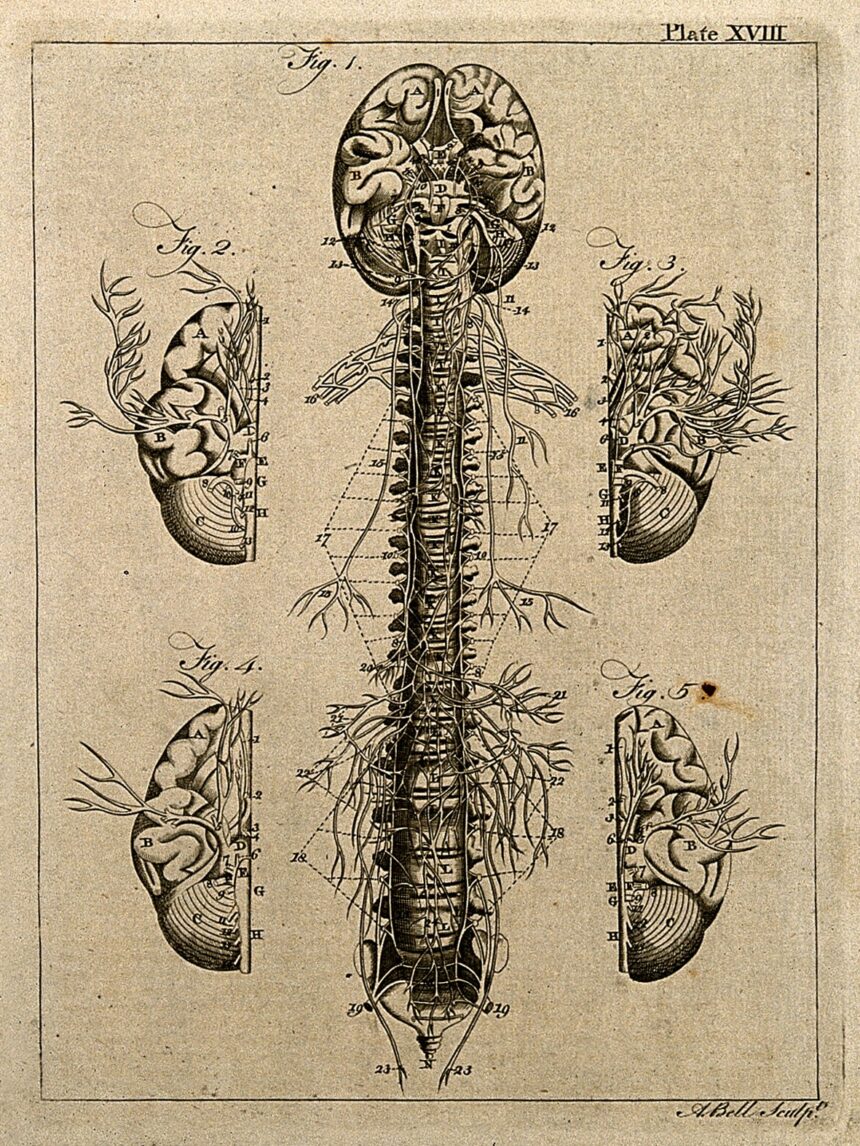
The human spine comprises 33 vertebrae stacked vertically to form a protective channel for the spinal cord—a bundle of nerve tissue that extends from the brain to the lower back. According to anatomical texts including those reviewed by the National Institute of Neurological Disorders and Stroke (NINDS), the spinal cord gives rise to 31 pairs of spinal nerves that exit through openings between vertebrae and branch to innervate every region of the body. Each nerve serves a specific dermatome—a zone of skin, muscle, and organ tissue—meaning that irritation or compression at one vertebral level produces predictable symptoms in its corresponding body region.

This segmental organization means that cervical (C1–C8) nerves control the neck, shoulders, arms, and respiratory diaphragm; thoracic (T1–T12) nerves innervate the chest, upper back, and abdominal organs including the stomach and intestines; lumbar (L1–L5) nerves govern the lower back, hips, and legs; and sacral (S1–S5) nerves regulate pelvic organs, including the bladder, bowel, and reproductive organs. Damage or compression at any level disrupts this communication pathway and can produce referred pain—sensation felt in a region distant from the actual injury site.
How spinal nerves map to body regions
Each vertebral level (cervical, thoracic, lumbar, sacral) innervates specific organs and body zones
Source: NINDS Spinal Cord Anatomy; GMJ News
Common pathways to spinal nerve compromise
Several modifiable and non-modifiable factors compromise spinal nerve function. Poor posture—sustained forward head position, rounded shoulders, or excessive spinal flexion—narrows the intervertebral foramina (the lateral spaces through which nerves exit), increasing mechanical pressure on nerve roots and producing referred pain, tingling, and muscle weakness downstream. Weakness in the core stabilizer muscles, particularly the deep abdominal transverse abdominis and the gluteal muscles, shifts mechanical load unevenly onto the spine, increasing disc bulging risk and localized inflammation.
Chronic psychological stress and anxiety elevate muscle tone through sympathetic nervous system activation, causing sustained contraction of paraspinal muscles and creating a vicious cycle: tight muscles compress nerves, altered nerve signals perpetuate pain perception, and pain reinforces muscle tension. Sedentary behavior reduces blood flow to vertebral discs and surrounding tissues, limiting nutrient delivery and oxygen supply, which accelerates disc degeneration and increases susceptibility to herniation. Direct spinal trauma—falls, motor vehicle collisions, contact sports injuries—can lacerate or compress nerve roots acutely, and repetitive microtrauma from poor mechanics accumulates over years to damage nerve tissue chronically.
How nerve irritation creates distant symptoms
When a spinal nerve is compressed or irritated, the organ or muscle tissue it innervates loses efficient neural signaling capacity. A compressed cervical nerve may cause shoulder pain, arm weakness, or tingling fingers even though the primary problem lies in the neck. A thoracic nerve irritation might manifest as chest wall pain or digestive dysfunction rather than mid-back tenderness. A lumbar nerve root compression produces leg pain, foot numbness, or hip weakness—a pattern known as radiculopathy when nerve irritation causes radiating pain along the nerve’s distribution.
Spinal nerves exit at specific vertebral levels and innervate dermatomes—zones of skin, muscle, and organ tissue—so that compression at one vertebral level produces predictable referred pain and dysfunction in distant body regions.
— National Institute of Neurological Disorders and Stroke (NINDS)
This relationship explains why referred pain syndromes are often misdiagnosed initially: a patient experiencing hand numbness may pursue carpal tunnel testing before imaging reveals the true culprit—cervical spine compression. Similarly, unexplained digestive symptoms, pelvic dysfunction, or leg pain often trace back to spinal nerve irritation at a corresponding vertebral level. The key clinical insight is that symptom location and lesion location may be spatially distant; diagnosis requires understanding segmental spinal anatomy.
Practical strategies for spinal protection and nervous system health
Protecting spinal health translates directly to preserving nervous system function. Postural alignment reduces mechanical stress on nerve roots: maintaining neutral spine alignment during sitting, standing, and lifting, using ergonomic workstations, and taking frequent posture breaks during desk work all reduce compression. Core stabilization training—progressive strengthening of deep abdominal and gluteal muscles—distributes mechanical load evenly and reduces disc bulging risk. According to research in spinal biomechanics, adequate core endurance is among the strongest predictors of long-term spine health and pain prevention.
Stress management and sleep reduce sympathetic muscle tension and allow tissue repair: regular aerobic exercise, mindfulness-based stress reduction, and consistent sleep patterns lower baseline muscle tone and inflammation. Regular movement—avoiding prolonged static postures, incorporating gentle stretching, and maintaining cardiovascular fitness—preserves blood flow to spinal tissues and prevents the stiffness and inflammation associated with sedentary behavior. Injury prevention through proper lifting mechanics, fall prevention, and protective equipment during contact activities avoids acute nerve trauma.
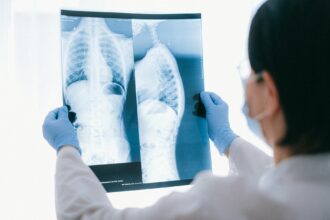
For those experiencing spinal pain or neurological symptoms, early evaluation by a qualified healthcare provider—including imaging when indicated—ensures accurate diagnosis and appropriate treatment before chronic dysfunction develops.
What this means
Frequently asked questions
Can a pinched nerve in my neck really cause arm or hand pain?
Yes. Cervical spinal nerves (C5–C8) innervate the arm and hand, so compression at a cervical vertebral level produces referred pain, numbness, or tingling along the nerve’s distribution—often extending to the forearm or fingers. This is called cervical radiculopathy. Imaging (MRI or CT) confirms the diagnosis, and early treatment (physical therapy, postural correction, or medical management) usually prevents progression.
Why does my lower back pain feel worse when I sit for long periods?
Prolonged sitting increases pressure on lumbar discs and narrows the intervertebral foramina where lumbar nerves exit, compressing nerve roots and worsening pain. Sedentary postures also weaken stabilizer muscles and reduce blood flow to spinal tissues. Regular movement breaks, core strengthening, and ergonomic seating reduce symptom severity.
What should I do if I suspect I have a spinal nerve problem?
Seek evaluation from a healthcare provider (physician, physical therapist, or spine specialist) who can perform a thorough neurological examination and order imaging if warranted. Early diagnosis and intervention—whether conservative (physical therapy, postural correction) or medical—improve outcomes and prevent chronic dysfunction. Do not self-diagnose or delay professional care if neurological symptoms (weakness, bowel/bladder dysfunction) are progressive.
Your spine is not simply a skeletal scaffold—it is the anatomical and functional foundation of your nervous system’s ability to coordinate every bodily function. Understanding how spinal health directly influences organ function, movement, sensation, and whole-body wellness empowers both preventive care and informed clinical decision-making. Protecting your spine through evidence-based ergonomic, strengthening, stress-management, and movement practices is among the most cost-effective investments in long-term health and functional independence.
Source: Educational overview informed by anatomy and clinical neurology resources from the National Institute of Neurological Disorders and Stroke (NINDS) and the Centers for Disease Control and Prevention (CDC). Explore more on Clinical Updates and Explainers at GMJ News.
🗺️ Find certified Georgian healthcare providers: sheniekimi.ge — Georgia Health Map · 998 clinics · 6,600+ doctors · 2,296 pharmacies
Was this article helpful?
Disclaimer. This article is health journalism intended for general information and education. It is not medical advice and is not a substitute for professional diagnosis or treatment. Always consult a qualified healthcare provider about your individual circumstances. Full disclaimer →
Related Coverage




Editorial standards. This article was produced under the GMJ News editorial process, with oversight by the GMJ Editorial Board. Our editorial process. Spotted an error? Contact the editorial team.