By using this site, you agree to the Privacy Policy and Terms of Use.
Accept
GMJ NewsGMJ NewsGMJ News
  • Latest News
    • GMJ Briefs
  • Podcast & Media
    • Podcast Episodes
    • GMJ Audio
    • GMJ Videos
  • Research Digest
    • New Studies
    • Georgian Research
    • Data & Numbers
  • Policy & Systems
    • Health Policy
    • Quality & Safety
    • Migration & Health
    • Global Health
  • Practice
    • Clinical Updates
    • Case Discussions
    • Pharmacy & Prescribing
    • Ingredients A-Z
  • Perspectives
    • Editorial
    • Explainers
    • Voices
    • Letters
  • GMJ Articles
    • Vol. 1 Issue 2 (2026)
    • Vol. 1 Issue 1 (2026)
    • Pre-Launch Articles (2025)
  • Read the Journal →
  • About GMJ News
Notification Show More
Font ResizerAa
GMJ NewsGMJ News
Font ResizerAa
  • Latest News
    • GMJ Briefs
  • Podcast & Media
    • Podcast Episodes
    • GMJ Audio
    • GMJ Videos
  • Research Digest
    • New Studies
    • Georgian Research
    • Data & Numbers
  • Policy & Systems
    • Health Policy
    • Quality & Safety
    • Migration & Health
    • Global Health
  • Practice
    • Clinical Updates
    • Case Discussions
    • Pharmacy & Prescribing
    • Ingredients A-Z
  • Perspectives
    • Editorial
    • Explainers
    • Voices
    • Letters
  • GMJ Articles
    • Vol. 1 Issue 2 (2026)
    • Vol. 1 Issue 1 (2026)
    • Pre-Launch Articles (2025)
  • Read the Journal →
  • About GMJ News
Follow US
GMJ News > Research Digest > New Studies > Brain Consumes 20% of Body’s Energy, Requires Key Micronutrients for Optimal Function
New StudiesResearch Digest

Brain Consumes 20% of Body’s Energy, Requires Key Micronutrients for Optimal Function

GMJ
Last updated: 28/05/2026 14:13
By
GMJ Research Desk
Share
6 Min Read
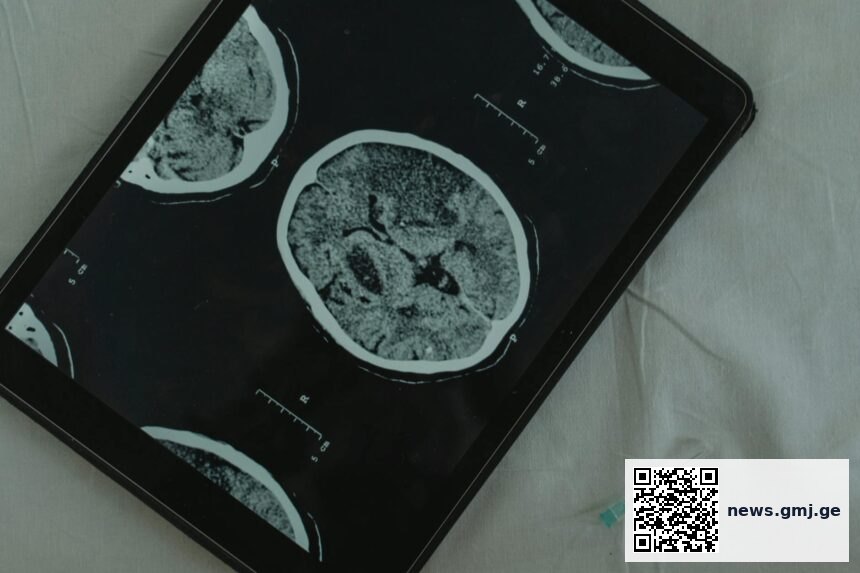
Brain energy consumption chart showing metabolic demands across different age groups
New research reveals the brain consumes 20% of total body energy in adults, rising to 50% during childhood development. This extraordinary metabolic demand requires optimal micronutrient availability for cognitive function. — Photo: Tima Miroshnichenko / Pexels
SHARE
🎧 Listen to this article5:41 min · 679 words · GMJ Audio

Updated 28/05/2026

Contents
      • Brain Energy Consumption by Age Group
  • Homocysteine Regulation Critical for Cognitive Health
  • Energy Metabolism Drives Neural Function
  • Neurotransmitter Synthesis Requires Vitamin B6
  • Signal Transmission Depends on Myelin Integrity
    • Key takeaways
  • Frequently asked questions
    • Why does the brain consume so much energy relative to its size?
    • Which nutrients are most critical for brain energy metabolism?
3 min read|679 words

The human brain accounts for approximately 20% of the body’s total energy consumption despite representing only 2% of body weight, with energy demands reaching up to 50% during childhood development around age 10. This extraordinary metabolic requirement underscores the critical importance of consistent micronutrient availability for optimal cognitive function and neural health.

20%
of total body energy consumed by the adult brain, rising to 50% at age 10

Brain Energy Consumption by Age Group

Percentage of total body energy metabolism, showing peak demand in childhood

Age 10
50%
Young Adult
25%
Adult
20%
Elderly

17%

Source: The brain consumes ~20% of the body’s energy (Facebook medical content)

Submit Your Paper
GMJ_Submit_Banner

Homocysteine Regulation Critical for Cognitive Health

Elevated homocysteine levels pose significant risks to both blood vessels and neurons, making proper regulation through B-vitamin availability essential for long-term brain health. Vitamins B6, B9 (folate), B12, riboflavin, choline, and niacin (B3) work synergistically to maintain optimal homocysteine metabolism, according to the original medical content.

The original source notes that supplementing B12 and folate in older adults with elevated homocysteine levels has been shown to slow brain atrophy and improve memory performance.

🎙️ Related Podcast Episodes
🎧 #53 | GMJ Podcast | Palliative Care in Georgia — Health System Gaps, Access Barriers, and Policy Implications · 16m

The mechanism involves converting homocysteine back to methionine or cysteine, preventing the accumulation of this potentially neurotoxic amino acid. For comprehensive information on clinical updates regarding nutrient interventions, ongoing research continues to validate these protective effects.

Energy Metabolism Drives Neural Function

The brain’s extraordinary energy demands require constant ATP production through mitochondrial pathways that depend heavily on micronutrient cofactors. B vitamins, lipoic acid, CoQ10, iron, and manganese serve as essential components in these energy-generating processes.

Thiamine (B1) and riboflavin (B2) deficiencies directly impair cellular energy metabolism, manifesting as cognitive fog, poor concentration, and mental fatigue. According to the source material, patients with thiamine deficiency often experience reversible confusion and energy loss that resolves completely once repleted with B1.

This reversibility underscores the direct relationship between micronutrient status and cognitive performance. For additional context, see new studies.

Neurotransmitter Synthesis Requires Vitamin B6

Vitamin B6 serves as an indispensable cofactor in converting amino acids into critical neurotransmitters including serotonin, dopamine, and GABA. Without adequate B6 availability, these conversion processes become impaired, directly affecting mood regulation and emotional stability.

The original source indicates that B6 supplementation in individuals with low serotonin production improves emotional stability and stress resilience by restoring neurotransmitter balance.

The clinical implications extend beyond mood disorders to include anxiety, depression, and cognitive performance. This evidence supports the integration of nutritional assessment into mental health evaluation protocols, as explored in explainer articles on nutrient-brain connections.

Signal Transmission Depends on Myelin Integrity

Efficient neural communication requires intact myelin sheaths and optimal axonal firing capacity, both of which depend on specific micronutrients. DHA, folate (B9), B12, thiamine, and iron maintain these structural and functional components of nerve signal transmission.

According to the source material, low B12 can lead to nerve demyelination and neuropathy, while DHA from omega-3s improves communication speed between neurons. For detailed research, see B12 deficiency studies.

Key takeaways

  • The brain consumes 20% of adult energy but up to 50% during childhood peak development
  • B-vitamin deficiencies directly impair cognitive function through disrupted energy metabolism and neurotransmitter synthesis
  • Homocysteine regulation through folate and B12 supplementation demonstrates measurable cognitive protection in aging adults
  • Micronutrient status assessment should be integrated into cognitive health evaluations

Frequently asked questions

Why does the brain consume so much energy relative to its size?

The brain’s high energy consumption reflects the metabolic cost of maintaining neural networks, synthesizing neurotransmitters, and supporting synaptic transmission. Active neurons require constant ATP production to sustain electrical signaling and maintain cellular integrity.

Which nutrients are most critical for brain energy metabolism?

B vitamins (especially B1, B2, B6, B9, B12), iron, manganese, CoQ10, and lipoic acid serve as essential cofactors in mitochondrial energy production. Deficiencies in any of these nutrients can impair cognitive function and energy availability.

The relationship between brain energy metabolism and micronutrient availability represents a fundamental aspect of cognitive health that extends across the lifespan. As research continues to elucidate these mechanisms, healthcare providers are increasingly incorporating nutritional assessment into cognitive health protocols.

Source: The brain consumes ~20% of the body’s energy (it can be up to 50% around the age 10)

Was this article helpful?

Disclaimer. This article is health journalism intended for general information and education. It is not medical advice and is not a substitute for professional diagnosis or treatment. Always consult a qualified healthcare provider about your individual circumstances. Full disclaimer →

Related Coverage

Correction issued for MAGE-A4/A8 immunotherapy trial in advanced solid tumoursJul 14, 2026
Jackfruit-derived biomaterial shows promise in reversing severe gum disease damageJul 14, 2026
Scientists Reprogram Brain Immune Cells to Combat Alzheimer's DiseaseJul 14, 2026
Flavanols in fruits and vegetables offer measurable cardiovascular protection, research showsJul 13, 2026
Related reference
  • Riboflavin · Ingredient
  • Vitamin B6 · Ingredient
  • Vitamin D · Ingredient
  • Vitamin A · Ingredient
  • Manganese · Ingredient
  • Thiamine · Ingredient
  • Choline · Ingredient
  • Thiamin · Ingredient
PG
Written by
Prof. Giorgi Pkhakadze, MD, MPH, PhD
Editor-in-Chief, GMJ News
Full profile →  ·  ORCID 0000-0001-7609-4515
Medical disclaimer. This article is health journalism intended for general information. It is not medical advice and is not a substitute for consultation with a qualified healthcare professional. Always seek your physician's advice regarding any medical condition.
Medically reviewed by Prof. Giorgi Pkhakadze, MD, MPH, PhD. Spotted an error? Contact the editorial team.

Get the GMJ News digest
Evidence-based health journalism in your inbox. No spam; unsubscribe anytime.
TAGGED:B-vitaminsbrain energycognitive functionmicronutrientsneural metabolism
Share This Article
Facebook LinkedIn Bluesky Copy Link Print
GMJ
ByGMJ Research Desk
Follow:
GMJ Research Desk is part of GMJ News, the newsroom of the Georgian Medical Journal (gmj.ge), published by the Public Health Institute of Georgia. Every article is editorially reviewed before publication.
Leave a Comment Leave a Comment

Leave a Reply Cancel reply

Your email address will not be published. Required fields are marked *

Submit Your Paper →

Georgia's peer-reviewed open-access medical journal. No APC until January 2027.
Submit Manuscript →
Why Nearly Half of U.S. Counties Lack Maternity Care Despite Falling Birth Rates

Nearly 50% of U.S. counties lack an obstetrician-gynecologist despite falling birth rates.…

Why Sunlight Triggers Sneezing in Some People: The Science Behind Photic Sneeze Reflex

Approximately 18–35% of people experience involuntary sneezing when exposed to bright sunlight—a…

Correction issued for MAGE-A4/A8 immunotherapy trial in advanced solid tumours

Nature Medicine has published an author correction to a phase 1 trial…

Submit Your Paper to GMJ

No APC until January 2027.
Submit Manuscript →

You Might Also Like

Diagram showing brain's glymphatic system with cerebrospinal fluid flow and astrocyte network
New StudiesResearch Digest

Brain’s Hidden Cleanup System Works Around the Clock to Prevent Neurodegeneration

By
GMJ Research Desk
27/05/2026
Research illustration showing sex differences in Alzheimer's disease risk and prevention strategies for women
New Studies

Why Alzheimer’s disease hits women harder: new evidence on sex-specific risk factors

By
GMJ Research Desk
21/05/2026
Traditional Chinese medicinal herbs and modern laboratory equipment representing convergence of ancient and contemporary medicinePhoto by RDNE Stock project on Pexels (Pexels License)
New StudiesResearch Digest

Traditional Chinese herb shows promise for androgenetic alopecia treatment

By
GMJ Research Desk
12/06/2026
Medical research laboratory with antiviral drug development equipment and COVID-19 treatment research
Clinical UpdatesNew StudiesPracticeResearch Digest

New Antiviral Drug Shows Promise Against COVID-19 in Clinical Research

By
GMJ Practice Desk
08/06/2026
Facebook Twitter Youtube Instagram
Company
  • Privacy Policy
  • Contact US
  • GMJ Journal
  • Submit Manuscript
  • Editorial Team
  • Register at GMJ
  • Terms of Use

Subscribe to GMJ News — Click here

Join Community
© 2026 Georgian Medical Journal (GMJ). Published by the Public Health Institute of Georgia (PHIG). All rights reserved.
Welcome Back!

Sign in to your account

Username or Email Address
Password

Lost your password?

Not a member? Sign Up