By using this site, you agree to the Privacy Policy and Terms of Use.
Accept
GMJ NewsGMJ NewsGMJ News
  • Latest News
    • GMJ Briefs
  • Podcast & Media
    • Podcast Episodes
    • GMJ Audio
    • GMJ Videos
  • Research Digest
    • New Studies
    • Georgian Research
    • Data & Numbers
  • Policy & Systems
    • Health Policy
    • Quality & Safety
    • Migration & Health
    • Global Health
  • Practice
    • Clinical Updates
    • Case Discussions
    • Pharmacy & Prescribing
    • Ingredients A-Z
  • Perspectives
    • Editorial
    • Explainers
    • Voices
    • Letters
  • GMJ Articles
    • Vol. 1 Issue 2 (2026)
    • Vol. 1 Issue 1 (2026)
    • Pre-Launch Articles (2025)
  • Read the Journal →
  • About GMJ News
Notification Show More
Font ResizerAa
GMJ NewsGMJ News
Font ResizerAa
  • Latest News
    • GMJ Briefs
  • Podcast & Media
    • Podcast Episodes
    • GMJ Audio
    • GMJ Videos
  • Research Digest
    • New Studies
    • Georgian Research
    • Data & Numbers
  • Policy & Systems
    • Health Policy
    • Quality & Safety
    • Migration & Health
    • Global Health
  • Practice
    • Clinical Updates
    • Case Discussions
    • Pharmacy & Prescribing
    • Ingredients A-Z
  • Perspectives
    • Editorial
    • Explainers
    • Voices
    • Letters
  • GMJ Articles
    • Vol. 1 Issue 2 (2026)
    • Vol. 1 Issue 1 (2026)
    • Pre-Launch Articles (2025)
  • Read the Journal →
  • About GMJ News
Follow US
GMJ News > Research Digest > New Studies > Why High-Dose Vitamin B12 Supplements Work Despite Poor Absorption
New StudiesResearch Digest

Why High-Dose Vitamin B12 Supplements Work Despite Poor Absorption

GMJ
Last updated: 28/05/2026 14:02
By
GMJ Research Desk
Share
6 Min Read
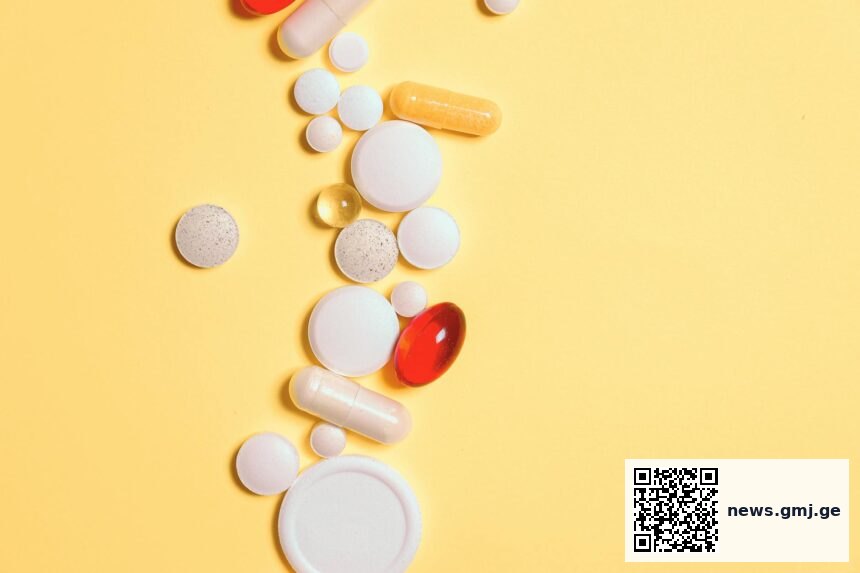
Chart showing vitamin B12 absorption rates at different dosage levels
Research reveals how vitamin B12 supplements overcome absorption limitations through a backup pathway. While efficiency drops dramatically at high doses, total absorption continues rising significantly. — Photo: Anna Shvets / Pexels
SHARE
🎧 Listen to this article5:10 min · 648 words · GMJ Audio

Updated 28/05/2026

Contents
      • Vitamin B12 Absorption Efficiency vs Total Amount
  • Two Distinct Absorption Mechanisms
  • Paradox of Decreasing Efficiency, Increasing Absorption
  • Clinical Implications for High-Dose Therapy
    • Key takeaways
  • Frequently asked questions
    • Why do B12 supplements contain such high doses if absorption is limited?
    • Can high-dose oral B12 replace injections for pernicious anemia?
3 min read|648 words

New research reveals how vitamin B12 supplements overcome the body’s absorption limitations through a backup pathway that becomes increasingly important at higher doses. According to Adams et al. (Scandinavian Journal of Gastroenterology, 1971), while absorption efficiency drops dramatically as dose increases, the total amount absorbed continues to rise.

1.5 µg
Maximum B12 absorption per dose through intrinsic factor pathway

Vitamin B12 Absorption Efficiency vs Total Amount

Percentage absorbed and total micrograms retained at different oral doses

1 µg dose
50%
5 µg dose
20%
25 µg dose
5%
500 µg dose

2%

1000 µg dose

1.3%

Source: Adams et al., 1971; NIH Office of Dietary Supplements | Georgian Medical Journal News

Submit Your Paper
GMJ_Submit_Banner

Two Distinct Absorption Mechanisms

According to the source, vitamin B12 enters the body through two fundamentally different pathways. The primary route involves intrinsic factor, a specialized protein produced by parietal cells in the stomach.

The source explains that this intrinsic factor pathway is highly efficient but severely limited in capacity. The protein binds to B12 in the small intestine and transports it across the intestinal wall via cubilin receptors in the distal ileum, but this system saturates at approximately 1.5 µg per dose regardless of how much additional B12 is consumed.

The secondary pathway operates through passive diffusion, allowing roughly 1-2% of any oral dose to cross the intestinal lining without requiring intrinsic factor. According to the source, this process occurs throughout the entire length of the digestive tract. For more insights on clinical applications of vitamin supplementation research.

Paradox of Decreasing Efficiency, Increasing Absorption

The landmark study by Adams et al. (Scandinavian Journal of Gastroenterology, 1971) used radiolabeled cyanocobalamin to measure whole-body retention across different dosing levels. Their findings revealed that at a 1 µg dose, approximately 50% of the vitamin was retained by the body. However, as doses increased to 5 µg and 25 µg, retention percentages dropped to 20% and just over 5%, respectively.

The NIH Office of Dietary Supplements reports approximately 2% absorption at 500 µg and 1.3% at 1,000 µg. Despite these low efficiency rates, the source notes that the absolute amount absorbed continues climbing significantly.

Clinical Implications for High-Dose Therapy

According to the source, this absorption pattern explains why high-dose oral B12 supplementation can serve as an alternative to injections in patients with intrinsic factor deficiency. At a 1,000 µg dose, the source calculates that approximately 13 µg total enters the bloodstream—with roughly 10 µg coming from passive diffusion alone.

The source notes that the recommended daily allowance (RDA) is 2.4 µg, meaning even the backup passive diffusion pathway delivers more than four times the daily requirement from a single high-dose supplement.

The NIH notes that high-dose oral supplementation “may be another treatment option” for pernicious anemia, though intramuscular injections remain standard first-line therapy. The source states that available randomized controlled trials comparing oral versus injection approaches are considered limited in quality, highlighting an area for future research investigation.

At 1,000 µg oral dose, approximately 13 µg total B12 is absorbed, with 10 µg coming from passive diffusion alone—delivering over 4 times the daily requirement through the backup pathway.

— Based on calculations from Adams et al., Scandinavian Journal of Gastroenterology (1971) and NIH data

Key takeaways

  • Adams et al. (1971) found intrinsic factor pathway achieves 50% efficiency at 1 µg dose
  • Source indicates passive diffusion absorbs 1-2% of any dose but becomes primary route at supplement levels
  • NIH data shows high-dose oral B12 can deliver therapeutic amounts despite low absorption percentages
  • NIH states injections remain first-line therapy but oral alternatives “may be another treatment option”

Frequently asked questions

Why do B12 supplements contain such high doses if absorption is limited?

According to the source data, while absorption efficiency drops dramatically at high doses, the total amount absorbed continues increasing. A 1,000 µg supplement delivers about 13 µg total absorption based on the NIH’s 1.3% absorption rate.

Can high-dose oral B12 replace injections for pernicious anemia?

The NIH states that high-dose oral supplementation “may be another treatment option,” though injections remain standard first-line therapy. The source notes that more research is needed as available studies are considered limited in quality.

Source: Vitamin B12 is absorbed through two pathways

Was this article helpful?

Disclaimer. This article is health journalism intended for general information and education. It is not medical advice and is not a substitute for professional diagnosis or treatment. Always consult a qualified healthcare provider about your individual circumstances. Full disclaimer →

Related Coverage

Eye-tracking study reveals depression shifts children's attention to sad facesJul 14, 2026
Correction issued for MAGE-A4/A8 immunotherapy trial in advanced solid tumoursJul 14, 2026
Jackfruit-derived biomaterial shows promise in reversing severe gum disease damageJul 14, 2026
Scientists Reprogram Brain Immune Cells to Combat Alzheimer's DiseaseJul 14, 2026
Related reference
  • Vitamin B12 · Ingredient
  • Cobalamin · Ingredient
PG
Written by
Prof. Giorgi Pkhakadze, MD, MPH, PhD
Editor-in-Chief, GMJ News
Full profile →  ·  ORCID 0000-0001-7609-4515
Medical disclaimer. This article is health journalism intended for general information. It is not medical advice and is not a substitute for consultation with a qualified healthcare professional. Always seek your physician's advice regarding any medical condition.
Medically reviewed by Prof. Giorgi Pkhakadze, MD, MPH, PhD. Spotted an error? Contact the editorial team.
Get the GMJ News digest
Evidence-based health journalism in your inbox. No spam; unsubscribe anytime.
TAGGED:absorptionintrinsic factorpassive diffusionSupplementsvitamin B12
Share This Article
Facebook LinkedIn Bluesky Copy Link Print
GMJ
ByGMJ Research Desk
Follow:
GMJ Research Desk is part of GMJ News, the newsroom of the Georgian Medical Journal (gmj.ge), published by the Public Health Institute of Georgia. Every article is editorially reviewed before publication.
Leave a Comment Leave a Comment

Leave a Reply Cancel reply

Your email address will not be published. Required fields are marked *

Submit Your Paper →

Georgia's peer-reviewed open-access medical journal. No APC until January 2027.
Submit Manuscript →
International Survey Reveals Critical Gaps in Cardio-Oncology Training Despite Rising Clinical Demand

An international survey presented at ESC Cardio-Oncology 2026 has identified substantial deficiencies…

UK Guidance on Inadvertent Vaccination in Pregnancy: What Healthcare Providers Need to Know

UK health authorities have published guidance for healthcare professionals managing inadvertent live…

UK Charity Maggie’s to Open Two New Cancer Care Centres in Coventry and Birmingham

Charity Maggie's will open two new dedicated cancer care centres in Coventry…

Submit Your Paper to GMJ

No APC until January 2027.
Submit Manuscript →

You Might Also Like

Scientific illustration showing polyphenol molecules binding to iron in digestive system
New StudiesResearch Digest

How Coffee and Tea Reduce Iron Absorption by Up to 94% Through Polyphenol Binding

By
GMJ Research Desk
27/05/2026
Chart comparing pharmaceutical R&D spending versus innovation output across major companies
Data & Numbers

New R&D Ranking Reveals Sharp Disparities in Pharmaceutical Innovation Efficiency

By
GMJ Research Desk
19/05/2026
Portrait of Dr. Daniela Hozbor, Argentine biochemist researching pertussis vaccinesIllustrative image · Photo by Nataliya Vaitkevich on Pexels (Pexels License)
New StudiesResearch Digest

Argentine Biochemist Daniela Hozbor Advances Global Pertussis Vaccine Research

By
GMJ Research Desk
14/06/2026
Healthcare workers reviewing Chagas disease surveillance data in Latin American clinic
Global HealthNew StudiesPolicy & SystemsResearch Digest

Multi-country study reveals critical gaps in Chagas disease data systems across Bolivia and Paraguay

By
GMJ Policy Desk
08/06/2026
Facebook Twitter Youtube Instagram
Company
  • Privacy Policy
  • Contact US
  • GMJ Journal
  • Submit Manuscript
  • Editorial Team
  • Register at GMJ
  • Terms of Use

Subscribe to GMJ News — Click here

Join Community
© 2026 Georgian Medical Journal (GMJ). Published by the Public Health Institute of Georgia (PHIG). All rights reserved.
Welcome Back!

Sign in to your account

Username or Email Address
Password

Lost your password?

Not a member? Sign Up