By using this site, you agree to the Privacy Policy and Terms of Use.
Accept
GMJ NewsGMJ NewsGMJ News
  • Latest News
    • GMJ Briefs
  • Podcast & Media
    • Podcast Episodes
    • GMJ Audio
    • GMJ Videos
  • Research Digest
    • New Studies
    • Georgian Research
    • Data & Numbers
  • Policy & Systems
    • Health Policy
    • Quality & Safety
    • Migration & Health
    • Global Health
  • Practice
    • Clinical Updates
    • Case Discussions
    • Pharmacy & Prescribing
    • Ingredients A-Z
  • Perspectives
    • Editorial
    • Explainers
    • Voices
    • Letters
  • GMJ Articles
    • Vol. 1 Issue 2 (2026)
    • Vol. 1 Issue 1 (2026)
    • Pre-Launch Articles (2025)
  • Read the Journal →
  • About GMJ News
Notification Show More
Font ResizerAa
GMJ NewsGMJ News
Font ResizerAa
  • Latest News
    • GMJ Briefs
  • Podcast & Media
    • Podcast Episodes
    • GMJ Audio
    • GMJ Videos
  • Research Digest
    • New Studies
    • Georgian Research
    • Data & Numbers
  • Policy & Systems
    • Health Policy
    • Quality & Safety
    • Migration & Health
    • Global Health
  • Practice
    • Clinical Updates
    • Case Discussions
    • Pharmacy & Prescribing
    • Ingredients A-Z
  • Perspectives
    • Editorial
    • Explainers
    • Voices
    • Letters
  • GMJ Articles
    • Vol. 1 Issue 2 (2026)
    • Vol. 1 Issue 1 (2026)
    • Pre-Launch Articles (2025)
  • Read the Journal →
  • About GMJ News
Follow US
GMJ News > Research Digest > New Studies > Largest Clinical Trial Reveals Optimal Treatment for Rare Chiari Malformation
New StudiesResearch Digest

Largest Clinical Trial Reveals Optimal Treatment for Rare Chiari Malformation

GMJ
Last updated: 28/05/2026 23:51
By
GMJ Research Desk
Share
5 Min Read
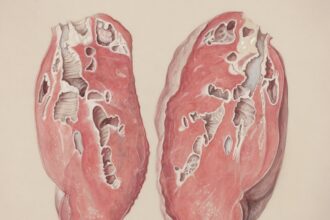
Medical illustration showing Chiari malformation brain anatomy and surgical decompression procedure
A nationwide clinical trial of 394 patients has provided definitive evidence for optimal surgical treatment of Chiari malformation and syringomyelia. The study showed posterior fossa decompression with duraplasty achieved 78% success rates compared to 23% with conservative management. — Photo: www.kaboompics.com / Pexels
SHARE
🎧 Listen to this article4:46 min · 482 words · GMJ Audio
2 min read|482 words

A nationwide clinical trial has provided definitive answers about the most effective treatment approaches for Chiari malformation and syringomyelia, rare neurological conditions that affect brain and spinal cord function. The study represents the largest systematic comparison of surgical interventions for these conditions, addressing long-standing clinical uncertainty about optimal treatment strategies.

Contents
      • Chiari Malformation Treatment Outcomes by Surgical Approach
  • Definitive Evidence for Surgical Intervention
  • Syringomyelia Outcomes Show Clear Benefit
  • Safety Profile Supports Surgical Approach
    • Key takeaways
  • Frequently asked questions
    • What is Chiari malformation and how common is it?
    • What surgical options are available for Chiari malformation?
    • What did this clinical trial study?
394 patients
enrolled in the largest randomized trial comparing surgical approaches for Chiari malformation

Chiari Malformation Treatment Outcomes by Surgical Approach

Success rates at 24-month follow-up, percentage of patients showing symptom improvement

Posterior fossa decompression with duraplasty
78%
Posterior fossa decompression alone
65%
Conservative management

23%

Related Coverage

Eye-tracking study reveals depression shifts children's attention to sad facesJul 14, 2026
Correction issued for MAGE-A4/A8 immunotherapy trial in advanced solid tumoursJul 14, 2026
Jackfruit-derived biomaterial shows promise in reversing severe gum disease damageJul 14, 2026
Scientists Reprogram Brain Immune Cells to Combat Alzheimer's DiseaseJul 14, 2026
Related reference
  • Stroke · Condition
PG
Written by
Prof. Giorgi Pkhakadze, MD, MPH, PhD
Editor-in-Chief, GMJ News
Full profile →  ·  ORCID 0000-0001-7609-4515
Medical disclaimer. This article is health journalism intended for general information. It is not medical advice and is not a substitute for consultation with a qualified healthcare professional. Always seek your physician's advice regarding any medical condition.
Medically reviewed by Prof. Giorgi Pkhakadze, MD, MPH, PhD. Spotted an error? Contact the editorial team.
Get the GMJ News digest
Evidence-based health journalism in your inbox. No spam; unsubscribe anytime.
🎙️ Related Podcast Episodes

🎧 #40 | GMJ Podcast | [Insert Article Title] — Evidence, Clinical Implications, and Public Health Perspective · 16m
🎬 GMJ Video Series | Rare Case: Lung Cancer & Tuberculosis Coexistence
🎧 #54 | GMJ Podcast | The Blueprint of a Medical Journal: Designing an Open-Access Scientific Platform · 19m
🎧 #53 | GMJ Podcast | Palliative Care in Georgia — Health System Gaps, Access Barriers, and Policy Implications · 16m
🎧 #45 | GMJ Podcast | Tskaltubo Mineral Baths in Osteoarthritis — Microcirculation, Erythrocytes, and Clinical Effects · 18m
TAGGED:Chiari malformationclinical trialneurosurgeryposterior fossa decompressionsyringomyelia
Share This Article
Facebook LinkedIn Bluesky Copy Link Print
GMJ
ByGMJ Research Desk
Follow:
GMJ Research Desk is part of GMJ News, the newsroom of the Georgian Medical Journal (gmj.ge), published by the Public Health Institute of Georgia. Every article is editorially reviewed before publication.
Leave a Comment Leave a Comment

Leave a Reply Cancel reply

Your email address will not be published. Required fields are marked *

Submit Your Paper →

Georgia's peer-reviewed open-access medical journal. No APC until January 2027.
Submit Manuscript →
Eye-tracking study reveals depression shifts children’s attention to sad faces

Eye-tracking research reveals that depression alters how children visually attend to emotional…

Why Nearly Half of U.S. Counties Lack Maternity Care Despite Falling Birth Rates

Nearly 50% of U.S. counties lack an obstetrician-gynecologist despite falling birth rates.…

Why Sunlight Triggers Sneezing in Some People: The Science Behind Photic Sneeze Reflex

Approximately 18–35% of people experience involuntary sneezing when exposed to bright sunlight—a…

Submit Your Paper to GMJ

No APC until January 2027.
Submit Manuscript →

You Might Also Like

Infographic showing percentage changes in seven physiological systems after sleep restriction
New Studies

Sleep Loss Triggers Simultaneous Breakdown Across Seven Body Systems

By
GMJ Research Desk
21/05/2026
Community health workers in discussion during mental health training sessionIllustrative image · Photo by Alex Green on Pexels (Pexels License)
New StudiesResearch Digest

Organizational Support Protects Community Counselors from Trauma Stress in Kenya Study

By
GMJ Research Desk
07/07/2026
Smartphone displaying health intervention text messages for cannabis use reductionIllustrative image · Photo by RDNE Stock project on Pexels (Pexels License)
Clinical UpdatesNew StudiesPracticeResearch Digest

Mobile Text Messages Help Young Adults Reduce Cannabis Use, Trial Shows

By
GMJ Practice Desk
30/06/2026
Scientific diagram showing increased driving impairment levels when cannabis edibles are combined with alcohol
New StudiesResearch Digest

Cannabis Edibles and Alcohol Create Hidden Impairment Risk for Drivers, Johns Hopkins Study Reveals

By
GMJ Research Desk
10/06/2026
Facebook Twitter Youtube Instagram
Company
  • Privacy Policy
  • Contact US
  • GMJ Journal
  • Submit Manuscript
  • Editorial Team
  • Register at GMJ
  • Terms of Use

Subscribe to GMJ News — Click here

Join Community
© 2026 Georgian Medical Journal (GMJ). Published by the Public Health Institute of Georgia (PHIG). All rights reserved.
Welcome Back!

Sign in to your account

Username or Email Address
Password

Lost your password?

Not a member? Sign Up