By using this site, you agree to the Privacy Policy and Terms of Use.
Accept
GMJ NewsGMJ NewsGMJ News
  • Latest News
    • GMJ Briefs
  • Podcast & Media
    • Podcast Episodes
    • GMJ Audio
    • GMJ Videos
  • Research Digest
    • New Studies
    • Georgian Research
    • Data & Numbers
  • Policy & Systems
    • Health Policy
    • Quality & Safety
    • Migration & Health
    • Global Health
  • Practice
    • Clinical Updates
    • Case Discussions
    • Pharmacy & Prescribing
  • Perspectives
    • Editorial
    • Explainers
    • Voices
    • Letters
  • GMJ Articles
    • Vol. 1 Issue 2 (2026)
    • Vol. 1 Issue 1 (2026)
    • Pre-Launch Articles (2025)
  • Read the Journal →
  • About GMJ News
Notification Show More
Font ResizerAa
GMJ NewsGMJ News
Font ResizerAa
  • Latest News
    • GMJ Briefs
  • Podcast & Media
    • Podcast Episodes
    • GMJ Audio
    • GMJ Videos
  • Research Digest
    • New Studies
    • Georgian Research
    • Data & Numbers
  • Policy & Systems
    • Health Policy
    • Quality & Safety
    • Migration & Health
    • Global Health
  • Practice
    • Clinical Updates
    • Case Discussions
    • Pharmacy & Prescribing
  • Perspectives
    • Editorial
    • Explainers
    • Voices
    • Letters
  • GMJ Articles
    • Vol. 1 Issue 2 (2026)
    • Vol. 1 Issue 1 (2026)
    • Pre-Launch Articles (2025)
  • Read the Journal →
  • About GMJ News
Follow US
GMJ News > Research Digest > New Studies > New grid-based method improves prosthetic foot wear assessment in resource-limited settings
New StudiesResearch Digest

New grid-based method improves prosthetic foot wear assessment in resource-limited settings

GMJ
Last updated: 31/05/2026 14:11
By
GMJ News Desk
Share
6 Min Read
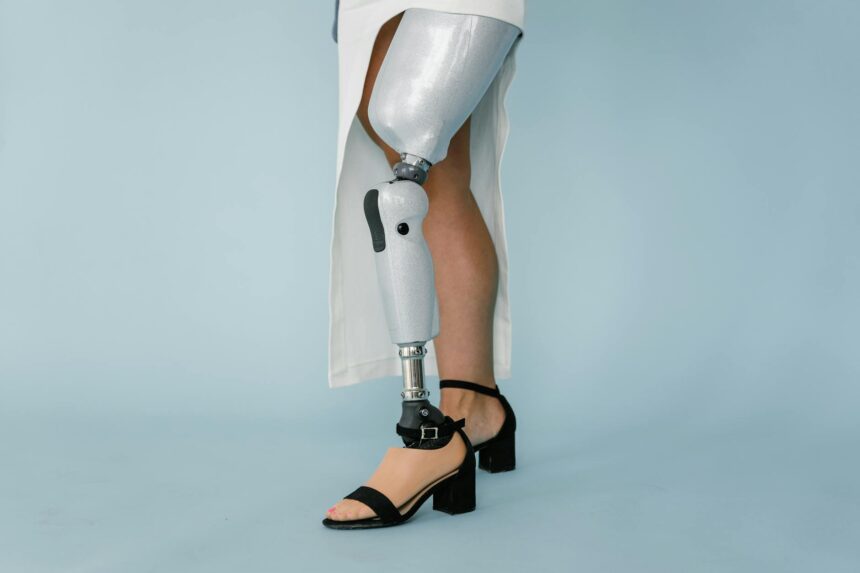
Medical researcher examining prosthetic foot with grid overlay assessment method
New grid-based visual scoring system achieves 0.88 inter-observer reliability for assessing prosthetic foot wear. Method requires only basic photography, making systematic monitoring accessible in resource-limited settings. — Photo: MART PRODUCTION / Pexels
SHARE
🎧 Listen to this article5:33 min · 782 words · GMJ Audio

Contents
      • Inter-observer agreement levels for prosthetic foot wear assessment
  • Grid method shows strong reliability across observer groups
  • Method addresses critical gap in low-resource settings
  • Modified scoring approach reduces variability
    • Key takeaways
  • Frequently asked questions
    • How does the grid-based assessment method work?
    • What equipment is needed to implement this assessment method?
    • How reliable is the assessment compared to laboratory methods?

Researchers have developed and validated a reliable, low-cost method for assessing mechanical wear in prosthetic feet that could transform device monitoring in resource-constrained settings. The study, published in PLOS Global Public Health, demonstrates that a grid-based visual scoring system shows strong inter-observer reliability for monitoring prosthetic foot deterioration.

62 prosthetic feet
analysed using 20×10 grid scoring system across four independent observer groups

Inter-observer agreement levels for prosthetic foot wear assessment

Kendall’s W reliability scores across different dataset configurations, 2024

Reduced dataset (3 raters)
0.88
Full dataset (4 raters)
0.75
Modified method
0.72
Central foot areas
0.92

Source: Berthaume et al., PLOS Global Public Health, 2024 | Georgian Medical Journal News

Submit Your Paper
GMJ_Submit_Banner

Grid method shows strong reliability across observer groups

The research team, led by Dr. Michael A. Berthaume at Imperial College London, tested their assessment method on 62 plantar images of used SACH (Solid Ankle Cushioned Heel) feet collected from Sri Lanka. Four independent observer groups scored wear patterns using a 20×10 grid overlay, rating each cell from 0-9 based on visual wear indicators.

🎙️ Related Podcast Episodes
🎧 #36 | GMJ Podcast | Artificial Intelligence and Doctor–Patient Communication — Evidence from Georgian Clinics · 18m
🎧 #35 | GMJ Podcast | Lung Adenocarcinoma and Tuberculous Lymphadenitis — Diagnostic Challenges in a Rare Case · 19m

According to the published findings, inter-observer agreement ranged from fair to excellent, with Kendall’s W reliability scores reaching 0.88 in the reduced three-rater dataset. The method demonstrated particularly high reliability in central, less-worn areas of prosthetic feet where agreement exceeded 0.92.

“This represents a significant advance for global health applications,” noted the research team. The visual scoring system requires only basic photography equipment and trained observers, making it accessible in settings where sophisticated laboratory testing is unavailable.

Method addresses critical gap in low-resource settings

Prosthetic foot wear assessment has traditionally relied on expensive laboratory equipment or subjective clinical judgement, creating barriers to systematic monitoring in rural and resource-constrained areas. The World Health Organization estimates that over 1 billion people need assistive technology, yet access remains severely limited in many regions.

The grid-based method addresses this gap by providing a standardized, field-appropriate tool that can be implemented without specialized equipment. Intra-observer reliability testing showed high consistency when the same raters re-scored images after five or more days, particularly in central foot regions that experience moderate wear patterns.

For broader clinical applications, the research supports using a reduced three-rater approach that maintains strong reliability while being more practical to implement. This finding has important implications for quality and safety monitoring in prosthetic care programs worldwide.

Modified scoring approach reduces variability

The researchers also developed and tested a modified scoring method that showed reduced intra-observer variability, though with slightly lower inter-observer agreement scores. According to the study authors, this reduction was primarily due to increased statistical ties affecting the Kendall’s W calculation rather than genuine disagreement between observers.

The original method provides higher resolution data for detailed wear analysis, while the reduced approach offers broader applicability across different prosthetic foot types. Both approaches demonstrated sufficient reliability for clinical implementation, allowing programs to select the most appropriate method based on their specific needs and resources.

This flexibility makes the assessment tool particularly valuable for organizations working in diverse settings with varying technical capacity and staff availability.

Inter-observer agreement ranged from fair to excellent, with the reduced three-rater dataset achieving Kendall’s W reliability scores of 0.88, supporting clinical implementation of the grid-based assessment method.

— Dr. Michael A. Berthaume, Imperial College London (PLOS Global Public Health, 2024)

Key takeaways

  • Grid-based visual scoring system achieves 0.88 inter-observer reliability with three raters
  • Method requires only basic photography equipment, making it accessible in resource-limited settings
  • Central foot areas show highest assessment reliability at 0.92 agreement scores
  • Both full and reduced scoring approaches demonstrate sufficient reliability for clinical use

Frequently asked questions

How does the grid-based assessment method work?

Observers apply a 20×10 grid overlay to photographs of prosthetic foot plantar surfaces and score each cell from 0-9 based on visual wear indicators. This systematic approach provides standardized quantification of wear patterns and magnitude across the entire foot surface.

What equipment is needed to implement this assessment method?

The method requires only basic photography equipment and trained observers, making it significantly more accessible than traditional laboratory-based wear testing. This low-cost approach is specifically designed for field use in resource-constrained settings.

How reliable is the assessment compared to laboratory methods?

The study demonstrated fair to excellent inter-observer agreement with Kendall’s W scores reaching 0.88, indicating strong reliability for clinical applications. While not replacing laboratory analysis, it provides a practical alternative for systematic monitoring where sophisticated testing is unavailable.

The validation of this grid-based assessment method represents an important step toward improving prosthetic care monitoring globally. As implementation expands, the tool could enhance both clinical practice and research into prosthetic device performance, ultimately supporting better outcomes for users worldwide. The method’s scalability and low cost make it particularly promising for addressing the significant gaps in assistive technology access identified by international health organizations.

Source: A reliable and inclusive method for assessing failure-causing mechanical wear in prosthetic feet

Was this article helpful?

Related Coverage

Paracetamol Poisoning Study Reveals High Risk of Repeated Attempts and Long-term MortalityMay 31, 2026
Open-Source AI Tool Improves Pancreatic Cancer Vascular Invasion Assessment Across Multiple CentresMay 31, 2026
Genetic Factors May Explain Why Some Chikungunya Infections Turn ChronicMay 31, 2026
Night shift workers may benefit from melatonin's DNA repair properties, early study suggestsMay 31, 2026
TAGGED:assistive technologyglobal-healthmedical devicesprostheticsrehabilitation
Share This Article
Facebook LinkedIn Bluesky Copy Link Print
Leave a Comment Leave a Comment

Leave a Reply Cancel reply

Your email address will not be published. Required fields are marked *

Submit Your Paper →

Georgia's peer-reviewed open-access medical journal. No APC until January 2027.
Submit Manuscript →
UK Radiotherapy Safety Analysis Reveals 13% Rise in Reported Incidents

UK government analysis reveals 13% increase in voluntarily reported radiotherapy incidents, with…

UK Radiotherapy Safety Analysis Reveals 13% Rise in Reported Incidents

UK government analysis reveals 13% increase in voluntarily reported radiotherapy incidents, with…

Rural Georgia Community Challenges ICE Detention Center Over Healthcare Capacity Concerns

Social Circle, Georgia challenges federal plans for ICE detention facility, citing concerns…

Submit Your Paper to GMJ

No APC until January 2027.
Submit Manuscript →

You Might Also Like

WHO delegates at Seventy-ninth World Health Assembly voting on pandemic preparedness resolutions
Health Policy

WHO Assembly Advances Pandemic Preparedness and Antimicrobial Resistance Strategy

By
GMJ News Desk
21/05/2026
World map showing distribution of high consequence infectious disease risk by country
Global Health

UK Health Agency Identifies Countries with High Consequence Infectious Disease Occurrence

By
GMJ News Desk
21/05/2026
Data visualization showing eight medical conditions that drive multimorbidity progression in English adults
New Studies

Eight conditions drive 90% of multimorbidity onset in England’s 49.6 million adults

By
GMJ News Desk
21/05/2026
Chart showing three different peak performance ages across human lifespan from Swedish longitudinal study
New StudiesResearch Digest

Your Body Has Three Performance Peaks, Not One, Reveals 47-Year Swedish Study

By
GMJ News Desk
24/05/2026
Facebook Twitter Youtube Instagram
Company
  • Privacy Policy
  • Contact US
  • GMJ Journal
  • Submit Manuscript
  • Editorial Team
  • Register at GMJ
  • Terms of Use

Subscribe to GMJ News — Click here

Join Community
© 2026 Georgian Medical Journal (GMJ). Published by the Public Health Institute of Georgia (PHIG). All rights reserved.
Welcome Back!

Sign in to your account

Username or Email Address
Password

Lost your password?

Not a member? Sign Up