By using this site, you agree to the Privacy Policy and Terms of Use.
Accept
GMJ NewsGMJ NewsGMJ News
  • Latest News
    • GMJ Briefs
  • Podcast & Media
    • Podcast Episodes
    • GMJ Audio
    • GMJ Videos
  • Research Digest
    • New Studies
    • Georgian Research
    • Data & Numbers
  • Policy & Systems
    • Health Policy
    • Quality & Safety
    • Migration & Health
    • Global Health
  • Practice
    • Clinical Updates
    • Case Discussions
    • Pharmacy & Prescribing
    • Ingredients A-Z
  • Perspectives
    • Editorial
    • Explainers
    • Voices
    • Letters
  • Health Topics
  • GMJ Articles
    • Vol. 1 Issue 2 (2026)
    • Vol. 1 Issue 1 (2026)
    • Pre-Launch Articles (2025)
  • Read the Journal →
  • About GMJ News
Notification Show More
Font ResizerAa
GMJ NewsGMJ News
Font ResizerAa
  • Latest News
    • GMJ Briefs
  • Podcast & Media
    • Podcast Episodes
    • GMJ Audio
    • GMJ Videos
  • Research Digest
    • New Studies
    • Georgian Research
    • Data & Numbers
  • Policy & Systems
    • Health Policy
    • Quality & Safety
    • Migration & Health
    • Global Health
  • Practice
    • Clinical Updates
    • Case Discussions
    • Pharmacy & Prescribing
    • Ingredients A-Z
  • Perspectives
    • Editorial
    • Explainers
    • Voices
    • Letters
  • Health Topics
  • GMJ Articles
    • Vol. 1 Issue 2 (2026)
    • Vol. 1 Issue 1 (2026)
    • Pre-Launch Articles (2025)
  • Read the Journal →
  • About GMJ News
Follow US
GMJ News > Perspectives > Explainers > All-trans vs Cis MK-7: The Isomer Problem Most Supplement Labels Hide
ExplainersQuality & Safety

All-trans vs Cis MK-7: The Isomer Problem Most Supplement Labels Hide

GMJ
Last updated: 20/08/2026 14:19
By
GMJ Perspectives Desk
Share
6 Min Read
Only isomer-resolving HPLC distinguishes active all-trans MK-7 from inactive cis
SHARE
🎧 Listen to this article4:45 min · 723 words · GMJ Audio
4 min read|723 words

Supplement quality stories usually concern how much of an ingredient a product contains. MK-7 adds a subtler failure mode: a product can contain exactly the labelled milligrams of menaquinone-7 and still deliver a fraction of the biology — because MK-7 exists as geometric isomers, and only one of them works. This is the quality question most labels never mention, and the reason isomer testing has become the differentiator among serious K2 products.

Contents
  • Same formula, different shape, different biology
  • Where cis contamination comes from
  • Why a basic potency assay cannot catch it
  • Reading a certificate of analysis like an isomer sceptic
  • The clinical bottom line
  • Primary sources

Same formula, different shape, different biology

MK-7’s side chain is built from seven isoprene units linked by double bonds, and each double bond can adopt one of two geometries: trans (extended, straight) or cis (kinked). Natural MK-7 — as bacteria have always made it — is all-trans: every bond extended, the molecule straight as a ruler. That geometry is not cosmetic. Vitamin K function depends on the side chain seating into the hydrophobic channels of gamma-glutamyl carboxylase’s membrane environment and into lipoprotein transport; a cis kink bends the molecule out of fit. The analytical and biological literature (Szterk 2018, and the surrounding analytical-chemistry work) is unambiguous: cis-MK-7 shows essentially no vitamin K activity — it is a passenger with the passport of an active molecule.

Where cis contamination comes from

The isomer problem is a manufacturing-route problem. Chemical synthesis of MK-7 builds the side chain through reactions that, without tight stereochemical control, produce a mixture of geometries; poorly controlled processes have been documented delivering products with substantial cis fractions — historically, market surveys have found synthetic-route products ranging anywhere from excellent to majority-inactive. Fermentation-derived MK-7 — produced by Bacillus subtilis and related strains, the natto route — is naturally all-trans, because bacterial enzymes are stereospecific by construction; the isomer purity is inherited from the biology rather than imposed by process control. (Careful storage still matters: prolonged UV exposure can isomerise even good material — one more argument in the packaging-and-format chain.)

Why a basic potency assay cannot catch it

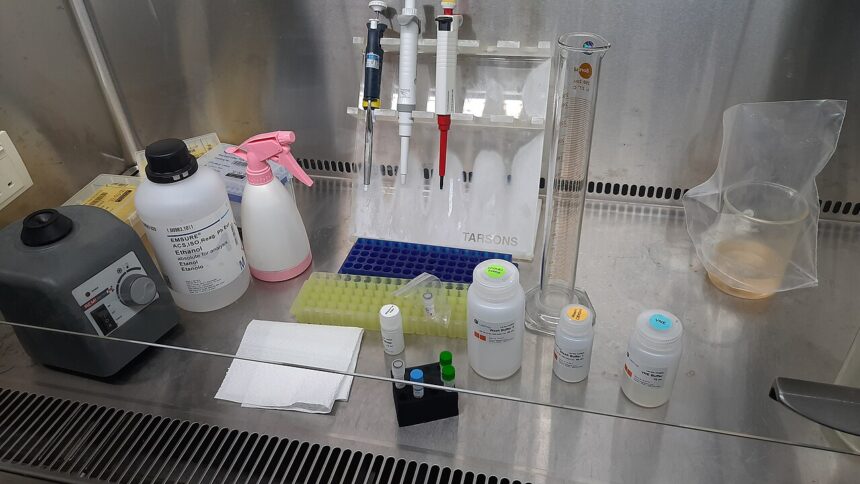
Here is the uncomfortable analytical truth: a standard content assay — even standard HPLC with typical reversed-phase columns — quantifies “MK-7” by mass and can report cis and trans together as one number. A product that is 60% inactive isomer passes a naïve potency test at full label claim. Separating the isomers requires isomer-resolving chromatography: specialised stationary phases (C30 columns are the classic choice) or optimised methods that split the cis and trans peaks, quantifying each — the methodology Szterk and colleagues applied when surveying commercial supplements (Food Chem, 2018) and finding exactly the variability the mechanism predicts. This test exists, is routine in competent laboratories, and is rarely published by brands — largely because it can only be flattering to products that have nothing to hide.

Submit Your Paper
GMJ_Submit_Banner

Reading a certificate of analysis like an isomer sceptic

Applying the CoA-reading method to K2 specifically, the questions become: Does the certificate state “all-trans MK-7” as the analyte — with a declared all-trans percentage (≥96–98% is the serious-product range) — or merely “menaquinone-7”? Does the method column reference an isomer-resolving HPLC procedure, not just “HPLC”? Is the source declared (fermentation-derived being the naturally all-trans route)? A certificate answering all three has measured the thing that matters; a certificate silent on isomers has measured milligrams of molecule-shaped material. On K2 labels, “all-trans” is not decoration — it is the entire difference between the trial-tested vitamin and its inert twin.

The clinical bottom line

MK-7’s biology belongs exclusively to the all-trans isomer; cis-MK-7 is inactive cargo that ordinary potency testing counts as product. Fermentation makes all-trans by nature, sloppy synthesis makes mixtures, and only isomer-resolving HPLC can tell — so the quality signal to demand is explicit: all-trans MK-7, percentage stated, isomer-specific method on the certificate. Everything else is label-claim theatre.

Primary sources

  • Szterk A, Zmysłowski A, Bus K. Identification of cis/trans isomers of menaquinone-7 in food as exemplified by dietary supplements. Food Chem. 2018;243:403–409. doi:10.1016/j.foodchem.2017.09.121
  • Berenjian A, Mahanama R, Talbot A, et al. Efficient media for high menaquinone-7 production: response surface methodology approach. N Biotechnol. 2011;28(6):665–672. doi:10.1016/j.nbt.2011.07.007 (fermentation route)
  • Schurgers LJ, Vermeer C. Determination of phylloquinone and menaquinones in food: effect of food matrix on circulating vitamin K concentrations. Haemostasis. 2000;30(6):298–307. doi:10.1159/000054147
  • Sato T, Schurgers LJ, Uenishi K. Comparison of menaquinone-4 and menaquinone-7 bioavailability in healthy women. Nutr J. 2012;11:93. doi:10.1186/1475-2891-11-93
  • ISO/IEC 17025:2017 — competence requirements the isomer-testing laboratory itself should meet. iso.org

Educational information on analytical quality, not medical advice. Anticoagulated readers: the interaction rules apply to all active vitamin K, isomer-pure or otherwise.

Was this article helpful?

Related Coverage
Retinol vs Beta-Carotene: BCO1 Genetics and Why Conversion Is UnreliableAug 20, 2026
Why B12 Needs Amber Glass: Cobalamin PhotodegradationAug 20, 2026
Methylcobalamin vs Cyanocobalamin: The Form Difference ExplainedAug 20, 2026
Vitamin D3 + K2: Absorption vs Direction — How the Pairing WorksAug 20, 2026
Explore more on this topic:🧭 Supplements & Nutraceuticals hub🧭 Leukaemia hub🧭 Rheumatoid Arthritis hub
🔥 Most read this week
1High-Dose Zinc Supplements May Create Copper Deficiency, Warn Nutrition Experts
2L-Theanine Improves Sleep Quality Without Drowsiness, Systematic Review Finds
3How Coffee Brewing Method Affects Cholesterol: The Science Behind Diterpenes and Filters
4How Coffee and Tea Reduce Iron Absorption: A Mechanism Explained
Related reference
  • Vitamin A · Ingredient
  • Vitamin K · Ingredient
  • Iron · Ingredient
  • SAMe · Ingredient
PG
Editorial oversight
Prof. Giorgi Pkhakadze, MD, MPH, PhD
Editor-in-Chief, GMJ News
Full profile →  ·  ORCID 0000-0001-7609-4515
Medical disclaimer. This article is health journalism intended for general information. It is not medical advice and is not a substitute for consultation with a qualified healthcare professional. Always seek your physician's advice regarding any medical condition.
Editorial standards. This article was produced under the GMJ News editorial process, with oversight by the GMJ Editorial Board. Our editorial process. Spotted an error? Contact the editorial team.

📬 GMJ Health Digest
Evidence-based medical news, once a week. Free, no spam, unsubscribe anytime.
Share This Article
Facebook LinkedIn Bluesky Copy Link Print
GMJ
ByGMJ Perspectives Desk
Follow:
GMJ Perspectives Desk is part of GMJ News, the newsroom of the Georgian Medical Journal (gmj.ge), published by the Public Health Institute of Georgia. Every article is editorially reviewed before publication.
Leave a Comment Leave a Comment

Leave a Reply Cancel reply

Your email address will not be published. Required fields are marked *

Submit Your Paper →

Georgia's peer-reviewed open-access medical journal. No APC until January 2027.
Submit Manuscript →
Most Brazilian Children with Disabling Musculoskeletal Pain Recover Within a Year, Study Shows

A prospective cohort study of Brazilian children found that 86% with disabling…

Concussion History Linked to Higher Tinnitus Risk, Study Finds

A study published in Sports Medicine Open (June 2026) found that greater…

Retinol vs Beta-Carotene: BCO1 Genetics and Why Conversion Is Unreliable

Beta-carotene only becomes vitamin A after an enzymatic conversion — and common…

Submit Your Paper to GMJ

No APC until January 2027.
Submit Manuscript →

You Might Also Like

Illustration of UV radiation spectrum showing UVA, UVB penetration depths in human skinIllustrative image · Runner with Long-Sleeve Sun Protection (48855587326).jpg by Chris Hunkeler from Carlsbad, California, USA / CC BY-SA 2.0 via Wikimedia Commons (CC BY-SA 2.0)
Clinical UpdatesExplainersPerspectivesPractice

Understanding UV Radiation: What the Science Says About Sun Protection

By
GMJ Practice Desk
04/08/2026
SAHPRA South African Health Products Regulatory Authority logo and Citro-Soda product recall announcement
Quality & Safety

South African regulator recalls Citro-Soda batches amid contamination fears

By
GMJ Policy Desk
21/05/2026
Color-coded periodic-style chart showing 20 standard amino acids grouped by chemical classIllustrative image · Protein Synthesis Elongation.png by Christinelmiller / CC BY-SA 4.0 via Wikimedia Commons (CC BY-SA 4.0)
ExplainersPerspectives

The 20 Amino Acids: The Chemical Alphabet of Life and What Every Patient Should Know

By
GMJ Perspectives Desk
06/08/2026
Illustration of synaptic reorganization showing coordinated nutrient effects on neural networks and receptor regulationIllustrative image · Photo by Shawn Day on Unsplash (Unsplash License)
ExplainersNew StudiesPerspectivesResearch Digest

Why Nutrients Work Better Together: How Coordinated Inputs Reshape Brain Synapses

By
GMJ Perspectives Desk
04/08/2026
Facebook Twitter Youtube Instagram
Company
  • Privacy Policy
  • Contact US
  • GMJ Journal
  • Submit Manuscript
  • Editorial Team
  • Register at GMJ
  • Terms of Use

Subscribe to GMJ News — Click here

Join Community
© 2026 Georgian Medical Journal (GMJ). Published by the Public Health Institute of Georgia (PHIG). All rights reserved.
Welcome Back!

Sign in to your account

Username or Email Address
Password

Lost your password?