🟠 Moderate Evidence
Berberine, a widely used botanical alkaloid promoted for metabolic health, has one of the lowest oral bioavailabilities of any therapeutic compound in routine use. Direct measurements in human volunteers confirm pharmacokinetic predictions: less than 1% of an oral dose reaches systemic circulation as the parent molecule. This raises a fundamental pharmacological puzzle—if systemic exposure is so minimal, how do clinical trials consistently demonstrate measurable effects on glucose and lipid metabolism?
Key takeaways
- Parent berberine bioavailability is below 1% in humans, confirmed by LC-MS/MS analysis in multiple studies
- The dominant circulating form after oral dosing is berberrubine, a demethylated metabolite, not the parent compound
- Poor intestinal permeability and active P-glycoprotein efflux are the primary pharmacokinetic barriers
- Clinical efficacy despite minimal systemic exposure suggests either metabolite activity, gut-level effects, or unmeasured mechanisms
Study at a Glance
| Source | Journal of Natural Products |
| Study type | Observational pharmacokinetic study |
| Population | Healthy volunteers and hypercholesterolemic patients |
| Analytical method | LC-MS/MS (liquid chromatography-tandem mass spectrometry) |
| Key finding | Parent berberine barely detectable; berberrubine (metabolite) dominant in plasma |
Berberine bioavailability across study populations and methods
Absolute bioavailability (%) of parent berberine measured by LC-MS/MS, 2007–2014
Source: Chen et al. 2011; Hua et al. 2007; Spinozzi et al. 2014 | Georgian Medical Journal News

The metabolite dominates: What actually circulates is not berberine
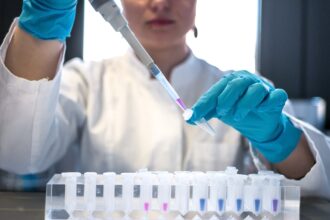
When researchers at the University of Bologna used sensitive liquid chromatography-tandem mass spectrometry (LC-MS/MS) to measure plasma concentrations after oral berberine in healthy and hypercholesterolemic patients, they made an unexpected discovery. According to Spinozzi and colleagues, published in the Journal of Natural Products in 2014, the parent berberine compound was barely detectable in blood. Instead, the dominant circulating species was berberrubine—a demethylated metabolite produced during first-pass hepatic metabolism.
This finding was independently confirmed by Hua and colleagues in the Journal of Pharmaceutical and Biomedical Analysis (2007), who studied healthy human volunteers using the same analytical approach. Both teams established that the pharmacokinetic profile observed in rodent models—reported by Chen and colleagues in AAPS PharmSciTech (2011) at 0.68% absolute bioavailability—accurately reflected what occurs in humans.
Crucially, berberrubine is more lipophilic (fat-soluble) than the parent berberine molecule, meaning it crosses biological membranes more efficiently and achieves higher plasma concentrations. This metabolite becomes the dominant pharmacologically active species after oral dosing. New research continues to examine whether clinical effects are driven by berberrubine itself, synergistic metabolism, or other unmeasured mechanisms.
Intestinal barrier and efflux transporters: The pharmacokinetic bottleneck
The reason berberine achieves such minimal systemic exposure is now well-characterized at the molecular level. Berberine is a quaternary ammonium alkaloid, carrying a permanent positive charge even at physiological pH. This chemical property is a major barrier to absorption: charged molecules do not cross intestinal epithelial cells efficiently through passive diffusion.
Compounding this problem, the fraction of berberine that does manage to enter enterocytes is actively pumped back into the gut lumen by P-glycoprotein (also known as MDR1 or ABCB1), an efflux transporter expressed on the apical surface of intestinal cells. P-glycoprotein is part of the body’s natural defense mechanism, designed to exclude xenobiotics and toxic compounds. In the case of berberine, this transporter treats the alkaloid as a substrate for removal, maintaining plasma concentrations at a fraction of a percent despite oral administration.
This combination—poor passive intestinal permeability plus active P-glycoprotein-mediated efflux—creates a pharmacokinetic “bottleneck” that explains the consistent finding of minimal parent berberine in systemic circulation across multiple independent studies and populations.
Parent berberine plasma concentrations after oral dosing are barely detectable using LC-MS/MS analysis, with less than 1% reaching systemic circulation, while berberrubine (a demethylated metabolite) becomes the dominant circulating species.
— Spinozzi and colleagues, University of Bologna (Journal of Natural Products, 2014)
Clinical efficacy despite minimal exposure: A pharmacological paradox
The core puzzle remains unresolved: if systemic exposure to parent berberine is below 1%, how do clinical trials demonstrate meaningful effects on hemoglobin A1c, lipid profiles, and glucose metabolism? Several mechanisms have been proposed but require further investigation.
First, berberrubine itself—the dominant metabolite—may carry the primary pharmacological activity, even though most clinical studies have focused on berberine as the active principle. Second, high local concentrations within the gut lumen (where the vast majority of the dose remains) could exert effects on intestinal permeability, microbiota composition, or glucose absorption without requiring systemic exposure. Third, berberine may act as a substrate-inducer of transporters or enzymes that amplify downstream metabolic effects. Fourth, some studies may lack the sensitivity to detect pharmacologically relevant but sub-threshold plasma concentrations.
Current prescribing guidance typically treats berberine as an oral agent for glucose and lipid support, yet the mechanistic disconnect between extremely low bioavailability and observed clinical outcomes highlights a significant gap in understanding. This paradox underscores the importance of mechanistic pharmacology research in complementary medicine compounds, which often lack the rigorous characterization applied to pharmaceutical drugs.
What this means
Frequently asked questions
If berberine bioavailability is less than 1%, why is it used clinically?
The mechanism of clinical efficacy remains unclear, but may involve the demethylated metabolite berberrubine (which circulates at higher levels), local gut-level effects on glucose absorption or microbiota, or downstream metabolic amplification. Patient-focused discussions should emphasize that efficacy, if real, does not depend on high systemic drug levels—but also that mechanistic clarity is still lacking.
Is berberrubine the active compound, or is berberine?
Current evidence suggests berberrubine (the demethylated metabolite) is the dominant circulating form and may carry the primary pharmacological activity. However, most published clinical trials were designed assuming berberine itself was the active principle. Future research should directly test berberrubine’s efficacy and safety profile to clarify this question.
Does P-glycoprotein inhibition improve berberine absorption?
Theoretically, P-glycoprotein inhibitors could increase berberine bioavailability, but this has not been systematically studied in humans. Such an approach would be investigational and raise safety concerns, as P-glycoprotein inhibition can amplify systemic exposure to other drugs and compounds. Current clinical use relies on the minimal bioavailability profile as a de facto safety margin.
The berberine paradox—high clinical efficacy amid minimal systemic exposure—reveals gaps in how we understand botanical compounds and extends beyond berberine itself. As deeper pharmacological investigation of herbal medicines progresses, researchers will likely uncover similar discrepancies in other widely used compounds. This work underscores the value of rigorous mechanistic pharmacology in complementary medicine and the need for clinical trial designs that can accommodate unusual pharmacokinetic-efficacy relationships.
Source: Spinozzi et al., Journal of Natural Products, 2014; Hua et al., Journal of Pharmaceutical and Biomedical Analysis, 2007; Chen et al., AAPS PharmSciTech, 2011
Was this article helpful?
Disclaimer. This article is health journalism intended for general information and education. It is not medical advice and is not a substitute for professional diagnosis or treatment. Always consult a qualified healthcare provider about your individual circumstances. Full disclaimer →
Related Coverage

Editorial standards. This article was produced under the GMJ News editorial process, with oversight by the GMJ Editorial Board. Our editorial process. Spotted an error? Contact the editorial team.