When RevMed’s Rasonque received European Medicines Agency approval this month, the headlines were swift and familiar: breakthrough therapy, unmet medical need addressed, new hope for patients. These are not false statements. For pancreatic cancer—a disease whose five-year survival rate hovers near 12 percent globally—any genuine advance in treatment efficacy deserves recognition.
Yet I find myself troubled by the rhythm of our celebrations. Rasonque follows the now-predictable sequence: FDA approval in the United States, followed by EMA clearance in Europe, with announcements crafted for investor confidence and regulatory validation. The drug will be available to patients in wealthy health systems, generating revenue for shareholders, and meaningfully improving outcomes for perhaps thousands of people annually across North America and Western Europe.
This is progress. It is also nearly complete obscurity from the perspective of global pancreatic cancer burden.
The epidemiologic reality is stark: approximately 80 percent of patients diagnosed with pancreatic cancer live in low- and middle-income countries. The vast majority will never access Rasonque—not because it lacks efficacy or regulatory approval, but because pricing, supply chains, health system capacity, and geographic accident will simply render it invisible to them. A patient in rural Georgia faces the same disease biology as a patient in Stockholm. The Stockholm patient may access Rasonque within weeks. The Georgian patient will almost certainly never know it exists.
This is not a new problem, and it is not unique to pancreatic cancer. But it deserves honest naming at moments like these, when regulatory systems we have designed—quite competently—deliver medicines to markets we have explicitly chosen to serve.
I do not intend to diminish RevMed’s achievement or the scientific merit of bringing a new therapeutic option to patients who desperately need it. The company’s research teams deserve credit. The EMA reviewers who evaluated the clinical evidence deserve credit. The clinical trial participants, including Europeans, who accepted the risks of experimental treatment deserve recognition.
What requires scrutiny is the structural assumption embedded in how we measure and celebrate pharmaceutical innovation: that regulatory approval is the same as access, and that access in high-income regions justifies the entire enterprise.
Consider what approval of Rasonque in Europe actually means for global pancreatic cancer care: it means that health systems in the EU, Norway, Switzerland, and the United Kingdom will now face decisions about reimbursement and formulary inclusion. These decisions will be real, constrained by budgets, and fiercely negotiated. Some patients in Europe will face restrictions or prior authorization requirements. Some will not receive the drug because their national health system deems the cost-effectiveness ratio unfavorable, even after EMA approval. Access across Europe will be uneven.
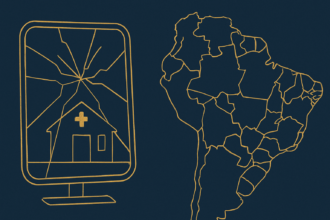
Beyond Europe, the picture remains essentially unchanged from yesterday. In sub-Saharan Africa, Southeast Asia, and Latin America, the absence of Rasonque will not be experienced as a regulatory gap or a procurement logistics problem. It will be experienced as a fact of biology: some cancers cannot be treated where they occur. Patients will receive supportive care if they are fortunate enough to reach a hospital with basic oncology services. Most will not.
The question that should accompany each new cancer approval is not primarily technical: Can we make this medicine? That question is largely solved. The question should be distributive: Have we structured this innovation to reach patients proportionate to disease burden? For pancreatic cancer, the answer remains no.
I do not expect pharmaceutical companies operating within market systems to solve global health inequity alone. That burden belongs to governments, international organizations, and the global health community. But I do think we should resist the cognitive comfort of celebrating regulatory milestones as though they represent progress for pancreatic cancer patients globally. They represent progress for pancreatic cancer patients in specific, wealthy places.
If RevMed and other innovators are serious about pancreatic cancer as a global health priority, the conversation after European approval should turn immediately to tiered pricing, conditional donations to low-income settings, capacity building for early diagnosis in regions where most cases occur, and genuine partnership with health systems outside wealthy markets.
Without that conversation—without accepting that regulatory approval is merely the first step in a much harder work of equitable access—we are simply rehearsing a familiar script: innovation celebrated in well-resourced settings, while the global burden of untreated disease remains essentially constant.
Rasonque represents hope. But hope concentrated in Europe is not hope for pancreatic cancer. It is hope for European patients, which is a narrower and more honest thing to celebrate.
Was this article helpful?
Disclaimer. This article is health journalism intended for general information and education. It is not medical advice and is not a substitute for professional diagnosis or treatment. Always consult a qualified healthcare provider about your individual circumstances. Full disclaimer →
Related Coverage




Editorial standards. This article was produced under the GMJ News editorial process, with oversight by the GMJ Editorial Board. Our editorial process. Spotted an error? Contact the editorial team.