Over the past eighteen months, raw milk has emerged as a flashpoint in food safety policy—not because of the product itself, but because our regulatory infrastructure remains fundamentally reactive. Multiple jurisdictions have witnessed outbreaks of Escherichia coli, Listeria monocytogenes, and Campylobacter jejuni traced to raw milk consumption. In response, prominent physician organizations have called for outright bans. This is understandable but counterproductive. What we actually need is what we should have had years ago: mandatory licensing, real-time traceability systems, and evidence-based standards that treat raw milk as a regulated product rather than an unmonitored commodity.
The surge in raw milk popularity reflects legitimate consumer interest in less-processed foods and direct relationships with producers. This is not a marginal phenomenon. In jurisdictions where raw milk sales are permitted, demand has grown substantially, driven by both health-conscious consumers and philosophical preferences for artisanal food production. Rather than dismissing this market as irrational, regulators should recognize it as a persistent feature of modern food systems that demands proportionate governance.
The problem is not raw milk per se—it is the absence of institutional frameworks to manage the genuine microbiological risks it presents. Unlike pasteurized milk, which benefits from a standardized safety intervention applied universally across commercial production, raw milk currently operates in most jurisdictions as a largely unmonitored space. Producers face inconsistent requirements. Traceability is poor. Rapid outbreak investigation—already challenging with distributed retail networks—becomes nearly impossible when supply chains are informal or poorly documented. Consumers receive minimal standardized information about handling and storage risks.
Consider what we know from international experience. New Zealand and parts of Europe have maintained raw milk markets under robust regulatory schemes including mandatory producer licensing, regular pathogenic testing, cold-chain requirements, and detailed record-keeping. These systems are not costless, and they do not eliminate risk entirely—but they reduce preventable illness substantially and provide epidemiologists with actionable outbreak data. When illness clusters occur, investigators can identify contaminated sources within days rather than weeks. This is not theoretical advantage; this is measured public health benefit.
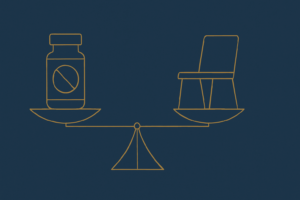
The call for bans reflects legitimate frustration with current governance failures. Physicians see preventable suffering. Public health agencies struggle with investigations hampered by poor documentation. These are real problems. But the solution is not to eliminate consumer choice through prohibition; it is to build the regulatory capacity that prohibition was meant to substitute for. A ban is administratively simpler than licensing, but it is not more protective—it simply displaces the risk into informal, unmonitored channels where outbreak detection and response become even more difficult.
What proactive regulation would require: First, mandatory licensing of raw milk producers with clearly specified hygienic standards tailored to raw milk production—not wholesale importation of pasteurization-era regulations, but standards reflecting actual microbiological controls applicable to unpasteurized products. Second, mandatory pathogen testing protocols with defined frequency and action thresholds. Third, complete traceability from producer through retail to consumer, enabling rapid epidemiological investigation. Fourth, standardized labeling and handling guidance for consumers. Fifth, a public reporting system for suspected raw milk-associated illness.
These measures require investment. Regulatory agencies in Georgia and elsewhere face resource constraints. But consider the alternative: repeated outbreak investigations, emergency public warnings, litigation, and the cumulative erosion of public trust in food safety institutions. The cost of proactive licensing is substantially less than the cost of managing preventable outbreak cycles.
Banning raw milk will not eliminate consumer demand; it will eliminate transparency. Physicians concerned with raw milk safety should welcome strong regulation over prohibition because regulation works—it creates the visibility and accountability necessary for actual risk reduction. Prohibition creates opacity.
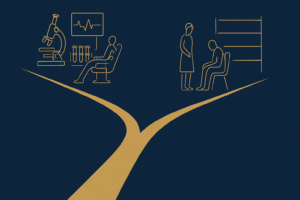
The path forward requires regulatory humility and institutional investment. We must acknowledge that raw milk will continue to be consumed in many jurisdictions regardless of formal status. Given this reality, we face a choice: manage it poorly through inaction and prohibition, or manage it well through proactive licensing and traceability. The evidence from jurisdictions that have chosen the latter is clear. We should move toward it without delay.
Was this article helpful?
Disclaimer. This article is health journalism intended for general information and education. It is not medical advice and is not a substitute for professional diagnosis or treatment. Always consult a qualified healthcare provider about your individual circumstances. Full disclaimer →
Related Coverage

Editorial standards. This article was produced under the GMJ News editorial process, with oversight by the GMJ Editorial Board. Our editorial process. Spotted an error? Contact the editorial team.