By using this site, you agree to the Privacy Policy and Terms of Use.
Accept
GMJ NewsGMJ NewsGMJ News
  • Latest News
    • GMJ Briefs
  • Podcast & Media
    • Podcast Episodes
    • GMJ Audio
    • GMJ Videos
  • Research Digest
    • New Studies
    • Georgian Research
    • Data & Numbers
  • Policy & Systems
    • Health Policy
    • Quality & Safety
    • Migration & Health
    • Global Health
  • Practice
    • Clinical Updates
    • Case Discussions
    • Pharmacy & Prescribing
    • Ingredients A-Z
  • Dictionary
    • Browse A–Z
    • About the Project
    • Contribute a Term
  • Perspectives
    • Editorial
    • Explainers
    • Voices
    • Letters
  • Health Topics
  • GMJ Articles
    • Vol. 1 Issue 2 (2026)
    • Vol. 1 Issue 1 (2026)
    • Pre-Launch Articles (2025)
  • Read the Journal →
  • About GMJ News
Notification Show More
Font ResizerAa
GMJ NewsGMJ News
Font ResizerAa
  • Latest News
    • GMJ Briefs
  • Podcast & Media
    • Podcast Episodes
    • GMJ Audio
    • GMJ Videos
  • Research Digest
    • New Studies
    • Georgian Research
    • Data & Numbers
  • Policy & Systems
    • Health Policy
    • Quality & Safety
    • Migration & Health
    • Global Health
  • Practice
    • Clinical Updates
    • Case Discussions
    • Pharmacy & Prescribing
    • Ingredients A-Z
  • Dictionary
    • Browse A–Z
    • About the Project
    • Contribute a Term
  • Perspectives
    • Editorial
    • Explainers
    • Voices
    • Letters
  • Health Topics
  • GMJ Articles
    • Vol. 1 Issue 2 (2026)
    • Vol. 1 Issue 1 (2026)
    • Pre-Launch Articles (2025)
  • Read the Journal →
  • About GMJ News
Follow US
GMJ News > Research Digest > New Studies > Brain-Immune Connection: How the Inflammatory Reflex Controls Disease
New StudiesResearch Digest

Brain-Immune Connection: How the Inflammatory Reflex Controls Disease

GMJ
Last updated: 25/05/2026 16:13
By
GMJ Research Desk
Share
7 Min Read
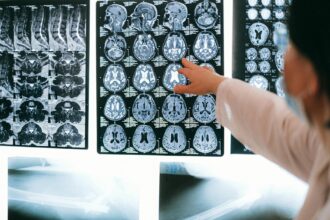
Diagram showing inflammatory reflex pathway from brain through vagus nerve to spleen and immune response
New research reveals how the brain controls immune responses through the inflammatory reflex, an electrical pathway via the vagus nerve that can reduce inflammation within minutes. Clinical trials show promise for treating rheumatoid arthritis and other inflammatory diseases. — Photo: RF._.studio _ / Pexels
SHARE
🎧 Listen to this article6:16 min · 906 words · GMJ Audio

Updated 25/05/2026

Contents
      • The Inflammatory Reflex Pathway
  • Vagus Nerve: The Body’s Anti-Inflammatory Highway
  • Spleen Transforms Neural Signals into Chemical Messages
  • Acetylcholine: Nature’s Anti-Inflammatory Switch
  • Clinical Applications Show Promise
    • Key takeaways
  • Frequently asked questions
    • How quickly does the inflammatory reflex work?
    • Can you activate the inflammatory reflex without surgery?
    • What diseases might benefit from targeting the inflammatory reflex?
4 min read|700 words

Research reveals how the brain directly communicates with the immune system through an electrical pathway called the inflammatory reflex, offering insights into treating chronic inflammatory diseases. This neural circuit, mediated by the vagus nerve, demonstrates that inflammation is not purely chemical but can be electrically controlled by the brain.

Minutes
Time required for vagus nerve stimulation to increase noradrenaline in the spleen

The Inflammatory Reflex Pathway

Three-stage neural circuit from brain to immune response

Brain Signal
Stage 1
Spleen Relay
Stage 2
Anti-inflammatory Response
Stage 3

Source: Nature Reviews Endocrinology, 2012 | Georgian Medical Journal News

Submit Your Paper
GMJ_Submit_Banner

Vagus Nerve: The Body’s Anti-Inflammatory Highway

The inflammatory reflex begins with electrical impulses from the brainstem traveling through the vagus nerve to the spleen, the body’s primary blood-filtering and immune-coordinating organ. According to research published in Nature Reviews Endocrinology (2012), this pathway represents a fundamental mechanism by which the nervous system regulates immune responses.

Deep breathing exercises and meditation can activate the vagus nerve, leading to reductions in circulating inflammatory markers including C-reactive protein (CRP) and interleukin-6 (IL-6), according to the Nature Reviews Endocrinology study. This connection explains why stress management techniques often produce anti-inflammatory effects in clinical studies.

🎙️ Related Podcast Episodes
🎧 #28 | GMJ Podcast | SheniEkimi.ge #1: Top 5 Evidence-Based Public Health News · 19m

Spleen Transforms Neural Signals into Chemical Messages

When the vagus nerve stimulates the spleen, it triggers the splenic nerve to release noradrenaline, which in turn activates immune T cells to produce acetylcholine. Animal models referenced in the Nature Reviews Endocrinology study demonstrate that this neural-to-chemical conversion occurs within minutes of vagus nerve stimulation, highlighting the rapid communication between nervous and immune systems.

This relay mechanism explains how psychological states can directly influence immune function. The spleen serves as a critical junction where electrical nerve impulses are translated into specific immune responses, providing a biological basis for the mind-body connection observed in medical research.

Acetylcholine: Nature’s Anti-Inflammatory Switch

The final step involves acetylcholine binding to receptors on macrophages, the immune cells responsible for producing inflammatory molecules. This binding reduces the release of tumor necrosis factor-alpha (TNF-α), a key inflammatory cytokine implicated in rheumatoid arthritis, inflammatory bowel disease, and other chronic conditions, according to the Nature Reviews Endocrinology study.

Clinical studies using implanted vagus nerve stimulators in rheumatoid arthritis patients have demonstrated decreases in TNF-α levels accompanied by improved joint pain scores, as referenced in the Nature Reviews Endocrinology research. These benefits occurred without traditional immunosuppressive medications, suggesting the inflammatory reflex offers a more targeted approach to inflammation control, according to studies tracked by the Georgian Medical Journal.

Clinical Applications Show Promise

The electrical nature of this anti-inflammatory pathway offers advantages over pharmaceutical approaches, including faster onset of action. The Nature Reviews Endocrinology study describes how both invasive stimulation devices and non-invasive techniques such as transcutaneous vagus nerve stimulation are being explored for broader clinical application, as reported in recent systematic reviews.

Vagus nerve stimulation increased splenic noradrenaline within minutes and reduced TNF-α production in macrophages, demonstrating direct neural control over inflammatory responses.

— Nature Reviews Endocrinology (2012)

Key takeaways

  • The inflammatory reflex is a three-stage electrical pathway from brain to immune response via the vagus nerve and spleen
  • Neural stimulation can reduce inflammatory markers like TNF-α within minutes
  • Clinical applications include vagus nerve stimulators for rheumatoid arthritis and other inflammatory diseases
  • Non-invasive techniques like deep breathing can activate this anti-inflammatory pathway

Frequently asked questions

How quickly does the inflammatory reflex work?

Animal models show that vagus nerve stimulation increases noradrenaline in the spleen within minutes, according to the Nature Reviews Endocrinology study. The subsequent anti-inflammatory effects, including reduced TNF-α production, can be measured shortly after stimulation begins.

Can you activate the inflammatory reflex without surgery?

Yes, non-invasive methods including deep breathing exercises, meditation, and transcutaneous vagus nerve stimulation can activate this pathway, according to the Nature Reviews Endocrinology research. These techniques have been shown to reduce inflammatory markers.

What diseases might benefit from targeting the inflammatory reflex?

The Nature Reviews Endocrinology study focuses on rheumatoid arthritis, with potential applications in other chronic inflammatory diseases where TNF-α plays a key role.

The discovery of the inflammatory reflex fundamentally changes our understanding of how the nervous and immune systems interact. As researchers develop more sophisticated ways to harness this natural anti-inflammatory pathway, patients may gain access to treatments that offer the precision of targeted therapy with the safety profile of the body’s own regulatory mechanisms.

Source: How the brain talks to the immune system

Was this article helpful?

Disclaimer. This article is health journalism intended for general information and education. It is not medical advice and is not a substitute for professional diagnosis or treatment. Always consult a qualified healthcare provider about your individual circumstances. Full disclaimer →

Related Coverage

Ethiopia Study Reveals Stakeholder Concerns Over Novel Malaria TreatmentsAug 23, 2026
Sitafloxacin monotherapy matches doxycycline-rifampicin for brucellosis treatment in landmark trialAug 23, 2026
Ultra-processed foods linked to higher kidney cancer risk in large US studyAug 23, 2026
Fish Oil Supplements Reach the Brain but Show No Cognitive Benefit, Two-Year Study FindsAug 22, 2026
Explore more on this topic:🧭 Rheumatoid Arthritis hub
🔥 Most read this week
1High-Dose Zinc Supplements May Create Copper Deficiency, Warn Nutrition Experts
2Creatine and Kidney Damage: What the Evidence Actually Shows
3L-Theanine Improves Sleep Quality Without Drowsiness, Systematic Review Finds
4Evidence-Based Hydration Protocol: How Much Fluid and Sodium Athletes Actually Need
Related reference
  • Inflammatory Bowel Disease · Condition
  • Rheumatoid Arthritis · Condition
  • Choline · Ingredient
PG
Editorial oversight
Prof. Giorgi Pkhakadze, MD, MPH, PhD
Editor-in-Chief, GMJ News
Full profile →  ·  ORCID 0000-0001-7609-4515
Medical disclaimer. This article is health journalism intended for general information. It is not medical advice and is not a substitute for consultation with a qualified healthcare professional. Always seek your physician's advice regarding any medical condition.
Editorial standards. This article was produced under the GMJ News editorial process, with oversight by the GMJ Editorial Board. Our editorial process. Spotted an error? Contact the editorial team.

📬 GMJ Health Digest
Evidence-based medical news, once a week. Free, no spam, unsubscribe anytime.
TAGGED:brain-immune connectionchronic inflammationinflammatory reflexTNF-alphavagus nerve
Share This Article
Facebook LinkedIn Bluesky Copy Link Print
GMJ
ByGMJ Research Desk
Follow:
GMJ Research Desk is part of GMJ News, the newsroom of the Georgian Medical Journal (gmj.ge), published by the Public Health Institute of Georgia. Every article is editorially reviewed before publication.
Leave a Comment Leave a Comment

Leave a Reply Cancel reply

Your email address will not be published. Required fields are marked *

Submit Your Paper →

Georgia's peer-reviewed open-access medical journal. No APC until January 2027.
Submit Manuscript →
Ethiopia Study Reveals Stakeholder Concerns Over Novel Malaria Treatments

A qualitative study in Ethiopia reveals that health workers and patients view…

Sitafloxacin monotherapy matches doxycycline-rifampicin for brucellosis treatment in landmark trial

A multicenter randomized trial in The Lancet Regional Health – Western Pacific…

Ultra-processed foods linked to higher kidney cancer risk in large US study

A prospective analysis of over 300,000 US adults found that higher consumption…

Submit Your Paper to GMJ

No APC until January 2027.
Submit Manuscript →

You Might Also Like

Brain lipid profiles in women and men with and without Alzheimer's diseaseIllustrative image · Photo by ready made on Pexels (Pexels License)
Clinical UpdatesNew StudiesPracticeResearch Digest

Why women’s brains lose omega-3 protection: new insights from European Alzheimer’s study

By
GMJ Practice Desk
25/07/2026
Scientific illustration showing amino acid pathways in brain neurotransmitter synthesis
New StudiesResearch Digest

How Amino Acids Shape Brain Function: The Science Behind Protein and Cognition

By
GMJ Research Desk
27/05/2026
Molecular diagram showing Rb pathway inactivation mechanism in EGFR-mutant lung tumor transformationIllustrative image · Photo by Egor Komarov on Pexels (Pexels License)
Clinical UpdatesNew StudiesPracticeResearch Digest

Rb Pathway Inactivation Drives Squamous Transformation in EGFR-Mutant Lung Cancers

By
GMJ Practice Desk
12/07/2026
Illustration of mitochondrial structure and cellular energy signaling pathwaysIllustrative image · Photo by National Institute of Allergy and Infectious Diseases on Unsplash (Unsplash License)
ExplainersNew StudiesPerspectivesResearch Digest

Mitochondria as metabolic decision-makers: how cellular power plants regulate inflammation, aging, and disease

By
GMJ Perspectives Desk
21/07/2026
Facebook Twitter Youtube Instagram
Company
  • Privacy Policy
  • Contact US
  • GMJ Journal
  • Submit Manuscript
  • Editorial Team
  • Register at GMJ
  • Terms of Use

Subscribe to GMJ News — Click here

Join Community
© 2026 Georgian Medical Journal (GMJ). Published by the Public Health Institute of Georgia (PHIG). All rights reserved.
Welcome Back!

Sign in to your account

Username or Email Address
Password

Lost your password?