By using this site, you agree to the Privacy Policy and Terms of Use.
Accept
GMJ NewsGMJ NewsGMJ News
  • Latest News
    • GMJ Briefs
  • Podcast & Media
    • Podcast Episodes
    • GMJ Audio
    • GMJ Videos
  • Research Digest
    • New Studies
    • Georgian Research
    • Data & Numbers
  • Policy & Systems
    • Health Policy
    • Quality & Safety
    • Migration & Health
    • Global Health
  • Practice
    • Clinical Updates
    • Case Discussions
    • Pharmacy & Prescribing
    • Ingredients A-Z
  • Dictionary
    • Browse A–Z
    • About the Project
    • Contribute a Term
  • Perspectives
    • Editorial
    • Explainers
    • Voices
    • Letters
  • Health Topics
  • GMJ Articles
    • Vol. 1 Issue 2 (2026)
    • Vol. 1 Issue 1 (2026)
    • Pre-Launch Articles (2025)
  • Read the Journal →
  • About GMJ News
Notification Show More
Font ResizerAa
GMJ NewsGMJ News
Font ResizerAa
  • Latest News
    • GMJ Briefs
  • Podcast & Media
    • Podcast Episodes
    • GMJ Audio
    • GMJ Videos
  • Research Digest
    • New Studies
    • Georgian Research
    • Data & Numbers
  • Policy & Systems
    • Health Policy
    • Quality & Safety
    • Migration & Health
    • Global Health
  • Practice
    • Clinical Updates
    • Case Discussions
    • Pharmacy & Prescribing
    • Ingredients A-Z
  • Dictionary
    • Browse A–Z
    • About the Project
    • Contribute a Term
  • Perspectives
    • Editorial
    • Explainers
    • Voices
    • Letters
  • Health Topics
  • GMJ Articles
    • Vol. 1 Issue 2 (2026)
    • Vol. 1 Issue 1 (2026)
    • Pre-Launch Articles (2025)
  • Read the Journal →
  • About GMJ News
Follow US
GMJ News > GMJ Briefs > Civil War Displacement Amplifies Maternal Mortality Crisis in Central African Republic

Civil War Displacement Amplifies Maternal Mortality Crisis in Central African Republic

GMJ
Last updated: 02/07/2026 08:43
By
Prof. Giorgi Pkhakadze
Share
1 Min Read
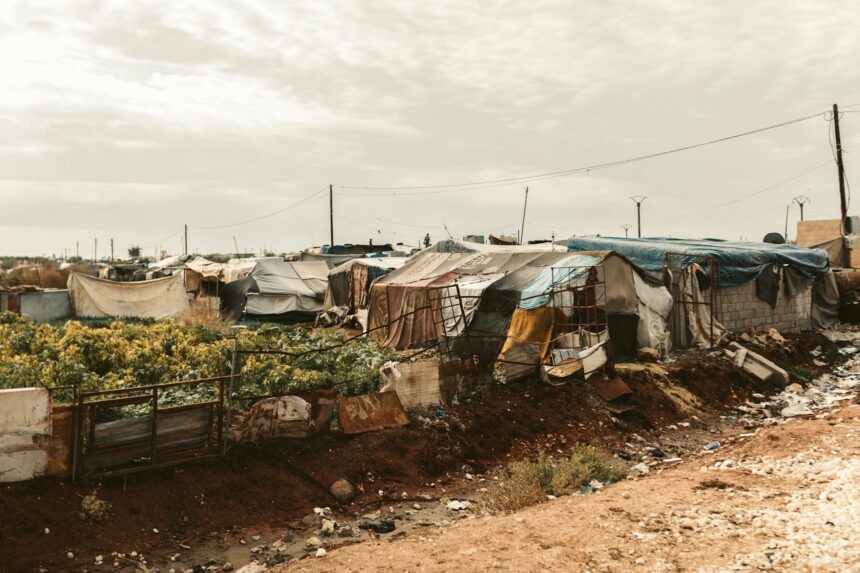
Pregnant Sudanese refugee women waiting for prenatal consultation at Birao District Hospital in Central African Republic
Pregnant Sudanese refugee women in Central African Republic face 138 times higher maternal mortality risk than EU countries. International aid cuts compound healthcare infrastructure challenges for 36,414 displaced refugees. — Photo by Abd Alrhman Al Darra on Pexels (Pexels License)
SHARE
1 min read|154 words

The humanitarian crisis unfolding in the Central African Republic has created a perfect storm for maternal health catastrophe. Among 36,414 Sudanese refugees who have fled ongoing civil war, pregnant women face a devastating reality: a 138-fold higher risk of maternal death compared to European Union standards.

This alarming disparity stems from a convergence of factors. CAR’s already fragile healthcare infrastructure, weakened by decades of political instability, faces mounting pressure from refugee populations requiring emergency obstetric care. Compounding this challenge, international aid cuts have further compromised medical capacity precisely when it is most needed.

The Birao District Hospital represents a critical lifeline for these vulnerable women, yet resource constraints limit its ability to provide comprehensive prenatal and delivery services. Healthcare workers grapple with insufficient equipment, medications, and trained personnel to manage pregnancy complications. This crisis underscores how displacement amplifies existing health inequities, demanding urgent international attention and resource mobilization.

Read the full article on GMJ Newsroom.

Submit Your Paper
GMJ_Submit_Banner

Was this article helpful?

GMJ Brief · Announcement

📰 Read the full article: Maternal mortality crisis deepens for Sudanese refugee women in Central African Republic →

Share This Article
Facebook LinkedIn Bluesky Copy Link Print
GMJ
ByProf. Giorgi Pkhakadze
Follow:
Prof. Giorgi Pkhakadze, MD, MPH, PhD, is Editor-in-Chief of the Georgian Medical Journal and Chair of the Public Health Institute of Georgia (PHIG). He is Professor and Head of the Department of Social and Behavioural Sciences at David Tvildiani Medical University, and Secretary/Treasurer of the UEMS Section of Public Health. ORCID: 0000-0001-7609-4515.

Submit Your Paper →

Georgia's peer-reviewed open-access medical journal. No APC until January 2027.
Submit Manuscript →
Ethiopia Study Reveals Stakeholder Concerns Over Novel Malaria Treatments

A qualitative study in Ethiopia reveals that health workers and patients view…

Sitafloxacin monotherapy matches doxycycline-rifampicin for brucellosis treatment in landmark trial

A multicenter randomized trial in The Lancet Regional Health – Western Pacific…

Ultra-processed foods linked to higher kidney cancer risk in large US study

A prospective analysis of over 300,000 US adults found that higher consumption…

Submit Your Paper to GMJ

No APC until January 2027.
Submit Manuscript →

You Might Also Like

Diagram showing resistant starch fermentation pathway in colon, butyrate-producing bacteria, and colonocyte energy metabolism

The Resistant Starch Gap: Why Western Diets Fall Short of Clinical Evidence

By
Prof. Giorgi Pkhakadze
30/07/2026
Conceptual illustration of African research and manufacturing collaboration networks across the continent

Key Finding: Africa’s Regional Research Hubs: Building Local Capacity for Drug Manufacturing and Health Innovation

By
Prof. Giorgi Pkhakadze
23/08/2026
Bar chart comparing steady-state serum vitamin D levels across three dosing schedules: daily, weekly, and monthly

Weekly Vitamin D Boluses Outperform Daily Dosing—Here’s Why

By
Prof. Giorgi Pkhakadze
28/07/2026
Infographic showing key risk factors for child wasting in Ghana including diarrheal episodes and maternal education

Diarrheal Episodes Show 95% Predictive Importance for Child Wasting in Ghana

By
Prof. Giorgi Pkhakadze
14/06/2026
Facebook Twitter Youtube Instagram
Company
  • Privacy Policy
  • Contact US
  • GMJ Journal
  • Submit Manuscript
  • Editorial Team
  • Register at GMJ
  • Terms of Use

Subscribe to GMJ News — Click here

Join Community
© 2026 Georgian Medical Journal (GMJ). Published by the Public Health Institute of Georgia (PHIG). All rights reserved.
Welcome Back!

Sign in to your account

Username or Email Address
Password

Lost your password?