By using this site, you agree to the Privacy Policy and Terms of Use.
Accept
GMJ NewsGMJ NewsGMJ News
  • Latest News
    • GMJ Briefs
  • Podcast & Media
    • Podcast Episodes
    • GMJ Audio
    • GMJ Videos
  • Research Digest
    • New Studies
    • Georgian Research
    • Data & Numbers
  • Policy & Systems
    • Health Policy
    • Quality & Safety
    • Migration & Health
    • Global Health
  • Practice
    • Clinical Updates
    • Case Discussions
    • Pharmacy & Prescribing
    • Ingredients A-Z
  • Perspectives
    • Editorial
    • Explainers
    • Voices
    • Letters
  • GMJ Articles
    • Vol. 1 Issue 2 (2026)
    • Vol. 1 Issue 1 (2026)
    • Pre-Launch Articles (2025)
  • Read the Journal →
  • About GMJ News
Notification Show More
Font ResizerAa
GMJ NewsGMJ News
Font ResizerAa
  • Latest News
    • GMJ Briefs
  • Podcast & Media
    • Podcast Episodes
    • GMJ Audio
    • GMJ Videos
  • Research Digest
    • New Studies
    • Georgian Research
    • Data & Numbers
  • Policy & Systems
    • Health Policy
    • Quality & Safety
    • Migration & Health
    • Global Health
  • Practice
    • Clinical Updates
    • Case Discussions
    • Pharmacy & Prescribing
    • Ingredients A-Z
  • Perspectives
    • Editorial
    • Explainers
    • Voices
    • Letters
  • GMJ Articles
    • Vol. 1 Issue 2 (2026)
    • Vol. 1 Issue 1 (2026)
    • Pre-Launch Articles (2025)
  • Read the Journal →
  • About GMJ News
Follow US
GMJ News > GMJ Briefs > Medical Image Processing Speed Increases 10,000-Fold with New FireANTs Algorithm

Medical Image Processing Speed Increases 10,000-Fold with New FireANTs Algorithm

GMJ
Last updated: 07/07/2026 22:43
By
Prof. Giorgi Pkhakadze
Share
1 Min Read
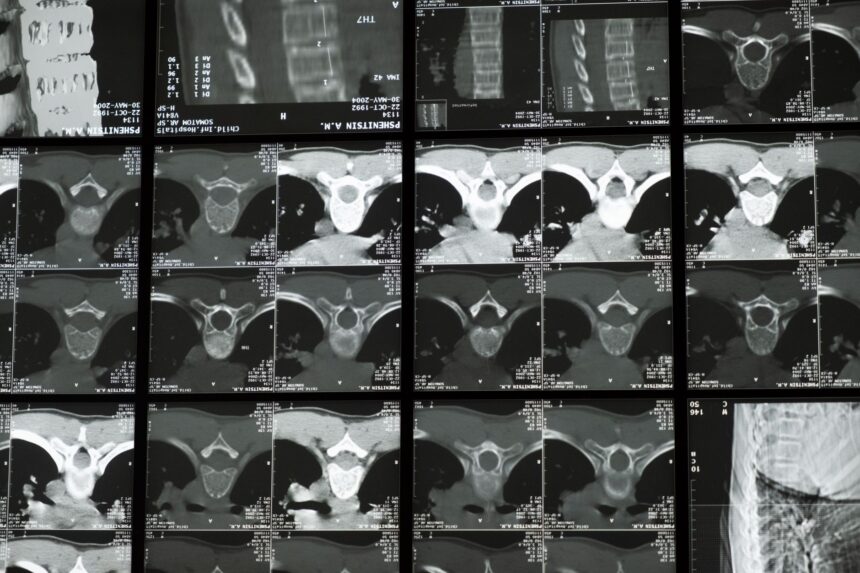
Medical imaging workstation showing before and after processing times with FireANTs algorithm
University of Pennsylvania engineers developed FireANTs, an open-source algorithm that reduces medical image analysis time from one week to minutes. The breakthrough combines AI speed with geometric precision for accurate disease detection. — Photo by cottonbro studio on Pexels (Pexels License)
SHARE
1 min read|129 words

A groundbreaking advancement in computational medical imaging has achieved a dramatic reduction in processing time without sacrificing diagnostic precision. The FireANTs algorithm, developed at the University of Pennsylvania, has demonstrated the ability to complete medical image analysis tasks in minutes that previously required seven days of computational work.

This represents approximately a 10,000-fold acceleration in processing speed while maintaining 100 percent accuracy in disease detection and image alignment. The breakthrough addresses a significant clinical challenge: the time-intensive nature of longitudinal image comparison, which is essential for tracking disease progression and evaluating treatment efficacy across numerous medical specialties.

The open-source distribution model ensures that this technological advancement is accessible to healthcare institutions globally, potentially standardizing rapid medical image analysis protocols across diverse clinical settings and improving diagnostic workflow efficiency at scale.

Was this article helpful?
GMJ Brief · Key Finding

📰 Read the full article: New AI Algorithm Cuts Medical Image Analysis Time from Week to Minutes →

Share This Article
Facebook LinkedIn Bluesky Copy Link Print
GMJ
ByProf. Giorgi Pkhakadze
Follow:
Prof. Giorgi Pkhakadze, MD, MPH, PhD, is Editor-in-Chief of the Georgian Medical Journal and Chair of the Public Health Institute of Georgia (PHIG). He is Professor and Head of the Department of Social and Behavioural Sciences at David Tvildiani Medical University, and Secretary/Treasurer of the UEMS Section of Public Health. ORCID: 0000-0001-7609-4515.

Submit Your Paper →

Georgia's peer-reviewed open-access medical journal. No APC until January 2027.
Submit Manuscript →
Teen Drug Use and Binge Drinking Linked to Severe Mental Health Crisis

UCLA research reveals dangerous links between teen substance use and mental health…

PFAS ‘Forever Chemicals’ Persist in Ski Wax Rooms Despite Regulatory Bans

New research reveals PFAS 'forever chemicals' persist in ski wax facilities years…

Community Walking Groups Show Mental Health Benefits for Bereaved Adults

A community walking group in Darwen demonstrates how peer-supported physical activity provides…

Submit Your Paper to GMJ

No APC until January 2027.
Submit Manuscript →

You Might Also Like

Bronchoscopic view showing black carbon deposits in bronchial airways from coal dust exposure

Recognizing Bronchial Anthracosis: What Occupational Health Professionals Should Know

By
Prof. Giorgi Pkhakadze
30/06/2026
Healthcare cost reduction chart showing potential savings from medically tailored meal interventions

Key Finding: Medically Tailored Meals Show Promise in Reducing Healthcare Costs, Nature Medicine Reports

By
Prof. Giorgi Pkhakadze
20/06/2026
Medical illustration showing spinal cord anatomy and stroke location in adolescent patient

Post-Viral Spinal Stroke in Adolescent Emphasises Need for Neurological Vigilance

By
Prof. Giorgi Pkhakadze
26/06/2026
Laboratory scientist analyzing blood samples for PFAS chemical detection and fingerprinting

Blood Tests Reveal Hidden PFAS Fingerprints as Forever Chemicals Transform in Human Body

By
Prof. Giorgi Pkhakadze
18/06/2026
Facebook Twitter Youtube Instagram
Company
  • Privacy Policy
  • Contact US
  • GMJ Journal
  • Submit Manuscript
  • Editorial Team
  • Register at GMJ
  • Terms of Use

Subscribe to GMJ News — Click here

Join Community
© 2026 Georgian Medical Journal (GMJ). Published by the Public Health Institute of Georgia (PHIG). All rights reserved.
Welcome Back!

Sign in to your account

Username or Email Address
Password

Lost your password?

Not a member? Sign Up