Updated 13/09/2026
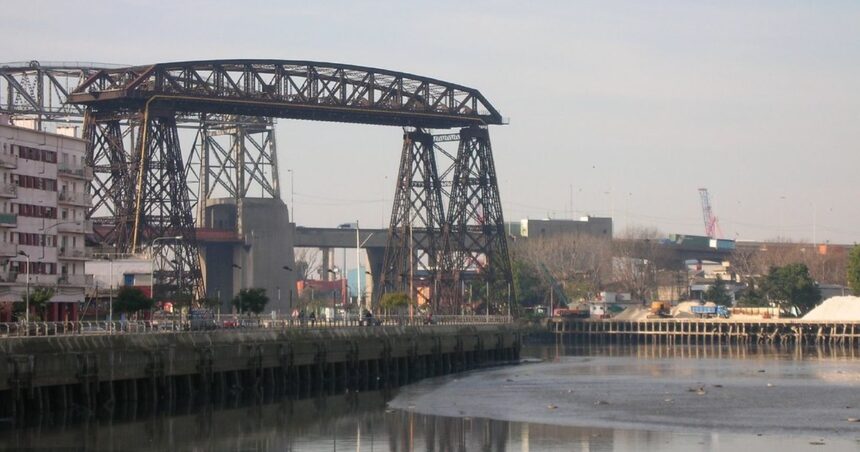
Photo: Polluted Riachuelo River with Puente Transbordador N. Avellaneda Bridge, by puroticorico (Flickr), cropped for layout · Licensed CC BY 2.0 · Source
Plain-language summary of research published in the Georgian Medical Journal. Written for the general public by the GMJ News editorial team.
Unregulated discharge from copper and gold mining in Georgia’s Bolnisi district has pushed copper concentrations in the Kazretula and Mashavera rivers far above WHO drinking-water limits. A laboratory study in the Georgian Medical Journal tests a low-cost, locally sourced fix: Georgian bentonite clay, evaluated for the first time in the indexed literature as a heavy-metal adsorbent.

A Local Problem, A Local Material
Bentonite clay is a montmorillonite-rich aluminosilicate with a high cation-exchange capacity, making it a plausible natural adsorbent for pulling heavy-metal ions out of contaminated water. Georgian bentonite deposits in the Ascana region (Ozurgeti) had never been evaluated for this specific application before this study, despite the mining contamination problem existing in a different part of the country entirely.
The Experiment
Researchers used naturally contaminated water from the Kazreti mining region — baseline copper concentration roughly 2,262 mg/L, over a thousand times the WHO guideline — treated with 5.0 g of bentonite clay per 100 mL at five temperatures (20, 40, 60, 80, 100°C), each run five times for 25 total experiments. Residual copper was measured by UV-Vis spectrophotometry.
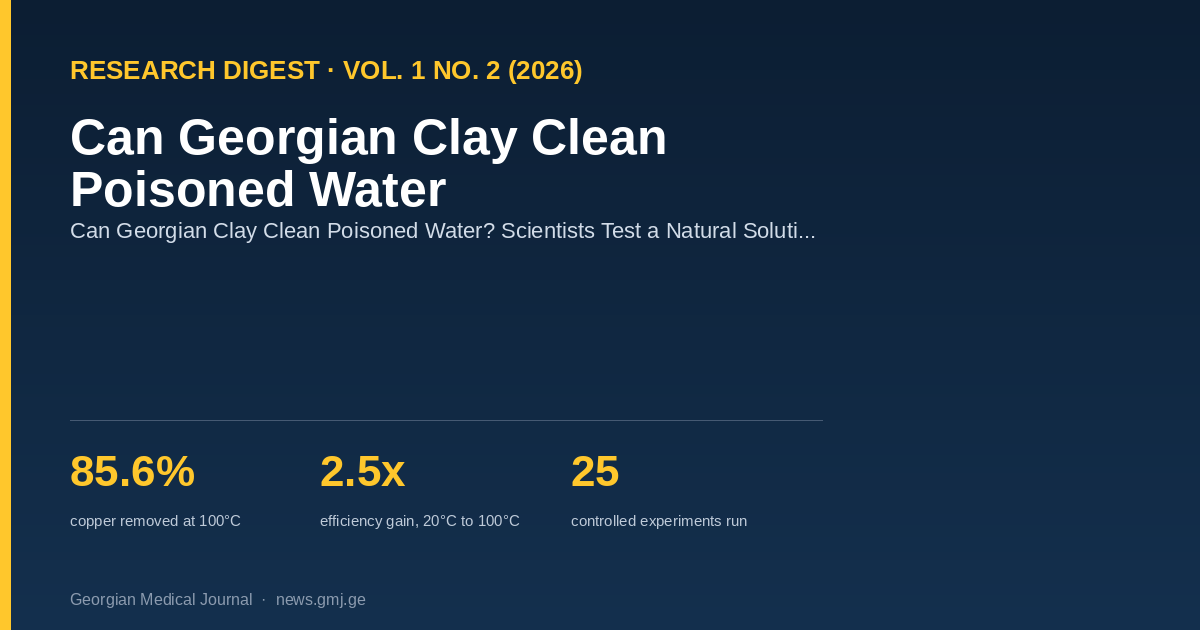
At a glance — the headline figures.
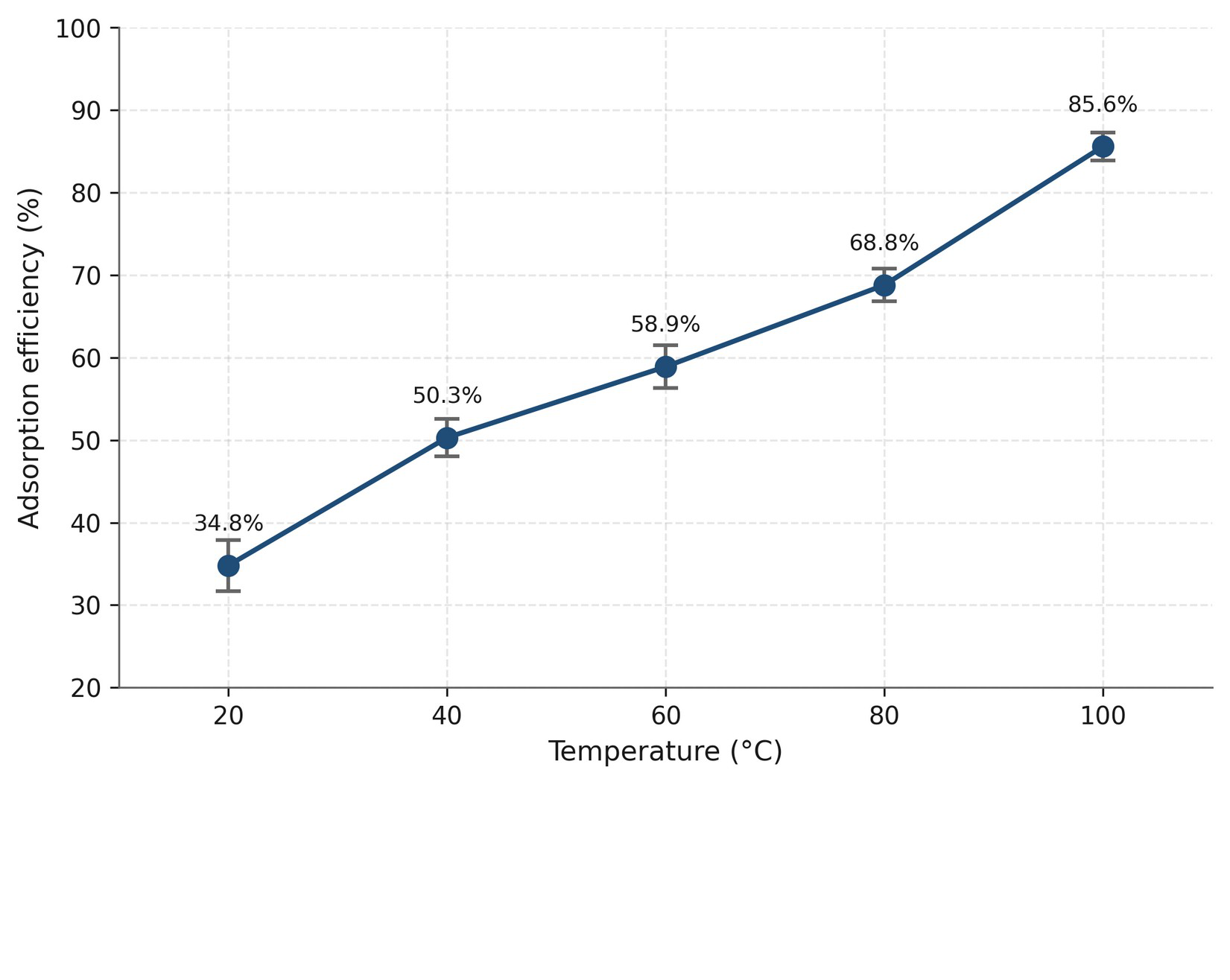
Copper(II) adsorption efficiency by Georgian bentonite clay across five temperatures. Figure from the study. Source: Georgian Medical Journal, Vol. 1 No. 2 (2026), DOI: 10.66636/gmj.v1.i2.a4.
Adsorption efficiency rose steadily with temperature: 34.8% at 20°C, climbing to 85.6% at 100°C — a 2.5-fold increase, with low variability between repeat runs (coefficient of variation 2.0–8.9%), consistent with an endothermic chemisorption process. At 80°C and above, the treated water was visually colourless, indicating near-complete copper removal.
This is the first systematic evaluation of Georgian bentonite for heavy-metal remediation to appear in the indexed literature, and the results are strong enough to support real interest — but the authors are clear this is a laboratory proof of concept, not a deployed solution. Adsorption isotherms, competitive multi-metal removal (real contaminated water rarely contains just one heavy metal), desorption kinetics, and pilot-scale field testing all remain to be done before Ascana bentonite could actually be deployed in the Bolnisi mining district it was tested to help.
🗺️ Find certified Georgian healthcare providers: sheniekimi.ge — Georgia Health Map · 998 clinics · 6,600+ doctors · 2,296 pharmacies
Read the Original Research
Original article: Can Georgian Clay Clean Poisoned Water? Scientists Test a Natural Solution to Heavy Metal Pollution
Published in: Georgian Medical Journal, Vol. 1 No. 2 (2026)
DOI: 10.66636/gmj.v1.i2.a4
📄 Read the full article at gmj.ge →
Georgian Medical Journal (GMJ) · ISSN 3088-4322 · gmj.ge · Open Access CC BY 4.0 · Published by the Public Health Institute of Georgia (PHIG). This summary is an independent editorial product of GMJ News; for clinical decisions, consult the original peer-reviewed article and a qualified professional.
Was this article helpful?
Disclaimer. This article is health journalism intended for general information and education. It is not medical advice and is not a substitute for professional diagnosis or treatment. Always consult a qualified healthcare provider about your individual circumstances. Full disclaimer →
Related Coverage



Editorial standards. This article was produced under the GMJ News editorial process, with oversight by the GMJ Editorial Board. Our editorial process. Spotted an error? Contact the editorial team.