By using this site, you agree to the Privacy Policy and Terms of Use.
Accept
GMJ NewsGMJ NewsGMJ News
  • Latest News
    • GMJ Briefs
  • Podcast & Media
    • Podcast Episodes
    • GMJ Audio
    • GMJ Videos
  • Research Digest
    • New Studies
    • Georgian Research
    • Data & Numbers
  • Policy & Systems
    • Health Policy
    • Quality & Safety
    • Migration & Health
    • Global Health
  • Practice
    • Clinical Updates
    • Case Discussions
    • Pharmacy & Prescribing
    • Ingredients A-Z
  • Perspectives
    • Editorial
    • Explainers
    • Voices
    • Letters
  • GMJ Articles
    • Vol. 1 Issue 2 (2026)
    • Vol. 1 Issue 1 (2026)
    • Pre-Launch Articles (2025)
  • Read the Journal →
  • About GMJ News
Notification Show More
Font ResizerAa
GMJ NewsGMJ News
Font ResizerAa
  • Latest News
    • GMJ Briefs
  • Podcast & Media
    • Podcast Episodes
    • GMJ Audio
    • GMJ Videos
  • Research Digest
    • New Studies
    • Georgian Research
    • Data & Numbers
  • Policy & Systems
    • Health Policy
    • Quality & Safety
    • Migration & Health
    • Global Health
  • Practice
    • Clinical Updates
    • Case Discussions
    • Pharmacy & Prescribing
    • Ingredients A-Z
  • Perspectives
    • Editorial
    • Explainers
    • Voices
    • Letters
  • GMJ Articles
    • Vol. 1 Issue 2 (2026)
    • Vol. 1 Issue 1 (2026)
    • Pre-Launch Articles (2025)
  • Read the Journal →
  • About GMJ News
Follow US
GMJ News > Practice > Pharmacy & Prescribing > FDA Updates Alli Weight Loss Drug Label with Kidney Injury Warning
Pharmacy & PrescribingPractice

FDA Updates Alli Weight Loss Drug Label with Kidney Injury Warning

GMJ
Last updated: 23/06/2026 18:42
By
GMJ Practice Desk
Share
6 Min Read
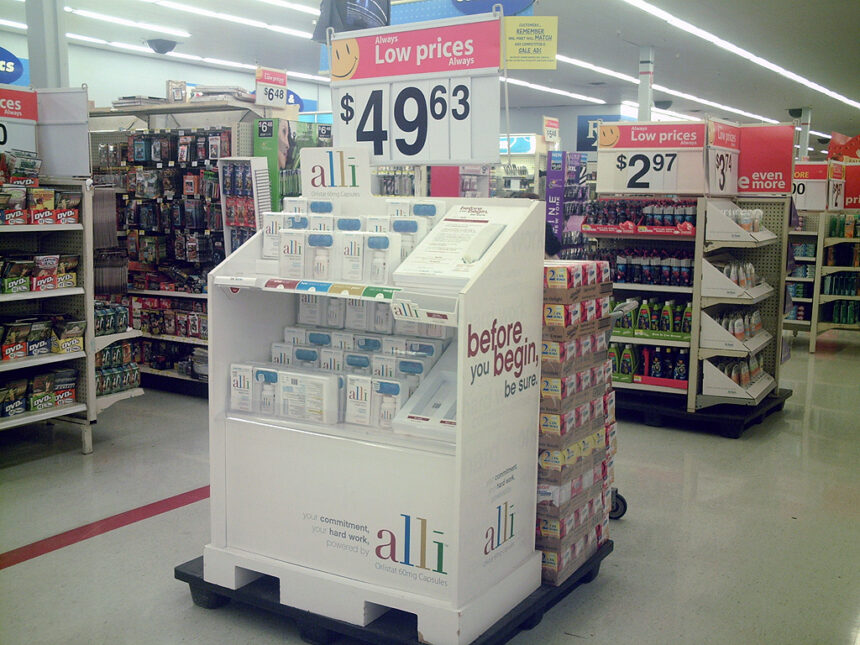
FDA warning label for alli weight loss medication showing kidney safety informationIllustrative image · "OTC weight loss drugs" by Clean Wal-Mart is licensed under CC BY 2.0. To view a copy of this license, visit https://creativecommons.org/licenses/by/2.0/. (CC BY 2.0)
FDA mandates new kidney injury warnings on alli weight loss drug labels. The updated labeling requires consumers to consult healthcare providers before use if they have kidney disease history. — "OTC weight loss drugs" by Clean Wal-Mart is licensed under CC BY 2.0. To view a copy of this license, visit https://creativecommons.org/licenses/by/2.0/. (CC BY 2.0)
SHARE
3 min read|692 words
✓ Medically reviewed by Prof. Giorgi Pkhakadze, MD, MPH, PhD · ORCID 0000-0001-7609-4515

The US Food and Drug Administration has mandated new labeling requirements for alli (orlistat) 60 mg capsules, the only FDA-approved over-the-counter weight loss medication. The updated Drug Facts Label now includes warnings about acute kidney injury and kidney stone formation, marking the first major safety communication update for the drug since its OTC approval.

Contents
    • Key takeaways
      • OTC Weight Loss Drug Safety Requirements
  • Kidney Safety Warnings Added to Popular Weight Loss Drug
  • Clinical Evidence Behind the Safety Update
  • Implications for Weight Management Practice
    • What this means
  • Frequently asked questions
    • Is alli still safe to use for weight loss?
    • What are the signs of kidney injury to watch for?
    • Do I need to see a doctor before buying alli?

Key takeaways

  • FDA requires new kidney injury warnings on alli weight loss drug labels
  • Acute kidney injury identified as rare but serious side effect of orlistat
  • Consumers must now consult healthcare providers before use if they have kidney disease history
60 mg
Maximum orlistat dose available without prescription

OTC Weight Loss Drug Safety Requirements

New FDA labeling mandates for alli (orlistat), 2024

60 mg
Maximum OTC dose
Rare
Kidney injury risk
Required
Provider consultation

Source: FDA Safety Communication, 2024 | Georgian Medical Journal News

Kidney Safety Warnings Added to Popular Weight Loss Drug

The FDA’s safety communication specifically addresses acute kidney injury as a rare but serious adverse effect associated with orlistat use. According to the FDA’s drug safety database, cases of kidney injury have been reported in patients taking both prescription (Xenical 120 mg) and over-the-counter (alli 60 mg) formulations of orlistat.

Submit Your Paper
GMJ_Submit_Banner

The updated labeling requires consumers to “ask a health care provider before use” if they have a history of kidney stones or kidney disease. This represents a significant change from previous labeling that did not include specific kidney-related contraindications for over-the-counter use.

Clinical Evidence Behind the Safety Update

Orlistat works by blocking approximately 30% of dietary fat absorption in the intestines, leading to reduced caloric intake and weight loss. However, post-market surveillance data compiled by the FDA’s MedWatch system identified patterns of kidney injury that prompted this labeling revision.

The mechanism linking orlistat to kidney injury likely involves changes in oxalate metabolism and calcium absorption, which can contribute to kidney stone formation and subsequent kidney damage. Healthcare providers have been advised to monitor patients for signs of kidney dysfunction when prescribing or recommending orlistat therapy through clinical practice updates.

Cases of acute kidney injury have been reported in patients taking both prescription and over-the-counter formulations of orlistat

— FDA Safety Communication (2024)

Implications for Weight Management Practice

This labeling change affects millions of Americans who use alli as part of their weight management strategy. The drug remains available without prescription, but the enhanced warnings require consumers to make more informed decisions about its use, particularly those with pre-existing kidney conditions.

Healthcare providers must now consider kidney function assessment before recommending orlistat, especially for patients with diabetes, hypertension, or other conditions that increase kidney injury risk. The CDC estimates that over 70% of American adults are overweight or obese, making this safety update relevant to a substantial population seeking weight loss interventions.

What this means

For patients: Consult healthcare providers before using alli if you have kidney disease history or risk factors for kidney stones
For clinicians: Consider baseline kidney function assessment and counsel patients about kidney injury signs when recommending orlistat
For policymakers: Enhanced post-market surveillance systems may be needed for OTC medications with emerging safety signals

Frequently asked questions

Is alli still safe to use for weight loss?

Yes, alli remains FDA-approved for OTC weight loss when used as directed. The new labeling provides important safety information to help consumers make informed decisions about use, particularly those with kidney disease risk factors.

What are the signs of kidney injury to watch for?

Symptoms may include decreased urination, swelling in legs or feet, fatigue, nausea, or back pain. Anyone experiencing these symptoms while taking alli should discontinue use and seek medical attention immediately.

Do I need to see a doctor before buying alli?

The new labeling recommends consulting a healthcare provider before use if you have a history of kidney stones or kidney disease. Otherwise, alli remains available without prescription for appropriate candidates.

The FDA’s proactive approach to updating OTC drug labeling demonstrates the importance of ongoing safety monitoring even for established medications. As weight management remains a critical public health priority, ensuring the safety profile of available interventions protects consumers while maintaining access to effective treatments.

Source: FDA Approves Labeling Changes for Over-the-Counter (OTC) Weight Loss Drug alli (Orlistat) to Warn of Risk of Kidney Stones and Kidney Injury

Was this article helpful?

Disclaimer. This article is health journalism intended for general information and education. It is not medical advice and is not a substitute for professional diagnosis or treatment. Always consult a qualified healthcare provider about your individual circumstances. Full disclaimer →

Related Coverage

New Picture Book Series Targets Mental Health Development in Children Aged 7-12Jun 26, 2026
ACOG Issues Independent Pregnancy Vaccine Guidelines Diverging from CDC RecommendationsJun 26, 2026
NHS England Expands Precision Radiotherapy Access to Reduce Prostate Cancer Treatment Sessions from 20 to 5Jun 25, 2026
Home Exercise Program Reduces Cognitive Decline During Cancer ChemotherapyJun 25, 2026
Related reference
  • Hypertension · Condition
  • Calcium · Ingredient
PG
Written by
Prof. Giorgi Pkhakadze, MD, MPH, PhD
Editor-in-Chief, GMJ News
Full profile →  ·  ORCID 0000-0001-7609-4515
Medical disclaimer. This article is health journalism intended for general information. It is not medical advice and is not a substitute for consultation with a qualified healthcare professional. Always seek your physician's advice regarding any medical condition.
Medically reviewed by Prof. Giorgi Pkhakadze, MD, MPH, PhD. Spotted an error? Contact the editorial team.

Get the GMJ News digest
Evidence-based health journalism in your inbox. No spam; unsubscribe anytime.
TAGGED:alliFDAkidney injuryorlistatweight loss
Share This Article
Facebook LinkedIn Bluesky Copy Link Print
GMJ
ByGMJ Practice Desk
Follow:
GMJ Practice Desk is part of GMJ News, the newsroom of the Georgian Medical Journal (gmj.ge), published by the Public Health Institute of Georgia. Every article is editorially reviewed before publication.
Leave a Comment Leave a Comment

Leave a Reply Cancel reply

Your email address will not be published. Required fields are marked *

Submit Your Paper →

Georgia's peer-reviewed open-access medical journal. No APC until January 2027.
Submit Manuscript →
FDA Issues Early Alert for Hamilton Medical Ventilator Circuit Obstruction Risk

FDA issues early safety alert for Hamilton Medical ventilator breathing circuits due…

Modern Fathers More Likely to Discuss Sex and Relationships with Teenagers, Study Shows

New research reveals modern fathers are increasingly engaging in conversations about sex…

CDC Staff Report Agency Capacity Weakened by Budget Cuts, Survey Finds

Survey of over 600 CDC workers finds 99% believe budget cuts have…

Submit Your Paper to GMJ

No APC until January 2027.
Submit Manuscript →

You Might Also Like

Medical professionals in hospital setting discussing work-life balance and family responsibilitiesPhoto by Patty Brito on Unsplash (Unsplash License)
Clinical UpdatesPractice

Dual Doctor Couples Face Amplified Childcare Crisis in Medical Training

By
GMJ Practice Desk
12/06/2026
Medical illustration showing prostate cancer treatment timeline and perioperative therapy approach
Clinical UpdatesPractice

Perioperative Treatment Revolution Could Transform Prostate Cancer Outcomes

By
GMJ Practice Desk
05/06/2026
Infographic showing PCOS prevalence rates across different global regions with medical terminology discussion
Clinical UpdatesPractice

PCOS Name Change Campaign Gains Momentum as Women Seek Better Understanding

By
GMJ Practice Desk
09/06/2026
Clinical laboratory showing advanced cell and gene therapy preparation in a controlled environment
Clinical Updates

New guidance on advanced therapy clinical trials: What researchers need to know

By
GMJ Practice Desk
20/05/2026
Facebook Twitter Youtube Instagram
Company
  • Privacy Policy
  • Contact US
  • GMJ Journal
  • Submit Manuscript
  • Editorial Team
  • Register at GMJ
  • Terms of Use

Subscribe to GMJ News — Click here

Join Community
© 2026 Georgian Medical Journal (GMJ). Published by the Public Health Institute of Georgia (PHIG). All rights reserved.
Welcome Back!

Sign in to your account

Username or Email Address
Password

Lost your password?

Not a member? Sign Up