By using this site, you agree to the Privacy Policy and Terms of Use.
Accept
GMJ NewsGMJ NewsGMJ News
  • Latest News
    • GMJ Briefs
  • Podcast & Media
    • Podcast Episodes
    • GMJ Audio
    • GMJ Videos
  • Research Digest
    • New Studies
    • Georgian Research
    • Data & Numbers
  • Policy & Systems
    • Health Policy
    • Quality & Safety
    • Migration & Health
    • Global Health
  • Practice
    • Clinical Updates
    • Case Discussions
    • Pharmacy & Prescribing
    • Ingredients A-Z
  • Perspectives
    • Editorial
    • Explainers
    • Voices
    • Letters
  • GMJ Articles
    • Vol. 1 Issue 2 (2026)
    • Vol. 1 Issue 1 (2026)
    • Pre-Launch Articles (2025)
  • Read the Journal →
  • About GMJ News
Notification Show More
Font ResizerAa
GMJ NewsGMJ News
Font ResizerAa
  • Latest News
    • GMJ Briefs
  • Podcast & Media
    • Podcast Episodes
    • GMJ Audio
    • GMJ Videos
  • Research Digest
    • New Studies
    • Georgian Research
    • Data & Numbers
  • Policy & Systems
    • Health Policy
    • Quality & Safety
    • Migration & Health
    • Global Health
  • Practice
    • Clinical Updates
    • Case Discussions
    • Pharmacy & Prescribing
    • Ingredients A-Z
  • Perspectives
    • Editorial
    • Explainers
    • Voices
    • Letters
  • GMJ Articles
    • Vol. 1 Issue 2 (2026)
    • Vol. 1 Issue 1 (2026)
    • Pre-Launch Articles (2025)
  • Read the Journal →
  • About GMJ News
Follow US
GMJ News > Policy & Systems > Health Policy > Georgia Must Prioritize Health Worker Safety as Strategic National Goal
Health PolicyPolicy & Systems

Georgia Must Prioritize Health Worker Safety as Strategic National Goal

GMJ
Last updated: 04/06/2026 23:36
By
GMJ News Desk
Share
6 Min Read
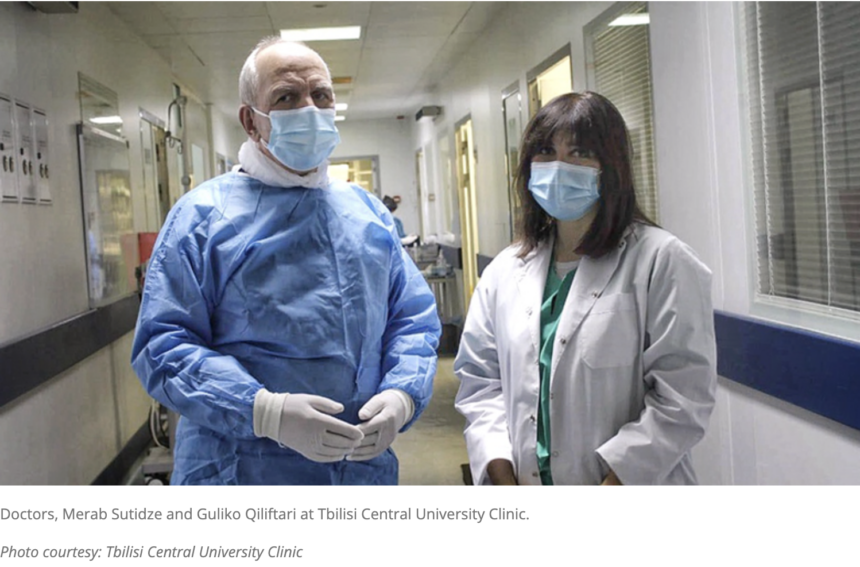
Healthcare professionals working in a hospital corridor in Tbilisi, illustrating the importance of protecting and supporting the health workforce.
Doctors Merab Sutidze and Guliko Qiliftari at Tbilisi Central University Clinic. Health workers are the foundation of every health system and require safe working conditions, adequate staffing, and institutional support.
SHARE
🎧 Listen to this article5:02 min · 699 words · GMJ Audio
3 min read|699 words
✓ Editorially Reviewed by Prof. Giorgi Pkhakadze, MD, MPH, PhD — GMJ News Desk

Healthcare worker safety in Georgia requires urgent strategic attention as the country builds a resilient health system capable of withstanding future crises. The COVID-19 pandemic exposed critical vulnerabilities in worker protection protocols across Georgian healthcare facilities, highlighting the need for comprehensive policy reform.

Contents
    • Key takeaways
      • Essential Components of Health Worker Safety Framework
  • Building System Resilience Through Worker Protection
  • Lessons From the Pandemic Response
  • Strategic Investment Areas
  • Policy Framework Development
    • What this means
  • Frequently asked questions
    • What constitutes comprehensive health worker safety?
    • How can Georgia fund health worker safety improvements?
    • What role do healthcare facilities play in worker protection?

Key takeaways

  • Healthcare worker safety represents a cornerstone of health system resilience
  • Georgia’s health sector needs strategic investment in worker protection infrastructure
  • Policy frameworks must address both physical safety and mental health support
Strategic Priority
Health worker safety in Georgia’s healthcare reform agenda

Essential Components of Health Worker Safety Framework

Key areas requiring strategic investment and policy attention

Personal Protective Equipment
Critical
Training & Education
High Priority
Mental Health Support
Urgent
Infrastructure Safety
Important
Policy Framework
Foundation

Source: GMJ Editorial Analysis | Georgian Medical Journal News

Building System Resilience Through Worker Protection

The foundation of any robust healthcare system lies in protecting those who deliver care. The World Health Organization defines health worker safety as encompassing physical security, occupational health protections, and psychological wellbeing support systems.

Submit Your Paper
GMJ_Submit_Banner

Georgia’s healthcare transformation must integrate worker safety as a core strategic pillar, not an afterthought. This approach aligns with international health policy best practices that recognize healthcare workers as essential infrastructure requiring dedicated protection.

🎙️ Related Podcast Episodes
🎧 #48 | GMJ Podcast | Launching the Georgian Medical Journal — Transparency, Editorial Standards, and Open-Access Vision · 17m
🎧 #47 | GMJ Podcast | Tskaltubo and the Future of Spa-Based Medicine — Radon Therapy, Rehabilitation, and Preventive Health · 19m
🎧 #44 | GMJ Podcast | Infant Formula Contamination — Global Food Safety Failure and the Cereulide Outbreak · 21m
🎧 #43 | GMJ Podcast | Cardiovascular Screening in Pediatric Athletes — Risk Stratification and Public Health Implications · 20m
🎧 #42 | GMJ Podcast | IT Service Management in Healthcare — Governance, Procurement, and Service Delivery · 16m

Lessons From the Pandemic Response

The COVID-19 crisis revealed gaps in Georgia’s health worker protection systems that extend beyond emergency preparedness. Healthcare facilities across the country faced challenges in maintaining adequate personal protective equipment supplies, implementing infection control protocols, and supporting staff psychological wellbeing during prolonged crisis periods.

These experiences provide valuable insights for developing comprehensive safety frameworks. The Centers for Disease Control and Prevention emphasizes that healthcare worker safety requires systematic approaches addressing multiple risk factors simultaneously, from biological hazards to workplace violence prevention.

Strategic Investment Areas

Effective health worker protection requires coordinated investment across several domains. Infrastructure improvements must include proper ventilation systems, ergonomic workplace design, and secure environments that prevent workplace violence. Equipment procurement systems need standardization and strategic stockpiling capabilities for emergency situations.

Training programs should encompass both technical skills for hazard recognition and response protocols for various emergency scenarios. Mental health support systems require integration into routine healthcare delivery, not crisis-only activation. These investments strengthen the entire health system’s capacity to maintain operations under stress.

Healthcare worker safety represents a strategic investment in health system resilience, requiring coordinated policy attention across multiple protection domains

— GMJ Editorial Board Analysis

Policy Framework Development

Georgia needs comprehensive legislation addressing health worker safety as a national priority. This framework should establish mandatory safety standards for healthcare facilities, create reporting systems for safety incidents, and provide legal protections for workers who identify safety concerns.

Regulatory oversight mechanisms must ensure consistent implementation across public and private healthcare providers. The International Labour Organization provides guidance on occupational safety standards specifically designed for healthcare environments.

Integration with Georgia’s broader healthcare reform agenda ensures sustainability and resource efficiency. Safety investments should align with patient care quality initiatives and digital health infrastructure development.

What this means

For patients: Safer healthcare workers provide higher quality care with reduced risk of healthcare-associated infections and medical errors
For clinicians: Comprehensive safety frameworks reduce occupational injury risk and support career sustainability in healthcare professions
For policymakers: Strategic investment in worker safety strengthens health system resilience and reduces long-term healthcare costs through improved retention and reduced liability

Frequently asked questions

What constitutes comprehensive health worker safety?

Health worker safety includes physical protection from occupational hazards, psychological support for work-related stress, violence prevention measures, and systematic approaches to infection control. Comprehensive programs address all these elements simultaneously.

How can Georgia fund health worker safety improvements?

Funding strategies include dedicated budget allocations in healthcare reform packages, international development partnerships, and integration with existing quality improvement initiatives.

What role do healthcare facilities play in worker protection?

Individual facilities must implement safety protocols, provide necessary equipment and training, establish reporting systems for safety concerns, and create supportive workplace cultures. Facility-level commitment ensures policy implementation success.

Georgia’s commitment to health worker safety will determine the resilience and effectiveness of its healthcare system for decades to come. Strategic investment in comprehensive protection frameworks represents not just an ethical imperative, but a practical foundation for sustainable healthcare delivery capable of meeting both routine and emergency care demands effectively.

Source: Protecting Those Who Protect Us: Health Worker Safety Must Become Georgia’s Strategic Priority

Was this article helpful?

100% of readers found this helpful (1 votes)

Related Coverage

Ethiopia Integrates Oxytocin into Vaccine Cold Chain to Prevent Maternal DeathsJun 4, 2026
Rural Georgia Community Challenges ICE Detention Center Over Healthcare Capacity ConcernsJun 4, 2026
PAHO Urges Stronger Measures Against Youth Tobacco and Nicotine AddictionJun 4, 2026
Medically Tailored Meals Reduce Healthcare Costs by $2,400 Per Person, US Analysis ShowsJun 4, 2026
TAGGED:Georgia healthcare policyhealth system resiliencehealth worker safetyhealthcare reformoccupational safety
Share This Article
Facebook LinkedIn Bluesky Copy Link Print
Leave a Comment Leave a Comment

Leave a Reply Cancel reply

Your email address will not be published. Required fields are marked *

Submit Your Paper →

Georgia's peer-reviewed open-access medical journal. No APC until January 2027.
Submit Manuscript →
CCHF Virus Found in 17% of Mauritanian Livestock, New Study Shows

New surveillance study finds CCHFV antibodies in 17.1% of Mauritanian livestock tested…

James Phillip Luby, Pioneer of Infectious Disease Research, Dies at 91

James Phillip Luby, pioneering infectious disease researcher who transformed hospital infection control…

AI Tool Detects Silent Bone Loss from Routine Chest X-rays Before Fractures Strike

New AI technology can detect early bone loss from routine chest X-rays,…

Submit Your Paper to GMJ

No APC until January 2027.
Submit Manuscript →

You Might Also Like

Medical professionals operating radiotherapy equipment in hospital treatment room
Policy & SystemsQuality & Safety

UK Radiotherapy Safety Analysis Reveals 13% Rise in Reported Incidents

By
GMJ News Desk
01/06/2026
Air France aircraft on tarmac representing flight diversion due to health protocols
Global HealthPolicy & Systems

Air France Flight Diverts to Canada After Passenger From Ebola-Hit Congo Boards ‘In Error’

By
GMJ News Desk
25/05/2026
Chart showing rising trend of WHO-detected health emergency events from 2015 to 2024
Global Health

World ‘Moving Backwards’ on Pandemic Preparedness as Disease Outbreaks Surge, GPMB Warns

By
GMJ News Desk
19/05/2026
Healthcare workers in Nigeria providing primary care services
Global HealthPolicy & Systems

Nigerian Health Commissioner’s Eight-Year Transformation Demonstrates Impact of Primary Healthcare Reform

By
GMJ News Desk
30/05/2026
Facebook Twitter Youtube Instagram
Company
  • Privacy Policy
  • Contact US
  • GMJ Journal
  • Submit Manuscript
  • Editorial Team
  • Register at GMJ
  • Terms of Use

Subscribe to GMJ News — Click here

Join Community
© 2026 Georgian Medical Journal (GMJ). Published by the Public Health Institute of Georgia (PHIG). All rights reserved.
Welcome Back!

Sign in to your account

Username or Email Address
Password

Lost your password?

Not a member? Sign Up