By using this site, you agree to the Privacy Policy and Terms of Use.
Accept
GMJ NewsGMJ NewsGMJ News
  • Latest News
    • GMJ Briefs
  • The Wire
  • Health Topics
  • Podcast & Media
    • GMJ Audio
    • GMJ Videos
    • Podcast & Media
    • Podcast Episodes
  • GMJ Articles
    • Vol. 1 Issue 3 (2026)
    • Public Health Dictionary — Supplement Edition
    • IAP Legacy Series
    • Read Full Journal (gmj.ge) →
    • Pre-Launch Articles (2025)
    • Vol. 1 Issue 1 (2026)
    • Vol. 1 Issue 2 (2026)
  • Perspectives
    • Editorial
    • Explainers
    • Letters
    • Voices
  • Policy & Systems
    • Global Health
    • Health Policy
    • Migration & Health
    • Quality & Safety
    • Work & Health
  • Dictionary
    • Our Story: 20 Years in the Making
    • Browse A–Z
    • About the Project
    • Contribute a Term
  • Practice
    • Case Discussions
    • Clinical Updates
    • Pharmacy & Prescribing
  • Research Digest
    • Data & Numbers
    • Georgian Research
    • New Studies
  • Read the Journal →
Notification Show More
Font ResizerAa
GMJ NewsGMJ News
Font ResizerAa
  • Latest News
  • The Wire
  • Health Topics
  • Podcast & Media
  • GMJ Articles
  • Perspectives
  • Policy & Systems
  • Dictionary
  • Practice
  • Research Digest
  • Read the Journal →
  • Latest News
    • GMJ Briefs
  • The Wire
  • Health Topics
  • Podcast & Media
    • GMJ Audio
    • GMJ Videos
    • Podcast & Media
    • Podcast Episodes
  • GMJ Articles
    • Vol. 1 Issue 3 (2026)
    • Public Health Dictionary — Supplement Edition
    • IAP Legacy Series
    • Read Full Journal (gmj.ge) →
    • Pre-Launch Articles (2025)
    • Vol. 1 Issue 1 (2026)
    • Vol. 1 Issue 2 (2026)
  • Perspectives
    • Editorial
    • Explainers
    • Letters
    • Voices
  • Policy & Systems
    • Global Health
    • Health Policy
    • Migration & Health
    • Quality & Safety
    • Work & Health
  • Dictionary
    • Our Story: 20 Years in the Making
    • Browse A–Z
    • About the Project
    • Contribute a Term
  • Practice
    • Case Discussions
    • Clinical Updates
    • Pharmacy & Prescribing
  • Research Digest
    • Data & Numbers
    • Georgian Research
    • New Studies
  • Read the Journal →
Follow US
GMJ News > Policy & Systems > Work & Health > Domestic Workers Remain Outside the Labour Code — What the Evidence Shows as the ILO Raises the Issue
Work & Health

Domestic Workers Remain Outside the Labour Code — What the Evidence Shows as the ILO Raises the Issue

GMJ
Last updated: 02/10/2026 23:16
By
GILS Research Team
Share
8 Min Read
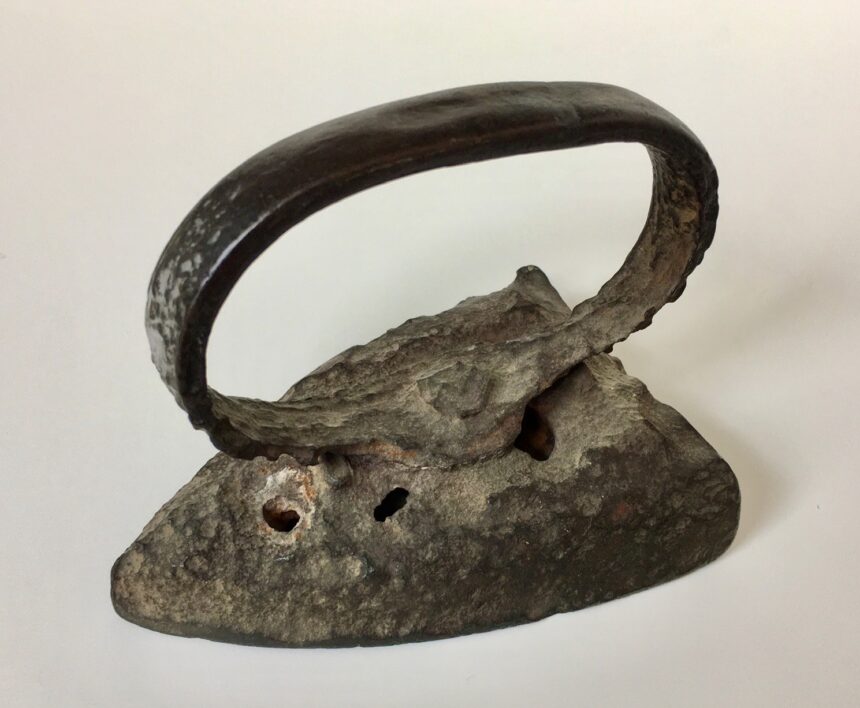
Antique clothes iron

Photo: Lambtron / Wikimedia Commons, CC BY-SA 4.0

SHARE
🎧 Listen to this article5:27 min · 1,003 words · GMJ Audio
Work & Health · From the Georgian Institute of Labour Studies
This analysis was first published by the Georgian Institute of Labour Studies (GILS), an initiative of the Public Health Institute of Georgia. Read the original on labour.edu.ge →
5 min read|1,003 words

Domestic workers — nannies, cleaners and carers, almost all of them women — work in private homes beyond the reach of labour inspection and largely outside pension and maternity protection. This analysis reviews the evidence on their numbers, conditions and legal status.

Contents
      • Key Findings
  • 1. Introduction
  • 2. How Many Domestic Workers?
  • 3. Working Conditions
  • 4. The Legal Gap
  • 5. Discussion
    • Argument: recognition is the first step
    • Counter-argument: regulation could drive work further underground
  • 6. Conclusion
      • GILS Recommendations
      • GILS Position
      • References
16 August 2026

Domestic workers — nannies, cleaners, carers and cooks working in private homes — remain outside the effective protection of Georgia’s Labour Code. The best available estimate puts their number at around 18,000, almost all of them women, though the true figure is likely higher. An ILO regional exchange with Armenia has put the issue back on the agenda. This analysis sets out what is known about domestic work in Georgia and what ratifying ILO Convention No. 189 would require. (An earlier version of this page cited a figure of 120,000 domestic workers, which GILS could not verify; it has been corrected.)

Key Findings

  • Estimates from Geostat’s Labour Force Survey put the number of people whose main job is domestic work at about 14,200 in 2017, 19,400 in 2018 and 18,000 in 2019 — around 1.1% of employment. The authors consider these lower bounds (ISET-PI / UN Women, 2021).
  • About 99% of domestic workers are women (ISET-PI / UN Women, 2021; UN Women, 2024).
  • Georgia has not ratified ILO Convention No. 189. The Labour Code does not cover domestic workers unless they are contracted through an employment agency, and courts have never ruled on whether domestic work is a labour relationship (UN Women, 2024).
  • In 2019, 96% of domestic workers worked on oral agreements, and about 82% of full-time domestic workers worked more than 40 hours a week (ISET-PI / UN Women, 2021).
  • No cases brought by domestic workers were found at the Labour Inspectorate, the Public Defender or five city courts for 2015–2020 (ISET-PI / UN Women, 2021).

1. Introduction

Domestic work enables others — often women — to participate in the labour market, yet domestic workers themselves are among the least protected. The ILO’s 2011 Domestic Workers Convention (No. 189) sets minimum standards for them. Georgia has not ratified it, and the government has not treated domestic work as a policy priority (ISET-PI / UN Women, 2021). The ILO recently convened representatives from Armenia and Georgia in Yerevan to discuss rights, representation and protection for domestic workers (ILO, n.d.).

2. How Many Domestic Workers?

Estimated domestic workers in Georgia (main job)Estimated domestic workers in Georgia (main job)06,00012,00018,00024,00014,191201719,430201817,9942019Source: ISET Policy Institute / UN Women (2021), from Geostat LFS. Lower-bound estimates.
Figure 1. Estimated number of domestic workers in Georgia, 2017–2019.

The ISET Policy Institute’s regulatory impact assessment, prepared for UN Women, estimated the number of domestic workers from Labour Force Survey microdata. Because many domestic workers may conceal their work — for example to avoid losing social assistance — the authors treat the figures as lower bounds (ISET-PI / UN Women, 2021). There is no official, regularly published statistic.

Submit Your Paper
GMJ_Submit_Banner

3. Working Conditions

Domestic workers' working conditions, 2019 (%)Domestic workers' working conditions, 2019 (%)0%25%50%75%100%96%Oral agreement(no written contract)82%Full-time workingmore than 40 hrs/week65%Work SaturdaysregularlySource: ISET-PI / UN Women (2021), Geostat LFS 2019. Suggestive given small sample.
Figure 2. Most domestic workers work on oral agreements and long hours.
Table 1. Profile of domestic workers, 2019
Characteristic Share
Women 99%
Urban 68%
Aged 35–70 88%
Oral agreement 96%
Full-time workers usually working >40 hours/week 82%
Net monthly earnings up to GEL 600 42% (22% refused to answer)

Source: ISET-PI / UN Women (2021), from Geostat LFS. Shares are suggestive given small sample sizes.

🎙️ Related Podcast Episodes
🎧 #48 | GMJ Podcast | Launching the Georgian Medical Journal — Transparency, Editorial Standards, and Open-Access Vision · 17m
🎧 #45 | GMJ Podcast | Tskaltubo Mineral Baths in Osteoarthritis — Microcirculation, Erythrocytes, and Clinical Effects · 18m
🎧 #37 | GMJ Podcast | NAD⁺ Injections and “NAD Boosters” — Public Health Risks and Regulatory Implications · 20m
🎧 #25 | WHO Warns: Childhood Hearing Loss Must Be Addressed Early · 19m
🎬 GMJ Video Series | Rare Case: Lung Cancer & Tuberculosis Coexistence

A survey of 184 domestic workers in 2020 found that only 8% had a written agreement, 23% had experienced contract violations — most often unpaid extra tasks or overtime — and 83% would not turn to the courts, the Public Defender or the Labour Inspectorate in a dispute (ISET-PI / UN Women, 2021).

4. The Legal Gap

Domestic workers employed directly by households cannot apply to the Labour Inspection Service, which does not cover employers who are private individuals without a registered economic activity; the Inspectorate can enter a household only with a court order in suspected cases of forced labour or exploitation. Those employed directly are excluded from the funded pension scheme and from state maternity benefits; during COVID-19, they could not access the one-time support available to informal workers without documentation from an agency (ISET-PI / UN Women, 2021).

5. Discussion

Argument: recognition is the first step

The ISET assessment compared three options and found that a transitional approach — awareness-raising first, followed by legal recognition of domestic work as a labour relationship after two years — offered the highest net benefit (ISET-PI / UN Women, 2021). UN Women’s 2024 policy document similarly sets out options for recognition, social security coverage and fiscal incentives for formalisation (UN Women, 2024).

Counter-argument: regulation could drive work further underground

Households and workers value flexibility, and formalisation costs could reduce demand or push arrangements deeper into informality. This is why reduced tax rates, simple registration and awareness campaigns are central to any reform.

6. Conclusion

Georgia’s domestic workers are few in official statistics but largely invisible in law. Recognising domestic work as employment, enabling simple formalisation and preparing for ratification of ILO Convention No. 189 would extend basic protections to a group of workers — almost all women — who currently have almost none.

GILS Recommendations

  1. Recognise domestic work as a labour relationship in the Labour Code.
  2. Create a simple registration and reduced-tax scheme for households employing domestic workers.
  3. Extend the funded pension and maternity benefits to registered domestic workers.
  4. Publish regular statistics on domestic workers from the Labour Force Survey.
  5. Prepare ratification of ILO Convention No. 189, in consultation with domestic workers’ organisations.

GILS Position

Work in a private home is still work. GILS supports legal recognition and practical formalisation for domestic workers, building on the evidence and options already developed with UN Women.

References

  1. ISET Policy Institute / UN Women (2021). Regulatory Impact Assessment of ILO C189 — Domestic Workers Convention. Pignatti, N., Chitanava, M., Lobjanidze, M. & Tsulukidze, M. iset-pi.ge
  2. UN Women (2024). Invisible Hands: Formalization of Domestic Work in Georgia. unwomen.org
  3. ILO (n.d.). Decent work for domestic workers takes centre stage at regional exchange in Yerevan. ilo.org
  4. ILO (2011). Domestic Workers Convention, 2011 (No. 189). Geneva.

Suggested citation: GILS Research Team (2026). Domestic Workers in Georgia: Outside the Labour Code. Editor: G. Pkhakadze. Georgian Institute of Labour Studies, Tbilisi. labour.edu.ge

GILS analyses are prepared with AI-assisted drafting. All figures and claims are verified against the cited primary sources and reviewed under the responsibility of the Editor.

Was this article helpful?

Disclaimer. This article is health journalism intended for general information and education. It is not medical advice and is not a substitute for professional diagnosis or treatment. Always consult a qualified healthcare provider about your individual circumstances. Full disclaimer →

Related Coverage

Georgia's Pension System Seven Years After the 2019 Reform: GEL 8.2 Billion Saved, but Coverage and Adequacy Gaps RemainOct 2, 2026
How Many Georgians Live Abroad? What the Migration Data Actually Show — and Why the Labour Market Should CareOct 2, 2026
Georgia's Minimum Wage Has Been GEL 20 Since 1999: The Numbers, the Failed Reforms, and What a Credible Law Would NeedOct 2, 2026
Working Poverty in Georgia: Why Having a Job Is No Longer a Guarantee Against PovertyOct 2, 2026
Explore more on this topic:🧭 Sexually Transmitted Infections hub🧭 Rheumatoid Arthritis hub🧭 African Trypanosomiasis (Sleeping Sickness) hub
🔥 Most read this week
1Animal Protein’s Muscle-Building Edge Disappears When Measured Over Days, Not Hours
2Animal Protein Produces 47% Larger Muscle Protein Synthesis Spike Than Plant Sources, New Research Shows
3Resistance Training Linked to 27% Reduction in Early Death Risk, Large-Scale Review Finds
4High-Intensity Interval Training Alone Preserves Muscle While Reducing Fat in Older Adults

Find certified Georgian healthcare providers at sheniekimi.ge/jandacvis-ruka/

PG
Editorial oversight
Prof. Giorgi Pkhakadze, MD, MPH, PhD
Editor-in-Chief, GMJ News
Full profile →  ·  ORCID 0000-0001-7609-4515
Medical disclaimer. This article is health journalism intended for general information. It is not medical advice and is not a substitute for consultation with a qualified healthcare professional. Always seek your physician's advice regarding any medical condition.
Editorial standards. This article was produced under the GMJ News editorial process, with oversight by the GMJ Editorial Board. Our editorial process. Spotted an error? Contact the editorial team.
📬 GMJ Health Digest
Evidence-based medical news, once a week. Free, no spam, unsubscribe anytime.
TAGGED:GILSSocial Protection
Share This Article
Facebook Whatsapp Whatsapp LinkedIn Telegram Bluesky Copy Link Print
GMJ
ByGILS Research Team
Follow:
GILS Research Team, Georgian Institute of Labour Studies (labour.edu.ge), an initiative of the Public Health Institute of Georgia. Editor: Prof. Giorgi Pkhakadze, MD, MPH, PhD (ORCID 0000-0001-7609-4515). GILS analyses are prepared with AI-assisted drafting; all figures and claims are verified against the cited sources and reviewed under the responsibility of the Editor.
Leave a Comment Leave a Comment

Leave a Reply Cancel reply

Your email address will not be published. Required fields are marked *

Submit Your Paper →

Georgia's peer-reviewed open-access medical journal. No APC until January 2027.
Submit Manuscript →
Organ Donation Amid Euthanasia: How Medical Ethics Navigate Competing Values

As voluntary euthanasia becomes legal in more countries, medical ethicists face a…

Georgia’s Pension System Seven Years After the 2019 Reform: GEL 8.2 Billion Saved, but Coverage and Adequacy Gaps Remain

Seven years after Georgia introduced a funded pension scheme, its assets have…

How Many Georgians Live Abroad? What the Migration Data Actually Show — and Why the Labour Market Should Care

Claims that 1.5 million Georgians work abroad circulate widely, but they are…

Submit Your Paper to GMJ

No APC until January 2027.
Submit Manuscript →

You Might Also Like

Orange safety helmet
Work & Health

Georgia Has Not Ratified the ILO’s Fundamental Safety Conventions: Why C155 and C187 Matter

By
GILS Research Team
02/10/2026
Drawing of a gauge reading empty wallet
Work & Health

Working Poverty in Georgia: Why Having a Job Is No Longer a Guarantee Against Poverty

By
GILS Research Team
02/10/2026
Construction workers — informal employment
Work & Health

37% of Georgia’s Workers Are Informally Employed: Who They Are, Where They Work, and Why Informality Persists

By
GILS Research Team
02/10/2026
Bicycle parked on a street
Work & Health

The EU Platform Work Directive: What a Presumption of Employment Would Mean for Georgia’s Couriers

By
GILS Research Team
02/10/2026
Facebook Twitter Youtube Instagram
Company
  • Privacy Policy
  • Accreditation Canada in Georgia
  • GMJ Journal
  • Submit Manuscript
  • Editorial Team
  • Register at GMJ

Subscribe to GMJ News — Click here

Join Community
© 2026 Georgian Medical Journal (GMJ). Published by the Public Health Institute of Georgia (PHIG). All rights reserved.
Welcome Back!

Sign in to your account

Username or Email Address
Password

Lost your password?