Key points
- Seek travel health advice at least 4–6 weeks before departure [2].
- Malaria is the leading preventable risk: the WHO African Region carries about 95% of the world’s malaria cases and deaths [1].
- Any fever within 12 months of returning from a malaria-risk country needs urgent medical assessment [4].
- Altitude sickness can begin above about 2,500 metres; Kilimanjaro rises to 5,895 m and Mount Kenya to 5,199 m [7, 8, 9].
- Since 1 October 2026, foreign visitors to Tanzania must hold a USD 44 inbound travel insurance policy [11].
Introduction
Safari travel offers substantial rewards, and most associated health risks are both predictable and preventable. Malaria remains the most serious concern: in 2024 the World Health Organization (WHO) estimated 282 million cases and 610,000 deaths globally, with approximately 95% occurring in the WHO African Region [1]. Common travel-related conditions such as infectious diarrhoea, sunburn and altitude sickness are largely avoidable through appropriate preparation.
- Key points
- Introduction
- 1. Which vaccinations do I need?
- 2. How do I avoid malaria?
- 3. What can I safely eat and drink?
- 4. How do I manage sun and heat?
- 5. Will altitude affect me?
- 6. Can I travel with diabetes, a heart or a lung condition?
- 7. What insurance do I need?
- Before you travel: checklist
- Conclusion
- Conflict of interest
- References
- About the authors
This article launches a weekly Safari Health series, jointly authored by a physician and experienced safari guide. Each question receives two answers: one based on medical evidence and one from three decades of field practice.
1. Which vaccinations do I need?
The doctor says: Arrange a consultation at a travel health clinic 4–6 weeks before departure, as some vaccines require multiple doses or time to establish efficacy [2]. Ensure routine immunisations, including measles, are current. Common travel vaccines include hepatitis A, typhoid, and a combined tetanus, diphtheria and polio booster; the appropriate regimen depends on destination, itinerary and personal medical history [2].
Yellow fever warrants particular attention. Under International Health Regulations, some countries require proof of yellow fever vaccination on the International Certificate of Vaccination or Prophylaxis [2, 3]. A single dose confers lifelong immunity; protection develops within 10 days in 80–100% of recipients and within 30 days in more than 99% [3]. Requirements vary between countries and depend on arrival location; your clinic should verify requirements for each country on your route.

The guide says: Keep your yellow fever certificate with your passport, not in checked luggage. You may be asked for it at airports and land borders.
2. How do I avoid malaria?
The doctor says: Malaria prevention relies on two measures: mosquito bite avoidance and, where indicated, antimalarial chemoprophylaxis [1, 4]. Your physician will select a medicine matched to your health status, concurrent medications and itinerary. Treatment typically begins days to weeks before travel and continues for weeks after return [4]. Use a repellent containing DEET (the NHS recommends 50% DEET), IR3535 or icaridin; sleep under an insecticide-treated net; and wear long sleeves and trousers in the evening [1, 4].
Symptoms typically appear 7 to 18 days after an infective bite, though onset can be delayed for months [4]. Any fever or flu-like illness occurring within 12 months of visiting a malaria-risk area requires urgent medical evaluation, with explicit mention of your travel history [4]. Malaria constitutes a medical emergency [4].
The guide says: Mosquitoes are most active from dusk until dawn. Apply repellent before evening drinks around the campfire, change into long sleeves at sunset, and ensure your bed net is fully tucked in.
3. What can I safely eat and drink?
The doctor says: Drink only bottled or treated water and clean your hands before eating. If diarrhoea develops, fluid replacement is the priority: consume small, frequent amounts and use oral rehydration salts (available from pharmacies before departure) [5]. Diarrhoea in adults typically resolves within 5–7 days. Seek medical care if stools contain blood, if you cannot retain fluids, if dehydration signs persist despite oral rehydration, or if diarrhoea persists beyond 7 days [5].
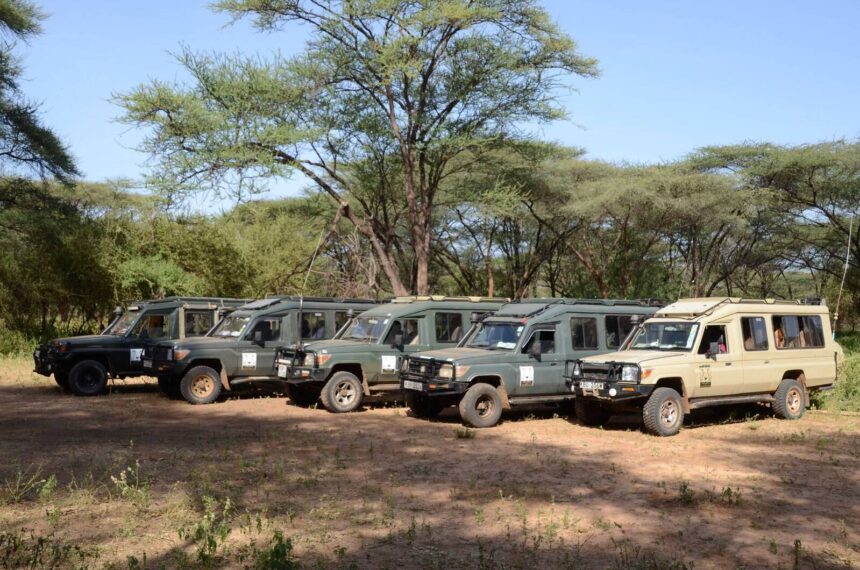
The guide says: Safari vehicles are equipped with water tanks, and each guest receives a refillable bottle, ensuring safe water is available on game drives [13]. Lodge and camp kitchens accommodate international guests; if you wish to sample local roadside food, ask your guide for appropriate venues.
4. How do I manage sun and heat?
The doctor says: Safari regions lie near the Equator, where solar radiation remains intense even on cool days. Use a sunscreen of at least SPF 30 with a UVA rating of at least four stars, reapply every two hours and after sweating, and wear a wide-brimmed hat and sunglasses [6]. Maintain regular fluid intake throughout the day.
The guide says: In open-roof vehicles you may spend several hours in direct sunlight. Early mornings can be cold, so wear removable layers that accommodate warming temperatures as the day progresses.
5. Will altitude affect me?
The doctor says: Altitude sickness can develop above approximately 2,500 metres, particularly with rapid ascent. Characteristic symptoms include headache, nausea, fatigue, dizziness and sleep disturbance, typically beginning 6–10 hours after arrival [7]. The NHS advises against ascending from below 1,200 m to above 3,500 m in a single day; above 3,000 m, do not sleep more than 500 m higher than the previous night; and take a rest day every 3–4 days. If symptoms worsen or fail to improve after one day, descend 300–1,000 m; confusion or breathlessness at rest mandate immediate descent and emergency care [7].
These recommendations are relevant for East Africa’s major peaks: Kilimanjaro reaches 5,895 m [8] and Mount Kenya’s highest summit, Batian, 5,199 m [9]. Individuals with cardiac or pulmonary disease should consult their specialist before booking high-altitude expeditions.
The guide says: On Kilimanjaro, route selection determines acclimatisation. Routes span approximately five to eight days [14], with longer routes allowing greater time for physiological adjustment. We match each route to individual fitness levels.
6. Can I travel with diabetes, a heart or a lung condition?
The doctor says: In most instances, yes, with proper preparation. For diabetes, carry two to three times your usual supply of insulin or other medicines and equipment, distributed across separate bags, along with a letter from your healthcare team itemising your medicines and devices [10]. Keep insulin and sensors in hand luggage, store insulin in a cool bag that does not freeze it, and discard any insulin with altered appearance [10]. Carry snacks to address travel delays [10]. Individuals with lung conditions should plan medicines and travel insurance in advance [15], and anyone with cardiac or pulmonary disease should obtain specialist advice before booking.
The guide says: Inform us of any medical condition at booking. We can arrange shorter drives, provide a private vehicle and select lodges closer to medical facilities. Game-drive tracks become dusty in the dry season; guests with asthma should keep inhalers readily accessible and bring a scarf or face covering.
7. What insurance do I need?
The doctor says: Obtain comprehensive travel medical insurance covering emergency evacuation and repatriation, declaring all pre-existing conditions when purchasing.
The guide says: Our guests are covered for emergency air evacuation in East Africa; our guides are trained in first aid, and our vehicles carry radio communication [12]. Tanzania now has an additional legal requirement: since 1 October 2026, all foreign visitors must hold a USD 44 inbound travel insurance policy covering medical emergencies for up to 92 days. This is available through the National Insurance Corporation for mainland arrivals and the Zanzibar Insurance Corporation for Zanzibar arrivals [11].
Before you travel: checklist
| When | Action | Source |
|---|---|---|
| 4–6 weeks before | Travel health consultation; vaccines; antimalarial prescription if advised | [2, 4] |
| At least 10 days before | Yellow fever vaccination, if required or recommended for your route | [3] |
| Before booking | Insurance with evacuation cover; specialist advice for heart or lung conditions | [12, 15] |
| Before departure (Tanzania) | Buy the USD 44 inbound travel insurance | [11] |
| Packing | Repellent, sunscreen SPF 30+, oral rehydration salts, double or triple medicine supply in hand luggage | [4, 5, 6, 10] |
| Up to 12 months after return | Any fever: seek medical care urgently and mention your travel | [4] |
Conclusion
Most safari-related health problems are preventable through early medical advice, sensible daily practices and appropriate insurance. Begin preparations at least 4–6 weeks before departure, prioritise malaria prevention, ascend gradually at altitude, and disclose any medical conditions to your safari operator. With this preparation, travellers can concentrate on experiencing Africa’s exceptional wildlife and landscapes.
Conflict of interest
Nikos Pocock is the founder of Africa Calling Safaris, which organises safaris in the region. Prof. Giorgi Pkhakadze declares no financial interest in Africa Calling Safaris.
References
- World Health Organization. Malaria: fact sheet. Geneva: WHO; 4 December 2025. https://www.who.int/news-room/fact-sheets/detail/malaria
- National Health Service (NHS). Travel vaccinations. Last reviewed 30 April 2026. https://www.nhs.uk/conditions/travel-vaccinations/
- World Health Organization. Yellow fever: fact sheet. Geneva: WHO; 20 October 2025. https://www.who.int/news-room/fact-sheets/detail/yellow-fever
- National Health Service (NHS). Malaria. Last reviewed 29 July 2025. https://www.nhs.uk/conditions/malaria/
- National Health Service (NHS). Diarrhoea and vomiting. Last reviewed 21 December 2023. https://www.nhs.uk/conditions/diarrhoea-and-vomiting/
- National Health Service (NHS). Sunscreen and sun safety. Last reviewed 24 March 2026. https://www.nhs.uk/live-well/seasonal-health/sunscreen-and-sun-safety/
- National Health Service (NHS). Altitude sickness. Last reviewed 31 July 2023. https://www.nhs.uk/conditions/altitude-sickness/
- UNESCO World Heritage Centre. Kilimanjaro National Park. https://whc.unesco.org/en/list/403/
- UNESCO World Heritage Centre. Mount Kenya National Park/Natural Forest. https://whc.unesco.org/en/list/800/
- Diabetes UK. Travel and diabetes. Last reviewed 11 April 2025. https://www.diabetes.org.uk/guide-to-diabetes/life-with-diabetes/travel
- Tanzania Association of Tour Operators. Tanzania to implement mandatory inbound travel insurance for foreign visitors from 1 October 2026 (reporting Government Notice No. 256 of 2026, Ministry of Finance). 26 September 2026. https://tatotz.org/tanzania-implement-mandatory-inbound-travel-insurance/
- Africa Calling Safaris. Frequently asked questions: safety and medical evacuation. https://africacallingsafaris.com/faq
- Africa Calling Safaris. Responsible tourism. https://africacallingsafaris.com/responsible-tourism
- Africa Calling Safaris. Tanzania: Mount Kilimanjaro routes. https://africacallingsafaris.com/destinations/tanzania
- Asthma + Lung UK. Travelling with a lung condition. https://www.asthmaandlung.org.uk/living-with/travel
About the authors
Nikos Pocock is the founder and Managing Director of Africa Calling Safaris in Nairobi. He has guided safaris across East Africa since 1995, and since 2002 he and his team have supported documentary and photography productions for National Geographic, the BBC, Discovery Channel and others.
Prof. Giorgi Pkhakadze, MD, MPH, PhD is Editor-in-Chief of the Georgian Medical Journal (GMJ) and Professor and Head of the School of Public Health at David Tvildiani Medical University, Tbilisi. He chairs the Public Health Institute of Georgia and is a WHO consultant on health and migration. From 2016 to 2021 he was a member of the UN Secretary-General’s Independent Accountability Panel for Every Woman, Every Child, Every Adolescent. ORCID 0000-0001-7609-4515.
Source and partnership
Originally published by Africa Calling Safaris on 10 October 2026 and republished here, lightly edited for an international medical readership, under the GMJ News–Africa Calling Safaris Travel Medicine partnership. Photograph courtesy of Africa Calling Safaris.
Read the original: Safari health checklist: 7 questions answered by a doctor and a guide
Was this article helpful?
Related Coverage

Editorial standards. This article was produced under the GMJ News editorial process, with oversight by the GMJ Editorial Board. Our editorial process. Spotted an error? Contact the editorial team.