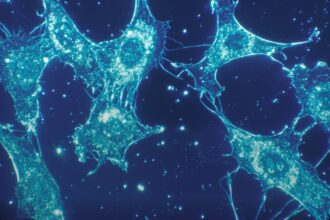
Mitochondria have long been taught as the “powerhouse of the cell,” but this metaphor obscures their true complexity. These organelles are dynamic multitasking structures that simultaneously manage energy production, oxidative stress regulation, genetic integrity, and cellular quality control. Understanding these four interconnected functions reveals why mitochondrial dysfunction underlies aging, neurodegeneration, metabolic disease, and cancer.
Key takeaways
- Mitochondria generate ATP via the TCA cycle and electron transport chain, powering all cellular processes from nerve signals to muscle contraction
- During energy production, mitochondria generate reactive oxygen species (ROS) that must be carefully balanced by antioxidant enzymes to prevent oxidative stress and cell death
- Mitochondrial DNA (mtDNA) encodes critical electron transport chain proteins, and accumulating mutations with age are linked to Alzheimer’s and Parkinson’s disease
- Dynamic fission and fusion processes allow mitochondria to adapt to cellular stress and remove damaged components through mitophagy, with impairment seen in metabolic and neurodegenerative disorders
The Four Mitochondrial Functions and Their Disease Associations
Key roles in cellular health and their involvement in major disease pathways
Source: Mitochondrial Physiology | Georgian Medical Journal News
Function 1: ATP Generation Powers Every Cellular Process
Mitochondria convert metabolic substrates—glucose, fatty acids, and amino acids—into the molecule that fuels all cellular activity: adenosine triphosphate (ATP). The process occurs in two stages. First, substrate molecules are broken down into acetyl-coenzyme A (acetyl-CoA), which enters the tricarboxylic acid cycle (TCA cycle, also called the Krebs cycle). This cycle generates electron carriers (NADH and FADH₂) that feed into the electron transport chain (ETC) embedded in the inner mitochondrial membrane.

The ETC is a series of protein complexes that transfer electrons in a stepwise fashion, creating a proton gradient across the membrane. This gradient drives ATP synthase, a molecular motor that phosphorylates adenosine diphosphate (ADP) to produce ATP. This fundamental process powers muscle contraction, neuronal signaling, protein synthesis, ion pumping, and every other energy-demanding cellular function. Dysfunction in this pathway—from mutations in ETC genes to impaired substrate delivery—directly impairs cellular function and contributes to muscle weakness, cardiac dysfunction, and clinical disease.
Function 2: Oxidative Stress Balance Prevents Cellular Damage
A critical but often overlooked consequence of ATP generation is the production of reactive oxygen species (ROS)—unstable molecular byproducts of electron transport. ROS include superoxide radicals, hydrogen peroxide, and hydroxyl radicals. While low levels of ROS serve as cellular signaling molecules, excessive ROS accumulation causes oxidative damage to proteins, lipids, and DNA, ultimately triggering cell injury or death.
Mitochondria have evolved multiple layers of antioxidant defense. Key enzymes include superoxide dismutase (SOD), which converts superoxide to hydrogen peroxide; catalase, which degrades hydrogen peroxide to water and oxygen; and glutathione peroxidase, which uses the tripeptide glutathione to neutralize peroxides. Research indicates that regular physical activity trains mitochondria to improve ROS balance and antioxidant enzyme capacity, which is one mechanism by which exercise protects against aging and chronic disease. Conversely, impaired ROS regulation is implicated in neurodegenerative disease, diabetes, and cardiovascular dysfunction. See our science explainers for more on oxidative stress in aging.
Function 3: Mitochondrial DNA Maintenance Preserves Genetic Stability
Unlike nuclear DNA, mitochondria possess their own small, circular genome (mtDNA) comprising approximately 16,569 base pairs in humans. mtDNA encodes 13 of the proteins needed for electron transport chain function, plus the rRNA and tRNA molecules required for mitochondrial protein synthesis. Because mtDNA is located near the site of ROS generation and lacks some of the protective mechanisms available to nuclear DNA, it accumulates mutations at a higher rate than nuclear genes.
These mutations have profound consequences. Missense mutations can impair ETC protein function, reducing ATP production. Large deletions can eliminate entire genes. mtDNA mutations are inherited maternally and, if present in a high proportion of mitochondrial genomes (a state called heteroplasmy), cause primary mitochondrial diseases characterized by progressive weakness, neurological decline, and organ failure. Beyond these rare Mendelian conditions, age-related accumulation of mtDNA mutations is increasingly recognized as a hallmark of aging and is strongly associated with neurodegenerative diseases. Studies of Alzheimer’s disease and Parkinson’s disease brains show elevated mtDNA mutation burden, oxidative damage, and impaired mitochondrial function. Understanding mtDNA integrity is central to understanding neurodegeneration and is explored further in our new studies section.
Function 4: Membrane Dynamics Enable Adaptive Quality Control
Mitochondria are not static organelles. They continuously undergo fission (splitting into smaller units) and fusion (merging with neighboring mitochondria), forming dynamic networks that reshape according to cellular energy demand and stress conditions. These membrane dynamics serve a critical quality control function. When mitochondria become damaged—through accumulated mtDNA mutations, protein misfolding, or ROS injury—fusion is prevented, isolating the damaged organelle. Fission then segregates damaged components, and the compromised mitochondrion is selectively degraded through mitophagy, a form of autophagy specific to mitochondria.
The proteins controlling fission (particularly dynamin-related protein 1, or DRP1) and fusion (OPA1, mitofusin-1, and mitofusin-2) are tightly regulated by cellular energy status and stress signals. Impaired fission or fusion dynamics are observed in metabolic disorders such as obesity and type 2 diabetes, and in neurodegenerative diseases including Alzheimer’s, Parkinson’s, and amyotrophic lateral sclerosis (ALS). This suggests that maintaining healthy mitochondrial networks is essential for preventing neuronal loss and preserving cognitive and motor function.
Mitochondrial dysfunction—spanning defects in ATP production, ROS regulation, mtDNA stability, and membrane dynamics—is now recognized as a unifying feature of aging, neurodegeneration, metabolic disease, and cancer, making mitochondrial health a central target for therapeutic intervention.
— Synthesis of mitochondrial biology literature (multiple institutions, 2020–2026)
What this means
Frequently asked questions
Can mitochondrial function be improved through diet or supplements?
Yes, accumulating evidence suggests that aerobic exercise is the most potent known intervention for improving mitochondrial biogenesis (formation of new mitochondria) and enhancing antioxidant enzyme expression. Dietary approaches rich in polyphenols (from berries, tea, dark chocolate) and micronutrients (CoQ10, vitamin E, B vitamins) provide substrates for mitochondrial function and antioxidant defense. However, isolated supplement studies show mixed results; whole-food approaches and consistent exercise remain the evidence base.
What are the signs of mitochondrial dysfunction?
Common presenting symptoms include unexplained fatigue disproportionate to activity, exercise intolerance, muscle pain or weakness, cardiac symptoms (palpitations, syncope), neuropsychiatric manifestations (depression, cognitive decline), and progressive multi-system involvement. Any combination of these in a patient with family history warrants evaluation by a metabolic or neuromuscular specialist.
Is mitochondrial DNA inherited only from mothers?
Yes, mitochondrial DNA is typically inherited exclusively through the maternal lineage because the egg cell contributes nearly all cytoplasm (and thus mitochondria) to the zygote, while sperm contribute minimal cytoplasm. Rare cases of paternal mtDNA inheritance have been documented but are exceptionally uncommon. This maternal inheritance has important genetic counseling implications for families with mtDNA mutations.
The emerging view of mitochondria as multifunctional cellular governors—rather than simple energy factories—has reshaped our understanding of aging and disease. As research into mitochondrial dynamics, quality control, and genetic stability advances, so too will our ability to intervene therapeutically. Clinical trials of mitochondrial-targeted drugs, antioxidants, and fission/fusion modulators are underway, offering hope for patients with mitochondrial disease and age-related decline. The next decade is likely to see mitochondrial health move from a research curiosity to a central pillar of preventive and therapeutic medicine.
Source: A simple guide to how mitochondria work. 4 primary jobs
Was this article helpful?
Disclaimer. This article is health journalism intended for general information and education. It is not medical advice and is not a substitute for professional diagnosis or treatment. Always consult a qualified healthcare provider about your individual circumstances. Full disclaimer →
Related Coverage




Editorial standards. This article was produced under the GMJ News editorial process, with oversight by the GMJ Editorial Board. Our editorial process. Spotted an error? Contact the editorial team.