Updated 13/09/2026
🟡 Preliminary Evidence
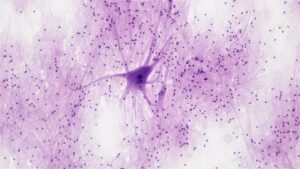
A preclinical study published in Neuron this year identified a specific population of brain cells that may determine whether endurance training translates into measurable fitness improvements. Researchers at Jackson Laboratory and the University of Pennsylvania found that neurons in the hypothalamus, called SF1 neurons, activate for approximately one hour after running ends—and this signal appears necessary to trigger the muscle and metabolic adaptations that define fitness gain.
Key takeaways
- SF1 neurons in the hypothalamus activate for ~1 hour post-exercise and appear to be necessary for fitness adaptation
- Blocking this signal for just 15 minutes after running eliminated endurance gains over 3 weeks of daily training in mice
- Artificially enhancing the signal produced greater fitness gains than training alone, suggesting it is not passive but causative
- Study conducted in mice; applicability to humans and other exercise modalities remains unknown
Study at a Glance
| Source | Neuron |
| Study type | Preclinical laboratory study with optogenetic intervention |
| Model | Adult mice (C57BL/6J) |
| Intervention | Optogenetic activation/inhibition of SF1 neurons; treadmill running |
| Institution | Jackson Laboratory and University of Pennsylvania |
SF1 neuron activation governs fitness adaptation in mice
Impact of signal modulation on endurance capacity after 3 weeks of daily treadmill running

Source: Jackson Laboratory & University of Pennsylvania, published in Neuron (2024) | Georgian Medical Journal News
How the brain signal works
The research team used optogenetics—a technique allowing precise control of neural activity—to manipulate SF1 neurons in the hypothalamus of mice while they ran on treadmills. According to the study published in Neuron, SF1 neurons became active for approximately one hour after running ceased. This post-exercise activation appeared to trigger downstream muscle remodeling and metabolic changes characteristic of fitness adaptation.
When researchers blocked this signal for just 15 minutes immediately after exercise using optogenetic suppression, the consequences were striking: three weeks of daily treadmill running produced zero measurable improvements in endurance capacity. Muscle tissue showed no gene expression changes associated with training adaptation. The absence of this one-hour neurological signal was sufficient to prevent the entire adaptive cascade that normally follows exercise.
Conversely, when the team artificially enhanced SF1 neuron activation after moderate-intensity running, the endurance gains exceeded what the same training volume normally produced. This finding suggests the signal is not merely a passive consequence of exercise, but rather a causal mechanism that determines whether training stimulus converts into physiological adaptation. Related research in New Studies continues to expand our understanding of how the nervous system governs physical adaptation.
Evidence of circuit strengthening with training
The study revealed that consistent training not only produces the SF1 activation signal, but also strengthens the neural circuit itself. Animals that ran regularly showed approximately twice the excitatory synapse density on SF1 neurons compared to sedentary controls. This finding suggests that repeated training bouts may enhance the capacity of this system to generate the adaptive signal—a form of neural learning superimposed on muscular learning.
This mechanism may explain why consistent endurance training becomes progressively more effective: the neurological machinery governing adaptation itself adapts with use. The implications extend beyond simple fitness response, touching on health optimization and athletic performance at a systems level.
Critical limitations and unknowns
Two substantial limitations constrain the generalizability of these findings. First, the study was conducted entirely in mice—a standard preclinical model that cannot directly confirm the mechanism operates identically in humans. Second, the exercise protocol tested was limited to treadmill running. Whether the SF1 neuron circuit responds similarly to resistance training, high-intensity interval training, swimming, or other modalities remains completely untested.
The post-exercise window studied (approximately one hour) was also defined by rodent physiology and the specific running protocol. Human recovery timelines and the metabolic demands of different sports may engage this or related circuits differently. These gaps mean the findings should be interpreted as hypothesis-generating rather than immediately applicable to human training.
Blocking SF1 neuron activation for just 15 minutes post-run eliminated all measurable endurance gains from three weeks of daily training in mice, suggesting this signal is necessary—not merely incidental—for exercise-induced adaptation
— Jackson Laboratory and University of Pennsylvania researchers, published in Neuron (2024)
What this means
What this means
Frequently asked questions
Does this finding apply to humans?
Not yet. This is a preclinical study conducted in mice using optogenetic techniques not yet applicable to intact humans. The findings are hypothesis-generating and establish a mechanism worthy of translational investigation, but human studies would be required to confirm whether the SF1 neuron circuit operates similarly in human physiology.
Does this explain why rest days are important?
Potentially, but not directly. The study examines the hour immediately after exercise, not the multi-day recovery between training sessions. The findings do support the broader principle that recovery processes are active and neurologically governed, not simply passive—and that conditions affecting brain state (stress, sleep) may impair adaptation. Rest days remain important for reasons beyond this one mechanism.
Can I enhance this signal myself as an athlete?
Not via any proven method. The study used optogenetics (light-activated genetic manipulation) to enhance the signal in mice. No non-invasive intervention has been shown to selectively boost SF1 neuron activity in humans. Optimizing general recovery factors—sleep, stress management, nutrition—remains the evidence-based approach to supporting training adaptation.
The identification of SF1 neurons as a necessary signal for exercise adaptation represents a significant step in understanding the neurobiology of training response. Translational research aimed at determining whether this mechanism operates similarly in humans, and whether the circuit’s function varies among individuals, could eventually enable more precise exercise prescription and explain why some individuals respond more robustly to training than others. Until then, the preclinical evidence reinforces the principle that exercise adaptation is an active, neurologically orchestrated process rather than a simple mechanical consequence of physical stress.
Source: Neuron study on post-exercise neural signaling and fitness adaptation
🗺️ Find certified Georgian healthcare providers: sheniekimi.ge — Georgia Health Map · 998 clinics · 6,600+ doctors · 2,296 pharmacies
Was this article helpful?
Disclaimer. This article is health journalism intended for general information and education. It is not medical advice and is not a substitute for professional diagnosis or treatment. Always consult a qualified healthcare provider about your individual circumstances. Full disclaimer →
Related Coverage



Editorial standards. This article was produced under the GMJ News editorial process, with oversight by the GMJ Editorial Board. Our editorial process. Spotted an error? Contact the editorial team.