Economically motivated adulteration has a simple logic: the most expensive thing in a supplement is usually a single ingredient, and the buyer cannot see it. Replace it with something cheaper that looks the same, or dilute it with a filler, and the margin improves with no visible change to the product. It is the oldest fraud in commerce — watered wine, chalked flour — and the modern supplement supply chain, with powders moving through several traders between field and factory, gives it ample opportunity. The defence is a discipline called identity testing, and understanding it is the key to understanding what separates a verified ingredient from an assumed one.
How common is it? The data
The landmark study used DNA barcoding on 44 herbal products from 12 companies: 59% contained plant species not listed on the label, a third showed substitution of the main ingredient by another species, and a fifth contained undeclared fillers such as rice, soybean or wheat (Newmaster et al. 2013). A 2019 review pooling DNA-authentication studies of nearly 5,957 commercial herbal products across 37 countries found 27% adulterated overall, with the highest rates in Australia, South America and Europe (Ichim 2019). The fraud extends beyond botanicals. Omega-3 oils are diluted with cheaper vegetable oils; whey protein is “spiked” with free amino acids or melamine-type nitrogen sources that inflate a crude-protein assay; natural vitamin E is replaced with synthetic; and trans-MK-7 is replaced by its cheap, inactive cis isomer (the isomer problem). The 2008 melamine scandal, in which a nitrogen-rich industrial chemical was added to milk to fake protein content, hospitalised over 50,000 infants and killed six (Gossner et al. 2009) — a reminder that adulteration designed to fool a test can be lethal.
The three kinds of fraud
Substitution replaces the declared ingredient with a cheaper relative: a different species of the same genus, a synthetic for a natural form, a lower-grade extract standardised on a marker compound that can be added artificially. Dilution keeps the right ingredient but cuts it with an inert or cheap filler — maltodextrin, rice flour, vegetable oil — so that a kilogram of “extract” contains 600 g of extract. Fortification to beat the test is the most sophisticated: the adulterant is chosen precisely because it makes the product pass the specific test the buyer uses. Melamine passes a Kjeldahl nitrogen test. Added caffeine passes a “total alkaloid” test for guarana. Added synthetic curcumin passes a colorimetric curcuminoid assay. Each of these fails a proper identity test — which is why the test chosen matters as much as whether a test is done.
What identity testing means in plain words
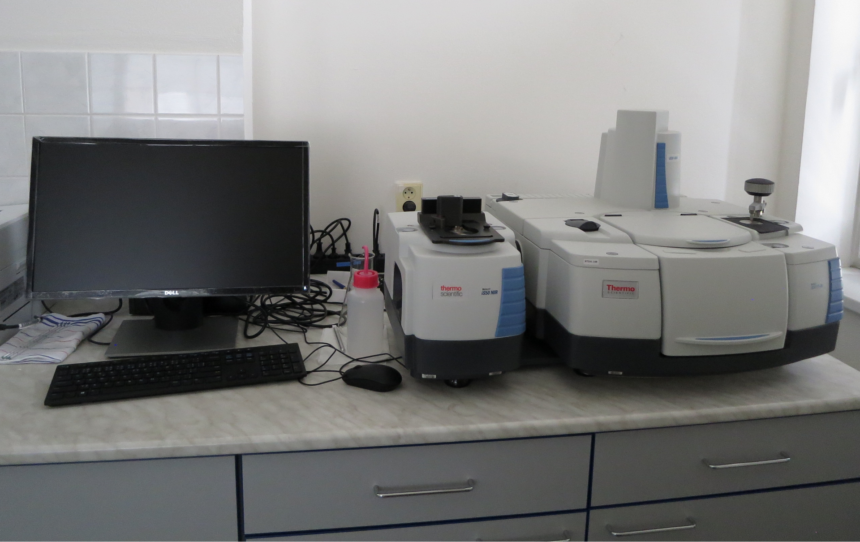
A potency test asks “how much?” An identity test asks the prior question: “is this actually the substance it claims to be?” US GMP rules (21 CFR 111.75) require manufacturers to confirm the identity of every incoming dietary ingredient with at least one scientifically valid test before it is used; EU food law achieves a similar end through HACCP hazard analysis and supplier verification. The methods form a ladder of specificity. Organoleptic and microscopic examination checks appearance, smell and cellular structure — cheap, and capable of catching gross substitution. Infrared and near-infrared spectroscopy produce a molecular “fingerprint” compared against a reference standard; fast and widely used at goods-in. Chromatography (HPLC, GC) separates the components of a mixture and compares the pattern to a reference; the gold standard for most vitamins, fatty acids and defined extracts, and the only way to tell a cis isomer from a trans one or a natural tocopherol from a synthetic racemate. DNA barcoding identifies botanical species from genetic sequence — powerful for raw plant material, less useful for highly processed extracts where DNA is destroyed. Isotope-ratio mass spectrometry can distinguish natural from synthetic origin and, sometimes, geographic origin. A robust specification uses two orthogonal methods, so that an adulterant engineered to fool one must also fool the other.

Reading it on the certificate
On a certificate of analysis (column by column), identity usually appears as its own line: “Identification — IR: conforms to reference standard” or “Identification — HPLC: retention time matches reference.” The things to look for are (1) that the line exists at all — a certificate listing only assay and heavy metals has skipped the prior question; (2) that the method is named; (3) that the reference is pharmacopoeial (USP, Ph. Eur., JP) or a certified reference material, not “in-house”; and (4) for botanicals, that the species is given with its Latin binomial and, ideally, the plant part and the marker compounds used for standardisation. Pharmacopoeial monographs exist precisely to make this comparison objective (what a USP monograph tests), and the US Pharmacopeia’s General Chapter 2251 catalogues known adulterants and the methods that detect them.
Why it matters to the patient, not only the buyer
Substitution is not merely a value-for-money problem. Substituting one plant species for another has caused documented harm — the best-known case being the substitution of Aristolochia for an unrelated herb in a Belgian weight-loss clinic in the 1990s, which caused irreversible kidney failure and urothelial cancer in over a hundred women. Undeclared fillers are a hazard for people with coeliac disease or allergies. And a diluted active ingredient in a product used for a real deficiency — B12, vitamin D, iron — means a patient who is “taking their supplement” remains deficient without anyone understanding why.
The clinical bottom line
Roughly a quarter to a half of herbal products in published surveys contain substituted or undeclared ingredients, and the same economics apply to oils, proteins and vitamins. Identity testing — spectroscopy, chromatography or DNA, against a pharmacopoeial reference, on every incoming lot — is the specific discipline that catches it, and its presence on a certificate of analysis, with the method and reference named, is the buyer’s evidence that the question “is this really what it says?” was asked before the question “how much?”
Primary sources
- Newmaster SG, Grguric M, Shanmughanandhan D, Ramalingam S, Ragupathy S. DNA barcoding detects contamination and substitution in North American herbal products. BMC Med. 2013;11:222. doi:10.1186/1741-7015-11-222
- Ichim MC. The DNA-based authentication of commercial herbal products reveals their globally widespread adulteration. Front Pharmacol. 2019;10:1227. doi:10.3389/fphar.2019.01227
- Gossner CM, Schlundt J, Ben Embarek P, et al. The melamine incident: implications for international food and feed safety. Environ Health Perspect. 2009;117(12):1803–1808. doi:10.1289/ehp.0900949
- Cohen PA, Avula B, Wang YH, et al. Presence and quantity of botanical ingredients with purported performance-enhancing properties in sports supplements. JAMA Netw Open. 2023;6(7):e2323879. doi:10.1001/jamanetworkopen.2023.23879
- Debelle FD, Vanherweghem JL, Nortier JL. Aristolochic acid nephropathy: a worldwide problem. Kidney Int. 2008;74(2):158–169. doi:10.1038/ki.2008.129
- US Food and Drug Administration. 21 CFR 111.75 — What must you do to determine whether specifications are met? ecfr.gov
- United States Pharmacopeia. General Chapter <2251> Screening for undeclared drugs and drug analogues; Food Chemicals Codex guidance on food fraud mitigation. usp.org
Educational information on supplement quality and consumer protection, not medical advice.
Was this article helpful?
Related Coverage




Editorial standards. This article was produced under the GMJ News editorial process, with oversight by the GMJ Editorial Board. Our editorial process. Spotted an error? Contact the editorial team.