Updated 28/08/2026
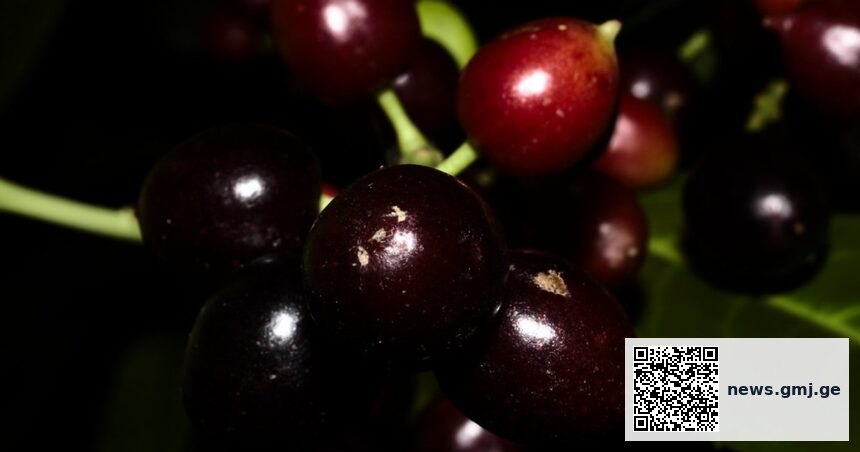
Photo: Prunus laurocerasus fruits, by stanzebla (Flickr), cropped for layout · Licensed CC BY-SA 2.0 · Source
Plain-language summary of research published in the Georgian Medical Journal. Written for the general public by the GMJ News editorial team.
Cardiovascular disease and type 2 diabetes share a common biological thread: oxidative stress, chronic inflammation, and insulin resistance. A study in the Georgian Medical Journal examines whether cherry laurel (Prunus laurocerasus), an evergreen shrub native to the Black Sea region, is a genuine multi-target candidate for addressing that shared pathology — or just another traditional remedy waiting for real data.

What Was Actually Measured
Researchers quantified phenolic acids, catechins, and anthocyanins in three forms of Georgian autochthonous cherry laurel — fresh juice, dried fruit, and the leftover processing residues (skins and pulp) — using validated spectrophotometric methods. Antioxidant activity was assessed with the DPPH radical-scavenging assay, expressed as IC50: the amount of sample needed to neutralise half the free radicals in the test, where a lower number means stronger antioxidant power.
A Clear Hierarchy Among the Three Forms
Dried fruit contained the highest concentrations of all three compound classes and showed the strongest antioxidant activity (IC50 = 1.98 mg). What’s more unexpected: processing residues — the material normally discarded after juice pressing — outperformed the juice itself on antioxidant potency (IC50 3.23 mg vs 5.05 mg), showing that a substantial share of the plant’s most active compounds stays bound to the skins and pulp rather than transferring into the juice.
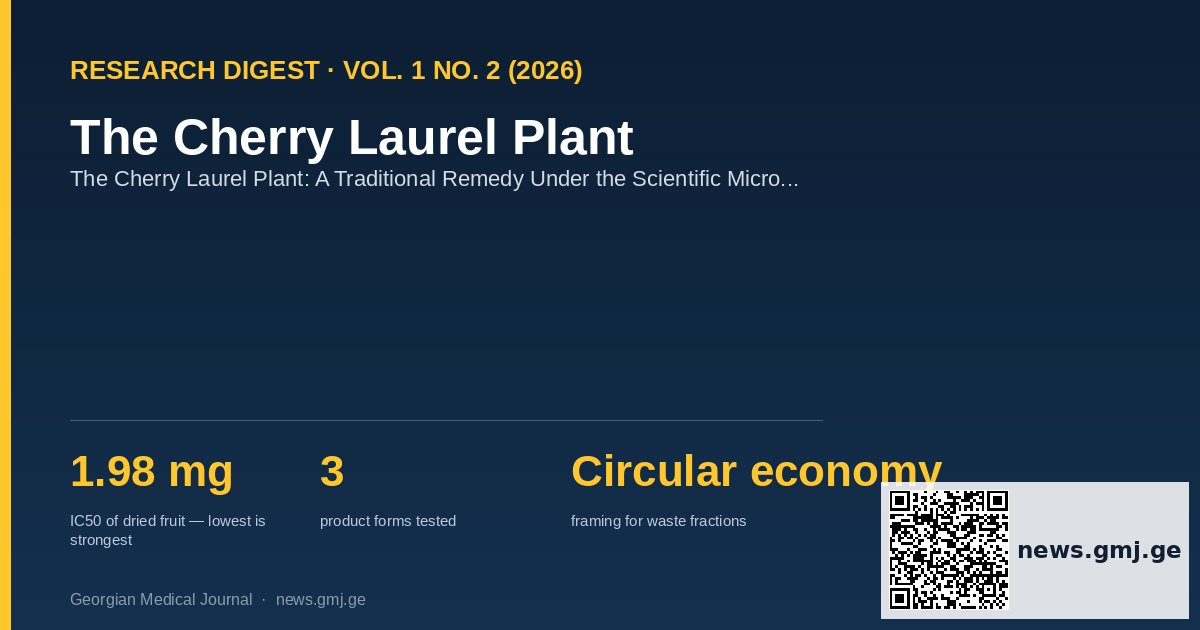
At a glance — the headline figures.
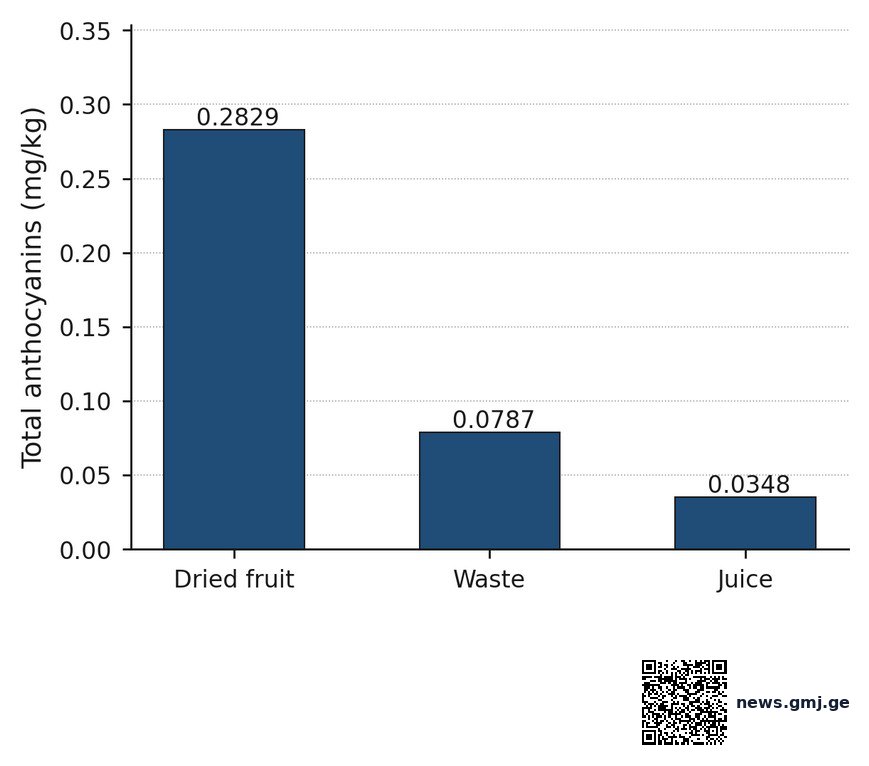
Total anthocyanin content across dried fruit, processing waste, and juice forms of Georgian cherry laurel. Figure from the study. Source: Georgian Medical Journal, Vol. 1 No. 2 (2026), DOI: 10.66636/gmj.v1.i2.a120.
The practical implication fits neatly into a circular-economy framing: the fraction currently treated as waste after juice production retains significant bioactivity, supporting its potential use in standardised antioxidant, antidiabetic, or cardioprotective preparations rather than simply being discarded. The authors are careful, though, to flag the real gap between this bench-level compositional data and any clinical claim — translation to actual human benefit will require standardised extracts and rigorous clinical trials that haven’t been done yet.
Read the Original Research
Original article: The Cherry Laurel Plant: A Traditional Remedy Under the Scientific Microscope
Published in: Georgian Medical Journal, Vol. 1 No. 2 (2026)
DOI: 10.66636/gmj.v1.i2.a120
📄 Read the full article at gmj.ge →
Georgian Medical Journal (GMJ) · ISSN 3088-4322 · gmj.ge · Open Access CC BY 4.0 · Published by the Public Health Institute of Georgia (PHIG). This summary is an independent editorial product of GMJ News; for clinical decisions, consult the original peer-reviewed article and a qualified professional.
Was this article helpful?
Disclaimer. This article is health journalism intended for general information and education. It is not medical advice and is not a substitute for professional diagnosis or treatment. Always consult a qualified healthcare provider about your individual circumstances. Full disclaimer →
Related Coverage



Editorial standards. This article was produced under the GMJ News editorial process, with oversight by the GMJ Editorial Board. Our editorial process. Spotted an error? Contact the editorial team.