


Home › Topics › Mindfulness-Based Medicine
Mindfulness-Based Medicine
GMJ News knowledge hub · last reviewed October 2026 · Georgian Medical Journal
SummaryStatisticsGlossaryGMJ newsFAQDocumentsOrganizationsResearch
Mindfulness-based medicine — encompassing MBSR (Mindfulness-Based Stress Reduction, developed by Jon Kabat-Zinn at the University of Massachusetts in 1979) and MBCT (Mindfulness-Based Cognitive Therapy, developed by Segal, Williams and Teasdale in 2002 — NICE-recommended for prevention of depressive relapse in people with 3 or more previous episodes) — is one of the few complementary approaches with Grade A evidence from randomised controlled trials and neuroscience validation, reducing recurrent depression relapse risk by approximately 30-35% compared to usual care and performing comparably to maintenance antidepressant therapy (WHO/NICE). Mindfulness is not mystical — it is operationally defined as “paying attention, on purpose, to the present moment, non-judgementally” — and neuroscience imaging consistently shows measurable changes in prefrontal cortex activation, amygdala reactivity and default mode network activity, supporting its biological plausibility beyond placebo.
Key messages
MBCT — NICE approved for recurrent depression (Grade A evidence)
NICE England recommends Mindfulness-Based Cognitive Therapy (MBCT) for people who have had 3 or more episodes of depression — as effective as maintenance antidepressant therapy for preventing relapse. This is Grade A evidence (multiple high-quality RCTs) and one of the strongest mainstream endorsements of any mind-body therapy.
MBSR vs MBCT — two distinct programmes
MBSR (Mindfulness-Based Stress Reduction): developed by Jon Kabat-Zinn, University of Massachusetts, 1979. 8-week group programme; secular; mixture of meditation, yoga, body scan, group inquiry; designed for chronic illness and stress. MBCT: 8-week group; adds CBT elements to MBSR; designed specifically to prevent depressive relapse by changing the relationship to negative thoughts rather than changing thought content.
Neuroscience — measurable brain changes
fMRI studies consistently show: increased prefrontal cortex activation (top-down emotional regulation); reduced amygdala reactivity to emotional stimuli; reduced default mode network activity (reduces ruminative mind-wandering); increased insula and anterior cingulate cortex activation (interoceptive awareness). Long-term meditators show increased cortical thickness in regions of attention and interoception (Sara Lazar, Harvard, 2005). These are genuine neurobiological changes.
Evidence by condition — what works
Grade A: MBCT for recurrent depression prevention. Grade B-A: chronic pain (reduces pain catastrophising and disability more than pain intensity); anxiety disorders (GAD, social anxiety, panic — comparable to CBT in some trials); cancer distress and quality of life; healthcare worker burnout. Grade B: ADHD in adults; insomnia (MBSR + CBT-I); PTSD (with trauma-sensitive adaptation). Grade C or insufficient: addiction (some evidence for relapse prevention); eating disorders; psychosis (specialist mindfulness-based programmes exist with caution).
Mindfulness is not mystical — it is attention training
Operational definition (Kabat-Zinn): "Paying attention, on purpose, to the present moment, non-judgementally." This is a trainable cognitive skill, not a spiritual practice — though many people integrate it into Buddhist or other contemplative frameworks. The secular MBSR/MBCT programmes require no religious belief, use scientifically measurable outcome measures, and have been delivered in hospitals, schools, prisons and corporate settings.
Adverse effects — rare but real — especially in trauma
Meditation is not risk-free. Willoughby Britton (Brown University) research: approximately 8% of meditators experience challenging or adverse effects: anxiety or panic exacerbation; depersonalisation/derealisation; re-experiencing trauma; dissociation. Contraindications or caution: active psychosis; severe depression with psychomotor retardation; PTSD without trauma-sensitive modification. Trauma-sensitive mindfulness adaptations (David Treleaven) exist to address these risks.
Key statistics
= Antidepressants
MBCT vs maintenance antidepressant for relapse prevention — comparable efficacy
JAMA Psychiatry 2016~8%
of meditators experience adverse effects (anxiety, depersonalisation, dissociation)
Britton et al.Mindfulness evidence by condition — approximate grade (Cochrane/NICE)
Glossary of key terms
Latest GMJ coverage

Brain and Immune System Form Integrated Network, Study Reveals Bidirectional Communication
08/10/2026
Why your spine is your body’s master communications network
20/08/2026
How the Brain Controls Inflammation Through the Vagus Nerve
16/08/2026
The Spine as Neural Gateway: How Spinal Health Affects Whole-Body Function
06/08/2026

How Brain Chemistry Shapes Mood, Sleep, and Focus: A Guide to Neurotransmitters
03/08/2026
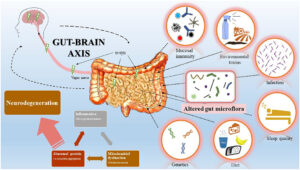
How the brain controls inflammation: The vagus nerve’s unexpected role in immune regulation
28/07/2026
Frequently asked questions 12 Q&A — structured for Google featured snippets and AI discovery
Knowledge hub: guidelines, conventions and reports
Organizations working in migration and health
Related health topics
Depression (MBCT recurrence prevention)Chronic pain (pain catastrophising)Burnout (healthcare workers)Mental healthAcupuncture (other NICE-approved CAM)Insomnia (MBSR)
About this hub. Produced by the GMJ News Editorial Team as a public-good service. Every statistic is linked to its primary source. Documents are preserved in the GMJ Repository with full attribution. Georgian Medical Journal · Contact the editorial team