🟢 Strong Evidence
A new study published in Nature Medicine (June 2026) demonstrates that neural decoding algorithms can significantly improve walking ability in people with Parkinson’s disease by enabling deep brain stimulation (DBS) devices to respond in real time to brain activity patterns. The research leverages the physiological principles underlying how the brain encodes movement, allowing DBS systems to adapt their stimulation based on moment-to-moment neural signals rather than delivering constant electrical pulses.
Key takeaways
- Activity-dependent DBS uses machine learning to decode brain signals and adjust stimulation dynamically during walking, addressing a core motor deficit in Parkinson’s disease
- The approach is grounded in neuroscientific understanding of how neural circuits encode locomotion, rather than relying on fixed stimulation parameters
- This adaptive methodology represents a shift from conventional DBS toward personalized, context-aware neuromodulation therapies
Study at a Glance
| Source | Nature Medicine |
| Study type | Clinical intervention study with neural decoding |
| Focus | Activity-dependent deep brain stimulation for locomotor deficits |
| Population | People with Parkinson’s disease experiencing gait impairment |
| Publication date | June 15, 2026 |
Evolution of Deep Brain Stimulation Technology
From fixed-parameter to adaptive, activity-dependent systems
Source: Nature Medicine, June 2026 | Georgian Medical Journal News

How Neural Decoding Transforms DBS Treatment
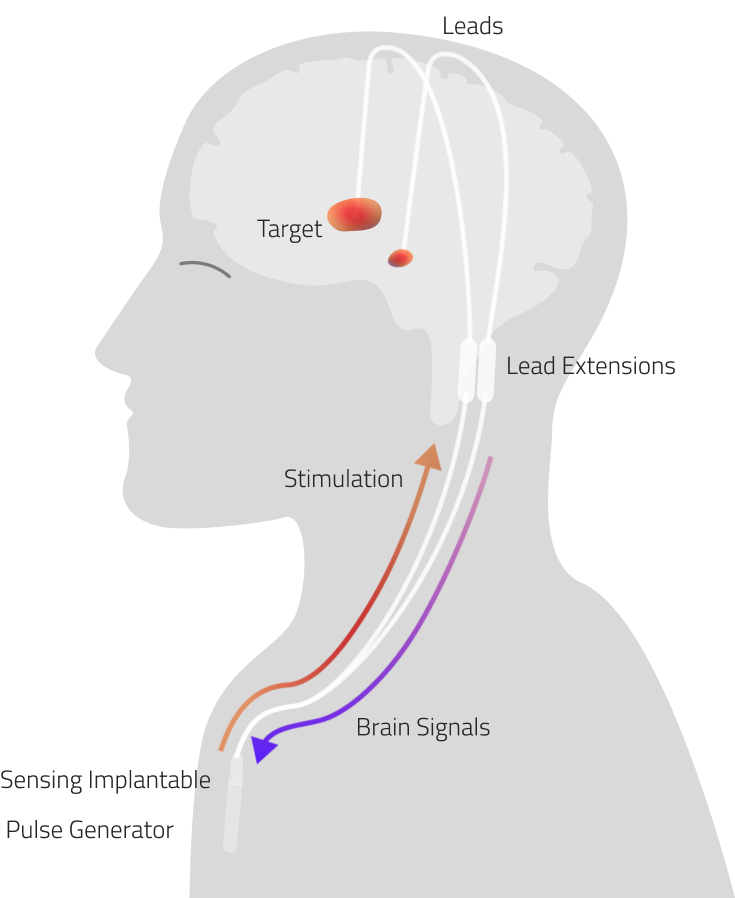
Parkinson’s disease causes progressive damage to dopamine-producing neurons in the basal ganglia, a brain region critical for coordinating movement. Conventional DBS devices, implanted in the subthalamic nucleus or globus pallidus, have provided symptomatic relief for decades by delivering continuous electrical stimulation. However, this fixed-parameter approach does not adapt to the brain’s changing state during different activities, often resulting in incomplete restoration of complex motor functions like walking.
The research published in Nature Medicine builds on established neuroscientific principles showing that neural populations in motor circuits encode movement parameters—speed, direction, limb position—through patterns of electrical activity. By using machine learning algorithms trained on recordings of these neural signals during walking, researchers created decoders that translate real-time brain activity into estimates of locomotor intent. The DBS system then modulates its stimulation based on these decoded signals, effectively “closing the loop” between brain and device. This clinical advancement in neurostimulation represents a fundamental shift toward precision neuromodulation.
Activity-dependent deep brain stimulation systems that leverage neural decoding algorithms can dynamically adjust electrical stimulation in response to brain activity patterns during movement, improving walking ability in Parkinson’s disease beyond what fixed-parameter DBS achieves.
— Research published in Nature Medicine, June 2026
Why This Matters for Motor Control in Neurodegenerative Disease
Walking is one of the most complex motor behaviors, requiring coordinated activation of multiple muscle groups guided by real-time feedback from the environment and the body. In Parkinson’s disease, patients develop characteristic gait disturbances—short, shuffling steps, difficulty initiating movement, and instability—that conventional DBS only partially ameliorates. The adaptive approach addresses this limitation by allowing the brain-machine interface to respond to the dynamic neural signals that naturally arise during locomotion.
The neuroscientific foundation of this work lies in decades of research on how motor cortex and basal ganglia circuits encode movement. Studies using intracranial recordings have shown that populations of neurons in these regions carry information about intended movements before they occur. By decoding these signals, adaptive DBS can anticipate and support the motor commands the brain is generating, rather than applying blanket electrical stimulation. This precision is analogous to the difference between a fixed-dose medication and a closed-loop insulin pump—both are effective, but the latter adapts continuously to physiological need.
The implications extend beyond Parkinson’s disease. Neurodegenerative diseases affecting motor function represent a growing global burden. Activity-dependent DBS provides a framework that could eventually be adapted for other conditions characterized by motor circuit dysfunction, including dystonia, tremor, and spasticity. The technology also raises important questions about optimal electrode placement, decoding algorithm training, and long-term device reliability in clinical practice.
Current State of Adaptive Neuromodulation and Future Directions
Deep brain stimulation has been approved by the U.S. Food and Drug Administration (FDA) for Parkinson’s disease since 1997, and over 180,000 patients worldwide have received DBS implants. Until recently, all commercially available systems used either open-loop (continuous) or symptom-triggered responsive stimulation. The emergence of activity-dependent systems with real-time neural decoding represents the next technological frontier in neuromodulation. Earlier-generation responsive DBS systems detect local field potentials (broadband electrical signals) in the implanted brain region and adjust stimulation if abnormal activity patterns emerge; these represent an intermediate step between fixed and fully adaptive approaches.
The Nature Medicine study advances the state of the art by implementing algorithms that decode specific motor variables from neural activity, enabling stimulation that is tailored not just to abnormal brain states but to the motor task at hand. This requires robust signal processing, accurate real-time computation, and reliable long-term electrode performance—all substantial engineering challenges. The research demonstrates proof of concept, but translation to routine clinical use requires validation in larger patient cohorts, assessment of long-term outcomes, and regulatory approval pathways.
Questions remain about how decoding algorithms generalize across patients, given inherent variability in brain anatomy and physiology. Personalized calibration of each patient’s decoder is likely necessary, which adds a training burden but may yield superior outcomes. The stability of neural recordings over months and years is another critical factor; neural signal degradation over time could compromise algorithm performance unless the system includes adaptive learning components that update the decoder continuously.
Clinical Implementation and Equity Considerations
If activity-dependent DBS proves effective in broader clinical trials and gains regulatory approval, implementation will face both technical and health systems challenges. The procedure requires neurosurgical expertise to place electrodes precisely in target regions—expertise concentrated in major academic centers and specialist neurosurgery departments. Training electrode engineers, programmers, and clinicians to optimize and maintain these more complex systems will require substantial investment in clinical training and quality assurance infrastructure.
Cost is another crucial consideration. Adaptive DBS systems will be more expensive than conventional DBS due to their computational hardware and software components. In high-income countries, insurance coverage may eventually expand as evidence accumulates; in low- and middle-income countries, cost barriers may limit access unless device manufacturers pursue tiered pricing strategies or healthcare systems make explicit coverage decisions. This raises important equity questions about which patients benefit from innovation in neuromodulation technology.
Additionally, the technology requires informed consent discussions that include not only the benefits and risks of DBS itself but also the novel aspects of adaptive algorithms, data recording, and potential future software updates. Regulatory frameworks—including FDA oversight in the United States and equivalent authorities in other jurisdictions—will need to establish standards for algorithm validation, transparency, and post-market surveillance as these devices enter clinical practice.
What this means
Frequently asked questions
How does activity-dependent DBS differ from conventional deep brain stimulation?
Conventional DBS delivers constant electrical stimulation at fixed parameters set by the clinician. Activity-dependent DBS uses neural decoding algorithms to monitor brain activity in real time and adjust stimulation moment-to-moment based on what the brain is signaling about movement intent. This allows the device to be more precise and responsive to the patient’s actual motor needs during different activities.
Is activity-dependent DBS available for patients with Parkinson’s disease today?
No. The Nature Medicine study reports successful proof of concept, but the technology has not yet completed the regulatory approval process or been deployed clinically. Patients interested in this approach should discuss with their neurosurgeon whether clinical trials are available in their region. Conventional DBS remains the standard surgical treatment for Parkinson’s disease motor symptoms.
What are the main challenges to implementing adaptive DBS widely?
Key challenges include: technical reliability of neural recordings over years; cost and complexity compared to conventional DBS; need for specialized neurosurgical and programming expertise; algorithm training and customization for each patient; and regulatory approval processes. Addressing these barriers will determine the speed and scope of clinical adoption.
The publication of activity-dependent deep brain stimulation research in Nature Medicine reflects the maturation of brain-machine interface science and its translation toward clinical neurology. As the global population ages and neurodegenerative diseases become more prevalent, adaptive neuromodulation technologies will likely become part of an expanded toolkit for managing motor dysfunction. The next critical steps are rigorous clinical trials demonstrating superiority over conventional approaches, regulatory pathways that ensure safety and efficacy, and health systems planning to integrate this technology equitably across patient populations and geographic regions.
Was this article helpful?
Disclaimer. This article is health journalism intended for general information and education. It is not medical advice and is not a substitute for professional diagnosis or treatment. Always consult a qualified healthcare provider about your individual circumstances. Full disclaimer →
Related Coverage



Medically reviewed by Prof. Giorgi Pkhakadze, MD, MPH, PhD. Spotted an error? Contact the editorial team.