By using this site, you agree to the Privacy Policy and Terms of Use.
Accept
GMJ NewsGMJ NewsGMJ News
  • Latest News
    • GMJ Briefs
  • Podcast & Media
    • Podcast Episodes
    • GMJ Audio
    • GMJ Videos
  • Research Digest
    • New Studies
    • Georgian Research
    • Data & Numbers
  • Policy & Systems
    • Health Policy
    • Quality & Safety
    • Migration & Health
    • Global Health
  • Practice
    • Clinical Updates
    • Case Discussions
    • Pharmacy & Prescribing
    • Ingredients A-Z
  • Perspectives
    • Editorial
    • Explainers
    • Voices
    • Letters
  • GMJ Articles
    • Vol. 1 Issue 2 (2026)
    • Vol. 1 Issue 1 (2026)
    • Pre-Launch Articles (2025)
  • Read the Journal →
  • About GMJ News
Notification Show More
Font ResizerAa
GMJ NewsGMJ News
Font ResizerAa
  • Latest News
    • GMJ Briefs
  • Podcast & Media
    • Podcast Episodes
    • GMJ Audio
    • GMJ Videos
  • Research Digest
    • New Studies
    • Georgian Research
    • Data & Numbers
  • Policy & Systems
    • Health Policy
    • Quality & Safety
    • Migration & Health
    • Global Health
  • Practice
    • Clinical Updates
    • Case Discussions
    • Pharmacy & Prescribing
    • Ingredients A-Z
  • Perspectives
    • Editorial
    • Explainers
    • Voices
    • Letters
  • GMJ Articles
    • Vol. 1 Issue 2 (2026)
    • Vol. 1 Issue 1 (2026)
    • Pre-Launch Articles (2025)
  • Read the Journal →
  • About GMJ News
Follow US
GMJ News > Practice > Clinical Updates > Daily Peanut Consumption Linked to 4% Improvement in Brain Blood Flow in Older Adults
Clinical UpdatesNew StudiesPracticeResearch Digest

Daily Peanut Consumption Linked to 4% Improvement in Brain Blood Flow in Older Adults

GMJ
Last updated: 12/07/2026 13:29
By
GMJ Practice Desk
Share
9 Min Read
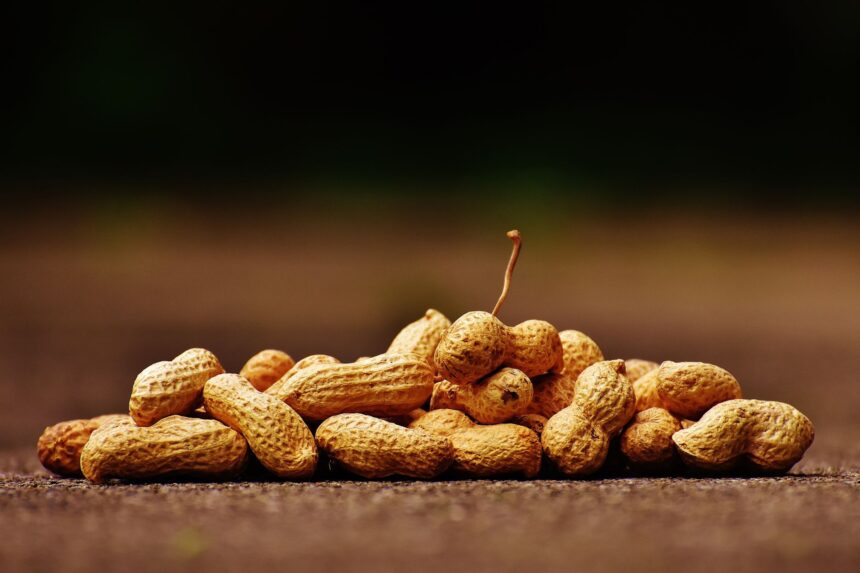
Infographic showing 4% improvement in cerebral blood flow from daily peanut consumption compared to 10-year aging declineIllustrative image · Photo by Pixabay on Pexels (Pexels License)
A new study in Clinical Nutrition (2025) found that consuming 60 grams of skin-roasted peanuts daily improved global brain blood flow by 4% in older adults—equivalent to reversing 10 years of age-related cognitive decline. The effect appears mediated by arginine, an amino acid that enhances nitric-oxide–driven vascular dilation. — Photo by Pixabay on Pexels (Pexels License)
SHARE
6 min read|1,131 words
✓ Medically reviewed by Prof. Giorgi Pkhakadze, MD, MPH, PhD · ORCID 0000-0001-7609-4515

🟠 Moderate Evidence

Contents
    • Key takeaways
      • Study at a Glance
      • Cerebral Perfusion Impact: Daily Peanut Consumption vs. Aging Decline
  • Arginine and Vascular Health: The Mechanistic Link
  • Clinical Significance: Reversing a Decade of Decline
  • Practical Implementation and Public Health Potential
    • What this means
  • Frequently asked questions
    • Does peanut consumption prevent dementia?
    • Is 60 grams of peanuts daily safe for everyone?
    • Why skin-roasted peanuts specifically?

A new study published in Clinical Nutrition (2025) found that consuming 60 grams of skin-roasted peanuts daily improved global cerebral blood flow by approximately 4% in older adults. The effect appears to be mediated by arginine, an amino acid present in peanuts at concentrations of 1.8–2.0 grams per serving, which researchers hypothesise enhances nitric-oxide–mediated vasodilation in cerebral vessels.

Key takeaways

  • A 60-gram daily serving of skin-roasted peanuts improved cerebral perfusion by 4% in older participants
  • The mechanism likely involves arginine-driven nitric oxide production and vascular dilation
  • A 4% increase in brain blood flow is equivalent to reversing approximately 10 years of age-related cerebral perfusion decline
  • This represents a simple, evidence-based dietary intervention for cognitive health in ageing populations

Study at a Glance

Source Clinical Nutrition
Study type Intervention study
Intervention 60 g daily skin-roasted peanuts
Primary outcome Global cerebral blood flow (measured non-invasively)
Key mechanism Arginine-mediated nitric oxide vasodilation (1.8–2.0 g arginine per serving)
4%
improvement in cerebral perfusion from daily peanut consumption—equivalent to reversing 10 years of age-related cognitive decline

Cerebral Perfusion Impact: Daily Peanut Consumption vs. Aging Decline

Global brain blood flow improvement, percentage change over time

+4%
Improvement from 60g daily peanuts
−4%
Typical 10-year aging decline
1.8–2.0g
Arginine per 60g serving

Source: Clinical Nutrition, 2025 | Georgian Medical Journal News

Submit Your Paper
GMJ_Submit_Banner

Arginine and Vascular Health: The Mechanistic Link

Arginine, a semi-essential amino acid abundant in peanuts, serves as a substrate for nitric oxide synthase, an enzyme that produces nitric oxide (NO)—a key signalling molecule responsible for vasodilation. The mechanism identified in this research aligns with established vascular physiology: increased NO production leads to relaxation of vascular smooth muscle, widening blood vessels and improving perfusion. This pathway is particularly relevant in ageing populations, where endothelial dysfunction and reduced NO bioavailability contribute to declining cerebral blood flow.

🎙️ Related Podcast Episodes
🎧 #31 | GMJ Podcast | Daily Multivitamins and Biological Ageing — COSMOS Trial · 21m
🎧 #45 | GMJ Podcast | Tskaltubo Mineral Baths in Osteoarthritis — Microcirculation, Erythrocytes, and Clinical Effects · 18m
🎧 #14 | WHO: Four in Ten Cancer Cases Could Be Prevented Globally · 16m

The 1.8–2.0 grams of arginine delivered by a 60-gram serving of skin-roasted peanuts represents a physiologically meaningful dose. Researchers propose that chronic dietary arginine supplementation through peanut consumption may help preserve cerebrovascular function as adults age. This finding extends existing evidence linking arginine-rich foods to cardiovascular health into the cerebral circulation domain, a clinically important area given the link between reduced brain perfusion and cognitive decline.

Clinical Significance: Reversing a Decade of Decline

The magnitude of improvement—a 4% increase in global cerebral blood flow—carries substantial clinical weight. According to the research, this gain is approximately equivalent to the amount of perfusion decline normally observed over 10 years of ageing in older adults. In practical terms, this suggests that a simple dietary intervention could help offset or partially reverse a significant age-related physiological process without pharmacological intervention.

For older adults at risk of or experiencing mild cognitive impairment, the implications are noteworthy. Cerebral hypoperfusion has been identified in observational studies as an early marker of cognitive decline and dementia risk. While this single study does not establish that peanut consumption prevents dementia, the reversal of a measurable, age-related vascular decline provides a mechanistic basis for future longitudinal investigations into cognitive outcomes. The intervention is also low-risk, scalable, and compatible with most dietary patterns, making it a candidate for public health messaging once evidence accumulates.

Practical Implementation and Public Health Potential

The specific intervention—60 grams of skin-roasted peanuts daily—is practical for most populations. This quantity is roughly equivalent to a small handful of peanuts or approximately two tablespoons of natural peanut butter (though the study used whole roasted peanuts). Skin-roasted preparation may preserve arginine bioavailability better than other processing methods, though additional comparative studies would strengthen this claim.

For healthcare providers, this research offers an evidence-based dietary recommendation to discuss with older adult patients concerned about cognitive ageing. Integration of this finding into clinical practice guidelines would require systematic review data and confirmation of cognitive outcomes in randomised trials. Policymakers and public health authorities may consider promoting peanut consumption as part of population-level cognitive health strategies, particularly in regions where peanut cultivation and affordability support widespread adoption.

A 60-gram daily serving of skin-roasted peanuts increased global cerebral perfusion by 4% in older adults, an improvement equivalent to reversing approximately 10 years of age-related cognitive decline. The mechanism involves arginine-mediated nitric oxide production and cerebrovascular dilation.

— Clinical Nutrition, 2025

What this means

For patients: Older adults may consider incorporating a small daily handful of skin-roasted peanuts (60g) as a simple, accessible dietary strategy to support brain blood flow and potentially reduce cognitive decline risk. This is not a treatment for dementia, but a preventive dietary measure.
For clinicians: Evidence-based dietary counselling can now reference a measured improvement in cerebral perfusion from peanut consumption. This provides a non-pharmacological option to discuss with patients concerned about age-related cognitive decline, though long-term cognitive outcomes require further study.
For policymakers: Cognitive health in ageing populations is a growing public health priority. Dietary interventions with documented vascular benefits should be evaluated for inclusion in population health guidelines and nutrition programmes for older adults, particularly in resource-limited settings where pharmacological interventions may be less accessible.

Frequently asked questions

Does peanut consumption prevent dementia?

This study demonstrates that peanuts improve a measurable physiological marker—cerebral blood flow—that is associated with cognitive health. However, the study did not measure cognitive outcomes or dementia risk. Future longitudinal research is needed to establish whether improved cerebral perfusion translates to reduced dementia risk. For now, this finding supports peanut consumption as one component of a brain-healthy lifestyle, alongside other evidence-based practices such as cognitive engagement, physical activity, and Mediterranean-style diet patterns.

Is 60 grams of peanuts daily safe for everyone?

For most adults, 60 grams of peanuts is a safe quantity and represents a modest caloric addition (approximately 340 calories). However, individuals with peanut allergies should avoid this intervention. Those with nut sensitivities, swallowing difficulties, or certain gastrointestinal conditions should consult a healthcare provider. Additionally, individuals taking medications that interact with arginine should discuss peanut consumption with their doctor, though typical dietary amounts are generally safe.

Why skin-roasted peanuts specifically?

The study used skin-roasted peanuts, which may preserve arginine content and bioavailability more effectively than some other preparation methods (e.g., blanching, which removes the skin). Skin contains beneficial compounds and may protect arginine from heat damage. While other forms of peanuts (natural peanut butter, boiled peanuts) also contain arginine, the specific preparation method studied should be noted. Comparable arginine doses from other peanut preparations may produce similar effects, but direct comparative studies would be needed to confirm this.

As populations age globally, identifying safe, accessible, and evidence-based interventions to support cognitive health becomes increasingly urgent. This study contributes a measurable physiological finding that warrants further investigation through longitudinal trials examining cognitive outcomes, quality of life, and dementia incidence. In the interim, healthcare systems should ensure that this evidence reaches clinicians and older adults as part of comprehensive, food-based approaches to healthy ageing.

Source: Clinical Nutrition (2025) — Peanut consumption and cerebral perfusion in older adults

Was this article helpful?

Disclaimer. This article is health journalism intended for general information and education. It is not medical advice and is not a substitute for professional diagnosis or treatment. Always consult a qualified healthcare provider about your individual circumstances. Full disclaimer →

Related Coverage

Coffee and Heart Health: New 2025 Evidence Reshapes Clinical GuidanceJul 29, 2026
Brain network fragmentation at legal alcohol limits predicts subjective intoxicationJul 29, 2026
Evidence Review: Five Health Behaviours Reshaping 2025 Clinical PracticeJul 29, 2026
L-Theanine Improves Sleep Quality Without Drowsiness, Systematic Review FindsJul 28, 2026
PG
Written by
Prof. Giorgi Pkhakadze, MD, MPH, PhD
Editor-in-Chief, GMJ News
Full profile →  ·  ORCID 0000-0001-7609-4515
Medical disclaimer. This article is health journalism intended for general information. It is not medical advice and is not a substitute for consultation with a qualified healthcare professional. Always seek your physician's advice regarding any medical condition.
Medically reviewed by Prof. Giorgi Pkhakadze, MD, MPH, PhD. Spotted an error? Contact the editorial team.

Get the GMJ News digest
Evidence-based health journalism in your inbox. No spam; unsubscribe anytime.
TAGGED:ageingargininecerebral perfusioncognitive healthNutritionpeanutsvasodilation
Share This Article
Facebook LinkedIn Bluesky Copy Link Print
GMJ
ByGMJ Practice Desk
Follow:
GMJ Practice Desk is part of GMJ News, the newsroom of the Georgian Medical Journal (gmj.ge), published by the Public Health Institute of Georgia. Every article is editorially reviewed before publication.
Leave a Comment Leave a Comment

Leave a Reply Cancel reply

Your email address will not be published. Required fields are marked *

Submit Your Paper →

Georgia's peer-reviewed open-access medical journal. No APC until January 2027.
Submit Manuscript →
Coffee and Heart Health: New 2025 Evidence Reshapes Clinical Guidance

New 2025 evidence reshapes clinical guidance on coffee consumption and heart health,…

Brain network fragmentation at legal alcohol limits predicts subjective intoxication

Functional MRI reveals that individuals with identical blood alcohol levels show variable…

Evidence Review: Five Health Behaviours Reshaping 2025 Clinical Practice

Real-world studies and trials in 2025 reveal that timing and context shape…

Submit Your Paper to GMJ

No APC until January 2027.
Submit Manuscript →

You Might Also Like

Scientific illustration showing gut-liver pathway disruption by alcohol consumption
New StudiesResearch Digest

New Study Reveals How Alcohol Disables Gut Immune Defenses, Worsening Liver Disease

By
GMJ Research Desk
24/05/2026
Mobile medical clinic van providing vascular care services to homeless patientsIllustrative image · Photo by Timur Weber on Pexels (Pexels License)
Clinical UpdatesPractice

Mobile Vascular Clinic Prevents Amputations Among Homeless Patients in Boston

By
GMJ Practice Desk
05/07/2026
Father and teenager having a conversation about relationships and communicationIllustrative image · Photo by www.kaboompics.com on Pexels (Pexels License)
New StudiesResearch Digest

Modern Fathers More Likely to Discuss Sex and Relationships with Teenagers, Study Shows

By
GMJ Research Desk
26/06/2026
Medical professionals reviewing clinical guidelines for autism and schizophrenia comorbidityIllustrative image · Photo by Peter Burdon on Unsplash (Unsplash License)
Clinical UpdatesPractice

Autism Spectrum Disorder and Comorbid Schizophrenia: Clinical Practice Guidelines

By
GMJ Practice Desk
07/07/2026
Facebook Twitter Youtube Instagram
Company
  • Privacy Policy
  • Contact US
  • GMJ Journal
  • Submit Manuscript
  • Editorial Team
  • Register at GMJ
  • Terms of Use

Subscribe to GMJ News — Click here

Join Community
© 2026 Georgian Medical Journal (GMJ). Published by the Public Health Institute of Georgia (PHIG). All rights reserved.
Welcome Back!

Sign in to your account

Username or Email Address
Password

Lost your password?

Not a member? Sign Up